Growing small plants indoors comes down to four things you can control right now: light, the right container and growing medium, water discipline, and a stable environment. Get those four things reasonably right and almost any compact plant will thrive on a windowsill, shelf, or desk. This guide walks you through each one in plain language, plus the quick fixes for the problems that trip up most beginners.
How to Grow Small Plants Indoors: Step-by-Step Guide
Marcus Holloway
30 Apr 2026
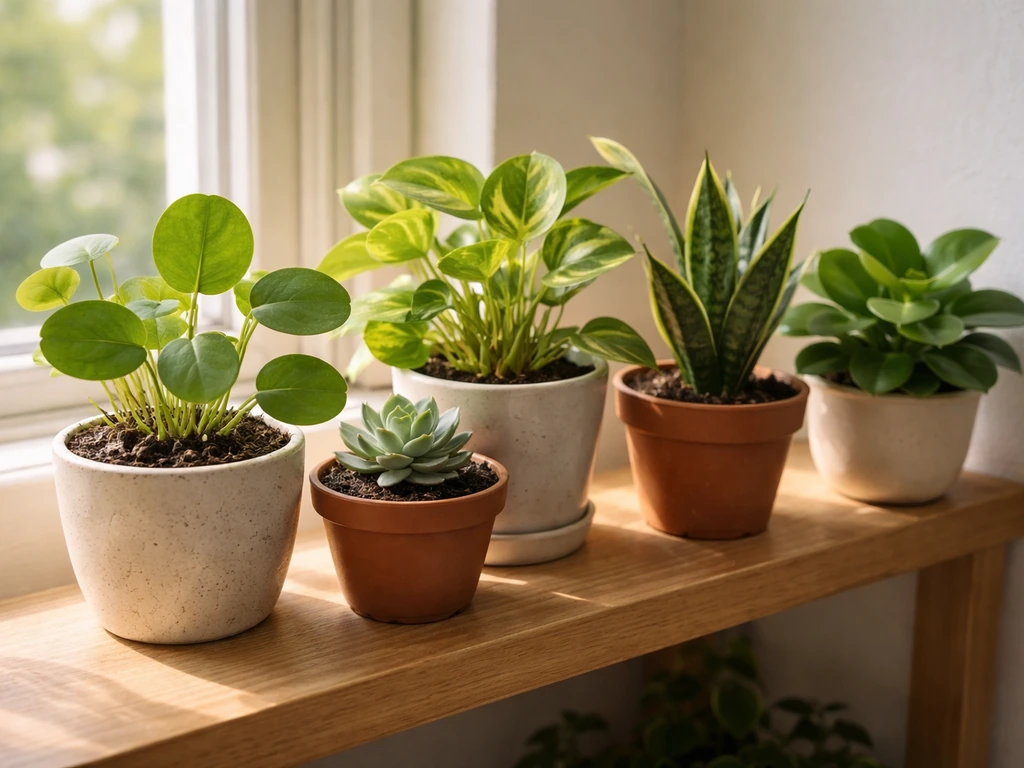
To grow big plants indoors, you still start with the fundamentals, but you focus harder on maximizing light and giving each plant enough space to develop a strong root system This guide walks you through each one in plain language. If you tune those basics well and add the right amount of light, you will usually see indoor plants grow faster and bigger over time light, watering discipline, and stable indoor conditions.
Choosing the right small indoor plants
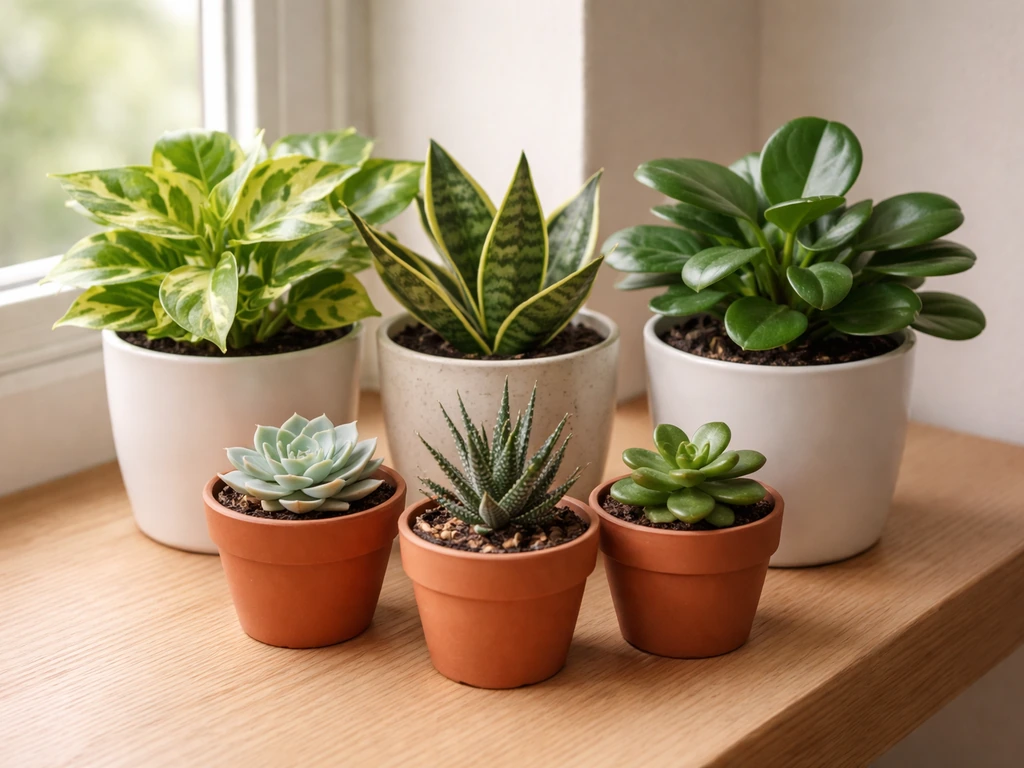
Not every plant marketed as a 'houseplant' is genuinely easy to keep small or happy indoors. The best starting choices are plants that are naturally compact, tolerate the lower light levels of most homes, and forgive occasional watering mistakes. A few dependable picks: pothos, spider plants, snake plants (Sansevieria), peace lilies, Chinese evergreens, and compact succulents like haworthia. These stay manageable in small pots, don't demand bright direct sun, and bounce back from beginner errors.
If you have pets, this matters more than you might think. The ASPCA maintains a searchable Toxic and Non-Toxic Plants database for dogs and cats, and it's worth a quick look before you buy. Spider plants, haworthia, and Boston ferns are generally listed as non-toxic, while pothos and peace lilies can be harmful to cats and dogs. Portland Nursery also publishes a handy list of commonly available houseplants that are non-toxic to both cats and dogs if you want a fast reference.
Think about your real conditions before you fall in love with a plant at the shop. A cactus needs a very bright south-facing window; a ZZ plant can handle a dim corner. Matching the plant to the light you actually have is the single biggest factor in long-term success. We'll dig into that next.
Light and placement for indoor growth
Light is the one thing you can't fake with good intentions. Most homes have far less usable light than people assume, and that gap is responsible for more dead houseplants than anything else. Here's a practical way to think about it: a south-facing window in the northern hemisphere gives the most light throughout the day, east and west windows give moderate light for part of the day, and north-facing windows give low, indirect light. Low-light plants can survive in roughly the 250 to 500 foot-candle range, which corresponds to a spot a few feet back from a north or east window.
If your windows don't give you enough, a grow light fills the gap without a lot of fuss. A simple LED grow light on a timer is affordable and works well for a shelf of small plants.
MU Extension recommends that in many cases plants getting no outdoor light should be lit about 16 to 18 hours per day, and 12 to 14 hours per day may be adequate when some additional light is received, with timers considered adequate for managing it lit from about 16 to 18 hours per day. [MU Extension recommends running supplemental lights for 14 to 18 hours per day](https://extension.
missouri. edu/publications/g6570) when grow lights are the primary source, so a timer is really non-negotiable here. Aim to keep the light 6 to 12 inches above most small foliage plants, closer for succulents that need higher intensity.
Rotate your plants a quarter turn every week or two. Light comes from one direction, and plants grow toward it. Rotating keeps growth even and prevents that lopsided, leaning look. It only takes a few seconds and makes a real difference over time.
Soil (or alternative media) and pot setup
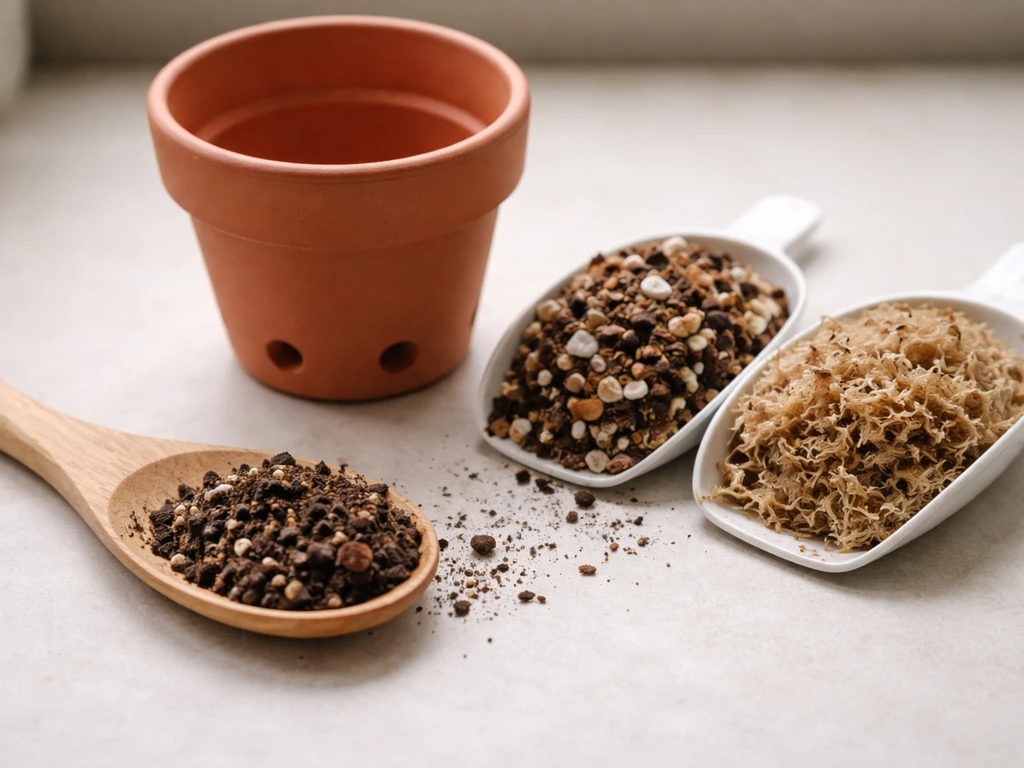
Most small indoor plants do best in a well-draining all-purpose indoor potting mix. Standard bagged potting mix is fine as a base, but it tends to compact over time and hold a bit too much moisture for plants that like to dry out between waterings. For succulents and cacti, mix in roughly 30 to 50 percent perlite or coarse sand to improve drainage. For moisture-loving plants like peace lilies, you can leave the mix as-is or add a small amount of peat moss or coco coir to retain a little more moisture.
The pot matters as much as the soil. Always use a container with drainage holes. No drainage holes means water pools at the bottom, roots suffocate, and root rot follows. Terracotta pots naturally wick away excess moisture and are a great choice for succulents or any plant that prefers drying out between waterings. Plastic pots retain moisture longer, which suits tropical plants that like consistent moisture. Size your pot to the plant: a pot that's just 1 to 2 inches wider than the root ball is ideal. Oversized pots hold excess wet soil around the roots, which encourages rot.
Alternative growing methods worth knowing
Soil isn't your only option for small indoor plants. Propagating pothos, tradescantia, or coleus in a jar of water works well as a semi-permanent setup, not just a propagation step. Basic hydroponic systems (a small net pot, growing medium like clay pebbles, and a nutrient solution) are surprisingly beginner-friendly for compact herbs and leafy greens.
Terrarium-style planting is popular for tiny plants like fittonia, mosses, and small ferns, but there's a real pitfall: layered terrarium materials (gravel, charcoal, then soil) can actually trap water and starve roots of oxygen rather than improving drainage. OSU Extension flags this specifically. If you go the terrarium route, use a well-draining mix, don't seal it completely, and open it periodically to prevent condensation buildup and excess humidity.
Watering and fertilizing small indoor plants
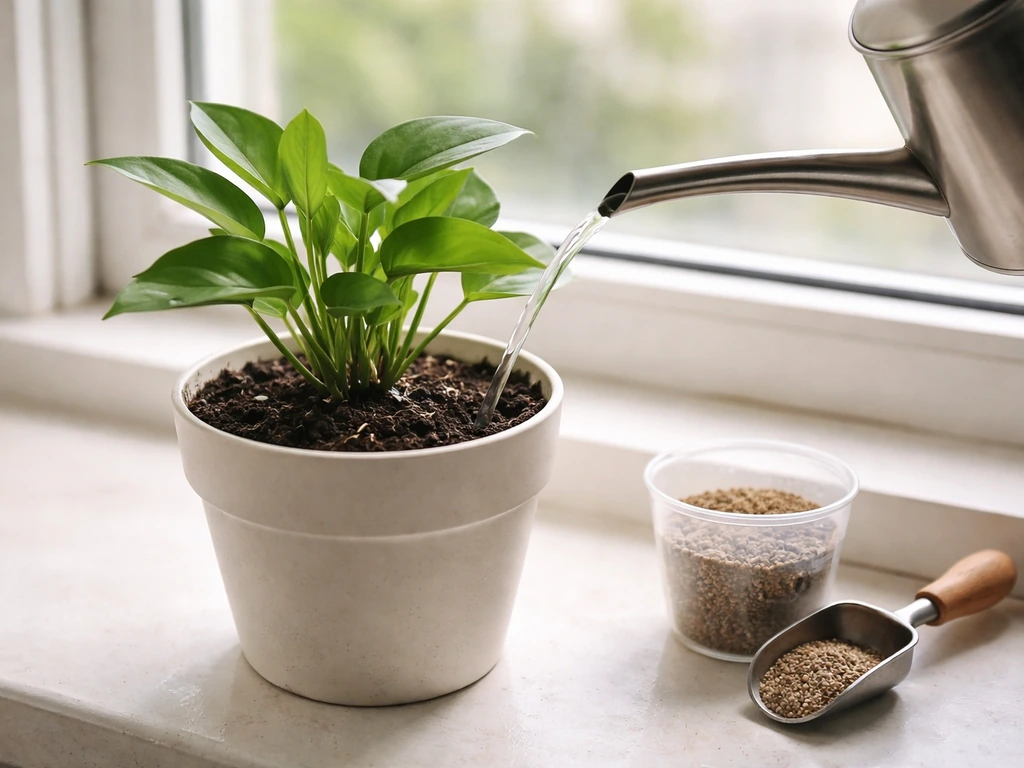
Overwatering kills more houseplants than underwatering, and it's usually not about how much water you give at once, it's about watering too frequently. The right approach is to water thoroughly when the plant needs it, then wait. The finger test is reliable: push your finger about 2 inches into the soil. If it's still damp, wait.
If it's dry, water. Illinois Extension describes this approach as the standard check for most houseplants, with slight variations depending on the plant's label (some prefer constantly moist, some prefer to dry out more). When you do water, water slowly and evenly until it runs out of the drainage holes, then empty the saucer after about 30 minutes so the roots aren't sitting in standing water.
For succulents specifically, Iowa State Extension advises thoroughly wetting the entire root ball and letting all the excess drain away, then waiting until the soil is completely dry before watering again. That might mean watering a succulent only once every two to three weeks in winter.
Fertilizing small indoor plants is simpler than it sounds. During the active growing season (roughly spring through early fall), feed with a balanced liquid fertilizer (like a 10-10-10 or 20-20-20 formulation) diluted to half the label strength, once a month. Most small plants don't need heavy feeding. In fall and winter, when growth slows, stop fertilizing entirely or cut back to every six to eight weeks. Over-fertilizing causes salt buildup in the soil that burns roots and causes brown leaf tips.
Temperature, humidity, and airflow needs
Most small tropical houseplants are comfortable in the same temperature ranges humans prefer, roughly 60 to 75 degrees Fahrenheit during the day. Where things go wrong is at the extremes: cold drafts from windows in winter, heat from radiators or vents, or air conditioning blowing directly on leaves. UMD Extension notes that excessively low or high temperatures can stop growth entirely, cause spindly appearance, trigger leaf drop, or kill the plant outright. Many flowering houseplants actually prefer cooler nighttime temperatures around 55 to 60 degrees Fahrenheit, so a slightly cool bedroom windowsill can work in your favor.
Humidity is an issue in most heated or air-conditioned homes, which tend to run dry. Tropical plants, ferns, and humidity-loving small plants prefer 40 to 60 percent relative humidity. A few practical fixes: group your plants together (they raise the humidity around each other through transpiration), place pots on a tray of pebbles filled with water (the evaporation adds moisture without the roots sitting in water), or run a small humidifier nearby. Misting is popular but less effective than these other methods and can encourage fungal issues if leaves stay wet overnight.
Airflow is the overlooked factor. Stagnant air encourages fungal disease and pest problems. A gentle fan on low running a few hours a day does a lot of good, especially if your plants are in a room with little natural ventilation. It also strengthens stems by creating a little movement, which is genuinely beneficial for plant structure.
Common problems and quick fixes
Leggy, stretched-out growth
If your plant is producing long, spindly stems with wide gaps between leaves, it's reaching for more light. Move it closer to a window or add a grow light. Trim back the leggy growth to encourage bushier new growth from lower nodes, and make sure you're rotating the plant regularly. Leggy growth in plants that are getting adequate light can also point to over-fertilizing with nitrogen, so check your feeding routine.
Yellow leaves
Yellow leaves are one of the most common distress signals, and the cause varies. Yellowing lower leaves on an otherwise healthy plant often just means those older leaves are naturally aging out. Widespread yellowing usually points to overwatering: feel the soil and check whether it's staying wet for too long. If the soil is dry and the plant is yellowing, it could be underwatering, root-bound conditions, or a nutrient deficiency. Yellow leaves with green veins specifically suggests a magnesium or iron deficiency, which a balanced fertilizer usually corrects over a few weeks.
Overwatering vs. underwatering
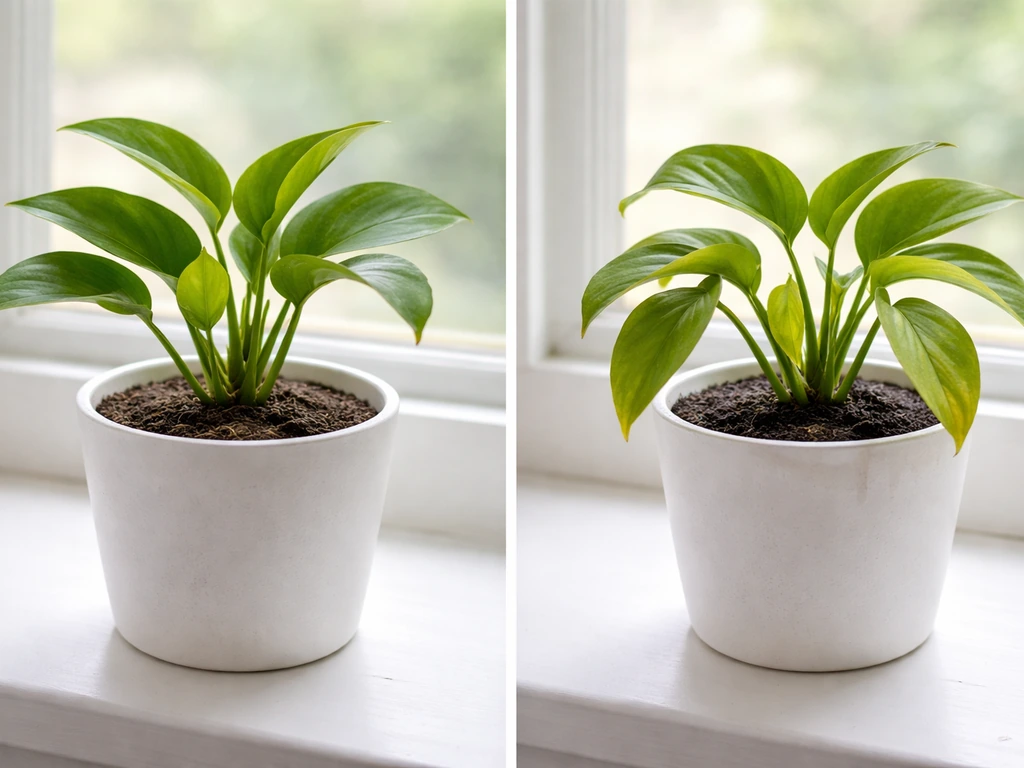
| Symptom | Likely Cause | Quick Fix |
|---|---|---|
| Yellowing leaves, mushy stem base, soggy soil | Overwatering / root rot | Let soil dry out fully; remove rotted roots and repot if severe |
| Dry, crispy leaf edges, wilting despite moist soil | Low humidity or salt buildup | Flush soil with water; increase humidity around plant |
| Drooping, dry soil, dry and brittle leaves | Underwatering | Water thoroughly until it drains; establish a more consistent schedule |
| Brown, soft leaf tips with wet soil | Root rot beginning | Check drainage; repot into fresh mix with better drainage |
Pests
The most common indoor plant pests are fungus gnats, spider mites, mealybugs, and scale. If you spot any pest activity, isolate the affected plant immediately so it doesn't spread to others. For flying pests like fungus gnats and whiteflies, UMN Extension recommends sticky traps (yellow or blue) to detect and monitor populations. Let the soil dry out more between waterings to break the fungus gnat life cycle, since their larvae live in moist soil.
Spider mites show up as fine webbing on leaf undersides and respond well to a spray of diluted neem oil or insecticidal soap applied weekly. Mealybugs look like tiny white cotton tufts and can be dabbed with rubbing alcohol on a cotton swab for small infestations, or treated with neem oil spray for larger ones.
Care routines, repotting, and long-term maintenance
Small plants don't need constant attention, but a simple regular routine makes a big difference. A weekly check covers most of what you need: test the soil moisture with your finger, check the undersides of leaves for pests, remove any dead or yellowing leaves, and rotate the pot a quarter turn. That five-minute weekly habit catches most problems before they become serious.
Repotting becomes necessary when you see roots growing out of the drainage holes or when the root mass is so dense you can barely see potting mix in the lower third of the root ball. Penn State Extension identifies these as the clearest signs a plant is pot-bound. When you repot, move up only one pot size (1 to 2 inches wider in diameter). Spring is the ideal time to repot, right as the plant is entering its active growth phase. Use fresh potting mix and water thoroughly after repotting, then hold off on fertilizing for about four to six weeks to avoid stressing the disturbed roots.
Pruning is optional for most small foliage plants but keeps them looking their best. Pinch back the growing tips of trailing or bushy plants like pothos, tradescantia, or basil to encourage fuller, more compact growth. For plants with a single main stem, just remove dead leaves and spent flowers. Clean leaves occasionally with a damp cloth to remove dust, which actually improves the plant's ability to photosynthesize, especially in lower light conditions.
If you want to go deeper on any single aspect of this, there's a lot more to explore: keeping plants thriving in an office setting, preventing indoor bug problems before they start, and scaling up your approach if you want to make small plants grow bigger over time are all natural next steps once you have the basics running smoothly.
If you want office plants to stay healthy, focus on matching each plant to your available light and using a consistent watering routine grow office plants. But honestly, start simple. Pick one or two easy plants, get the light right, water with intention, and build from there. If you want more step-by-step guidance beyond the basics, see these tips to grow indoor plants for a complete build your care routine checklist.
The learning curve is shorter than most people expect.
FAQ
What’s the best indoor spot to start if I’m not sure how much light I have?
Start with a bright window and assume you have less usable light than you think, then verify with plant response. If a plant looks stretched or leans strongly in one direction within 2 to 4 weeks, move it closer to the light or start supplemental lighting, rather than increasing fertilizer.
Do I need to water small indoor plants less if the pot is small?
Not always. Small pots dry out faster, but overwatering can still happen if you water too frequently without checking the soil. Use the 2-inch finger test, then water thoroughly and empty the saucer after about 30 minutes to avoid roots sitting in wet soil.
How do I know if my grow light is too far away or not strong enough?
Leggy growth, pale new leaves, and slow growth usually mean the plants are underlit. As a quick adjustment, lower the light within the recommended 6 to 12 inches range for most small foliage plants, or move succulents closer, and run the light on a timer for consistent hours.
Should I mist my plants instead of using better humidity methods?
Misting is usually a short-term fix, and it can encourage fungal problems if leaves stay wet overnight. Prefer grouping plants, a pebble tray, or a small humidifier, especially for ferns and other humidity-loving plants.
Can I keep small plants in decorative pots without drainage holes?
Avoid it, because drainage is non-negotiable for preventing root rot. If the decorative pot has no holes, use it as a cover pot over a nursery pot with drainage, then remove excess water from the cover after watering.
What soil should I use if I have a mix of plant types, like succulents and peace lilies?
Use different mixes for plants with different watering needs. Succulents and cacti typically need a more mineral, faster-draining mix with added perlite or coarse sand, while moisture-loving plants like peace lilies do better with a more moisture-retentive base.
How often should I fertilize small indoor plants if I’m growing slowly or in winter?
During active growth, feed about once a month with diluted balanced fertilizer at half-strength. In fall and winter, stop or reduce feeding, because slowed growth means the plant can’t use nutrients and salt buildup is a common cause of brown leaf tips.
Is bottom watering better than top watering for small plants?
It can be helpful, especially for moisture-sensitive plants, but only if you still let excess drain and do not leave water standing. Bottom watering may also mask a problem if the soil never fully wets, so check that the root ball gets evenly moistened.
Why are my leaves turning yellow but the soil feels dry?
If soil is truly dry, yellowing can indicate underwatering, root stress from being pot-bound, or a nutrient issue. Also check for drafts or heat blasts, because stress from temperature extremes can cause leaf loss even when watering seems correct.
What should I do if I suspect fungus gnats but I don’t see any adults?
Focus on the soil moisture. Let the top layer dry out more between waterings, since larvae thrive in consistently moist soil. Add sticky yellow or blue traps to monitor activity, and avoid keeping saucers full of water.
How do I rescue an overwatered small plant?
First stop watering, then improve drainage and airflow. If the soil stays wet for more than a few days or you smell sour odor, consider repotting into fresh, well-draining mix, trim any blackened roots, and wait 4 to 6 weeks before fertilizing to let damaged roots recover.
When is the right time to repot small indoor plants?
Repot when you see roots pushing out of drainage holes, or when the mix is barely visible in the lower part of the root ball. Move up only one pot size (about 1 to 2 inches wider), ideally in spring, then water thoroughly and pause fertilizing for about a month.
Can I propagate small plants like pothos or tradescantia directly in water long-term?
Yes, it can work as a semi-permanent setup. Use clean water and change it regularly to prevent buildup, and once roots are established, consider transitioning to soil if growth slows or leaves start to decline.
What’s a good weekly routine if I travel or forget about plants?
Do a quick weekly check, test soil moisture with your finger, inspect leaf undersides for pests, and rotate the pot. If you’re away, keep lights on a timer and make one deliberate watering based on soil dryness rather than following a fixed calendar.