Roots do three essential things that keep a plant alive: they pull in water and dissolved nutrients from whatever medium they're growing in, they anchor the plant so it stays upright and stable, and they breathe oxygen to power all of that work. When your roots are healthy, the rest of the plant almost takes care of itself. When roots are struggling, no amount of fertilizer, light, or attention above the soil line will fix it. Understanding what roots actually do gives you a huge advantage because you can read your plant's behavior and trace problems back to their real source instead of guessing.
How Do Roots Help a Plant Grow: Key Functions and Tips
Marcus Holloway
30 Apr 2026
The three core jobs every root system is doing right now
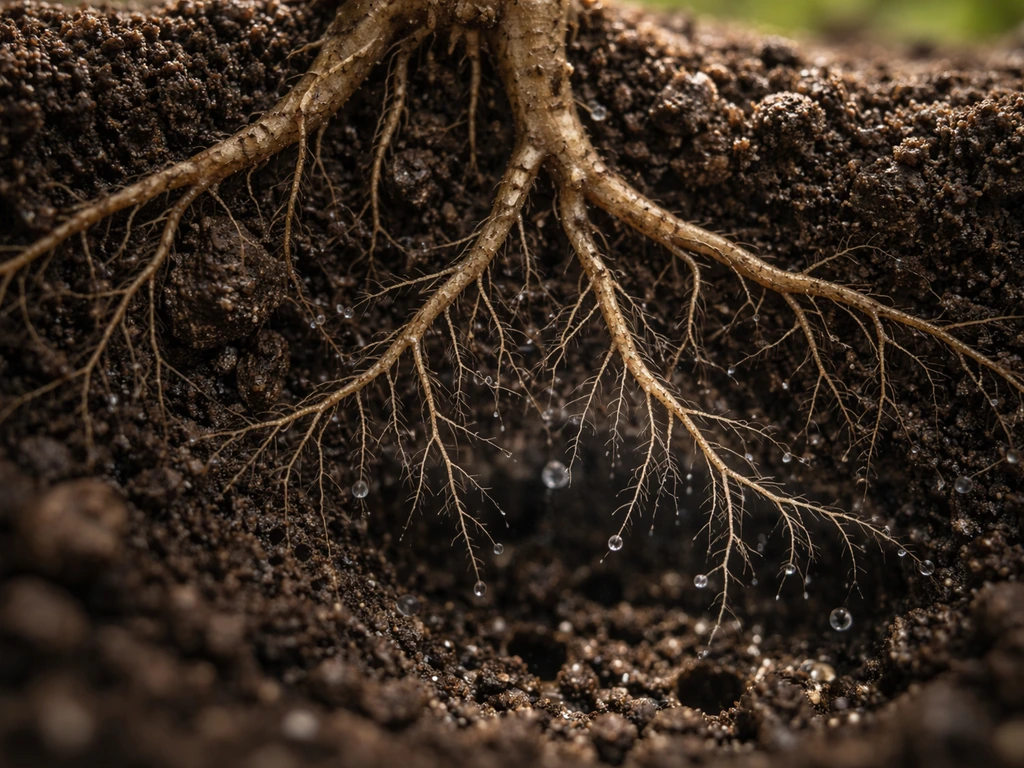
Think of roots as the plant's entire supply chain and foundation rolled into one. Structurally, they anchor the plant into its medium so wind, weight, and gravity don't topple it. That anchoring function matters more than people realize: a loosely planted seedling that rocks in the pot is constantly tearing tiny root hairs and stalling its own growth. But anchoring is really just the visible part of a much busier operation happening underground.
The real heavy lifting is water and nutrient uptake. Roots pull water and dissolved minerals from the soil or growing medium and ship them upward through the plant's vascular tissue (the xylem) to every leaf, stem, and flower. The finest roots, those thin wispy ones under 2 mm in diameter, are doing the bulk of this work because of their enormous surface area relative to their size. Those fine roots and their root hairs are the business end of the whole operation. When you repot roughly and tear them off, you are literally cutting the plant's ability to feed and hydrate itself.
Roots also store energy. Starchy reserves sit in roots and get tapped during low-light winters, drought stress, or early spring regrowth. This is why a plant can look completely dead above ground in winter and come roaring back once conditions improve: the roots were holding the reserves the whole time.
How roots actually pull in water and nutrients
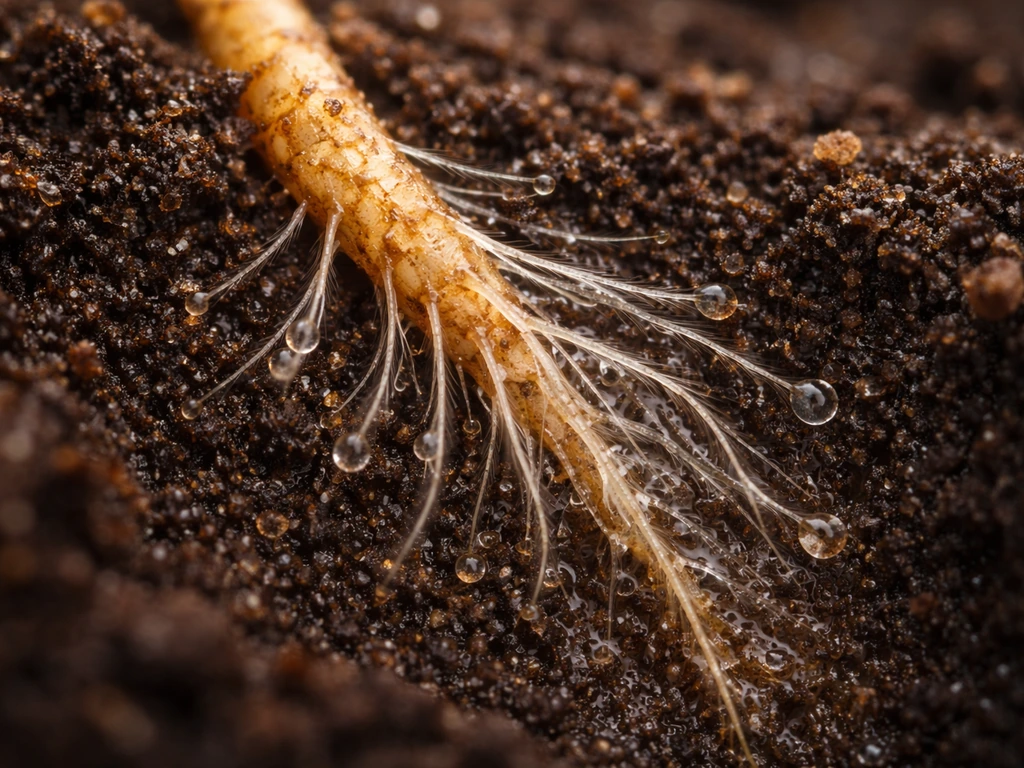
Water moves into root cells through osmosis, which just means it flows from where it's more concentrated (the moist soil) toward where it's less concentrated (inside the root cells). The plant doesn't have to pump it in with any effort when the soil has adequate moisture. Specialized proteins called aquaporins act like microscopic water channels in the root cell walls, controlling exactly how much water gets in and linking that uptake to what the rest of the plant needs. When you underwater, those channels can slow down and the plant wilts. When you overwater, the roots get cut off from oxygen (more on that shortly) and they can no longer function even if water is everywhere.
Nutrients like nitrogen, phosphorus, potassium, and a range of trace minerals are dissolved in that water, but they don't just drift in passively. The root surface has specific transporter systems, essentially molecular gates, that selectively absorb different mineral ions and load them into the xylem for transport upward. This is why nutrient deficiencies show up as specific visual symptoms. Yellowing leaves often point to nitrogen issues, dark green leaves with thin, weak growth can signal phosphorus deficiency, and stunted roots can accompany both. The plant is telling you what it's short on if you know how to read the signs.
Roots need oxygen too, and this is where most growers go wrong
This surprises a lot of beginners: roots breathe. They need a constant supply of oxygen to respire and generate the energy that powers water and nutrient uptake. Under normal, well-aerated conditions, oxygen diffuses through air-filled pores in the soil and reaches the roots easily. The moment those pores fill with water, oxygen diffusion slows to roughly 1/10,000th of its normal rate. Anoxia (zero-oxygen conditions) can develop in waterlogged soil even before it's fully saturated, and when that happens, roots stop functioning and start dying.
Compacted soil creates the same problem from a different angle. When soil particles are pressed together, there are fewer air spaces, gas exchange slows down, and root respiration gets choked off. Compaction also reduces how quickly water moves through the soil, which ironically can create wet pockets where roots drown even if you're not overwatering. If you've ever had a plant in a pot that feels dense and hard when you tap it, or noticed that water sits on the surface for a long time before soaking in, compaction is likely working against you.
The practical fix for both problems is the same: prioritize drainage and aeration in your growing medium. A mix that holds some moisture but drains freely and stays loose enough to have air pockets is the target for most plants. Adding perlite to potting mix, using pots with drainage holes, and not leaving plants sitting in standing water are the simplest things you can do right now to protect root oxygen supply.
How roots grow and how to encourage them
Depth vs spread: roots go where resources are
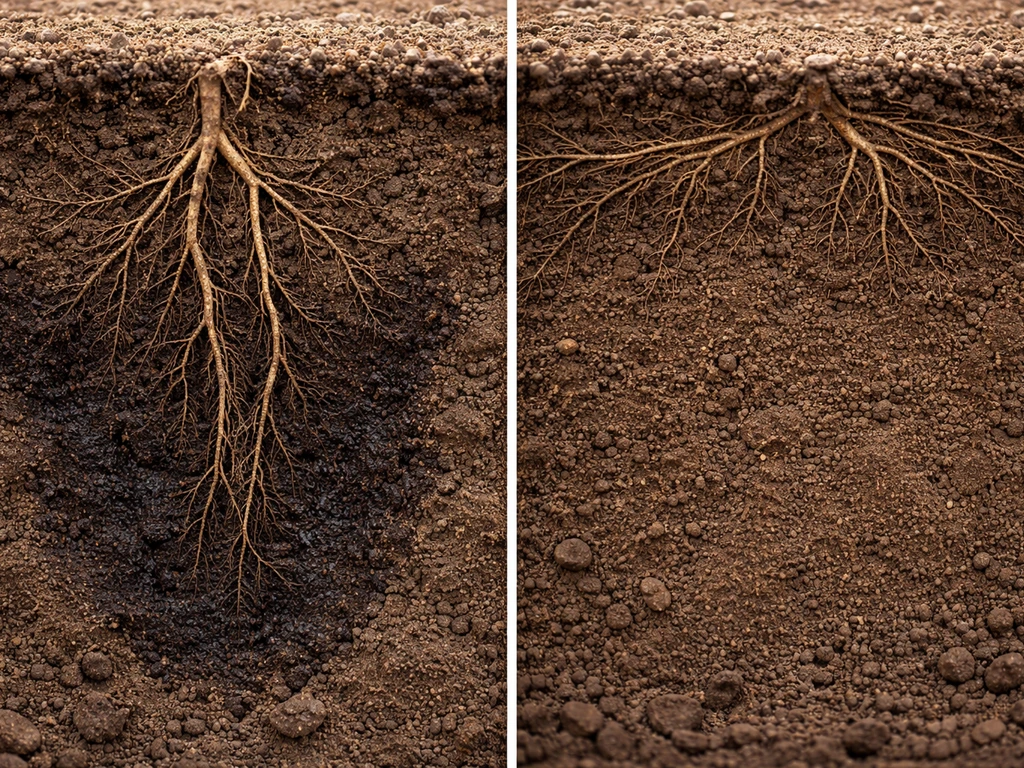
Root architecture is not fixed. Roots grow toward water and nutrients, so their depth and spread depend entirely on where those resources are in your growing medium. As roots develop from the seed, that growth direction is one of the main ways a new plant establishes itself and keeps getting the resources it needs roots grow toward water and nutrients. If you water shallowly and frequently, roots stay near the surface because that's where moisture is consistently available. If you water deeply and less often, roots follow the moisture down and spread out to fill the container, which builds a more resilient root system overall.
Soil compaction actively shrinks root systems. Research shows it can reduce root growth rate and total root biomass, which directly limits how much water and nutrients the plant can access and ultimately cuts into growth and yield. In containers, another root problem to watch for is circling roots: roots that hit a container wall and curl around instead of spreading out. UC ANR Cooperative Extension notes that blank" rel="noopener noreferrer">circling roots are common in container-grown plants and provides guidance on how to handle and avoid them. Over time, circling roots can girdle the plant. You can disrupt them at repotting by slicing or scoring the root ball to encourage outward growth, a simple technique evaluated by university researchers and recommended as a standard practice. Cutting or scoring the root ball can help prevent circling and encourages fresh, outward root growth after trimming.
Practical steps to encourage strong root development
- Water deeply and let the medium partially dry out between waterings to push roots to explore downward.
- Use a loose, well-aerated mix to remove mechanical resistance that slows root growth.
- Size containers appropriately: too large and the excess wet soil suffocates roots, too small and roots circle and bind.
- Consider air-pruning containers (fabric pots or air-pruning plastic designs) that naturally stop circling by desiccating root tips at the container wall, encouraging lateral branching instead.
- When repotting, gently loosen and untangle circling roots before placing the plant in its new container.
The underground partnership: roots and soil biology
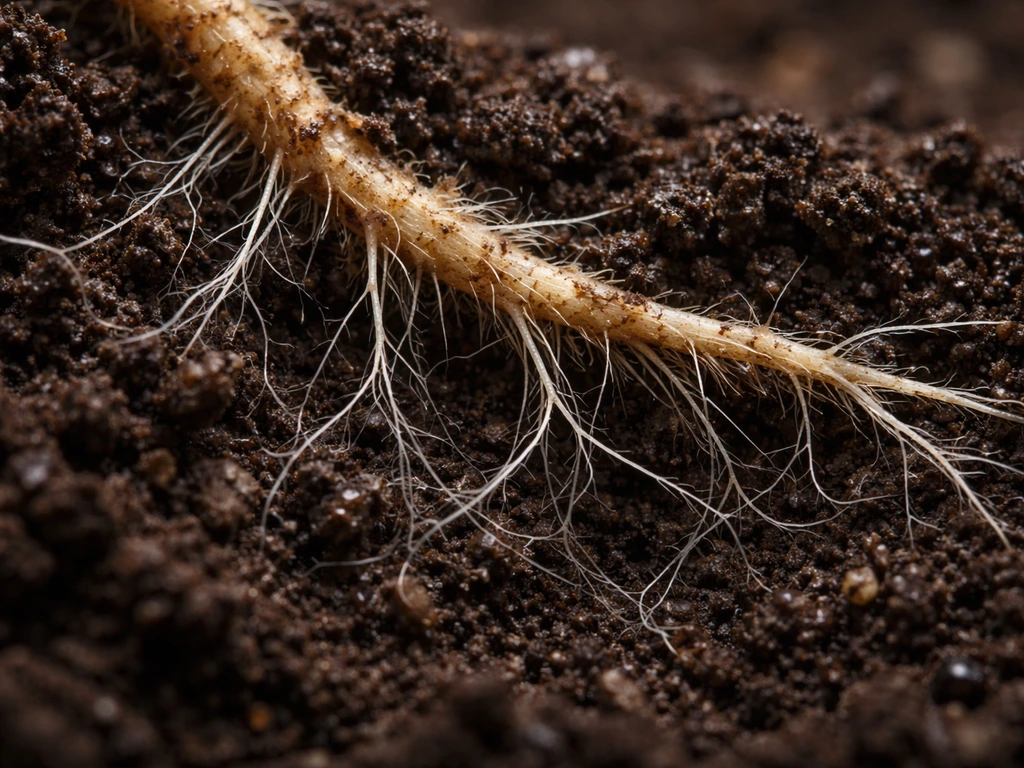
Roots don't work alone. They actively shape the microbial community in the soil around them by releasing compounds called root exudates, basically a mix of sugars, amino acids, and other organic molecules that feed bacteria and fungi. In return, many of those microbes promote plant growth directly or help suppress pathogens through a kind of induced plant immune response. It's a genuine partnership, and you can either support it or accidentally destroy it.
The most impactful of these partnerships is with arbuscular mycorrhizal (AM) fungi. These fungi colonize root tissue and extend threadlike hyphae far into the soil, effectively multiplying the root system's foraging reach for phosphorus and other nutrients that don't move easily through soil on their own. The practical payoff is a plant that's better fed, more drought-tolerant, and more resistant to certain root pathogens. You can support this relationship by inoculating roots with a mycorrhizal product at planting time, though one important caveat: high phosphorus fertilizer can actually suppress the fungi's colonization because the plant has no incentive to maintain the partnership when phosphorus is already abundant. If you're using heavy fertilizer routinely, the mycorrhizal product may not deliver the full benefit.
Some commercial mycorrhizal inoculants also contain fertilizer in the carrier material, so any productivity bump you see might be from the nutrients rather than the fungi themselves. Use inoculants in low-fertility situations, like when starting new plants from seed or transplanting into fresh unfertilized soil, and you'll get the most genuine benefit from the symbiosis.
What roots need in different growing setups
| Growing Medium | How Roots Get Oxygen | How Roots Get Nutrients | Key Risk to Watch |
|---|---|---|---|
| Soil (containers or ground) | Air-filled pore spaces between soil particles | Dissolved minerals in soil water, supported by microbes and mycorrhizae | Compaction and overwatering cutting off oxygen |
| Water (cuttings, propagation) | Oxygen dissolved in water; change water regularly to refresh | Limited: dilute liquid fertilizer once roots establish | Stagnant water depleting oxygen and inviting rot |
| Hydroponics | Dissolved oxygen in nutrient solution via air stones or recirculation | Precisely formulated nutrient solution | Low dissolved oxygen below 6-7 mg/L, which invites Pythium root rot |
| Terrariums / closed setups | Substrate layering (drainage layer below soil) traps air near roots | Slow-release nutrients in substrate, minimal additions needed | Waterlogging from no drainage hole; mold and rot in stagnant conditions |
In hydroponics, the stakes around oxygen are especially clear-cut. There's no soil to buffer anything: roots are suspended in a nutrient solution and depend entirely on dissolved oxygen for respiration. Most DWC (deep water culture) growers target dissolved oxygen at 7 mg/L or above. Drop below 6 ppm and you're in danger zone territory for root rot caused by water mold pathogens like Pythium. An air stone and a reliable pump are not optional extras in a hydro setup: they are the equivalent of drainage holes in a soil pot.
In terrariums and other closed or limited-drainage setups, the approach is substrate layering: a drainage layer of gravel or lava rock at the bottom, then a thin charcoal layer to manage pathogens, then the growing medium on top. This creates a reservoir zone that keeps excess water away from the root zone and maintains some air exchange near the roots. It's not perfect, but it dramatically reduces the rot risk that comes with no drainage hole.
Root problems you'll actually encounter and how to fix them
Root rot
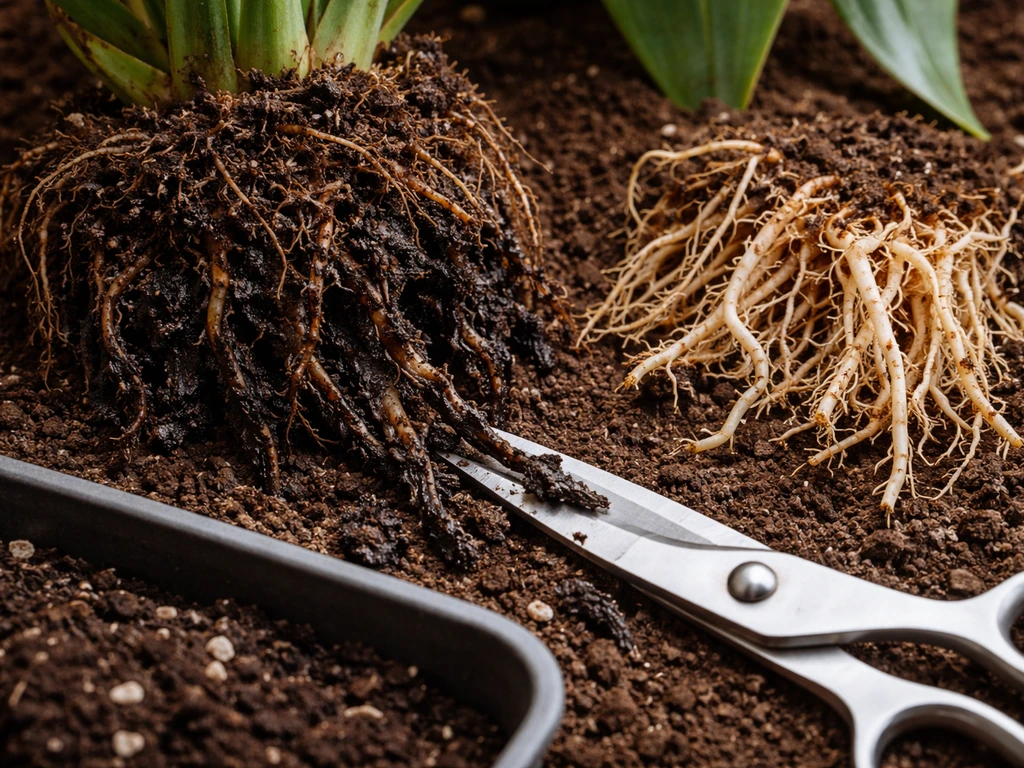
Root rot is the most common root problem across every growing environment. Pathogens like Pythium, Phytophthora, and Rhizoctonia cause dark brown to black, soft, mushy roots that may disintegrate when you touch them. The plant above ground wilts, stops growing, or collapses even though the soil feels wet. The wet soil is actually the problem: these pathogens live in almost all cultivated soils and only attack when wet conditions persist. Wilting in wet soil is a dead giveaway for root rot.
To fix it: unpot the plant, cut off all black or mushy roots with clean scissors, let the remaining roots air out for 30 minutes, and repot into fresh, dry, well-draining mix. Improve your watering habits going forward: water only when the top inch or two of soil is dry, make sure your pot has a drainage hole, and don't let it sit in a saucer of standing water.
Compacted soil
Compacted soil slows root growth, reduces oxygen, and creates waterlogged pockets. Signs include water pooling on the surface, a pot that feels rock-hard, and a plant that looks stunted despite regular care. For containers, the fix is repotting into fresh, loose mix with added perlite (a ratio of about 20-30% perlite works well for most houseplants). For in-ground beds, aerating by loosening the top layer with a fork and adding organic matter improves structure over time.
Transplant stress
Transplant stress happens because moving a plant tears fine roots and root hairs, temporarily crashing the plant's ability to absorb water and nutrients. The plant wilts, drops leaves, or stalls for a few days to a few weeks. To minimize it: handle root balls gently, keep as much of the original medium attached as you can, water immediately after transplanting, keep the plant out of direct sun for a few days, and hold off on fertilizing for at least two weeks. The plant needs to rebuild its fine root system before it can use the nutrients anyway.
Salt buildup from fertilizer
Over-fertilizing or using tap water high in minerals gradually builds up soluble salts in the growing medium. Those salts can chemically burn roots from the outside, essentially drawing water out of root cells instead of letting the plant draw water in. You'll often see a white crusty deposit on the rim or surface of the pot as an early warning sign. The fix is flushing: water the pot heavily three or four times in a row, letting it drain fully each time, to carry those salts out. Then pull back on fertilizer frequency and make sure you're not applying more than the label recommends.
Quick root problem reference
| Symptom | Likely Root Problem | Quick Fix |
|---|---|---|
| Wilting in wet soil | Root rot (Pythium, Phytophthora) | Remove rotten roots, repot in fresh dry mix, improve drainage |
| Stunted growth, water pools on surface | Compacted soil | Repot with perlite added, aerate in-ground beds |
| Wilting after repotting, leaf drop | Transplant stress | Shade, gentle watering, no fertilizer for 2 weeks |
| White crust on pot, leaf tip burn | Fertilizer salt buildup | Flush thoroughly, reduce fertilizer rate |
| Yellow leaves, slow growth despite watering | Nutrient deficiency from poor root function | Check drainage, consider root health before adding fertilizer |
| Mushy brown roots in hydro system | Low dissolved oxygen / Pythium | Improve aeration, aim for 7+ mg/L DO, clean system |
Putting it all together: what to do today
The biggest shift you can make as a grower is to start thinking about roots first, not last. Before you reach for fertilizer, adjust your light, or change your watering schedule, ask whether your roots are actually in a position to use those changes. Are they getting enough oxygen? Is the medium loose enough for them to spread? Are they sitting in standing water or a compacted, airless mix? Solving those foundational conditions gives everything else you do a real chance to work.
If you want to go deeper, look at what your specific growing environment needs: improving drainage and aeration in soil setups, maintaining dissolved oxygen levels in hydroponic systems, or getting substrate layering right in terrariums. Each setup has a slightly different version of the same root fundamentals. Roots also connect directly to questions like how to get a plant to establish roots from a cutting, what conditions roots need to grow well, and how new plants develop from root divisions. Once you understand what roots are actually doing, all of those topics start to click into place naturally.
- Check your pot: does it have drainage holes? If not, drill some or repot today.
- Feel your soil: is it hard, dense, or taking more than 30 seconds to absorb water? Add perlite at your next repot.
- Look at your roots: healthy roots are white or light tan and firm. Brown, mushy, or slimy roots need immediate action.
- Review your watering habit: water deeply when the medium is partially dry, not on a fixed schedule regardless of conditions.
- If you're growing in hydroponics, check your dissolved oxygen: keep it at 7 mg/L or above with good aeration.
- Hold off on fertilizer if your plant looks stressed: fix the root environment first, then feed once roots can actually absorb nutrients.
FAQ
How do I tell if a problem is coming from the roots versus the leaves or stems?
Use a simple timeline and pattern check. Root issues often show up as wilting or stalling while the soil is wet or staying compact, and leaf symptoms usually lag. If the plant wilts even though the pot feels consistently damp, suspect oxygen deprivation or root rot, not thirst. If you can gently slide the plant out and see brown or mushy roots (or a dense, circling root ball), the root cause is very likely underground.
Do roots need oxygen even when the soil is not fully saturated?
Yes, oxygen drops quickly as pore spaces fill with water. Even “not soaking” conditions can become oxygen-poor in dense mixes or when watering frequency is high. A practical test is to feel drainage behavior, if water sits on top or drains slowly, the root zone is likely spending too much time with reduced oxygen.
What watering method best supports healthy roots: frequent small waterings or deeper soakings?
For most container plants, deeper, less frequent watering encourages roots to grow outward and down toward moisture pockets, which reduces long-term waterlogged time in the top layer. Frequent shallow watering keeps roots near the surface and can contribute to uneven moisture zones. A good cue is to water thoroughly until it drains, then wait until the top inch or two is dry depending on your plant and pot size.
Can I fix root problems without repotting?
Sometimes, but not when the roots are already damaged. If you suspect root rot, leaving the same wet, oxygen-poor medium in place usually delays recovery because pathogens persist in that environment. If roots look mostly intact, you can try correcting oxygen and drainage first (adjust watering, improve airflow, consider adding perlite), but if you see dark mushy roots, you generally need to remove them and repot into fresh, well-draining mix.
Why do plants sometimes wilt when the soil is wet, even though roots are supposed to absorb water?
Because wet soil can deprive roots of oxygen, roots cannot respire normally, and they stop functioning. This is different from drought, where roots can still take up water but the medium lacks it. The tell is wilting in consistently wet or waterlogged conditions, especially if stems feel weak and growth has stalled.
Is a fertilizer increase always the right response to yellow leaves or slow growth?
Not if the roots cannot access oxygen or water. Nutrients only help when the root system is functioning and the medium allows proper transporter uptake. If you see yellowing alongside soggy soil, compacted texture, or root damage, first fix drainage and aeration (and address root rot risk) before adding more fertilizer to avoid further stress and salt buildup.
What is the best way to support root growth in compacted containers over time?
Repotting into a looser mix is the fastest reset, but you can also reduce future compaction by using a breathable, well-draining potting blend and watering in a way that dries slightly between cycles. For ongoing maintenance, gently break up the top layer occasionally to restore some air space, and avoid letting pots sit in saucers filled with runoff.
Should I cut or disturb roots when repotting to prevent circling?
If circling roots are present, modest root disruption at repotting can help guide future outward growth. The key is to do it deliberately, with a clean tool, and then pot into fresh, loose medium and water right after. Avoid repeated pruning sessions, doing this repeatedly can extend transplant stress; one well-timed repot is usually better.
How soon can I fertilize after transplanting, and why?
Hold fertilizer for at least about two weeks after transplanting. Transplanting tears fine roots and root hairs, which temporarily reduces uptake capacity, so fertilizer can sit in the medium and increase salt stress. Once you see new growth or clear recovery, you can resume at a reduced dose first, then return to normal only if the plant is responding.
How do I prevent salt buildup in the pot without overcorrecting my watering?
Periodically flush the medium when you notice white crusting or when plants seem stressed despite reasonable watering. Flush by watering heavily until excess drains out, repeating a few times to carry salts through the pot. Going forward, follow label rates and consider using less-frequent feeding, salt accumulation is more likely with heavy fertilizer and repeated top-ups that keep salts concentrated near the surface.
Do mycorrhizal inoculants work for all plants and in all soils?
They help most when phosphorus is relatively low and when you are establishing plants in fresh or low-fertility media. In soils or mixes already high in available phosphorus, the fungus may colonize less because the plant can get what it needs without the partnership. Also check the product, some “inoculants” include fertilizer in the carrier, so a visible boost may come partly from added nutrients rather than symbiosis alone.
What should I watch for in hydroponics if dissolved oxygen drops?
Expect root decline first, roots may look brown, slimy, or smell off, and plants can wilt even with plenty of water and nutrients. Use an aeration strategy that keeps oxygen high continuously, not just intermittently. If oxygen reliably dips below safe ranges, address the system immediately by improving airflow, checking pump performance, and ensuring adequate mixing of the reservoir.
In terrariums or setups with no drainage hole, what’s the safest way to reduce root rot risk?
Prioritize a layered substrate approach and avoid overwatering. A drainage-like layer (gravel or lava rock) plus charcoal below the main medium helps create a buffer zone and reduces pathogen pressure, but the real limiter is how often you add water. Keep the root zone from staying saturated for long periods, and let the top layers dry before adding more.