The easiest plants to grow are snake plants, pothos, and ZZ plants indoors, or hardy natives like prairie coneflower outdoors. Pick one of those, put it in a pot with good drainage and a quality potting mix, give it the right amount of light (bright indirect for most), water only when the top 2–3 inches of soil feel dry, and you've already solved 90% of what kills beginner plants. Everything else in this guide is just helping you build on that foundation, including how to branch into water growing, hydroponics, and terrariums when you're ready.
How to Grow Plants Easily: Simple Setup and Care
Marcus Holloway
23 Apr 2026
The easiest plants to start with
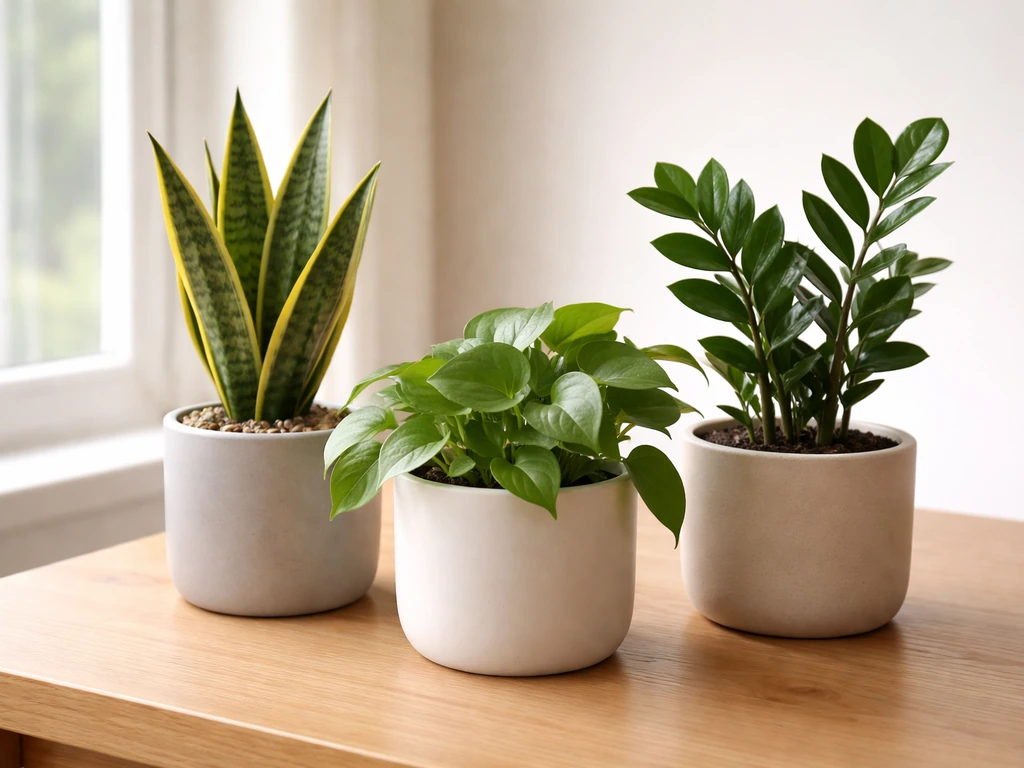
If you've killed plants before, it almost certainly wasn't your fault. You were probably handed something that needed more care than anyone told you. These three indoor plants are genuinely forgiving and a much better starting point.
Snake plant (Dracaena trifasciata)
This is the plant I recommend to absolutely everyone starting out. It tolerates low to medium light, bounces back from missed waterings, and rarely gets pests. You can put it in a dim corner, water it once every two weeks, and it'll just quietly thrive. It's not exciting, but that's the point. You want reliable when you're learning.
Pothos (Epipremnum aureum)
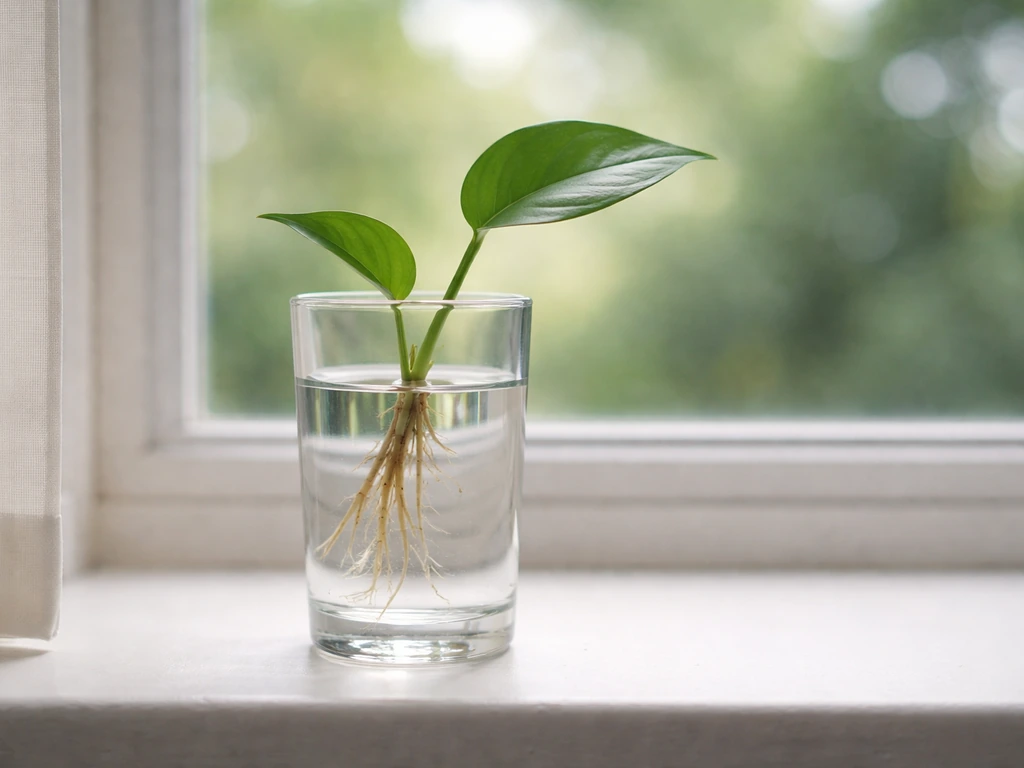
Pothos is the other plant I'd hand a nervous beginner. The key to keeping it happy is simple: water it deeply, then let the soil dry out before watering again. It's much more forgiving of going too long between waterings than it is of sitting in wet soil constantly. It also roots in water (just drop a cutting in a glass), which makes it a perfect first experiment if you're curious about water propagation.
ZZ plant (Zamioculcas zamiifolia)
The ZZ plant is the closest thing to a set-and-forget houseplant. It handles everything from low light to bright indirect light, and its thick rhizomes store water so it shrugs off irregular watering schedules. If you travel frequently or just forget to water, this one's for you.
Best easy plant for outdoors
For outdoor beginners in the US, prairie coneflower (Ratibida columnifera) is a smart pick. It thrives in USDA zones 4–9, handles drought and poor soil, and resists most common pests. Plant it once and it largely takes care of itself, which is exactly what you want when you're just getting started with garden beds or outdoor containers. The USDA plant guide for prairie coneflower (Ratibida columnifera) describes it as drought-tolerant and suggests it for landscaping, supporting the idea of a mostly hands-off outdoor choice blank" rel="noopener noreferrer">drought-tolerant and a suggested landscaping plant.
Setting up a simple growing space
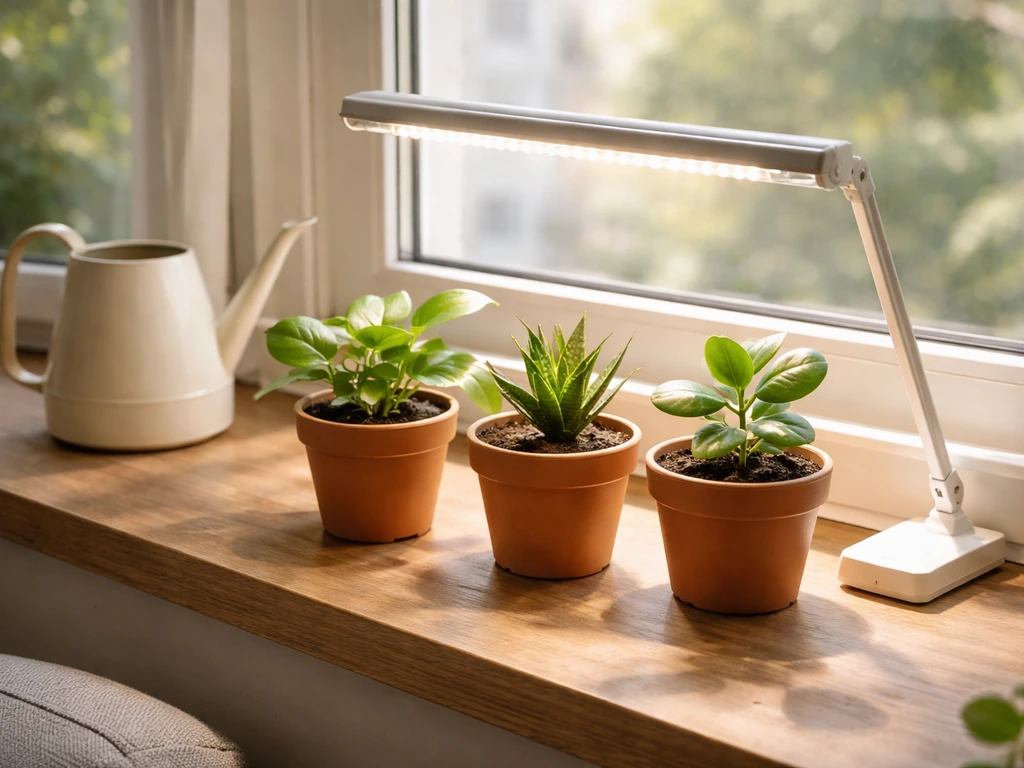
You don't need a greenhouse or a yard. A windowsill, a small balcony, or even a spare corner with a grow light can work. The setup doesn't have to be elaborate. It just has to cover three things: light, drainage, and airflow.
Indoor setup basics
- Pick a spot near your brightest window (south or east-facing works best in the Northern Hemisphere).
- If natural light is limited, add an LED grow light positioned 12–18 inches (30–45 cm) above the plant canopy.
- Run grow lights for 10–12 hours per day for established plants, or 14–16 hours for seedlings and cuttings. Always give plants 6–10 hours of darkness so they can respire properly.
- Use a pot with drainage holes. No exceptions. Even one inch of standing water at the bottom will rot roots faster than almost anything else.
- Set pots on a tray or saucer to protect surfaces, but empty the saucer after watering so the pot isn't sitting in water.
Outdoor setup basics
- For containers outdoors, use the same drainage-first rule. Container soil dries out faster outside, so check moisture more often in summer.
- For small garden beds, loosen the soil and amend with compost before planting. Avoid using straight garden soil in containers.
- Start with a sheltered spot that gets morning sun and afternoon shade if you're unsure about your climate. You can always move to more sun once you see how your plant responds.
Light, water, and soil: the three things that matter most
Light
Most houseplants labeled 'low light' actually mean 'can survive in low light,' not that they prefer it. Bright indirect light (near a window but not in direct sun) is the sweet spot for most beginner plants. If you're using a grow light, aim for about 10–12 hours of light per day for adults and up to 14–16 hours for seedlings. Don't skip the dark period: plants need 6–10 hours of darkness daily for healthy respiration, the same way you need sleep.
Watering
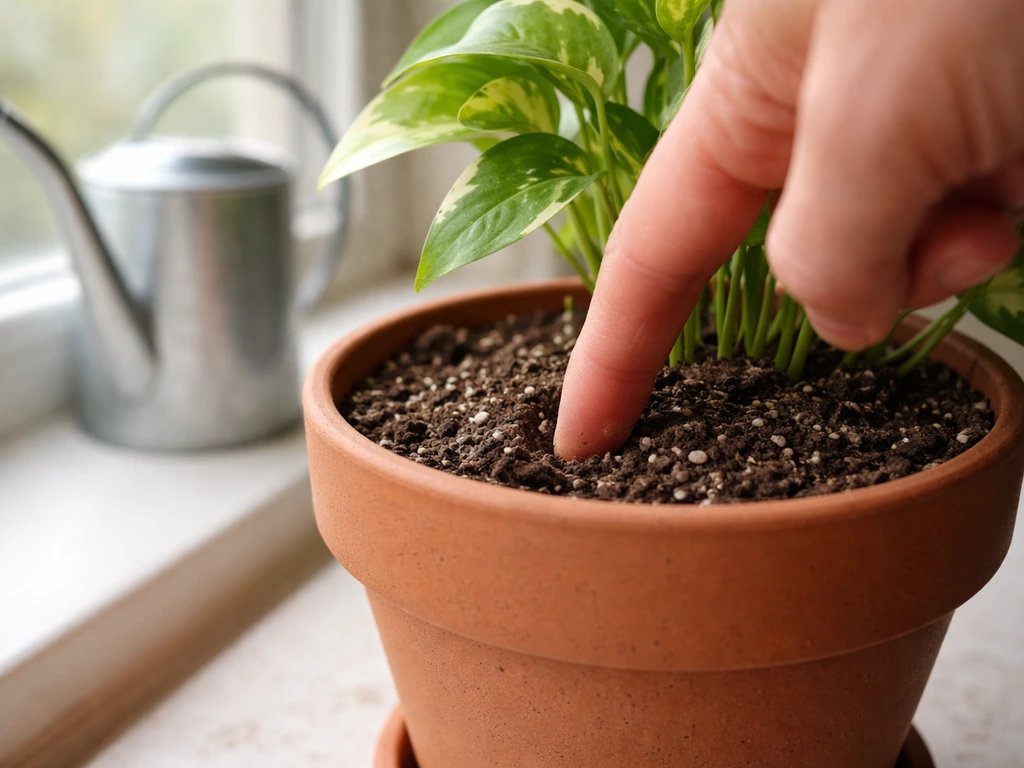
Overwatering is the number one way people kill houseplants, especially in winter when growth slows. The fix is simple: before you water, stick your finger 2–3 inches into the soil. If it feels moist, wait. If it feels dry, water thoroughly until it drains from the bottom. Deep, infrequent watering beats light, frequent watering almost every time because it encourages roots to grow downward. Good drainage matters as much as how much you water, since containers have limited soil volume and have nowhere for excess water to go if the drainage hole is blocked or absent.
Soil
Don't use garden soil in containers. It compacts, drains poorly, and can bring in diseases. A quality potting mix is typically soilless, made from something like peat moss plus vermiculite or perlite, which balances drainage and water retention. Look for a mix with a pH between 5.5 and 6.5 and avoid anything that smells like ammonia or has visible mold. The goal is a mix that holds enough moisture to hydrate roots but drains fast enough that roots aren't sitting in water.
Which growing medium is right for you
Soil is the obvious starting point, but it's not the only option. Once you're comfortable with the basics, water growing, hydroponics, and terrariums all follow the same core principles. Here's how they compare so you can decide what fits your space, budget, and curiosity.
| Medium | Best for | Ease level | Cost to start | Key benefit |
|---|---|---|---|---|
| Potting mix (soil) | All beginners, most plant types | Easiest | Low | Forgiving, widely available, familiar |
| Water propagation | Pothos, philodendron cuttings | Very easy | Near zero | Instant visual feedback on root growth |
| Passive hydroponics (Kratky) | Herbs, leafy greens, curious beginners | Easy | Low | No pumps or electricity needed |
| Wick system | Small herbs and greens | Easy | Low | Self-watering, almost maintenance-free |
| Terrarium | Tropical/humidity-loving plants, limited space | Moderate | Low to medium | Self-sustaining humidity, looks great |
My recommendation: start with soil and a snake plant or pothos. Once you're comfortable, try rooting a pothos cutting in water. That one experiment teaches you a huge amount about how roots work. From there, a Kratky or wick hydro setup is a natural next step: both require no electricity, no pumps, and are described by extension researchers as among the most beginner-friendly hydro methods available. Terrariums are a great option if you're working in a small apartment and want something that largely maintains its own humidity.
A simple weekly routine that actually works
Growth doesn't require a complicated system. It requires consistency. Here's a routine that works for most beginner setups, whether you're growing in soil on a windowsill or experimenting with a small hydro container.
- Every day: do a quick visual check. Are leaves perky or drooping? Is the soil surface dry or still dark and moist? Does anything look chewed or spotty?
- Every 2–3 days: do the finger test. Push your finger 2–3 inches into the soil. Water only if it's dry at that depth.
- Weekly: rotate your pots a quarter turn so all sides get even light exposure. Wipe dust off large leaves with a damp cloth so light absorption isn't blocked.
- Weeks 2–6 after planting: start a light fertilizer routine. Use a balanced liquid fertilizer at half strength once a week, or full strength every two weeks. More frequent, smaller doses are gentler and just as effective.
- Monthly: check whether roots are coming out of drainage holes. If they are, it's time to move up one pot size (about 2 inches wider in diameter).
- Seasonally: adjust your watering frequency. Plants need less water in winter when growth slows. Reduce feeding too, or stop altogether if growth has paused.
Planting from scratch: the short version
- Pick a pot with drainage holes that's only slightly larger than the root ball (too big = too much wet soil around roots).
- Fill the bottom third with quality potting mix.
- Set your plant in, fill around it, and press lightly to remove air pockets.
- Water thoroughly until water drains from the bottom.
- Place in appropriate light and don't water again until the top 2–3 inches feel dry.
- Hold off on fertilizer for the first 2–6 weeks while the plant settles in.
Common problems and how to fix them fast
Most beginner plant problems fall into a handful of categories. Here's how to recognize and fix them without guessing.
| Symptom | Most likely cause | Quick fix |
|---|---|---|
| Yellowing lower or inner leaves | Overwatering | Let soil dry completely before next watering; check drainage hole isn't blocked |
| Wilting despite moist soil | Root rot from overwatering | Remove from pot, trim any black/mushy roots, repot in fresh dry mix |
| Wilting with bone-dry soil | Underwatering or frequent shallow watering | Water deeply until it drains from the bottom; don't water lightly every day |
| Leggy, stretched, or pale stems | Not enough light | Move closer to window or lower grow light to 12–18 inches above canopy |
| No flowers on flowering plants | Low light | Increase light duration to 12+ hours or move to brighter location |
| Brown leaf tips | Low humidity, fluoride/salt buildup in soil, or inconsistent watering | Increase humidity, flush soil with plain water, or adjust watering schedule |
| Tiny moving dots or sticky residue on leaves | Spider mites or aphids | Wipe leaves with a damp cloth, spray with diluted neem oil or insecticidal soap |
| White crust on soil surface | Salt buildup from fertilizer or hard water | Flush soil thoroughly with water; reduce fertilizer concentration |
Troubleshooting by symptoms and when it's time to upgrade
Some problems are a one-time fix. Others are a signal that your current setup has reached its limits. Here's how to tell the difference.
When to upgrade your light
If your plant keeps stretching toward the light, producing small pale leaves, or flowering plants refuse to bloom even after you've moved them to your best window, natural light probably isn't cutting it. This is the clearest sign to add a grow light. Start with a basic full-spectrum LED panel, hang it 12–18 inches above the canopy, and run it for 10–12 hours a day. The stretching should slow or stop within a few weeks as the plant gets adequate light intensity.
When to upgrade your watering setup or medium
If you keep getting root rot even when you think you're being careful, the problem is usually the medium or the container. Swap to a well-draining potting mix with perlite, make sure the pot has drainage holes, and empty saucers after watering. Illinois Extension also recommends using [container drainage options](https://extension. illinois.
edu/container-gardens/container-drainage-options) that help prevent root-rot-prone conditions, such as ensuring a drainage hole so the plant is not sitting in excess water. If you're finding it hard to get the soil moisture balance right (too wet, then too dry), a passive hydro system like the Kratky method or a wick setup removes the guesswork almost entirely. Water level in the reservoir tells you exactly where things stand, and there's no soil to misjudge.
When to start fertilizing
If your plant has been in fresh potting mix for less than 6 weeks and looks slow or pale, don't panic. New mixes often have some nutrients built in and the plant may still be adjusting. After 6 weeks with no improvement in growth or leaf color, it's time to start a feeding routine. Begin at half strength (half a scoop or half the label dose per gallon of water) once a week and observe for 2–3 weeks before increasing. Most beginner issues labeled as 'nutrient problems' are actually overwatering or light problems in disguise, so rule those out first.
Your first growth goals and where to go next
If you're just starting out, here's a realistic and encouraging set of milestones to aim for, in order.
- Keep one plant alive and healthy for 30 days using the finger-test watering method.
- Grow a pothos or philodendron cutting in water until you can see roots (usually 1–3 weeks). This teaches you what healthy root growth looks like.
- Repot a rootbound plant into a container one size up without damaging the roots.
- Set up a consistent light routine, either using a window or a timer-controlled grow light.
- Start a basic fertilizing schedule and track whether leaf color and growth rate improve.
- Try one non-soil method: a Kratky jar for basil or lettuce, or a small closed terrarium with a moss and fern combo.
Once you've got those down, you're no longer a beginner. At that point you might want to explore how to grow plants more quickly by dialing in light and nutrients, or how to grow plants naturally using organic inputs and soil biology. Some people also get curious about growing a full plant from seed in just a few days using fast-cycling varieties.
If you specifically mean fast, Wisconsin-style results, look at how to grow wisconsin fast plants as a related option for choosing quick-cycling varieties and timing for your season. If your goal is how to grow a plant in 5 days, choose a fast-growing variety and focus intensely on light, warmth, and consistent moisture. All of those are natural next steps from the foundation you're building here.
The most important thing I want you to take away: the plants that die on beginners are usually the wrong plants for the conditions, not proof that you're bad at this. Start with a snake plant or pothos, nail the basics of light and watering, and you'll have more living plants than dead ones within a month. That's the whole game.
FAQ
What’s the easiest mistake to avoid when you’re learning how to grow plants easily indoors?
Overwatering, especially when you’re watering on a schedule. Use the soil check (top 2 to 3 inches dry) rather than guessing, and empty any decorative cachepots or saucers after watering so roots are not sitting in runoff.
How do I know if my plant needs more light or just less water?
If leaves look pale or the plant stretches, light is the issue. If soil stays wet for days, it’s usually water frequency or drainage. Try adjusting only one variable for 1 to 2 weeks so you can tell what actually fixed it.
Is a windowsill enough light, or should I buy a grow light right away?
A windowsill works well for snake plant, pothos, and ZZ when the window is bright and consistent. If your space is dim, you see steady leaning, or new growth is small and weak, a grow light is the fastest way to stop the problem without repeatedly moving the plant.
Can I grow plants easily without changing anything for months, like while I’m busy or traveling?
Yes, with the right plant and routine. Choose ZZ for long gaps and still check soil dryness once before you leave. Even set-and-forget setups benefit from starting with a pot that drains well and a fully filled potting mix, so the first watering is thorough.
What pot size should I use for an easy beginner setup?
Avoid jumping to a huge pot. Use a container only slightly larger than the root ball because excess soil holds water too long, which increases root-rot risk. If repotting, move up by about 1 to 2 inches in diameter rather than several sizes.
How often should I rotate my plant for even growth?
Rotate about a quarter turn every 1 to 2 weeks. This reduces constant leaning toward the light and helps you keep growth more uniform, especially on plants that naturally follow the light.
Do beginner plants need fertilizer right away after potting?
Usually no. If you used a fresh quality potting mix, growth often looks slow for the first few weeks while the plant adjusts. A simple rule is to wait roughly 6 weeks before starting feeding, then begin at half strength.
What should I do if my pothos cutting rots when I try water propagation?
Make sure only the nodes are submerged, keep the water level stable, and change the water if it becomes cloudy. Also avoid using cuttings with mushy ends, and wait until roots form before moving to soil to prevent the cutting from getting stuck between environments.
How do I choose a good potting mix when I’m trying to grow plants easily?
Look for a soilless mix that drains quickly and smells neutral. Avoid mixes with visible mold, and prefer blends that include aeration (perlite or vermiculite). If the mix stays soggy or compacts in your hand, it’s likely not a good fit for containers.
What’s the difference between “bright indirect light” and “direct sun,” and can beginners accidentally give too much?
Yes. Bright indirect light is near a window but shaded from harsh midday rays, while direct sun can scorch leaves quickly, especially through glass. If your plant sits in direct sun for hours and leaves get brown or translucent spots, move it back or behind a sheer curtain.
Should I remove yellow leaves right away?
You can remove yellow leaves once they turn fully yellow, but don’t keep plucking half-green leaves. Yellowing often means stress from watering or light, so fix the underlying cause first, then tidy the plant after conditions stabilize.
When should I repot a beginner plant, and what’s the safe trigger?
Repot when roots fill most of the pot, water runs through extremely fast, or the plant becomes root-bound and stops growing. Choose a pot with drainage and refresh the mix, but avoid repotting during winter dormancy if your plant has stopped actively growing.