Growing plants and trees successfully comes down to matching what you want to grow with what your space can actually offer, then following through with consistent care at each stage. Whether you're planting a fruit tree in a backyard, starting herbs on a windowsill, or experimenting with a container tree on a balcony, the fundamentals are the same: right plant, right place, right care. This guide walks you through every step, from picking your plant to diagnosing problems when things go sideways, so you can apply the same principles in your own process for how do crops grow. how do crops grow
How to Grow Plants and Trees: A Step-by-Step Guide
Marcus Holloway
24 Mar 2026
Picking the right plant or tree for your space and climate
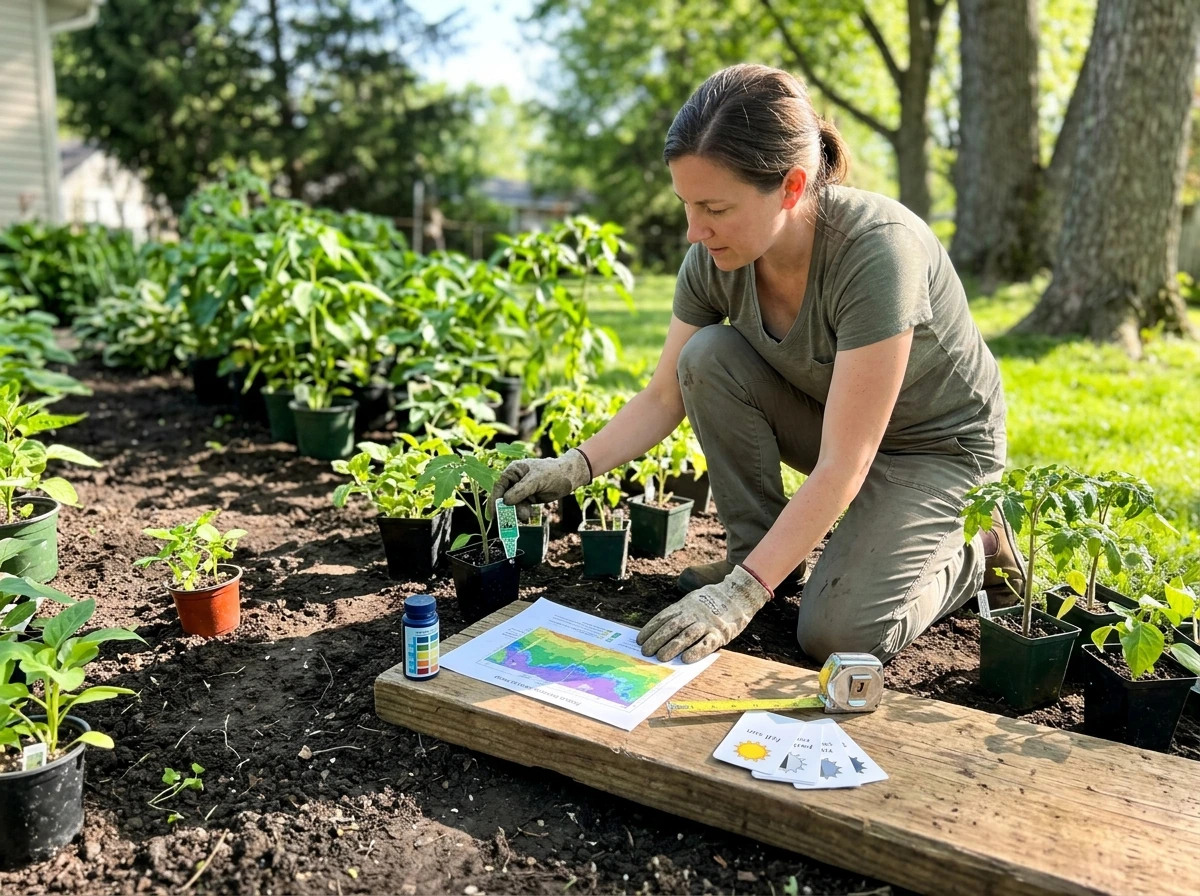
The single most important decision you'll make happens before you ever touch a shovel. Choosing a plant or tree that's genuinely suited to your conditions saves you from fighting an uphill battle every season. Start with your USDA Plant Hardiness Zone, which is the standard reference for determining which perennial plants are most likely to thrive based on the long-term extreme minimum temperatures in your area. You can look up your zone by zip code on the USDA's website in about 30 seconds.
Here's something most beginners miss though: your mapped zone is just a starting point. Microclimates exist everywhere, and they can push your local conditions well outside what the map shows. A paved driveway or concrete patio creates a heat island that can make your yard a half-zone warmer. A low-lying area or shaded corner can trap cold air and become a frost pocket that kills plants your zone technically says should survive. Walk your space and pay attention to where frost lingers longest, where snow melts first, and where the sun hits most directly. That's where your real planting decisions happen.
Beyond cold hardiness, think honestly about your light, space, and time. A tree that needs full sun (6 or more hours of direct light daily) will struggle in a north-facing yard. A species that reaches 40 feet at maturity is the wrong pick for a small urban lot. Ask yourself: what does this plant look like in 10 years, and does my space accommodate that? If you're growing in containers or indoors, also factor in whether the species tolerates root restriction and lower light, since those constraints rule out many trees entirely.
Native species are almost always a smart beginner choice. They're already adapted to your regional climate, they're more disease-resistant, and they support local wildlife. Dwarf or columnar varieties of trees give you the satisfaction of growing a real tree even in a small yard or large container. If you're primarily interested in food production, our guide on how to grow food plants goes deeper on productive species selection. how do i grow plants
How to plant: timing, site prep, and getting depth right
Planting at the right time matters more for trees than for most plants. In general, early spring (before bud break) and fall (after leaves drop but before the ground freezes) are the best windows for most trees in temperate climates. These periods let roots establish without the added stress of summer heat. Container-grown trees give you a bit more flexibility, but bare-root trees especially need to go in the ground during dormancy.
Handling bare-root stock the right way
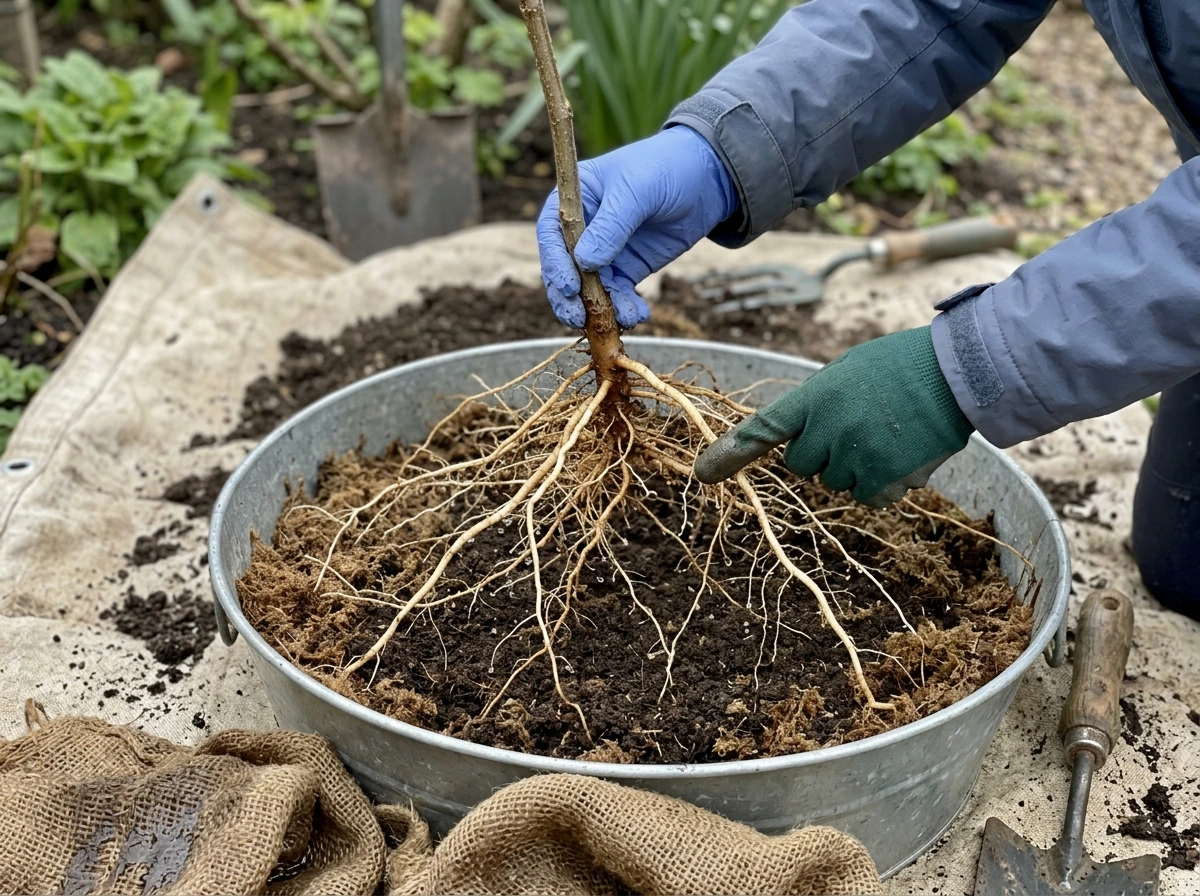
Bare-root trees are economical and often healthier than container stock, but they're also unforgiving about one thing: time. The window between pulling roots out of their packing material and getting them into the ground should be as short as possible. Exposed roots dry out fast, and that desiccation stress can set a tree back months. If you can't plant immediately, do what's called "sweating" the roots: lay the tree in a shaded spot, cover the roots with wet straw or wood chips, and seal them with clear plastic to retain moisture. That buys you a bit of time without sacrificing root health.
When you're ready to plant, spread the roots out as much as you can in the hole. They shouldn't be coiled or bunched. If a root tip is too long to fit without bending it awkwardly, you can prune it, but do that only as a last resort. The goal is maximum spread so roots can grow outward immediately.
Fixing circling roots on container-grown trees
Container-grown trees come with a hidden risk that catches a lot of gardeners off guard: circling roots. When a tree has been in a pot too long, its roots start wrapping around the inside of the container in a circular pattern. If you plant it without addressing this, those roots keep growing in a circle and can eventually girdle (strangle) the trunk, which can kill the tree years down the line.
Simply pulling the tree out of the pot doesn't fix it. You need to physically [cut or straighten the circling roots](https://www. clemson. edu/extension/bradford-pear/tree-care.
html) before planting so they'll grow outward into the surrounding soil. UNH Extension notes in its planting and mulching fact sheet that circling or matted roots should be cut or managed so outward root growth can occur for long-term survival physically cut or straighten the circling roots.
It's a bit stressful for the tree short-term, but it's critical for long-term health.
Digging the hole and setting the right depth
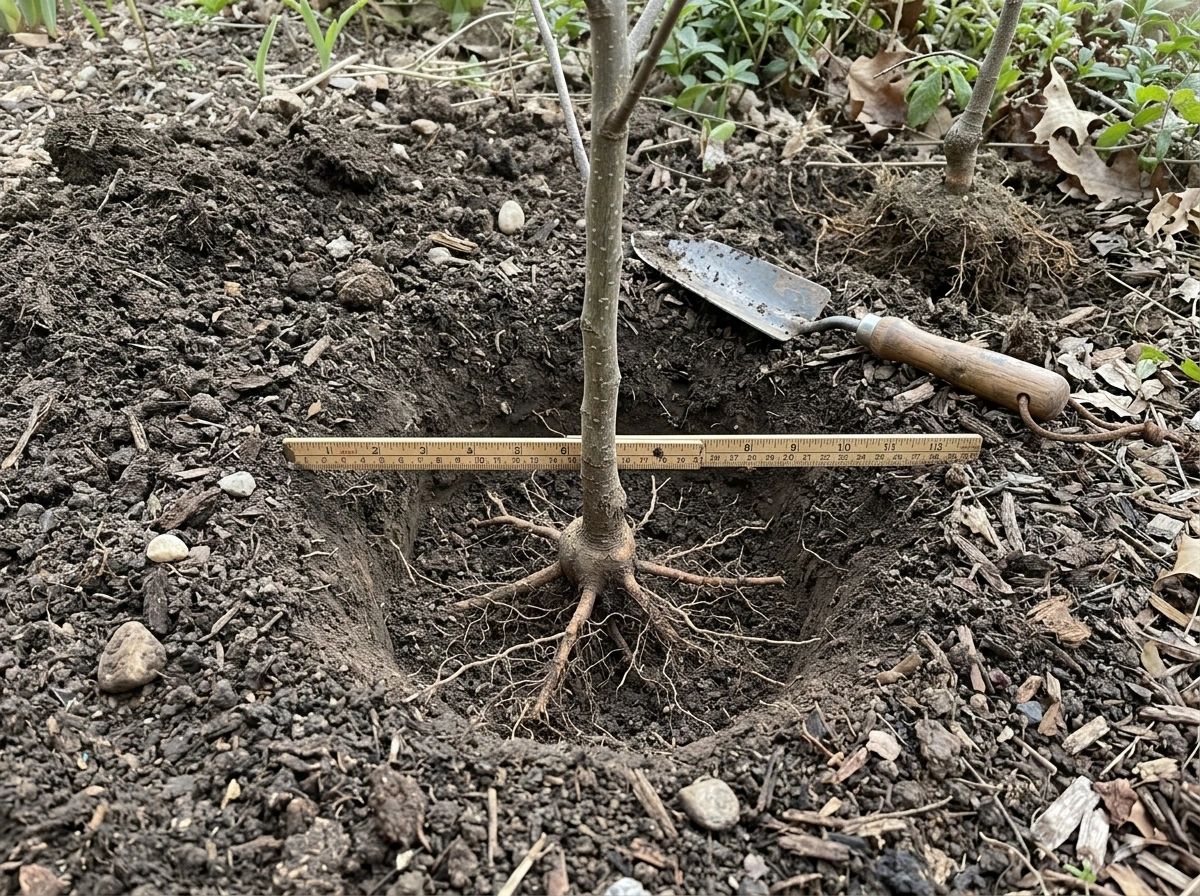
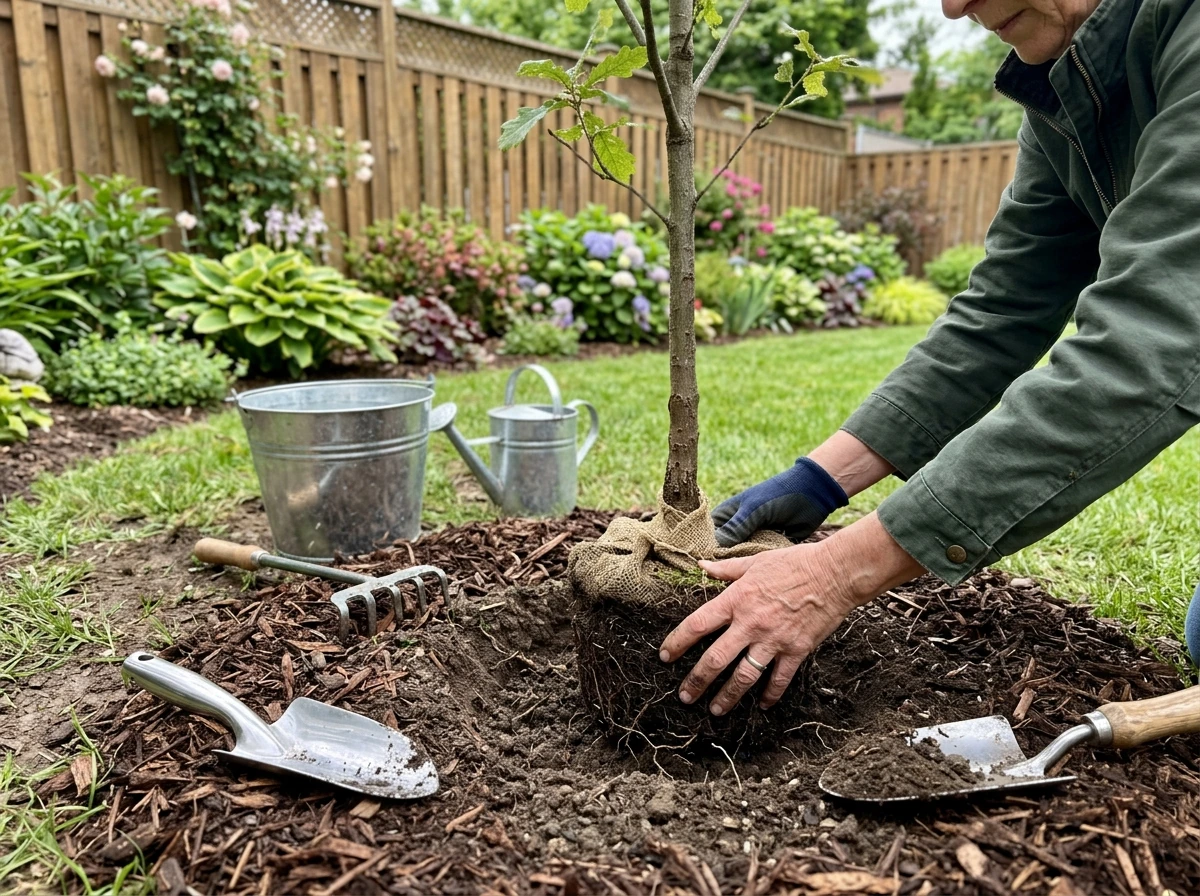
Planting depth is where a lot of trees are accidentally killed, slowly. Too deep is the most common mistake. Here's the rule: dig your hole 2 to 3 times as wide as the root ball, but no deeper than the height of the root ball. Width encourages outward root spread; depth determines whether the roots can breathe.
The reference point you're looking for is the root flare (also called the trunk flare or root collar), which is the swollen, widening area where the trunk transitions into roots. This flare should be at or slightly above the surrounding grade when you're done planting. If it's buried, the tree will struggle to breathe through its root system and becomes much more vulnerable to rot and disease. For balled-and-burlapped (B&B) trees, a good rule of thumb is that almost one-third of the soil ball height should sit above ground level after planting. Before backfilling, make sure you've removed or pulled back any burlap, twine, or wire basket from the top of the root ball so roots can actually emerge.
Backfill with the native soil you dug out. There's a long-standing myth that you should amend the backfill with compost or fertilizer, but research consistently shows that using the native soil encourages roots to grow out into the surrounding ground rather than staying in the amended pocket.
Watering and soil essentials after planting
Water your tree immediately after planting, thoroughly, not just a quick sprinkle. The goal is moisture all the way down to root depth, not just wet surface soil. Deep watering encourages roots to grow downward and outward. Shallow watering trains roots to stay near the surface, where they're more vulnerable to drought and temperature swings.
For newly planted trees, a general schedule based on trunk diameter works well. For trees under 2-inch caliper, water daily for the first two weeks, then every 2 to 3 days for the next two months, then weekly until the tree is established, which typically takes one to two or more seasons. For a simple general guideline, about an inch of water per week keeps most newly planted trees healthy, adjusting up in heat and down in rainy periods. The best way to check if you actually need to water: push a trowel or your finger about 2 inches into the soil near the root zone. If it feels moist, hold off. If it feels dry and crumbly, water now.
Mulch is your best friend after planting. Apply a 3 to 4 inch layer of shredded wood chips or bark in a wide ring around the tree, extending out at least as far as the canopy drip line if possible. Mulch retains moisture, moderates soil temperature, and suppresses weeds and turf grass that compete aggressively with young roots. One critical rule: keep mulch pulled back from the trunk itself, leaving a clear gap of a few inches.
Piling mulch against the trunk (the classic "mulch volcano" you see in parking lots) traps moisture against the bark and invites rot and disease. In cold climates, a 4 to 6 inch mulch layer also helps prevent freeze-thaw heaving by keeping soil temperature more stable over winter.
On soil quality: most trees do fine in native soil as long as it drains reasonably well. Waterlogged soil is one of the biggest killers of trees, not because of the water itself, but because saturated soil pushes out all the oxygen, and roots need oxygen to function. If your site stays soggy after rain, consider raised planting, drainage improvement, or choosing a species that tolerates wet feet. The same physics applies in containers: a layer of gravel at the bottom of a pot does not improve drainage the way people think. What actually determines drainage is the texture of the growing medium throughout.
Light, temperature, and seasonal care as your plant grows
Once a tree is in the ground and watered in, your ongoing job is managing its environment through the seasons. Light is the engine of growth: most trees need full sun to produce energy for strong root development, trunk growth, and fruiting. Shade-tolerant species exist, but even those grow faster and healthier with more light. If you're growing indoors or in a low-light space, position plants as close to the brightest window as possible, and consider supplemental grow lights for anything that needs more than a few hours of direct sun.
Temperature management is mostly passive once you've chosen a climate-appropriate species, but there are a few active steps worth taking. In late fall, after leaves drop, it's a good time to add or refresh your mulch layer to protect roots through winter. For young trees with tender bark, a physical barrier like a cylinder of quarter-inch mesh hardware cloth placed around (not touching) the trunk deters animals from chewing the bark during winter when other food sources are scarce. Bark damage that girdles the trunk is lethal to trees, so this is worth doing for the first few winters.
Seasonally, the transitions into spring and fall are when trees do the most active root and shoot growth. Spring is the best time to assess winter damage and prune as needed. Fall is when you should stop fertilizing (more on that shortly) and make sure any new growth has time to harden off before cold hits.
Fertilizing, pruning, and training for healthy structure
Here's something that surprises a lot of beginners: you should not fertilize a newly planted tree. Right after planting, the root system is limited and stressed from transplanting. Fertilizing at this stage, especially with high-nitrogen products, can burn roots and push soft new growth that's extremely vulnerable to cold damage. The guidance from extension services is clear: wait at least a year, and ideally two, before fertilizing a newly planted tree. Only start fertilizing once twig growth returns to a normal, healthy rate, which tells you the tree has moved past transplant shock.
When you do start fertilizing, timing matters. Avoid any high-nitrogen fertilizer application from late August through mid-September in temperate climates. Fertilizing late in the season triggers a flush of tender new growth that hasn't had time to harden before the first frost, and that growth gets damaged or killed. Spring and early summer are the right windows. For trees in the ground, a slow-release granular fertilizer applied to the soil surface (not dug in around roots) works well. For container trees, a diluted liquid fertilizer applied more frequently is generally more effective because containers flush nutrients quickly with regular watering.
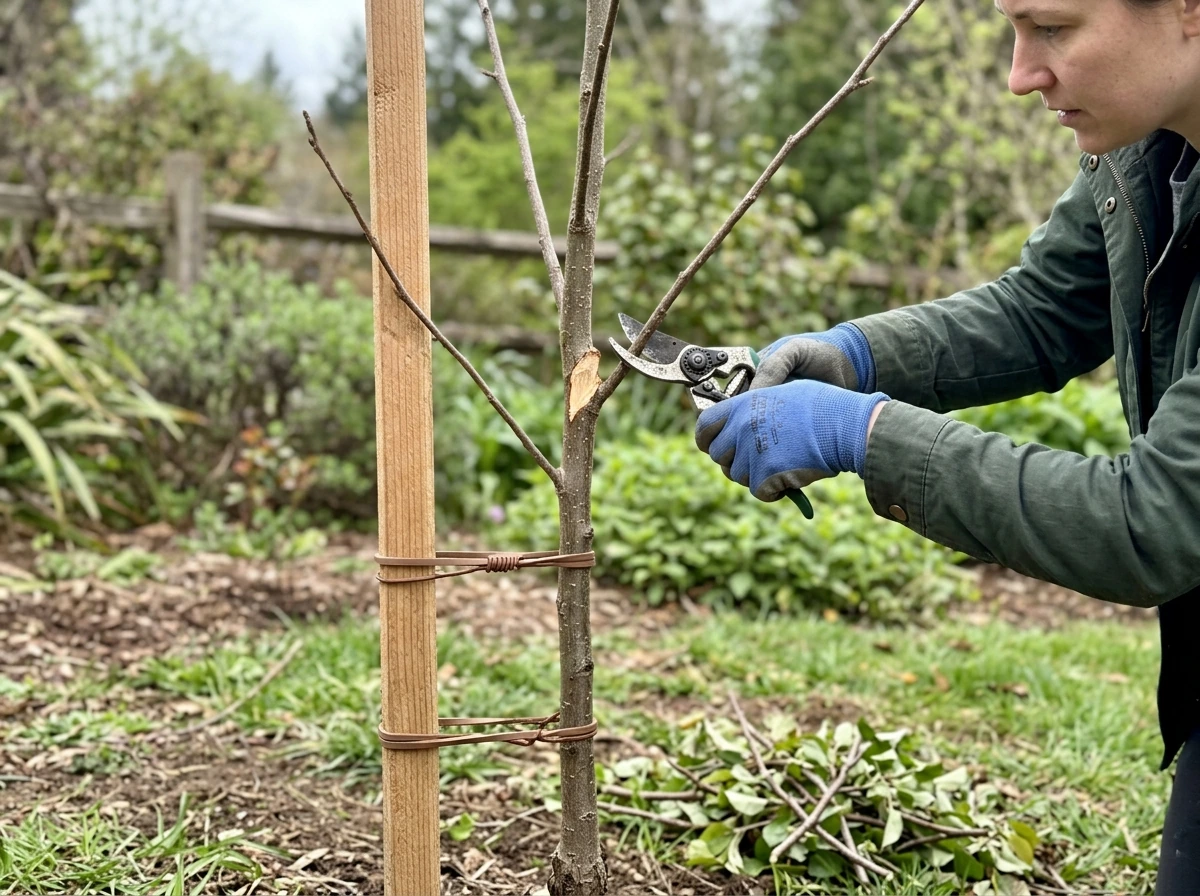
Pruning in the first year should be minimal. Remove dead, broken, or rubbing branches, and that's mostly it. Don't get ambitious about shaping structure right away. Wait at least a year before removing any larger limbs or making significant structural cuts. The tree's energy reserves are already stretched thin during establishment, and heavy pruning adds more stress. Once the tree is established, pruning in late winter or early spring (just before bud break) is ideal for most species because wounds close quickly as growth begins and disease pressure is lower.
Training is the process of guiding a tree's structure while it's young. For fruit trees especially, the first few years of pruning and training determine whether you end up with a well-spaced, productive canopy or a tangled mess of crossing branches. The goal is an open center or central leader structure (depending on species) with evenly spaced scaffold branches that don't crowd each other. Stakes and ties can help young trees grow straight in windy sites, but remove them after one to two seasons so the trunk develops natural strength.
Troubleshooting common problems
Plants and trees fail for a fairly predictable set of reasons. Once you know what to look for, most problems are fixable, and a lot of them teach you something useful for next time.
Wilting
Wilting almost always means one of two things: not enough water, or too much. Check the soil 2 inches down before you do anything. Dry and crumbly means water immediately. Wet and saturated means back off and let it dry out. Chronic overwatering is actually more common and more dangerous than underwatering because waterlogged soil starves roots of oxygen. Trees sitting in persistently wet soil can show wilting along with leaves that turn dull, yellow, or even reddish, and by then root rot may already be developing at the base of the trunk. If you suspect root rot, gently examine the soil line and lower trunk for dark, discolored, mushy wood. Good drainage and appropriate watering frequency prevent this entirely.
Yellowing leaves
Yellow leaves have several possible causes, so you need to read the pattern before reacting. Overall pale yellowing often points to nitrogen deficiency or simply too little light. Yellow leaves that drop, combined with wet soil, usually indicate overwatering or root rot. Yellow between the veins (while veins stay green) suggests an iron or magnesium deficiency, often triggered by pH that's too high for the plant to absorb available nutrients. Test your soil pH if you're seeing this pattern repeatedly. Adjusting pH is usually a more effective fix than adding more fertilizer.
Slow or stunted growth
Slow growth in the first year is normal. Trees focus on roots before shoots, and it can look like nothing is happening above ground while the root system is quietly expanding. If growth is slow in year two and beyond, look at light first (is it getting enough?), then soil drainage and nutrition. Compacted soil limits root expansion dramatically. Turf grass growing right up to the trunk base competes aggressively with young tree roots and significantly slows establishment. Keep a mulched, grass-free zone around young trees.
Transplant shock
Transplant shock shows up as wilting, leaf drop, or general sadness in the weeks after planting. It's the tree's response to root loss and environmental change. The best treatment is consistent moisture, no fertilizer, and patience. Resist the urge to add more fertilizer or try to "help" with more amendments. Keep the mulch in place, keep watering regularly, and give the tree time. Most trees in decent condition recover from transplant shock within a single growing season.
Pests and disease
Healthy, well-established trees resist most pests and diseases on their own. Stressed trees, especially those with root problems, poor nutrition, or physical bark damage, are much more vulnerable. For insect pests, a strong blast of water handles soft-bodied insects like aphids on smaller plants. Neem oil or insecticidal soap are good first-line treatments for most common pests without heavy chemical impact. For fungal diseases, improving air circulation, avoiding overhead watering, and removing affected material are the primary strategies. If you're seeing unusual spots, cankers, or oozing on bark, contact your local cooperative extension service, they offer free plant diagnostics and can tell you exactly what you're dealing with.
Growing trees in containers and unconventional setups
Not everyone has garden soil to work with, and that's fine. Trees can thrive in containers, and some actually do better with the root restriction and controlled environment that containers provide. The key is choosing varieties bred for confined spaces (dwarf citrus, columnar apples, compact Japanese maples) and using a container large enough to accommodate a few years of root growth. A container that's too small will need constant watering, stress the roots, and stunt growth.
Container growing changes your care routine in specific ways. Watering frequency increases because containers dry out faster than in-ground soil, especially in warm or windy conditions. Nutrients flush out faster with regular watering, so a consistent fertilizing schedule (once the tree is established) becomes more important. Drainage is non-negotiable: use a quality potting mix with good structure, and make sure your container has adequate drainage holes. Do not put a layer of gravel at the bottom of the pot thinking it will improve drainage. It actually creates a perched water table that keeps the bottom of the root zone saturated.
For soilless growing mediums, the principles of good root health still apply: any medium needs to provide oxygen, water, nutrients, and physical support. Coconut coir is popular because it provides good aeration and moisture retention, but it works best when mixed with perlite or vermiculite to improve drainage and oxygen availability. Pure coir holds too much moisture on its own for many plants.
If you're exploring hydroponic setups for plants (less common for full-sized trees but practical for dwarf varieties and many companion plants), the fundamentals shift significantly. Nutrients are delivered directly in the water solution, so you have fine control but also more responsibility for getting the balance right. Root oxygen is provided by the water delivery system rather than soil pore spaces. Our article on how to grow almost anything goes deeper on unconventional growing methods if that's the direction you're heading.
Terrariums are another option for small tropical plants and some dwarf species. The enclosed, high-humidity environment is great for moisture-loving species but requires careful management. Fertilize very sparingly in terrariums because the confined space limits how much growth is actually sustainable, and excess fertilizer salts build up quickly. High humidity combined with poor ventilation promotes fungal problems and algae, so choose your species carefully and make sure the terrarium gets adequate air exchange.
| Growing Setup | Best For | Key Advantage | Main Challenge | Critical Tip |
|---|---|---|---|---|
| In-ground soil | Most trees and shrubs, large plants | Best long-term root space and stability | Limited flexibility once planted | Get planting depth right: root flare at or above grade |
| Container (soil-based) | Dwarf trees, patio plants, balcony gardens | Portable, controllable environment | Dries out faster, needs more frequent watering/feeding | Use a well-draining potting mix; no gravel layer at the bottom |
| Soilless medium (coir/perlite) | Seedlings, indoor plants, container gardens | Lightweight, good aeration | No native nutrients; requires regular fertilizing | Mix coir with perlite or vermiculite for better oxygen and drainage |
| Hydroponics | Dwarf varieties, herbs, companion plants | Precise nutrient control, faster growth possible | Higher setup complexity, root oxygen management | Monitor nutrient solution pH and oxygen delivery closely |
| Terrarium | Small tropicals, moisture-loving species | High humidity, low maintenance watering | Fungal/algae risk in closed setups | Fertilize sparingly and ensure some air exchange to prevent rot |
For most people starting out, in-ground or container soil growing is the right call. It's forgiving, familiar, and the techniques you learn apply everywhere else. Once you've successfully established a tree or two, branching into soilless or hydroponic methods feels a lot less intimidating because you already understand what roots actually need.
Your next steps
If you're at the beginning of this process, start with one plant or one tree. Once you know the basics, you can apply the same principles to learn how to grow anything, even beyond your first plant. Look up your hardiness zone, walk your space to identify the best-lit and best-drained spots, and choose a species rated for your conditions.
Get the planting depth right (root flare at or above grade), water thoroughly at planting, mulch immediately, and resist the urge to fertilize for the first year. If you want the step-by-step basics for the whole process, this overview aligns well with how to grow plants in garden from choosing the right spot to ongoing care. For a deeper look at producing harvests, see how to grow crops how to grow plants.
Everything else, pruning, training, troubleshooting, gets easier once you've got a healthy, established plant to work from. You'll make mistakes along the way, every gardener does, but the fundamentals covered here will help you diagnose them fast and course-correct before they become serious problems.
FAQ
Can I plant trees or large shrubs any time during the year if I water them well?
You can sometimes, but survivability drops outside the usual dormancy windows. If you must plant in hot or windy weather, choose a container tree (not bare-root), water more deeply and more frequently during establishment, and use temporary shade for the first week to reduce transplant shock.
What’s the safest way to tell if my planting hole is too deep, especially for the root flare?
After you set the tree in the hole, step back and verify the root flare relative to the surrounding grade before backfilling. A practical check is to place a straight edge across the hole rim, the flare should land at or slightly above that line once the soil settles.
How do I know whether my soil drains poorly before planting a tree?
Do a simple percolation test: dig a hole, fill it with water, and time how long it takes to drain. If water remains puddled for many hours or the area stays soggy repeatedly after rain, assume poor oxygen availability and plan raised mounds or choose a species suited for wet sites.
Should I fertilize if my tree looks pale, yellow, or stalled soon after planting?
Avoid fertilizing immediately after transplanting, even if leaves look less than ideal. Nutrient symptoms can mimic transplant stress, the tree’s root system is recovering, and fertilizer can worsen root damage or push tender growth that suffers in cooler periods.
What if I see circling roots on a container tree, but the root mass is huge and I’m worried about cutting too much?
Don’t rely on gentle handling alone. You generally need to break up and straighten circling roots, and in severe cases you may need to prune them back. Work gradually, keep the root ball intact enough to prevent total collapse, then plant promptly and water thoroughly.
How much should I prune in the first year if the tree has a lot of top growth?
Keep pruning minimal. Remove dead or rubbing wood, but avoid major height reductions or structural cuts unless there is a clear safety or damage issue. Large cuts right after planting can slow establishment because the tree needs leaf area to recover.
Do I need stakes or ties for every newly planted tree?
Not always. Stake only if the root system cannot hold the tree upright in your wind conditions, or if the trunk is unstable. Remove supports after about one to two growing seasons so the trunk can develop natural strength and so ties do not girdle bark.
Is mulch always beneficial, and what’s the biggest mulching mistake?
Mulch is beneficial, but the most common failure is piling it against the trunk. Keep a few inches of clearance at the trunk flare, spread mulch to at least the canopy drip line when possible, and refresh in late fall as mulch breaks down.
How do I set a watering schedule if my soil is sandy or my site is clay-heavy?
Use your finger or trowel test rather than a calendar alone. Sandy soils drain fast, so check more often, while clay-heavy soils can stay wet longer and require less frequent watering to avoid oxygen starvation and rot risk.
What should I do if my tree shows wilting but the soil feels moist?
Moist soil with wilting often points to oxygen problems or root rot risk. Pause watering, inspect the lower trunk and surrounding soil line for dark or mushy tissue, improve drainage if possible, and avoid adding fertilizer until you know what’s going on.
Can I grow edible plants and fruit trees together, and how does that change care?
Yes, but plan spacing and nutrient strategy. Fruit trees can shade herbs and compete for water, so maintain a grass-free mulch zone around the tree and keep your fertilizer approach tailored, since fruit trees and quick herbs can have different timing needs.
When should I contact my local cooperative extension for diagnosis?
Contact them if you see unusual cankers, oozing on bark, repeated yellowing patterns that do not match watering, or pest damage that you cannot identify after basic checks. Provide photos, your planting date, and your soil pH or drainage observations if you have them.
Are terrariums and hydroponics good options for beginners who also want to grow trees?
Terrariums are best for small tropical or dwarf species because the environment limits root volume and ventilation, and hydroponics is generally more complex for full-sized trees. If your goal is “trees,” start with in-ground or containers, then branch into unconventional methods after you learn the basics of root health.