Growing a plant successfully comes down to matching three things: the right plant to your space, the right growing medium to your lifestyle, and the right care routine to both. Get those three aligned and almost anything will grow. For more seed-to-harvest detail on this exact goal, see how to grow plants conan next. Miss one and you end up with a sad, yellowing stem that makes you feel like you have a black thumb. You don't. You just need a better starting plan, and that's exactly what this guide gives you.
How to Grow Your Plant: Step-by-Step for Any Setup
Marcus Holloway
7 May 2026
Pick the right plant for your actual conditions
Before you buy anything, take an honest look at your space. How much natural light do you actually get? Not how much you wish you got, but how much is really coming through your windows on a typical day. University of Maryland Extension measures indoor light in foot-candles: low light is roughly 25 to 100 foot-candles, which is what you get in a room with a north-facing window or one that's several feet away from any window. Medium light is around 100 to 500 foot-candles, and bright indirect light goes above that. Plants can't fake their way through the wrong light level, so this single variable will narrow your options faster than anything else.
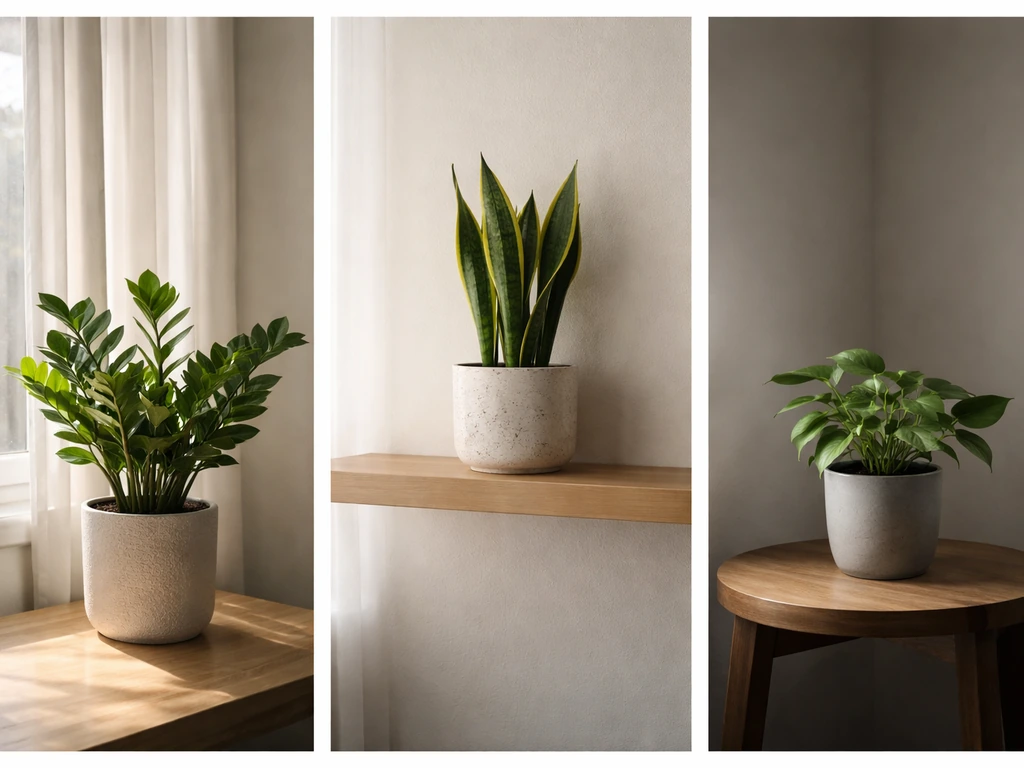
If your space is genuinely dim, you're not out of luck. ZZ plants, snake plants, pothos, and cast iron plants are all solid choices that tolerate low light without throwing a fit. Just know that even low-light plants still need some light, and Penn State Extension points out that plants in very low light may slowly lose variegation or vibrancy over time. If you're in a bright, sunny spot, you have far more options, from herbs to succulents to tropical statement plants.
Beyond light, think honestly about your schedule. If you travel frequently or tend to forget things exist, pick drought-tolerant plants like succulents, cacti, snake plants, or ZZ plants. If you love fussing over something daily, moisture-loving tropicals like ferns or calatheas will give you plenty to do. Matching the plant to your personality and routine is just as important as matching it to your light.
- Low light, low maintenance: snake plant, ZZ plant, cast iron plant, pothos
- Bright light, low maintenance: succulents, cacti, aloe
- Bright indirect light, moderate care: monstera, pothos, philodendron, peace lily
- High light, high care: most herbs, tomatoes, peppers, citrus
- Small spaces or shelves: trailing pothos, string of pearls, air plants, mini ferns
The core four: light, water, temperature, and humidity
Light
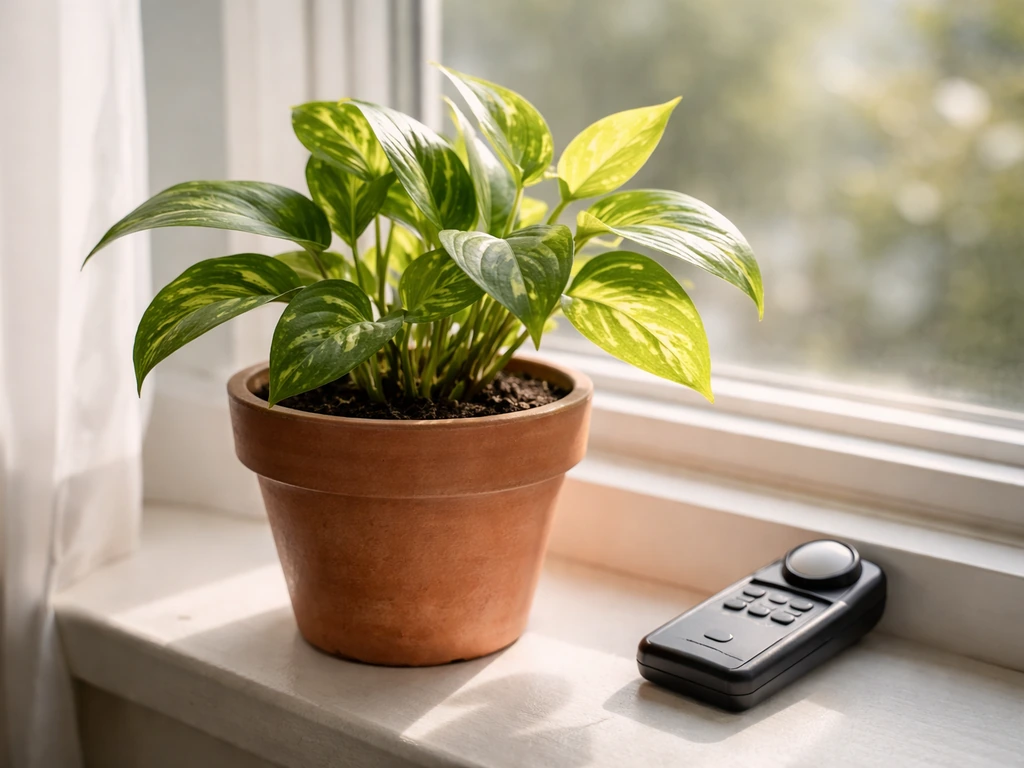
Light is plant food. Without enough of it, plants can't photosynthesize properly, and everything else you do, watering, fertilizing, repotting, is just rearranging deck chairs. UMN Extension emphasizes that both light intensity and photoperiod (the number of hours of light per day) matter. Most houseplants want around 12 to 16 hours of light. If your natural light is weak, a simple grow light placed 6 to 12 inches above the plant for 14 hours a day can make a dramatic difference without costing a fortune.
Water
Watering on a rigid schedule is one of the most common mistakes beginners make. UMN Extension specifically warns against it because it leads to either overwatering or underwatering depending on seasonal changes, pot size, and plant activity. Instead, use the finger test: push your finger about two inches into the soil. If the top two inches are dry, water. If the second inch is still wet, wait. Cornell Cooperative Extension recommends exactly this method. Your pot should also have at least one drainage hole so water can escape freely. Sitting in water is how most houseplants die.
Temperature
Most common houseplants are comfortable in the same temperature range humans like: roughly 60°F to 80°F. The danger zones are drafts, air conditioning vents, and sudden cold exposure near windows in winter. OSU Extension flags temperature shock as a real cause of leaf drop and yellowing, so keep your plants away from heating and cooling vents. If you're starting seeds, temperature matters even more specifically. UNH Extension uses tomatoes as a concrete example: they germinate anywhere between 50°F and 95°F, but they do best around 80°F. Always check your seed packet for the target germination temperature.
Humidity
Most tropical houseplants prefer humidity above 50%, but the average home runs closer to 30 to 40%. OSU Extension lists low humidity as a contributing factor in yellowing leaves and dropping foliage. Easy fixes: group plants together so they share moisture, set pots on a tray of pebbles with water below the pot base, or run a small humidifier nearby. Misting is popular but inconsistent as a long-term humidity solution.
Soil, water, hydroponics, or a terrarium: choosing your growing medium
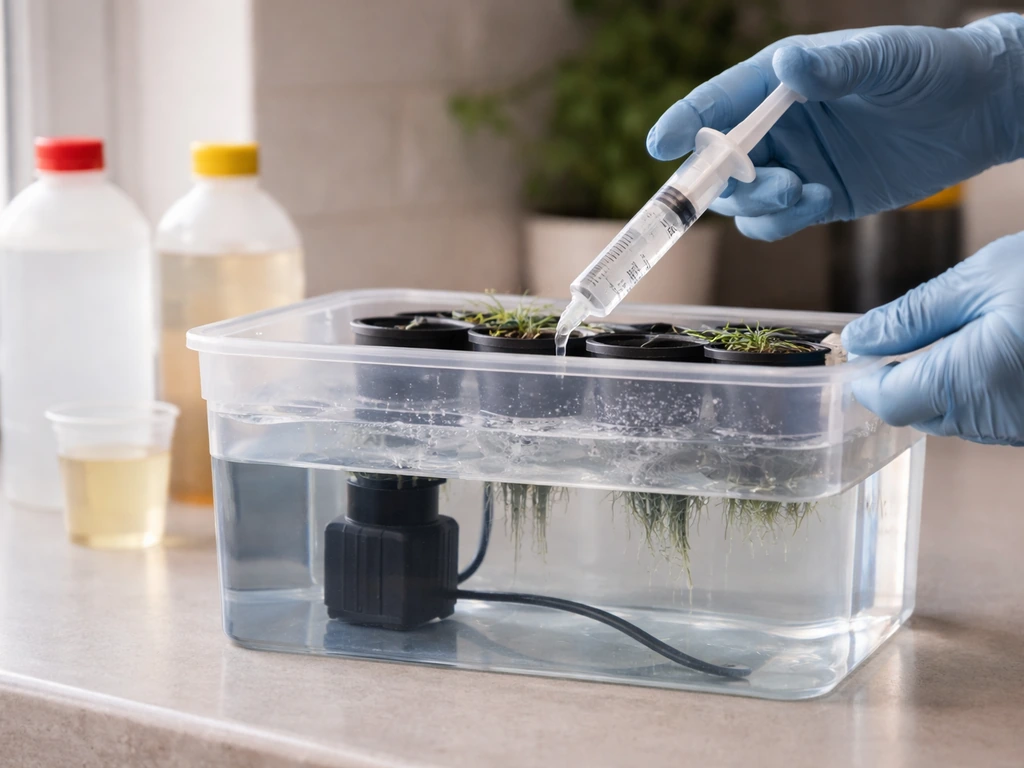
The medium you grow in changes everything: how often you water, how you feed your plant, how hands-on you need to be. Here's an honest breakdown of all four options so you can pick what actually fits your setup.
| Medium | Best for | Watering frequency | Nutrients | Difficulty |
|---|---|---|---|---|
| Soil (potting mix) | Most plants, beginners, wide plant variety | When top 2 inches dry | Balanced liquid or slow-release fertilizer | Easy |
| Water/vase growing | Cuttings, pothos, lucky bamboo, bulbs | Top off as needed | Diluted liquid fertilizer every few weeks | Easy to moderate |
| Hydroponics | Fast growth, vegetables, herbs, controlled setups | Continuous or timed nutrient solution | pH and EC-monitored nutrient solution | Moderate to advanced |
| Closed terrarium | Ferns, mosses, small tropicals | Rarely (every 4 to 6 months) | Minimal (1/4 strength organic, after 1 year) | Easy once set up |
Growing in soil
Soil is the most forgiving medium and a great starting point for beginners. Use a quality potting mix rather than outdoor garden soil, which compacts in containers. Add perlite if drainage is a concern. The pot must have drainage holes, and University of Maryland Extension recommends placing a pot shard over the hole before filling to prevent soil from washing out while still allowing drainage.
Growing in water
Some plants root and even thrive long-term in water. Pothos, philodendrons, lucky bamboo, and some bulbs like hyacinths do well with roots submerged in a vase or glass. Change the water every one to two weeks to prevent bacterial buildup, and add a few drops of diluted liquid fertilizer occasionally. This is a great low-mess method for small spaces.
Hydroponics
Hydroponics skips soil entirely and feeds roots directly through a nutrient-rich water solution. University of Missouri Extension explains that in hydroponic systems, fertilizers are dissolved directly into the water rather than applied to soil, so you need to monitor the solution carefully. UNH Extension also emphasizes that for home hydroponics you should monitor the water level regularly and that pH is important for nutrient uptake, especially micronutrients [need to monitor the nutrient solution carefully](https://extension. unh.
edu/resource/hydroponics-home). The two key measurements are pH and EC (electrical conductivity). For practical hydroponic pH and EC monitoring and adjustment guidance, growers often use the measurement targets and handling concepts explained in Truleaf Insights’ pH and EC management guide.
OSU Extension emphasizes that pH and EC management matter because salts in your source water can throw both off. MU Extension gives a specific target to aim for: dissolved oxygen in your nutrient solution should stay above 6 parts per million for optimal root health. Hydroponics produces fast growth and great yields for vegetables and herbs, but it requires more monitoring than soil.
Terrariums
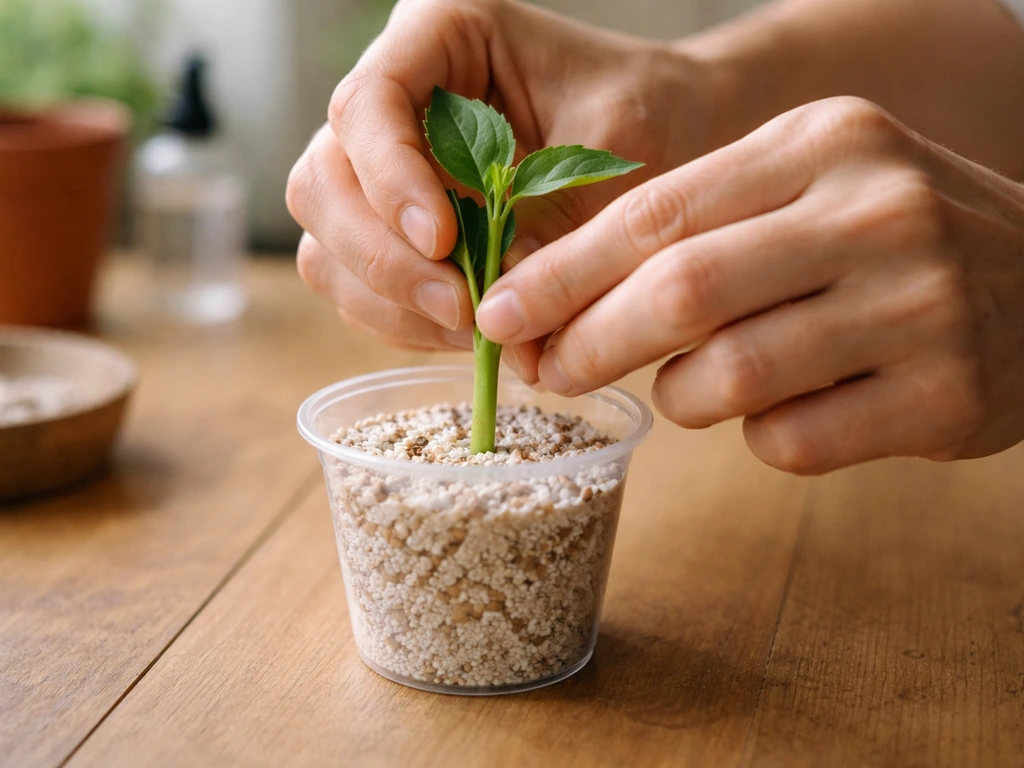
A closed terrarium creates its own micro-ecosystem. Once properly planted and sealed, MU Extension says it normally won't need watering for four to six months because moisture cycles through condensation. You'll know it needs water if condensation stops forming on the glass or if plants start wilting. The main rule: don't overwater when you do add water, because heavy watering disrupts the whole system.
If condensation builds up excessively in a closed terrarium, Mississippi State University Extension advises opening the lid for about an hour so the excess moisture can evaporate and help tune the terrarium's water cycle open the terrarium lid for about an hour to let excess moisture evaporate. Penn State Extension notes that open terrariums (dish gardens) work differently and need more regular care, similar to standard potted plants.
Stick with closed terrariums for the lowest-maintenance setup.
How to actually start: seeds, cuttings, and seedlings
Starting from seed
Seeds are the cheapest starting point but require the most patience. Fill a seed tray with a fine seed-starting mix (not regular potting soil, which is too chunky), press seeds to the surface at the depth listed on the packet, and cover lightly with fine vermiculite. UMN Extension recommends vermiculite specifically because it keeps the medium moist while still letting light reach seeds that need it to germinate.
Keep the tray consistently moist but not soggy, and maintain the temperature your seeds need. Once seedlings emerge, they need light immediately. Without enough, they go leggy and weak within days. If you don't have a bright window, set up a grow light within 6 inches of the tray for 14 to 16 hours a day.
Starting from cuttings
Taking a cutting from a healthy plant is one of the fastest ways to grow a new one. Start with a healthy, pest-free plant. Take a stem cutting just below a node (the bump where leaves attach), remove the lower leaves, and dip the cut end in rooting hormone, then tap off the excess. Penn State Extension recommends rooting media temperature between 75°F and 80°F for best results.
You can root cuttings in a mix of perlite and peat, in water, or in moist sphagnum moss. Cover loosely with a plastic bag or humidity dome to retain moisture. Once you see new growth or resistance when you tug gently, roots have formed and you can start treating it like a regular plant.
Starting from seedlings or transplants
Buying a seedling or young plant from a nursery skips the hardest early stages and is the best option if you're a beginner or want faster results. Transplant into a slightly larger pot with fresh potting mix, water it in thoroughly, and place it in the right light for its species. Give it a week or two to adjust before doing anything dramatic like fertilizing or moving it around.
Feeding your plant: fertilizer schedules and nutrients
Plants growing in containers can't go looking for nutrients the way they would in the ground, so you need to bring the nutrients to them. For most soil-grown houseplants, a balanced water-soluble fertilizer like a 20-20-20 formula works well. UConn Extension recommends water-soluble fertilizers applied regularly at a diluted rate because nutrients leach out of potting mix quickly with watering. Penn State Extension's guidance for pothos gives a practical baseline: fertilize every two weeks during the active growing season (spring through fall) and drop to once a month in winter when the plant slows down. That rhythm works for most common houseplants.
For hydroponics, you're replacing all nutrients through the solution itself, so balanced hydroponic nutrients mixed to the right EC and pH are non-negotiable. For terrariums, you barely fertilize at all: MU Extension advises using an organic water-soluble fertilizer at about one quarter of the recommended rate, only after the terrarium has been established for about a year, and never in winter. For cuttings you've just rooted, wait until roots are established before feeding at all.
- Soil houseplants: every 2 weeks in spring/summer, monthly in winter with a balanced liquid fertilizer
- Hydroponics: continuous nutrient solution maintained at correct pH and EC, changed regularly based on water quality and plant uptake
- Terrariums (closed): no fertilizer for the first year, then 1/4 strength organic liquid fertilizer, skipping winter
- New cuttings: nothing until roots are established, then begin standard feeding for the species
- Slow-release granules: a good option for outdoor or garden containers, but follow label rates to avoid salt buildup
Diagnosing problems: yellow leaves, pests, and watering mistakes
Yellow leaves
Yellow leaves are the most common distress signal, and they have a lot of possible causes. OSU Extension links yellowing most commonly to too much water, poor drainage, compacted soil, low humidity, and temperature shock. Start by checking the soil: if it's wet and has been for days, overwatering is your likely culprit. Let it dry out completely before watering again, and check that drainage holes aren't blocked. If the soil is fine and drainage is good, consider whether the plant is near a cold draft or an air vent, or whether the air is very dry. Nutrient deficiency (especially nitrogen) can also cause yellowing, but fix your watering and light first before reaching for fertilizer.
Wilting
Wilting can mean two opposite things: too dry or too wet. Touch the soil. Bone dry means the plant is thirsty, and a thorough watering will fix it within hours. But if the soil is wet and the plant is wilting, the roots may be rotting from overwatering. In that case, unpot the plant, trim any black or mushy roots, let the roots air briefly, then repot in fresh dry mix. Alaska Cooperative Extension notes that wilting and drooping can also be linked to root disease, so if root rot is confirmed, treat with a fungicide labeled for root rot before repotting.
Common pests
The most common houseplant pests are spider mites, fungus gnats, mealybugs, aphids, and whiteflies. Alaska Cooperative Extension says the first step is always identification: treat the right pest the right way. Spider mites thrive in hot, dry, low-humidity conditions, so boosting humidity is both a treatment and prevention strategy. Fungus gnats breed in wet soil; letting the top layer dry between waterings breaks their lifecycle. Colorado State University Extension recommends yellow sticky traps to catch and monitor flying pests like fungus gnats, aphids, and whiteflies. For mealybugs, dab them individually with a cotton swab dipped in rubbing alcohol. Catching any pest problem early is always easier than dealing with a full infestation.
Salt buildup from fertilizer
If you see crusty white deposits on the soil surface or pot edges, that's salt buildup from fertilizers. Penn State Extension recommends leaching: run water slowly through the pot several times so it flushes the salts out through the drainage hole. Do this every few months if you fertilize regularly.
Long-term plant health: repotting, pruning, and propagation
When and how to repot
A plant needs repotting when it's root-bound: roots circling the inside of the pot, growing out of drainage holes, or pushing the plant upward out of the pot. Illinois Extension lists these as the clear signals to act. When you repot, choose a pot only one to two inches larger in diameter, not much bigger, because excess soil around roots holds water the plant can't use quickly and leads to root rot. During repotting, check for circling roots and either cut them or gently unwind them. Illinois Extension specifically advises dealing with circling roots to restore healthy outward growth. University of Maryland Extension suggests placing a pot shard over drainage holes to keep soil in while still allowing drainage.
Pruning for better growth
Pruning keeps plants from getting leggy, encourages bushier growth, and removes damaged or diseased material. For most houseplants, the best time to prune is at the start of the active growing season in spring, just as new growth begins. Avoid heavy pruning in winter when most plants are in a low-energy state. Use clean scissors or pruning shears and cut just above a node or leaf to encourage branching at that point. For outdoor plants and trees, MU Extension notes dormant season pruning (from leaf fall through just before spring leaf-out) as a general guideline.
Propagation: making more plants from what you have
Propagation is how you turn one plant into many, for free. Stem cuttings are the easiest method for most houseplants. Take your cutting from a healthy plant, use rooting hormone if you want faster results, and place it in water, moist perlite, or a peat and perlite mix at 75°F to 80°F. MU Extension highlights one often-skipped step: transitioning newly rooted cuttings from high humidity to regular room conditions gradually. Don't yank the humidity dome off all at once. Open it for a few hours each day over about a week so the cutting adjusts without wilting. Once the plant is growing actively, begin fertilizing it according to normal care for that species.
If you want to go deeper on any specific step, there are great resources that break down individual methods in more detail, including beginner-focused visual walkthroughs and approaches adapted for unconventional setups and spaces. The fundamentals covered here apply whether you're growing one plant or a whole collection, in a sunny kitchen or a dim apartment corner. Start with the right plant for your conditions, match your care routine to your growing medium, and don't panic when something goes wrong. If you want a quick, trusted guide, look for BBC advice on how to grow a plant that matches your conditions. Every experienced grower has killed plants. The ones who succeed are just the ones who kept going.
FAQ
How do I know if my plant is getting enough light without buying a meter?
Start by choosing plants that match your lowest-light spot, not your brightest spot. If you can, do a simple check for a week: observe whether leaves remain upright and the plant keeps new growth. If it only looks good when you move it closer to the window, your permanent setup likely needs either a stronger window orientation or a grow light.
Can I use a grow light all year, even if my windows are weak?
Yes, but only if you pair it with correct seasonal changes. As days get shorter, reduce light duration with your grow light (keep temperature stable), and slow watering because plant growth slows. Fertilizing on the same schedule year-round is a common reason plants build up salts or develop weak, pale growth.
What should I do if the finger test says to water, but my plant looks unhealthy?
No, because different plants have different water needs even under the same “top two inches” rule. Always combine the finger test with pot weight or leaf behavior. If the soil feels dry but the pot is still heavy, wait, that often means the lower soil is still moist. If leaves are drooping, recheck drainage and soil moisture depth before watering again.
What counts as “bright indirect light,” and how close should a plant be to the window?
A bright, indirect setup usually means the plant is receiving light without harsh midday sun on its leaves. In practice, watch for leaf scorch (brown, crispy patches) or bleached, washed-out new growth. If you see either, move the plant back a few inches or use a sheer curtain during peak sun hours.
Should I repot immediately when a plant looks stressed, or wait?
Repotting is often best when the plant is actively growing, usually spring through early summer for many houseplants. If your plant is sick (wilt from root rot, severe yellowing), fix the cause first before increasing soil volume, because fresh mix can stay wet longer and worsen problems. Wait until you see recovery and new growth before moving up in pot size.
Will a pebble tray or misting actually solve low-humidity leaf drop?
Even “low-maintenance” plants can fail from humidity extremes. If your air is around 30 to 40% and your plant is humidity-sensitive, prioritize one reliable method: grouping, a nearby humidifier, or a pebble tray under the pot (ensure the pot base is not sitting in water). Misting can help temporarily but won’t reliably raise humidity for long.
How often should I leach my pots, and what if salt crust comes back fast?
Salt buildup can be subtle, especially in pots with fast-draining mixes. Leach with slow, even water until you see clear drainage, then empty the saucer right away. If crust returns quickly after leaching, reduce fertilizer strength or frequency and check whether your water is very hard (high mineral content).
When is it safe to start fertilizing after repotting or propagating?
Use fertilizer at a lower rate for the specific growth mode. After rooting cuttings, wait until you see established new leaves or steady growth. For hydroponics, keep to the nutrient solution schedule and monitor pH and EC because skipping or doubling nutrients can burn roots. For terrariums, fertilize rarely, only after the system is mature, and never in winter.
What are common drainage mistakes that make watering fail even when I have drainage holes?
For most houseplants, use a pot with at least one drainage hole, and make sure the plant is not standing in a filled cachepot or decorative outer pot. If you prefer a cover pot, empty it after watering. Also check for blocked holes from compacted mix or roots filling the bottom.
Which growing medium should I choose if I want the least maintenance but still want success?
The simplest way to choose is to match the medium to your monitoring style. If you want the lowest daily attention, soil in a forgiving potting mix is easiest. If you enjoy measuring and want fast growth, hydroponics can work well but demands pH and EC checks. If you want nearly hands-off watering, a closed terrarium fits best for small, compatible plants.
What’s the best way to prevent pests when bringing home a new plant?
Start with quarantine and identification. Isolate the new plant for at least 1 to 2 weeks, then inspect undersides of leaves and nodes with good light. For fungus gnats, address the wetness cycle, reduce how frequently you water, and consider sticky traps for monitoring. Treat pests as soon as you see them, early outbreaks are far easier than established infestations.