Carnivorous plants can absolutely thrive outdoors, and for most temperate species like Venus flytraps and Sarracenia pitcher plants, the outside environment is actually closer to what they evolved in than any windowsill could ever be. The key is matching the right species to your climate, giving them genuinely nutrient-poor wet soil (not garden soil, not potting mix), using only pure water like rain, distilled, or reverse osmosis, and letting them go dormant in winter rather than trying to keep them growing year-round. Get those four things right and outdoor carnivorous plants are surprisingly low maintenance.
How to Grow Carnivorous Plants Outdoors: Step-by-Step
Marcus Holloway
6 May 2026
Choose the right carnivorous plants for your outdoor climate
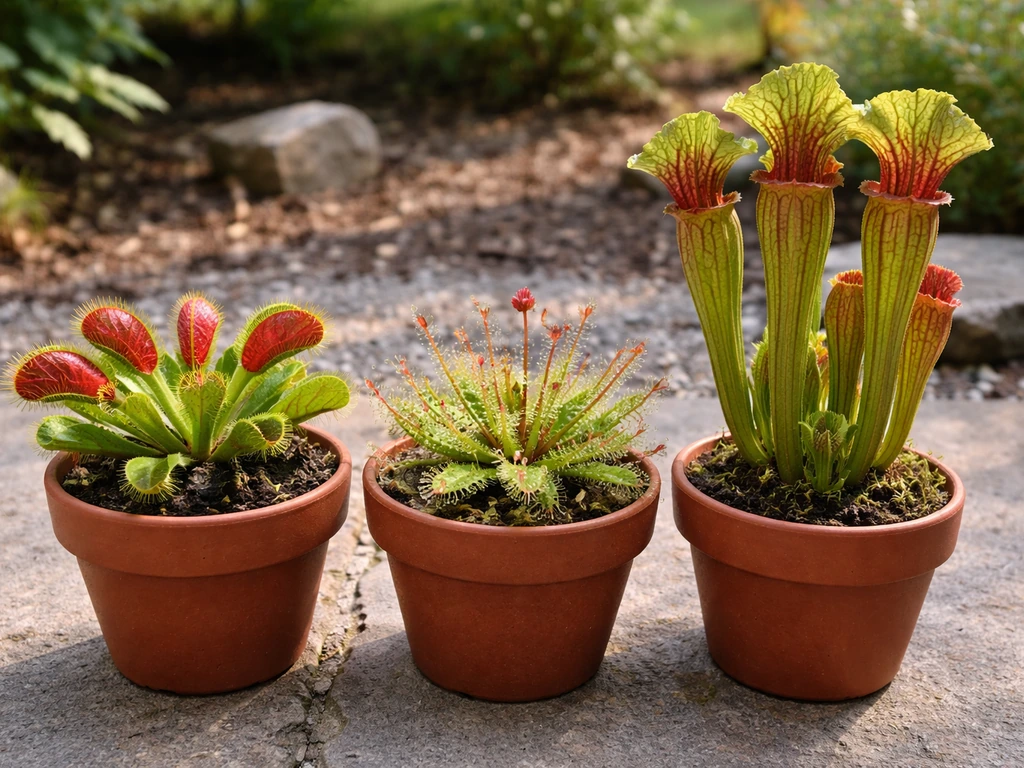
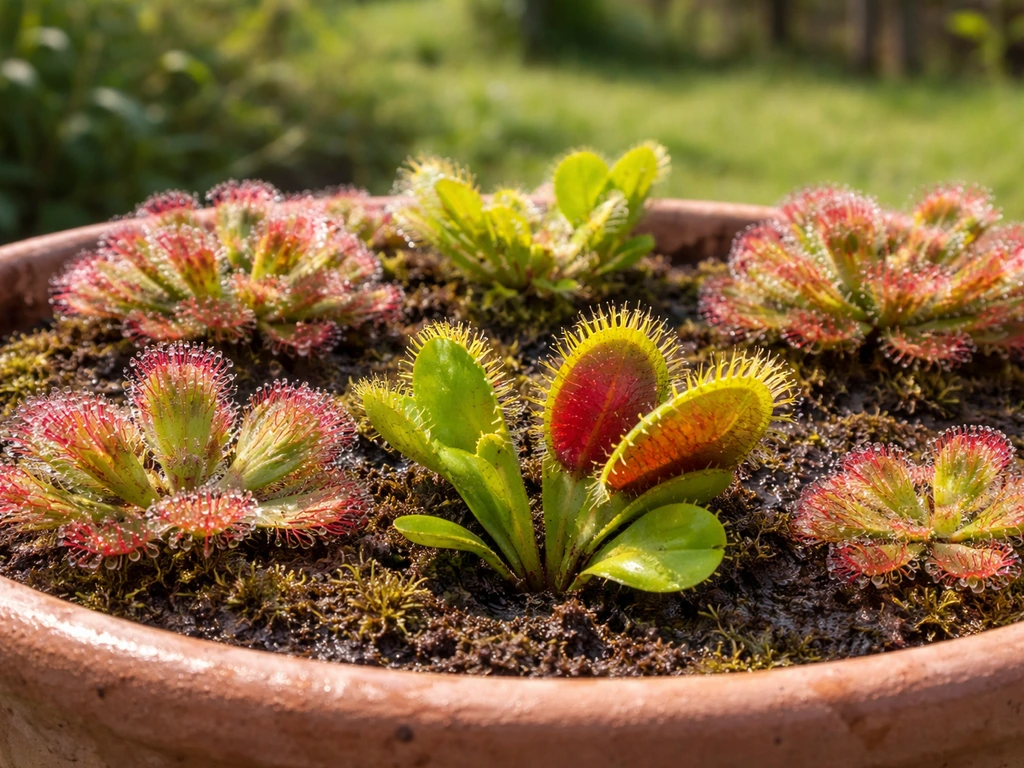
Not every carnivorous plant is suited for outdoor growing, and the biggest variable is your winter temperature. The good news is that the most popular species, Venus flytraps (Dionaea muscipula) and North American pitcher plants (Sarracenia), are genuinely cold-hardy temperate plants that need outdoor winters to stay healthy. Hardy sundews like Drosera binata can handle down to about -15 to -20°C (around 0°F) and are rated H6 under RHS hardiness guidelines, making them suitable for most of the UK, northern Europe, and a large chunk of North America. Subtropical sundews are more flexible: they do well in temperatures of roughly 10 to 35°C (50 to 95°F) and generally don't need a dormancy period, making them good candidates for warmer climates.
Nepenthes (tropical pitcher plants) are a different story entirely. Most highland and lowland Nepenthes only thrive outdoors year-round in USDA Zones 10 to 12, where it stays consistently warm. Many can briefly tolerate overnight lows around 40°F but need daytime temperatures in the mid-70s°F, and you should keep them above 50°F as a general rule. If you're outside those zones, Nepenthes are better treated as container plants that spend warm months outdoors and come inside for winter.
| Plant | Cold Hardiness | Dormancy Needed? | Best For |
|---|---|---|---|
| Venus flytrap (Dionaea) | To about -5°C / 23°F with protection | Yes, 3-4 months | Temperate climates, USDA Zones 6-9 |
| Sarracenia (North American pitcher plant) | Hardy species to Zone 5 (-26°C / -15°F) | Yes, Oct-Mar roughly | Temperate to cold-temperate climates |
| Hardy sundews (e.g., Drosera binata) | To -15 to -20°C / 0°F | Yes, semi-dormant | Most of UK, N. Europe, N. America |
| Subtropical sundews | Down to about 10°C / 50°F | No | Mild-winter climates |
| Nepenthes (tropical pitcher plant) | 50°F minimum, prefers warmer | No | USDA Zones 10-12 or containers elsewhere |
If you're just starting out and want something forgiving outdoors, Sarracenia are the most reliable choice for temperate growers. They're tough, they catch insects on their own, and they put on a real display. Venus flytraps are slightly more finicky about their winter conditions but still very doable. If you are specifically asking how to grow combat plants, the Venus flytrap section above covers the key sun, soil, water, and dormancy needs. Hardy sundews are almost unkillable once established. Start with one of those three and add Nepenthes or tropical species later once you've got the setup dialed in.
Outdoor site setup: sun, wind, and moisture planning
Carnivorous plants are full-sun plants. Sarracenia want at least 6 to 8 hours of direct sun per day, and 10 to 12 hours is even better. Venus flytraps need a minimum of about 3 to 4 hours of direct sun after they've been properly acclimated, though more is always better. A south-facing or west-facing spot that gets unobstructed sun through the growing season is ideal. Under a tree, beside a fence, or in the shadow of a building wall is going to cause problems regardless of how good your soil mix is.
One thing people underestimate is acclimation. If your plants have been inside or in a greenhouse, moving them straight into full July sun will scorch them. Introduce them to outdoor sun gradually over 1 to 2 weeks, starting with a few hours of morning sun and building up. Once established, they're tough and can handle the heat, but that initial adjustment period matters.
Wind is a secondary concern but worth thinking about. Strong winds dry out bog containers fast and can physically damage taller Sarracenia pitchers. A spot that gets good air circulation without being battered by constant strong wind is the sweet spot. Good airflow also helps prevent the mold and fungal issues that tend to show up in stagnant, humid corners. On the moisture side, think about whether your site collects rainwater naturally or whether you'll need to actively water. Bog containers can dry out surprisingly fast in hot weather, so easy access to your water source (more on that in the water section) is worth factoring into your placement decision.
Best outdoor planting options: pots, bog beds, or in-ground
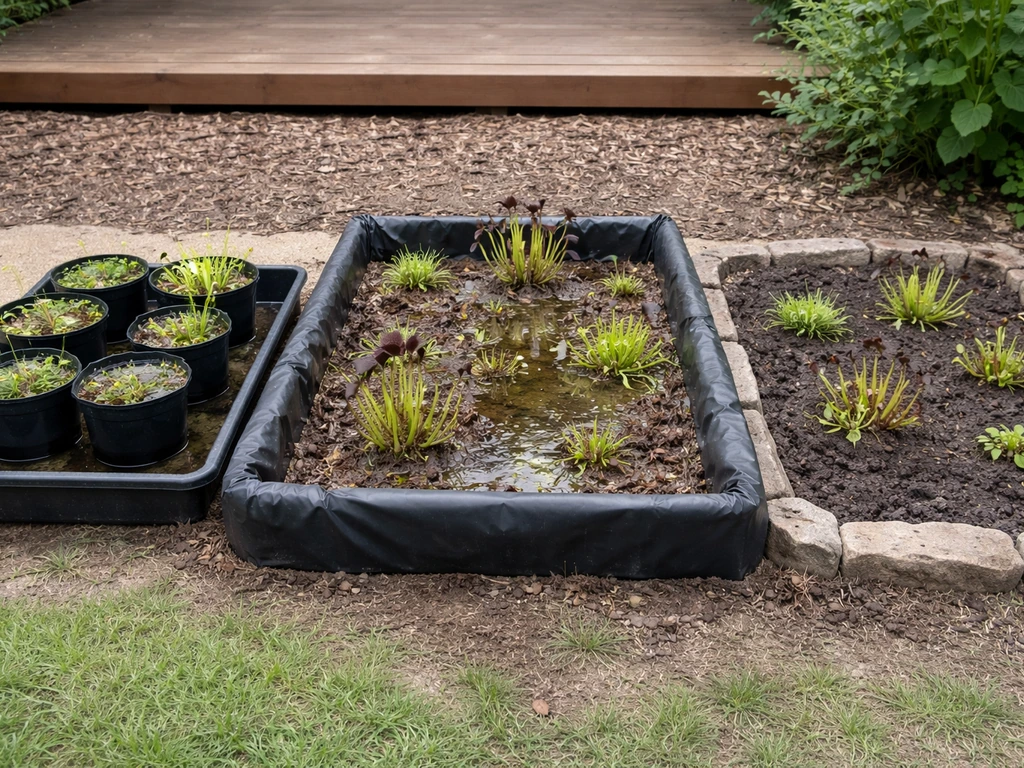
You have three main approaches to outdoor carnivorous plant growing, each with trade-offs.
Containers with tray watering
This is the most beginner-friendly setup and gives you the most control. You grow your plants in individual pots sitting in trays of water, which keeps the media consistently wet without you needing to water constantly. Plastic, metal, or pond-liner trays all work. The tray-watering method works well for nearly all carnivorous plants except Nepenthes.
If you’re looking specifically for crawling plants, use the same core rules for outdoor sun, low-mineral media, and consistent moisture how to grow crawling plants. Use pots that are at least 6 inches deep, ideally deeper, since longer roots reach the water reservoir and the plant gets more stable moisture.
Keep the tray water shallow (about an inch to an inch and a half) during the growing season rather than having the pot sitting submerged halfway up, which can suffocate roots.
Outdoor bog beds
A dedicated bog garden is the most impressive setup and is genuinely low maintenance once it's established. You dig out a bed (or use a raised container lined with pond liner) and fill it with the right media. A well-built outdoor bog keeps moisture levels consistent through rain and has enough volume that it doesn't dry out as fast as a small pot.
A good layering approach is to put about 3 to 4 inches of silica sand at the base as a filter/drainage layer, then fill the rest with a mix of roughly half peat moss and half silica sand. Adding some long-fiber sphagnum into the mix improves airflow and helps prevent compaction over time. One important winter planning note: bog beds can become excessively waterlogged when frozen, which creates rot risk for Venus flytraps in particular.
Factor in some drainage or overflow capacity when you build it.
In-ground planting in natural bog areas
If you genuinely have a naturally wet, acidic, low-nutrient area in your garden, such as a poorly-draining spot near a water feature, some Sarracenia species can be planted directly into the ground. This is the most advanced option and requires confidence that your native soil is suitable (most garden soil is not, it's too nutrient-rich). For most people, containerized bog beds or tray-watered pots are more reliable.
Soil and water rules: low nutrients and the right water source
This is where most beginners go wrong, and it's the most important thing to understand about carnivorous plants. These plants evolved in nutrient-poor, waterlogged, acidic environments. Their roots are adapted to that. They get their nutrients by catching insects, not from their soil. If you give them normal potting compost, garden soil, or fertilized growing mix, you're essentially poisoning their roots with nutrients they can't process. The media you use should be inert or actively low in minerals.
The standard mix that works for most carnivorous plants is a 1:1 ratio of sphagnum peat moss and coarse silica sand, sometimes called a CP mix. The sand grain size should be around 1.5 to 2 mm, coarse and sharp rather than fine beach or play sand. Pure live sphagnum moss, pure dried long-fiber sphagnum, or pure sphagnum peat all work as alternatives. The USBG recommends about 3 parts peat to 1 part clean sharp sand as another reliable ratio. Whatever you use, avoid anything with added fertilizer, wetting agents, bark, or compost. Check the bag, even products labeled as peat sometimes include additives.
Water quality is equally critical. Tap water and well water contain dissolved minerals that build up in the media over time and essentially create the nutrient-rich conditions you're trying to avoid. The United States Botanic Garden advises not to use tap water or mineral water on carnivorous plants because dissolved minerals can build up in the media over time [Tap water and well water contain dissolved minerals that build up in the media over time](https://www. usbg.
gov/gardens-plants/cultivating-carnivorous-plants). The damage is cumulative and irreversible once it's severe. Use rainwater, distilled water, or reverse osmosis water only. If you want to test your tap water, get a TDS (total dissolved solids) meter.
If your tap comes in below 90 ppm TDS, it can technically be used for Venus flytraps according to ICPS guidance, though under 50 ppm is the target for Sarracenia. Above those thresholds, stick to rainwater or distilled. Bottled drinking water is not a substitute, it typically contains added minerals and is essentially harmful to these plants.
Planting and initial care: spacing, depth, and getting established
When planting Venus flytraps, set the rhizome (the white bulb-like base) just at or slightly below the surface of the media, not buried deep. The crown where leaves emerge should be at or just above the surface. For Sarracenia, plant rhizomes horizontally just below the surface and make sure the growing point (the crown end) is exposed. Cover the roots, not the crown. In a bog bed, give Sarracenia plants about 12 inches of space from each other to allow for the spreading rhizomes and the size of mature pitchers. In pots, one adult Sarracenia per 4 to 6 inch pot works, or you can fit a small community of plants in a larger container.
After planting, keep the media thoroughly wet and give the plants a few days to a couple of weeks to settle before expecting new growth. If you've moved them from indoors or a greenhouse, remember that gradual sun acclimation applies here. Some die-back of existing leaves during establishment is normal and not a sign of failure. New growth that emerges after a week or two is your confirmation the plant is settling in.
Spring is the ideal time to plant or repot, as plants are coming out of dormancy and about to enter their most vigorous growing phase. If you're repotting established plants, spring is also the time to check for and separate offshoots or divide crowded rhizomes.
Ongoing care through the seasons, especially dormancy and overwintering
Temperate carnivorous plants have a distinct seasonal rhythm and understanding it makes everything else easier. The growing season roughly runs from spring through early autumn. During this time, keep media wet, maintain tray water, and let the plants do their thing. Sarracenia and Venus flytraps will be actively growing, trapping insects, and putting on new pitchers and traps.
As autumn arrives and temperatures drop, temperate species start heading into dormancy. Sarracenia typically go dormant around October and stay dormant through March. Venus flytraps need roughly 3 to 4 months of cool dormancy, ideally with temperatures below 70°F and above freezing (32°F). During dormancy, the plants look dead, they lose leaves, traps shrivel up, and they basically shut down. This is completely normal and necessary. Do not try to keep them warm and growing through winter with a heat lamp or by bringing them indoors to a warm room. A plant that never gets dormancy will weaken over time and often die within a couple of years.
Overwintering outdoors
Hardy Sarracenia species can survive outdoors in USDA Zone 5 and warmer without special protection. During winter dormancy, keep the media moist rather than fully saturated since the plants aren't actively taking up water, but don't let it dry out entirely. A cool, airy, light environment is ideal, roughly -10°C to 10°C (14 to 50°F) according to standard care guidance. Avoid airtight covers that trap stagnant, humid air since that creates perfect conditions for rot.
Venus flytraps are slightly less cold-hardy than the toughest Sarracenia. In borderline areas (mid-Atlantic US, for example), you can overwinter them outdoors by either burying the pots under several inches of mulch, pine needles, or bark, or by keeping them in a cold frame. A layer of pine needle mulch about 3 inches deep over the pot provides meaningful insulation without suffocating the plant. In Zone 7 and warmer, most Venus flytraps will overwinter outdoors without any special protection beyond leaving them in their tray setup.
The biggest overwintering risk is rot from fungal disease, which is triggered by cold, wet, stagnant conditions. Good airflow is your best defense. Reduce tray water depth in winter since the plant doesn't need as much, and make sure excess water can drain from bog beds rather than sitting frozen and waterlogged. Check plants periodically through winter for signs of gray or black rot at the rhizome or crown.
Feeding, fertilizing, and why less is always more
Here's a nice thing about outdoor carnivorous plants: if they're in full sun and correctly set up, you generally don't need to feed them at all. Outdoor Sarracenia in particular catch so many insects on their own that most growers never supplement their feeding. The pitchers fill with flies, beetles, and other crawling insects through the summer. Venus flytraps will snap up whatever wanders across them. The plant is doing its job.
Fertilizer in the conventional sense is something you should never use on carnivorous plants. They evolved in nutrient-poor environments and their roots can't handle the mineral concentration that fertilizers provide. Adding fertilizer to carnivorous plant media or water damages roots and opens the door to pathogens and rot. The same logic applies to unusual feeding attempts like hamburger meat or other processed foods, they decompose and introduce bacteria without providing the nutrients the plant actually wants.
If your plants genuinely aren't catching enough food, you can supplement with small live or freeze-dried insects from a pet store. Appropriately-sized insects placed into a pitcher or onto an open Venus flytrap trigger the plant's digestive enzymes naturally. Don't feed during dormancy since the plant isn't producing digestive secretions and the food will just rot. And don't force a Venus flytrap trap closed with your finger repeatedly since each trap only has a limited number of open/close cycles before it dies off.
Common problems and how to fix them
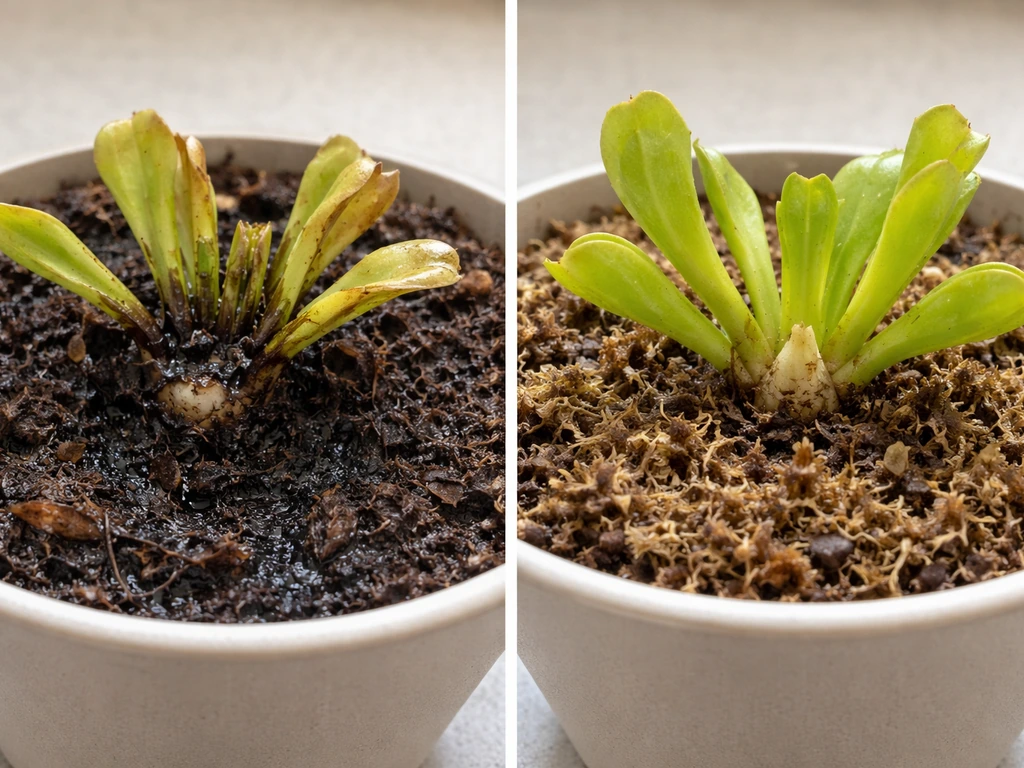
Rot at the rhizome or crown
Soft, black, or mushy tissue at the base of the plant is rhizome rot, and it's the most common way carnivorous plants die. The causes are almost always one of three things: wrong water (minerals accumulate and weaken root tissue, making it vulnerable to pathogens), over-fertilizing, or stagnant, humid conditions with poor airflow. If you catch it early, remove the affected tissue with clean scissors, dust the cut with a small amount of powdered sulfur or cinnamon as a natural antifungal, and repot into fresh media. Improve airflow and reduce standing water depth. If the rot has reached the growing crown, the plant is usually not recoverable.
Mold on the soil surface
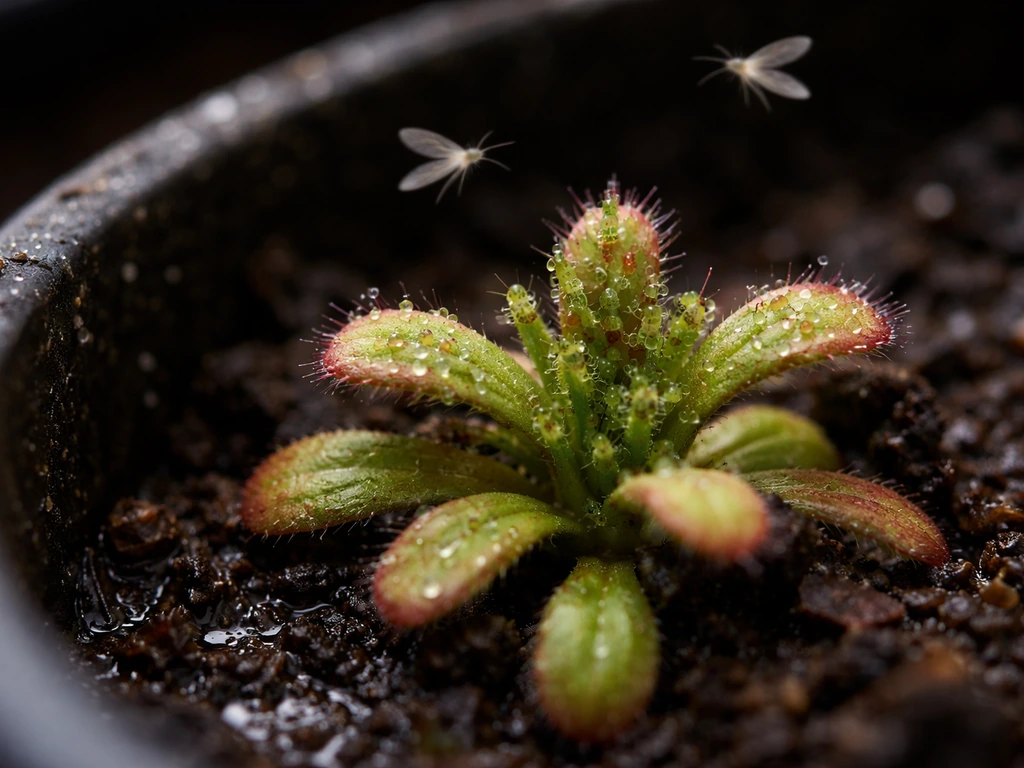
White or gray mold growing on top of the media is a sign of stagnant air rather than a direct sign of wrong media or water. It's common in enclosed or low-airflow setups. Moving the plant to a more exposed spot with better airflow usually resolves it. Surface mold alone isn't necessarily killing the plant, but it's worth inspecting the rhizome when you repot in spring to make sure mold hasn't worked its way down.
Aphids, fungus gnats, and other pests
Outdoor carnivorous plants are not immune to pests just because they eat insects. Aphids can colonize new growth, and fungus gnats can breed in wet sphagnum media. For aphids, a strong spray of water knocks them off, or you can isolate the affected plant and treat with insecticidal soap on the leaves, avoiding the media. For fungus gnats, Bacillus thuringiensis var. israelensis (Bti), a biological control available as mosquito dunks, can be dissolved in water and used as a soil drench safely without harming the plant. Mealybugs and scale are less common outdoors but can appear if you've moved plants from indoors, treat with isopropyl alcohol on a cotton swab directly on the insects.
Poor or slow growth
If your plants are alive but not producing new pitchers or traps and generally look stunted, the first things to check are light and water quality. If you want massive growth outdoors, start by dialing in strong light and ultra-low mineral water, then keep the plants moist year-round within their season-specific dormancy needs how to grow massive outdoor plants.
Carnivorous plants won't perform well with less than 6 hours of direct sun and will decline slowly rather than die dramatically if they're shaded out. Run a TDS test on your water. Mineral buildup in the media (from using tap water even occasionally) accumulates invisibly until plants start struggling. If you suspect mineral buildup, flush the media thoroughly with large volumes of distilled or rainwater and switch to a pure water source going forward.
Your next steps: a practical checklist to get started today
You don't need to do everything at once. Here's a straightforward sequence to get an outdoor carnivorous plant setup going this season.
- Identify your hardiness zone and pick an appropriate species: Sarracenia, Venus flytrap, or hardy sundews for temperate climates; subtropical sundews or Nepenthes (container only) for warmer regions.
- Scout your outdoor site for the sunniest available spot with at least 6 to 8 hours of direct sun and reasonable airflow.
- Source your media: sphagnum peat and coarse silica sand in a 1:1 ratio is your default mix. Check that both are additive-free.
- Decide on your setup: tray-watered pots for beginners, or a lined bog bed if you want to go bigger.
- Get a water source sorted before you plant: rain barrel, distilled water from a store, or an RO filter. Test your tap water TDS if you're not sure.
- Plant in spring as dormancy breaks, set rhizomes correctly, and get the tray water system running.
- Acclimate plants to full outdoor sun gradually over 1 to 2 weeks if coming from indoors.
- Set a monthly check-in routine: look at water level, check for rot or pests at the base of the plant, and make sure media is staying consistently wet.
- In autumn, stop feeding, reduce tray water, and plan your overwintering strategy based on your local winter temperatures.
If you're interested in going further, pitcher plants specifically have enough variety and growing nuance to be their own deep dive, and building a larger outdoor bog can accommodate a whole community of species that support each other's growing conditions. If you want the full, step-by-step details for pitcher plants, focus next on how to grow pitcher plants outdoors for your specific climate and setup. The fundamentals you've set up here carry directly into those more advanced setups.
FAQ
How much direct sun is actually required for outdoor carnivorous plants in my yard?
In practice, “outdoors” means full sun at the growing site, not just daytime brightness. If your yard only gets 3 to 5 hours of direct sun, Venus flytraps may limp along after acclimation, but Sarracenia and most sundews will gradually lose vigor and trap quality. If you cannot offer the recommended direct sun hours, consider shade-tolerant species and expect slower growth, or move the plants to a brighter spot before spending on upgraded media.
What should I do if my outdoor plants get scorched after being moved from indoors?
If you must move the plants, wait until the strongest part of the season is not directly overhead for days, for example late spring rather than mid-July heat waves. Acclimate over 1 to 2 weeks, start with morning sun, and avoid sudden exposure after rain or mist because wet leaves can scorch too. If scorching happens, don’t “fix it” by feeding or fertilizing, just return to the last safe light level and let new growth replace damaged leaves.
Can I use tap water occasionally, for example when I run out of rainwater?
Use a water source you can repeat reliably, because mineral buildup is cumulative. Rainwater is usually safest, but if you live somewhere with heavy airborne minerals or you collect from unclean containers, run a TDS check on the stored water. For winter, keep water available so tray-bog moisture does not swing wildly, but reduce standing depth to lower rot risk when temperatures drop.
Can I plant carnivorous plants in the ground if my yard stays wet?
Yes, but only if you are prepared to control mineral and oxygen conditions. A “dirty” bog bed or container made with ordinary potting compost or fertilizer-containing soil is a fast failure because nutrients stay available to roots. Stick to inert, low-mineral media and ensure drainage and overflow capacity so the bed is wet during the growing season but not constantly waterlogged and stagnant during frozen periods.
Do I need to clean up dead traps or leaves outside during the growing season?
Most outdoor growers only need to remove dead or failing traps and leaves by snipping them at the base, rather than pulling. If you suspect rot, remove only the clearly affected tissue with sterilized scissors. Do not fertilize “to replace losses,” and do not scrape the crown aggressively, since damage there often becomes irreversible.
How deep should I keep tray water under the pots in summer and in winter?
For tray watering, a key detail is keeping the tray water shallow and allowing airflow, especially when nights get cooler. If the pot sits submerged too deeply, oxygen at the roots can drop and rot becomes more likely. In summer, shallow water might still evaporate quickly, so check every day during heat spikes and refill promptly.
My plants look alive but aren’t making new traps, what should I troubleshoot first?
If pitchers or traps are sparse, prioritize light first, then verify water quality. Next, check for mineral creep by doing a quick TDS test on your irrigation water and, if you have to switch sources, flush the media with large volumes of distilled or rainwater. Avoid the common mistake of adding food or fertilizer, outdoor carnivorous plants typically do not need feeding when setup and sun are correct.
Is it ever worth hand-feeding outdoor Venus flytraps?
Avoid forcing traps shut repeatedly, and never feed during dormancy for temperate species. If you supplement, use only appropriately sized live insects, place them into open traps, and expect limited feeding because outdoor plants generally catch their own food. Also keep in mind that excessive “hand feeding” can trigger decay in traps that never fully digest the prey.
What causes mold on the surface of the media outdoors, and do I need to remove it?
Most true indoor-to-outdoor failures happen because airflow and sun intensity change together. After acclimation, you can still see fungal or mold issues if plants sit in a stagnant, humid corner. Improve airflow by moving them to an open position, and if surface mold appears, inspect the rhizome at repot time in spring rather than assuming the plant is doomed.
How should I overwinter them if my winters freeze but my containers stay wet?
For overwintering, “moist but not saturated” is the practical target for temperate species. Keep media damp so roots are not fully desiccated, reduce tray water depth, and ensure the setup allows excess water to drain when temperatures cycle around freezing. Use protection like pine needles for borderline Venus flytraps, but never seal them in airtight containers.
Can I grow Nepenthes outdoors long-term if I live just outside the recommended warm zones?
Nepenthes are the edge case where outdoors depends heavily on summer highs and nighttime lows. If your nights fall below the mid-range temps the plant needs, treat Nepenthes like seasonal container plants, move outdoors only during warm months, and bring them inside before cold weather arrives. Also remember that Nepenthes generally does not tolerate tray-bog style setups like Sarracenia can, so container drainage and warmth become more important than in other genera.