
Cutting your plant in the right spot triggers it to branch out, push new growth, and in many cases produce more flowers. The trick is knowing whether you want to prune the plant you already have (to make it fuller and bigger) or take a cutting from it to grow a brand-new plant. Both involve a blade, but they serve completely different goals, and mixing them up is one of the most common reasons gardeners end up with a sad, stunted plant instead of a thriving one.
How to Cut Plants to Grow More: Pruning and Cuttings Guide

Marcus Holloway
4 May 2026
Pruning vs taking cuttings: pick the right goal first
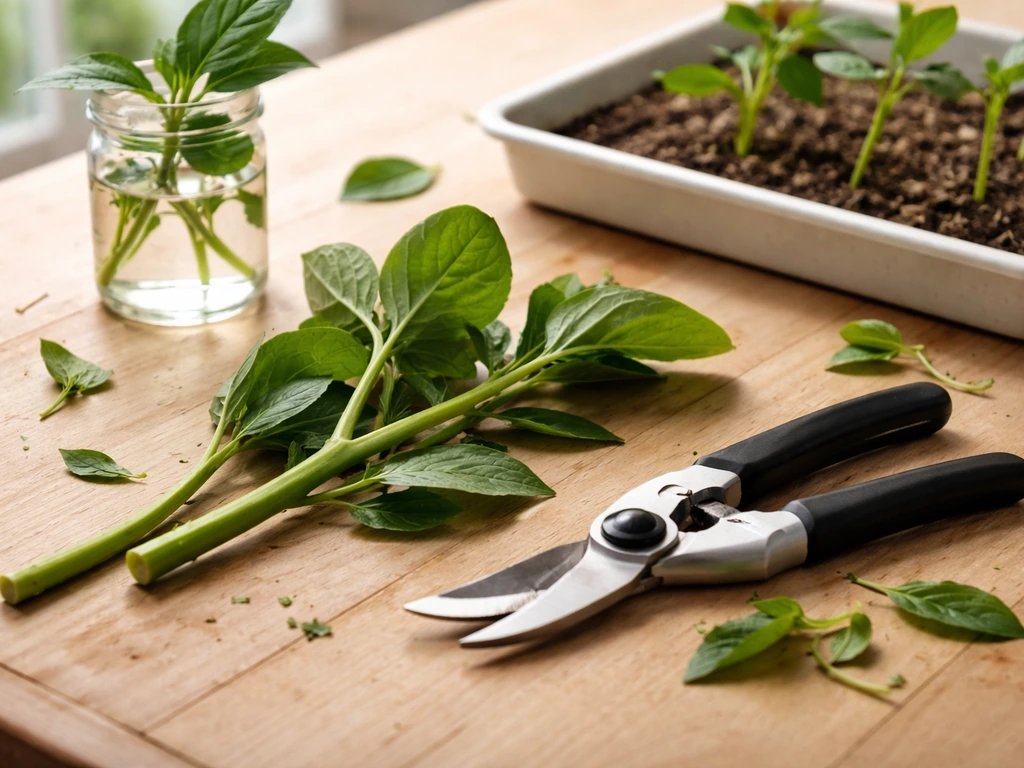
These two techniques get lumped together because they both involve cutting the plant, but they are genuinely different things. Pruning means removing parts of the plant you already have, specifically to make that plant grow more, branch more, or flower more. The plant stays in its pot or bed, keeps its root system, and redirects its energy based on where you cut. Taking a cutting, on the other hand, means snipping off a piece (usually a stem with a node or two) and using that piece to grow a completely new, separate plant, whether that is in water, soil, a propagation mix, or a hydroponic setup.
If your goal is a bushier basil plant, more roses on a shrub you already own, or a fuller pothos trailing from your shelf, you want to prune. If your goal is to multiply your collection, propagate a plant for a friend, or start fresh from a healthy parent plant, you want to take cuttings. Cuttings can take several weeks to develop roots and become independent, so they are a slower path to a new plant than dividing or buying. Pruning gives you results on the plant you already have, usually within a few weeks of the cut.
A lot of the time, you can do both at once. You prune a leggy stem off your monstera to encourage branching, and you drop that stem into water to propagate a new plant from it. Two goals, one cut. This article focuses mainly on pruning to increase growth, but it covers the propagation side too because the cut itself is often identical.
Why cutting actually works: apical dominance and node activation
Here is the core biology, and it is worth understanding because once you get it, you can troubleshoot almost anything. The tip of every stem (called the shoot apex) produces a hormone called auxin. That auxin flows downward and actively suppresses the buds sitting in the leaf axils (the little nodes where a leaf meets the stem). This is called apical dominance, and it is basically the plant's way of saying, keep growing taller, do not bother branching.
When you cut off or remove that shoot tip, the auxin source disappears. The dormant buds lower on the stem are no longer suppressed, and they wake up. Two or more new shoots emerge where there used to be one. The plant that had one leader now has two or three, and each of those can eventually branch again. This is why pinching the tip of a basil plant gives you a bushy plant instead of a single leggy stalk, and why topping a tomato redirects energy into fruit-bearing side shoots.
Nodes are the key locations on any stem. They are the bumps or joints where leaves attach, and they are packed with meristem tissue, which is essentially the plant's growth factory. Any cut you make should be positioned relative to a node because that is where new growth will emerge. Cut too far above a node and you leave a dead stub. Cut at the right spot and the node activates.
Tools, sterilization, and making a clean cut
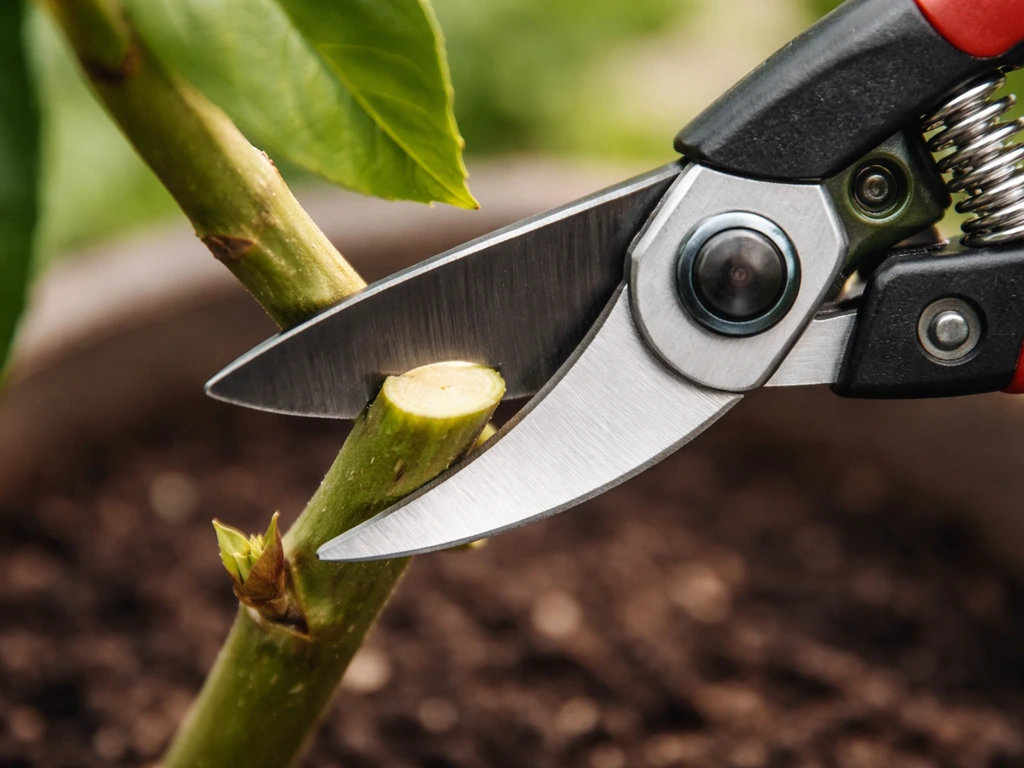
Dull or dirty tools are genuinely one of the top reasons pruning backfires. A crushed or torn stem heals slower, is more vulnerable to disease, and does not send the clean hormonal signal to the plant that a good cut does.
Choosing the right tool
For most houseplants and small garden plants, a pair of bypass pruners (the scissor-action type) is your best option. They cut with a clean slicing motion and do not crush the stem. Anvil pruners, where a single blade presses down onto a flat surface, can crush live tissue and are better suited for dead wood. For very soft stems (herbs, seedlings, young annuals), a clean pair of scissors or even your fingernails work perfectly. For thicker woody shrubs and trees, loppers or a pruning saw give you the leverage you need without mangling the cut.
Sterilizing your tools
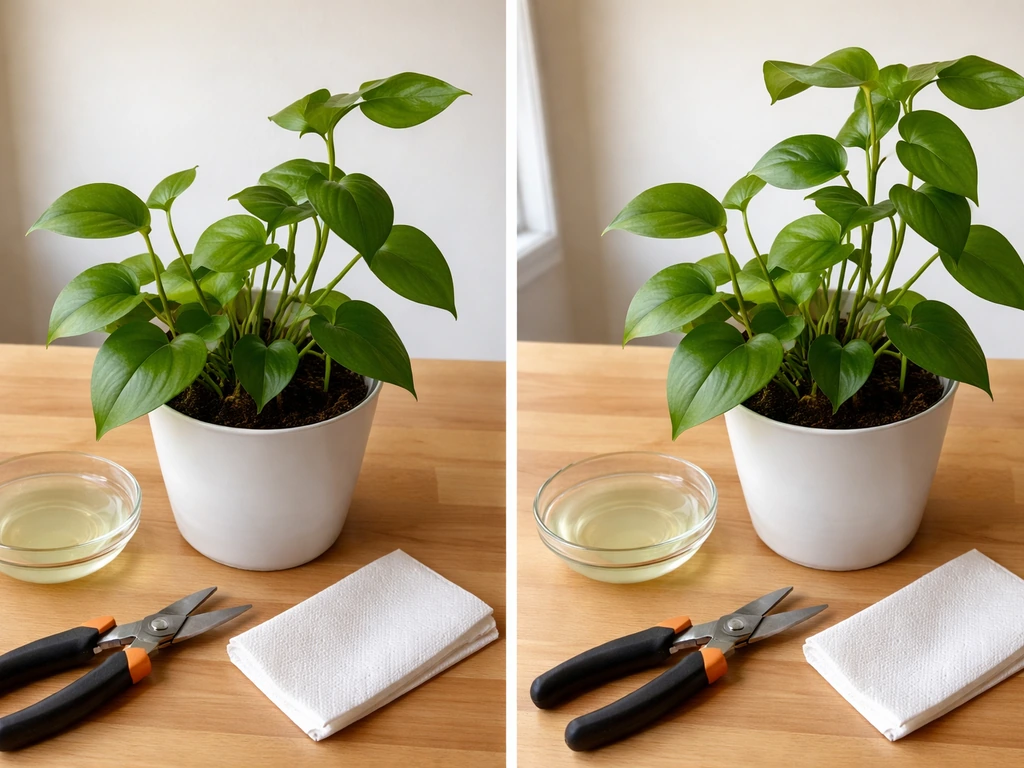
Wipe or dip your blades in a 10% bleach solution (roughly one part bleach to nine parts water) between plants, and especially before moving from a sick plant to a healthy one. Ethanol (rubbing alcohol at 70%) works too and is less corrosive to your tools over time. Do not skip this step when you are dealing with fungal or bacterial issues in your garden. It takes thirty seconds and can save an entire plant.
Making the cut correctly
For stems and soft growth, cut about a quarter inch above a node or outward-facing bud, at a slight angle (roughly 45 degrees) so water runs off the cut surface rather than pooling and encouraging rot. For woody shrubs and branches, make your cut just outside the branch collar (the slightly raised ring of tissue where a branch meets the trunk or parent stem). Leave that collar tissue intact. It is the plant's built-in wound-sealing mechanism, and cutting into it slows healing and opens the door to decay.
How to cut for more growth: the main techniques
There are four main cutting methods used to stimulate more growth, and each serves a slightly different purpose. Knowing which one fits your plant and goal makes the difference between a thriving plant and a confused one.
Pinching
Pinching is the gentlest technique and the one most beginners should start with. You literally pinch off the soft growing tip of a stem between your thumb and forefinger, removing the top one to two sets of leaves. This works best on soft-stemmed plants like basil, coleus, mint, petunias, and young annuals. It immediately breaks apical dominance at that tip and pushes the plant to branch from the nodes just below. Do this early and often on bushy plants and you will be amazed at how dense and full they get.
Topping (heading cuts)
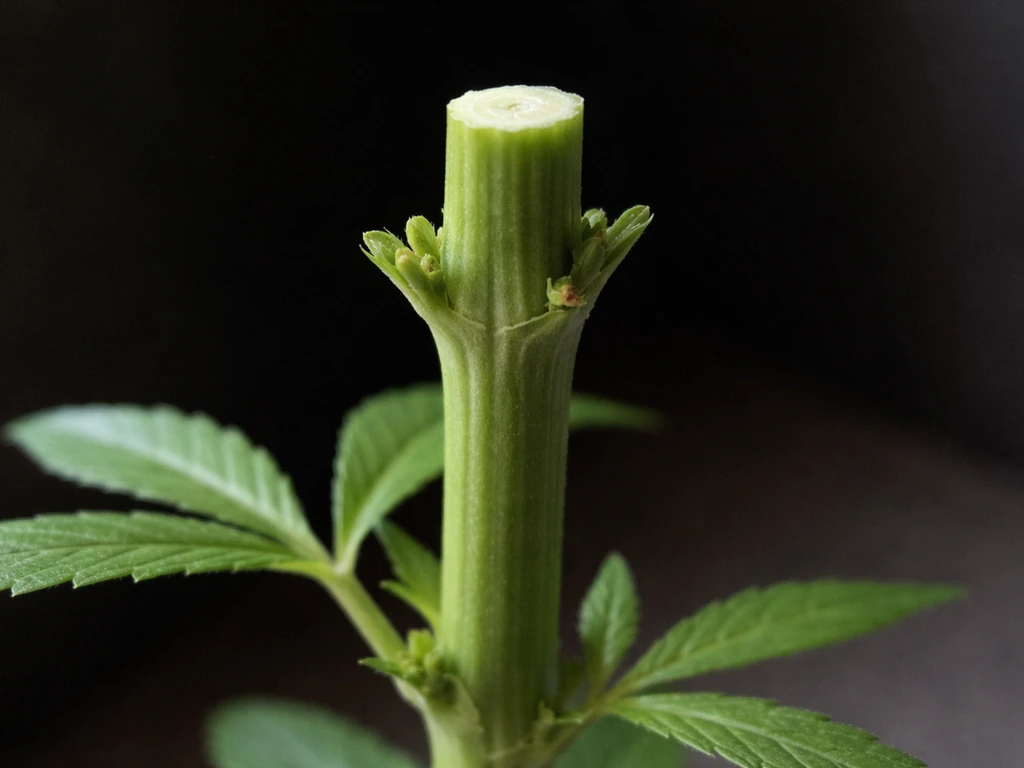
Topping is a more deliberate heading cut, removing a section of stem rather than just the very tip. The rule of thumb from extension research is to remove no more than about one-third of the previous season's growth at a time. Cut a quarter inch above a healthy, outward-facing bud or node, at a slight angle. This is your go-to for shrubs, woody herbs like rosemary, and plants you want to maintain at a certain size while encouraging denser growth. It is also the technique used on tomatoes and peppers to redirect energy from vertical growth into fruit production.
Thinning
Thinning removes an entire branch or stem back to its point of origin, whether that is the main trunk, a larger branch, or the soil level. You are not leaving a stub. You cut right outside the branch collar and remove the whole thing. Thinning does not directly stimulate branching the way pinching does, but it opens up the canopy for light penetration, removes crossing or crowded stems that compete for resources, and redirects the plant's energy into the remaining healthy growth. Use thinning for overcrowded shrubs, overgrown houseplants with a tangle of stems, or any time you want to improve airflow and reduce disease pressure.
Deadheading
Deadheading is the practice of removing spent flowers before they can set seed. Once a flower fades, the plant's energy shifts toward making seeds. If you cut off that spent bloom, the plant redirects that energy back into producing more flowers. Cut just below the spent blossom, about a quarter inch above the next outward-facing leaf or bud. blank" rel="noopener noreferrer">For roses, you can go deeper, cutting back to a leaf with five leaflets for a more vigorous rebloom. For rose deadheading, Illinois Extension (University of Illinois Urbana-Champaign) recommends cutting the flower stem back to an outward-facing bud above a leaf with five (or seven) leaflets, and making the cut at about a 45° angle about 1/4 inch above that outward-facing bud blank" rel="noopener noreferrer">Cutting back to a leaf with five leaflets for a more vigorous rebloom.. Deadhead regularly throughout the growing season for continuous flowering on annuals and repeat-blooming perennials.
When to cut and how it changes by plant type
Timing is where a lot of well-intentioned pruning goes wrong. Cut at the wrong moment and you either remove next year's flower buds or stress the plant during a period when it cannot recover quickly. Here is how to think about timing by plant type.
| Plant type | When to prune | Main goal | Key watch-out |
|---|---|---|---|
| Houseplants (pothos, monstera, philodendron) | Anytime during active growth, ideally spring through summer | Fuller, bushier growth; remove leggy stems | Avoid heavy pruning in winter when light is low and growth is slow |
| Soft annual herbs (basil, mint, cilantro) | Once the plant has 6+ leaves; pinch continuously | Prevent bolting, encourage bushy growth | Never cut below all the leaves; always leave nodes |
| Spring-flowering shrubs (lilac, forsythia) | Right after flowering is done | Maintain shape, encourage next year's blooms | Pruning before flowering removes the buds you are waiting for |
| Summer/fall-flowering shrubs (roses, hydrangeas) | Early spring, or after first flush fades | More blooms, controlled size | Pruning too late in the season removes developing buds |
| Perennials (salvia, echinacea, rudbeckia) | Deadhead throughout season; cut back in late fall or early spring | Extended bloom, clean regrowth | Leaving seed heads can feed birds in winter, so timing is a judgment call |
| Woody trees and shrubs (general) | Late winter to early spring before new growth | Shape, size control, stimulate new wood | Fall pruning can remove flower buds and may stimulate tender growth before frost |
For cuttings (if propagation is your goal), timing matters even more. Softwood cuttings from new, flexible growth taken during the growing season are the most likely to root successfully. Semi-hardwood cuttings, taken when the current season's growth has partially firmed up, are slightly more challenging. Hardwood cuttings, taken from dormant wood in late fall or winter, are the least likely to root but are useful for certain shrubs and trees. If you are just getting started with propagation, softwood cuttings in spring or early summer give you the best odds.
Aftercare: what to do right after you cut
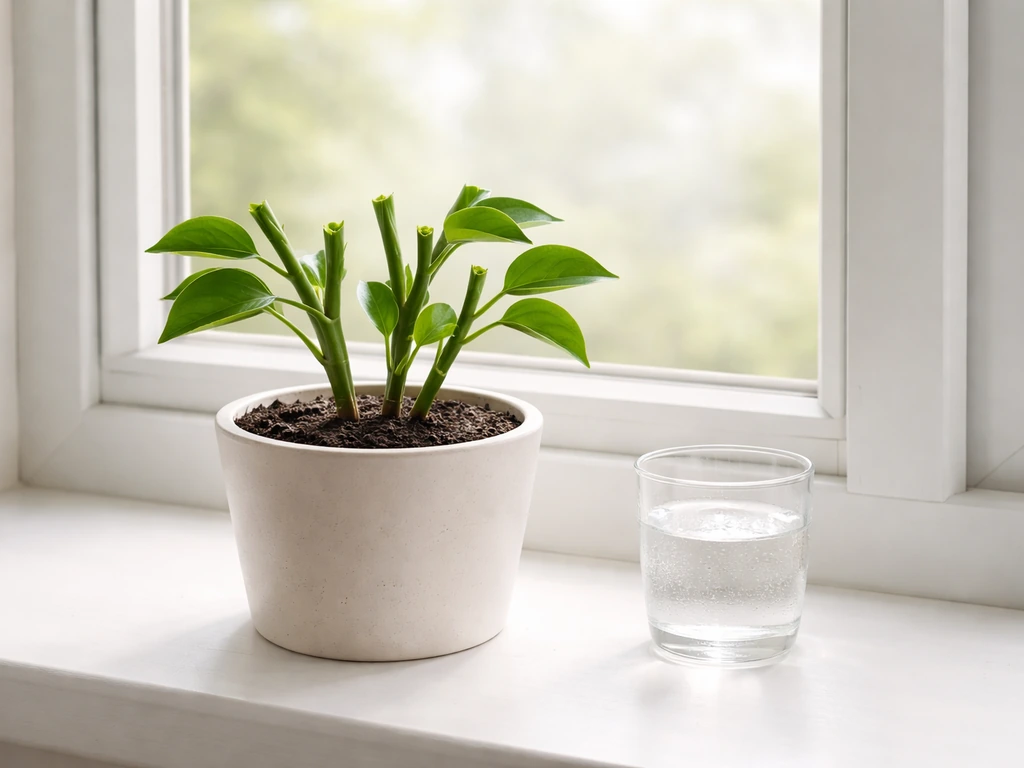
The cut is only half the job. What you do in the next two to four weeks determines whether the plant bounces back with new growth or sits there looking sad. Cuts stress a plant, even small ones, and you want to support recovery without overdoing it.
Light
Keep the plant in bright, indirect light after pruning, or leave outdoor plants where they get their usual exposure. Do not move a pruned plant into deeper shade thinking it needs to rest. Plants need light to photosynthesize and power the new growth you just triggered. If anything, slightly more light helps, but avoid sudden direct sun on a plant that was not already adapted to it.
Watering
Keep the soil consistently moist but not waterlogged after major pruning. The plant has fewer leaves now, so it transpires less water, which means you might actually need to water a little less frequently. Stick your finger an inch into the soil before watering and let that guide you rather than a fixed schedule.
Feeding
Hold off on heavy fertilizing for about a week or two after major pruning. The plant is focused on healing wounds and pushing new buds, not processing a nitrogen surge. After that initial recovery window, a balanced liquid fertilizer can support the flush of new growth you are about to see. For flowering plants, switching to a lower-nitrogen, higher-phosphorus feed after recovery can encourage blooms over leafy growth.
Wound care and humidity
For most houseplants and garden plants, clean cuts heal on their own. You do not need pruning paint or wound sealant on small cuts, and research generally does not support using it. Leave the cut surface open and let the plant do its thing. If you are working with a plant in a very dry environment (think a winter apartment with forced-air heat), a light misting around the plant (not directly on fresh cuts) or a small humidifier nearby can help reduce stress.
What to expect and when
New growth from pinching or light topping typically appears within one to three weeks on fast-growing plants like basil or pothos. Slower growers like succulents or woody shrubs may take four to six weeks or longer before you see clear branching. Deadheading results in new buds forming within a week or two on most annuals. Be patient, keep checking those nodes, and resist the urge to cut again before the first round of cuts has had time to respond.
When cuts do not work: troubleshooting slow or stressed plants
Sometimes you make all the right cuts and the plant just... sits there. Or worse, it looks worse than before. Here are the most common reasons, and what to do about each one.
- You cut too much at once. Removing more than one-third of a plant's foliage in a single session is stressful, and some plants (especially slow growers or those already weakened) cannot recover quickly. If this happened, stop cutting, give the plant optimal light and water, and wait. It may still push new growth, it just needs longer.
- You cut at the wrong time of year. Heavy pruning in fall or winter, especially on outdoor plants, removes the energy reserves the plant needs to survive cold or push spring growth. You may have also removed flower buds that were already set. If you did this, there is not much to do except wait for the next growing season and time it better.
- You cut in the wrong place. Cutting between nodes, leaving long stubs, or cutting into the branch collar on woody plants means new growth has nowhere to emerge from. Look closely at the cut stem. If there are no nodes below the cut, that stem will die back. Cut again, this time to a visible node.
- The plant is already stressed. A root-bound, underwatered, overwatered, or pest-damaged plant does not have the reserves to respond to pruning with new growth. Cutting a struggling plant harder is rarely the answer. Address the root cause first: repot if needed, check roots for rot, treat any pests, and stabilize watering before pruning again.
- Disease entered through the cut. If you see browning, wilting, or dark lesions spreading from the cut site, a pathogen may have entered through an unsterilized tool. Cut back below the affected tissue to clean, healthy wood, sterilize your tools, and treat with an appropriate fungicide or bactericide if the problem persists.
- You are pruning a non-branching species. Some plants, like dracaena or certain palms, grow from a single central meristem and do not branch the same way a shrub or basil plant does. Cutting the tip can actually damage or kill these plants. Know your plant type before you cut.
One last thing worth knowing: if your goal is to grow entirely new plants from what you cut off, that is a different path from pruning for more growth, and it comes with its own set of steps around rooting medium, humidity, and node placement. The cuttings you take when propagating can come from the same pruning session, which makes it an efficient use of what you remove. For best results, start with a healthy mother plant and take cuttings from new growth how to grow a mother plant for clones. If you are curious about that side of things, growing a new plant from an existing one, or specifically working from a single node, those are topics worth exploring alongside what you have learned here about pruning technique. If you want the practical steps, learn how to grow a plant from a node using a healthy cutting and the right cut placement working from a single node.
FAQ
Can I prune the same plant again right after I cut it to get faster growth?
Yes, but it depends on how much you remove and the plant type. For most established houseplants, light pinching or small thinning sessions are usually fine. Avoid repeatedly topping in the same week or taking off more than about one-third of a plant's active growth at once, because the root-to-leaf balance gets thrown off and you can stall recovery.
What parts of the plant should I prune if I want maximum new growth?
Start with the healthiest, most active stems. If you only prune leggy or stressed growth, you may not have enough stored energy or viable buds to trigger strong branching. Look for firm stems with visible nodes and avoid cutting back into visibly dead, hollow, or mushy tissue.
Should I keep my plant in higher humidity or mist more after pruning?
After major pruning, the cut surface should not be kept constantly wet. Keep soil moisture consistent, water at the base, and improve airflow so leaves and stems dry between waterings. Pooling water at cut sites, especially on humid days, raises rot risk even when the rest of your care is good.
What happens if I cut above the node, and how do I recover?
If you accidentally cut too far above the node, the dormant buds at that node may not activate, so growth can be slower or uneven. The practical fix is to avoid further cutting into that same area until you see what sprouts. If new shoots emerge elsewhere, proceed with light pinching later to shape the plant rather than repeating the same “wrong height” cut immediately.
If my plant is not flowering yet, should I deadhead anyway?
For pruning for more growth, the goal is usually active, healthy nodes and leaves, not flower removal. Deadheading redirects energy toward more blooms, while pinching and topping mainly increase branching. If your plant is not flowering, focus on pinching or thinning rather than removing “future bloom” buds.
How often should I disinfect pruning tools, and what’s the best disinfectant for frequent use?
Disinfect, but use the right approach. Bleach solutions can be corrosive, so rinse tools with water after disinfection and let them dry. For routine between-plant cuts, 70% alcohol is convenient, but it evaporates fast, so make sure the blade surface stays wet for several seconds.
Does pruning during hot or cold weather affect how much it grows back?
If you prune during intense heat, cold snaps, or drought stress, you remove tissue while the plant is already struggling to balance water and energy. In general, choose mild, stable conditions, and if the plant is already stressed, wait until it shows new growth or at least stable leaves before doing heavier shaping cuts.
What’s the difference between pinching and thinning if I’m trying to grow more foliage?
Yes. Pinching stimulates branching at the nodes near the removed tip. Thinning removes entire stems to improve light and airflow, it changes the plant’s energy distribution but does not reliably create the same “node wake-up” effect. If your goal is bushiness, pinching is usually more direct, while thinning is better for crowded canopies.
How critical is the angle of the pruning cut, and should I redo it if it looks flat?
Look for a clear outward-facing bud or node and aim for a cut that sheds water, angle matters. If you cut horizontally or trap water on the cut, you increase the chance of rot and slower healing. As long as the plant is healthy and the cut is recent, you generally do not need to re-cut it, just adjust your technique on future cuts.
My plant looks worse after pruning, could dull blades be the cause?
It can, especially if you used an overly harsh cut or removed too much at once. A dull blade can leave torn tissue that heals slowly, which delays bud activity. If your plant is otherwise healthy and you used clean technique after that, recovery often happens once wounds seal and light is adequate.
How do I know if my pruned plant is getting enough light to grow more?
Yes, use a simple “light test.” If your pruned plant can’t maintain its leaf position in the new light, it is too dim. Bright indirect light helps because it fuels the photosynthesis needed to power regrowth, but avoid sudden direct sun right after pruning if the plant was previously adapted to shade.
If I pruned and got no new growth, what should I troubleshoot first?
If growth is stalled beyond the expected window, check three things in order: light adequacy, watering consistency (not waterlogged), and whether you cut during an active stress period. Then inspect stems for new bud swell at nodes. If buds never swell and stems are firm and healthy, wait a bit longer rather than making more cuts immediately.
Should I use pruning sealant or wound paint on fresh cuts?
You usually do not need pruning paint or wound sealant on most small cuts, especially on houseplants. Use wound products only in special situations where local practice recommends them (for example certain large pruning wounds on trees). For typical pruning, leaving the surface to dry and heal naturally is safer and avoids trapping moisture at the cut.