Roots need three things above everything else: water, oxygen, and dissolved nutrients. Get those three right, and roots will grow. Miss one of them, and growth stalls no matter what else you do. The tricky part is that water and oxygen compete for the same space in the growing medium, so keeping both in balance is the real skill. Everything else, like temperature, container size, pH, and fertilizer, either supports or undermines that core balance.
What Do Roots Need to Grow Well Step by Step Guide
Marcus Holloway
13 May 2026
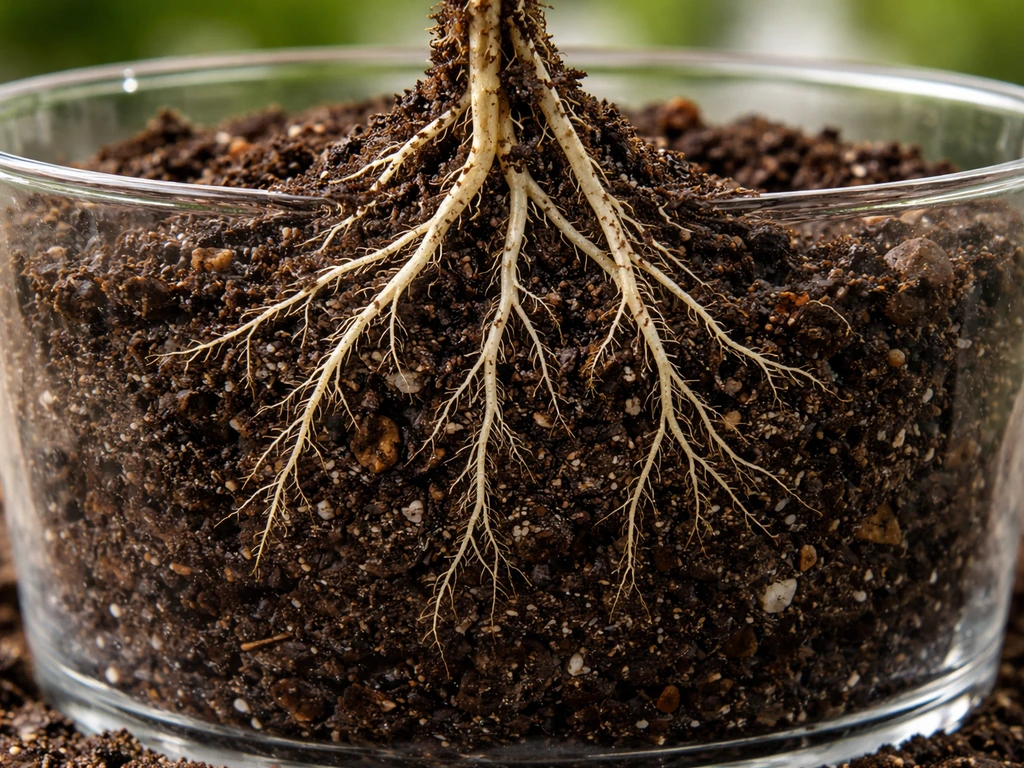
The core three: water, oxygen, and nutrients
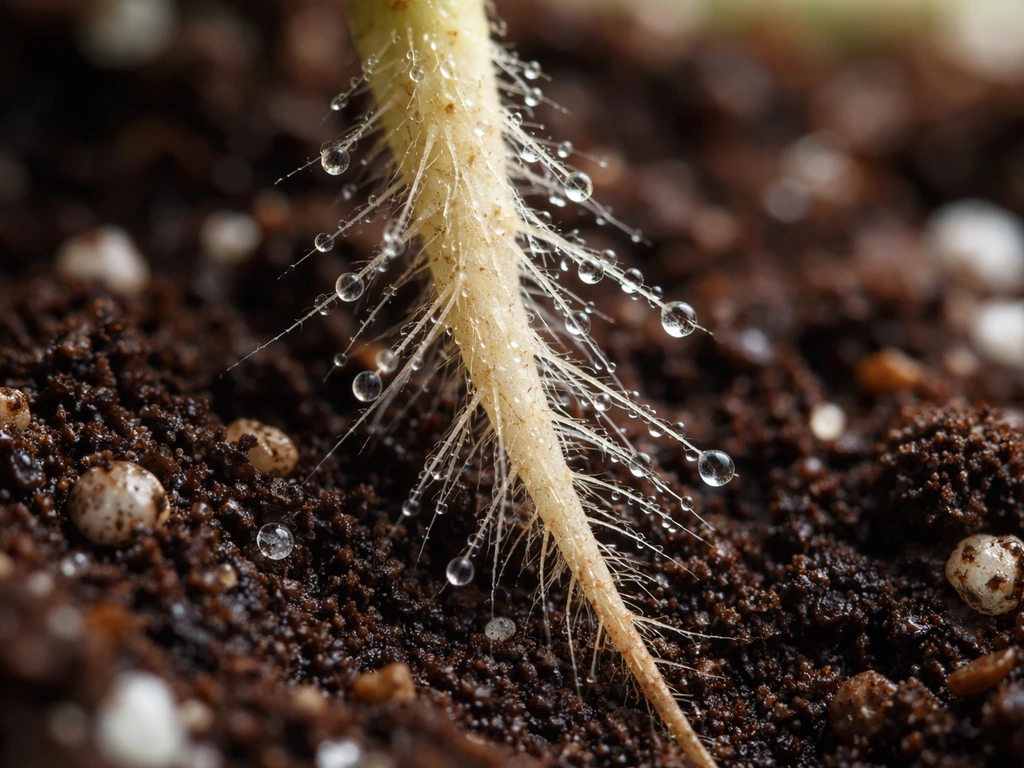
Roots absorb water and dissolved minerals through root hairs, tiny extensions along the root surface that massively increase contact area with the growing medium. As a plant develops, roots grow outward from the root tip and then branch into finer roots that explore more soil for water and nutrients root hairs. For that absorption to work, water has to be present, but so does oxygen. Roots don't photosynthesize; they respire, meaning they burn sugars to fuel their own growth.
That process requires oxygen, and oxygen only reaches roots through air-filled pores in the medium. Here's the catch: oxygen diffuses through air about 6,000 to 10,000 times faster than through water. When your medium stays waterlogged, those air pores fill up, oxygen delivery drops to near zero, and roots essentially suffocate. That's not a metaphor.
Anaerobic conditions can kill roots quickly, often within a day or two in warm weather.
Nutrients are the third leg. Roots can't use solid fertilizer granules or raw minerals sitting in the soil. They take up nutrients as dissolved ions in water, things like nitrogen, potassium, phosphorus, calcium, iron, and smaller amounts of micronutrients like boron, zinc, manganese, and molybdenum. If the growing medium is too dry, those ions aren't mobile. If the pH is off, those nutrients chemically convert into forms roots can't absorb even if they're technically present. So water, oxygen, and nutrients are all deeply connected. Manage one poorly, and the others don't work right either.
Light doesn't feed roots directly, but it still matters a lot
Roots grow in the dark. They don't need light hitting them directly, and in fact, most roots actively avoid light. But the leaves above ground do need light, because photosynthesis is what produces the sugars that fuel root growth. Think of it like this: the leaves are the factory, and roots are the construction crew.
If the factory shuts down because light is too low, the crew runs out of materials and stops building. Research confirms that low light conditions limit carbohydrate availability, which directly slows root development. In propagation studies, higher light intensity improved rooting percentage and root characteristics compared to low or medium irradiance. So if you're puzzled why a cutting in a warm, moist spot isn't rooting, check the light levels before anything else.
This matters across every growing setup. In a terrarium or closed container, low light doesn't just affect the leaves; it slows the energy supply that roots depend on. In hydroponics, it's one of the most overlooked reasons for slow establishment. Give the plant enough light to keep photosynthesis running well, and you're indirectly giving the roots the fuel they need to push out and grow.
Temperature and timing make a real difference
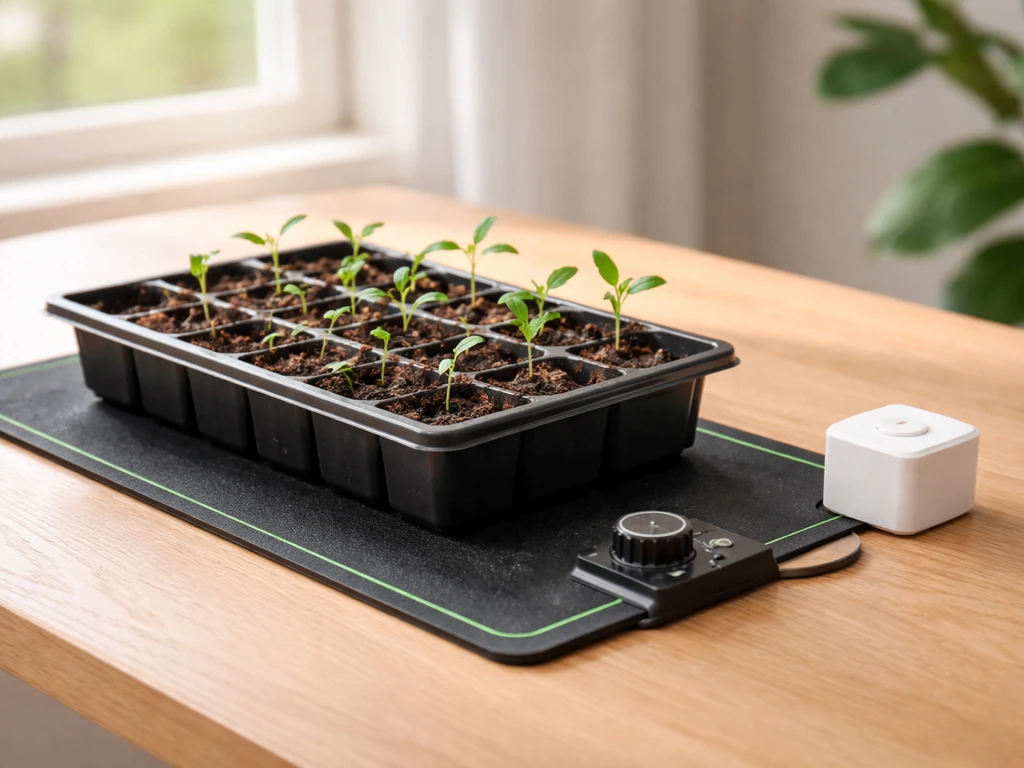
Root growth has a sweet spot for temperature. For most temperate plants, root-zone temperatures between 65 and 77°F (about 18 to 25°C) are ideal. WSU Extension specifically recommends keeping propagation boxes in that range for best rooting results. Below that band, root growth slows significantly because enzymatic processes slow down. Above it, roots can be stressed and more vulnerable to disease. This is why cuttings taken in late spring to early summer root faster than ones taken in midwinter: the ambient temperatures are in the right range without any extra effort.
If you're propagating indoors during cold months, a seedling heat mat placed under the container can keep root-zone temps in the target range even when the room itself is cool. Aim for the medium to sit around 70 to 75°F. Also worth knowing: the air temperature around the stem and leaves can actually be a few degrees cooler than the root zone during propagation, since you want to slow transpiration from leaves while encouraging root development below.
Your growing medium sets the ceiling for root health
The medium roots grow in is what controls the balance between moisture and oxygen. Soil texture, particle size, drainage, and pore structure all determine how much air stays available to roots after watering. Oxygen diffuses through connected air-filled pores, and when those pores are too small, too few, or blocked by fine particles compacted together, roots get starved of oxygen even if the medium isn't visibly waterlogged. This is why heavy clay soils are so hard on roots: the fine particles pack tightly, leaving little room for air.
Soil and standard potting mix
For most houseplants and garden containers, a well-draining potting mix is the starting point. Look for mixes that include perlite, which drains fast and creates stable air pockets, or coarse sand. You can improve almost any standard potting mix by adding about 20 to 30% perlite by volume. For cacti, succulents, or anything described as drought-tolerant, go closer to 50% perlite. Soil pH also matters enormously for nutrient availability. Most vegetables and houseplants do best between pH 6.0 and 7.2. Outside that range, nutrients like iron and phosphorus lock up in forms roots can't use. You can test your soil pH cheaply with a basic kit from any garden center.
Water propagation
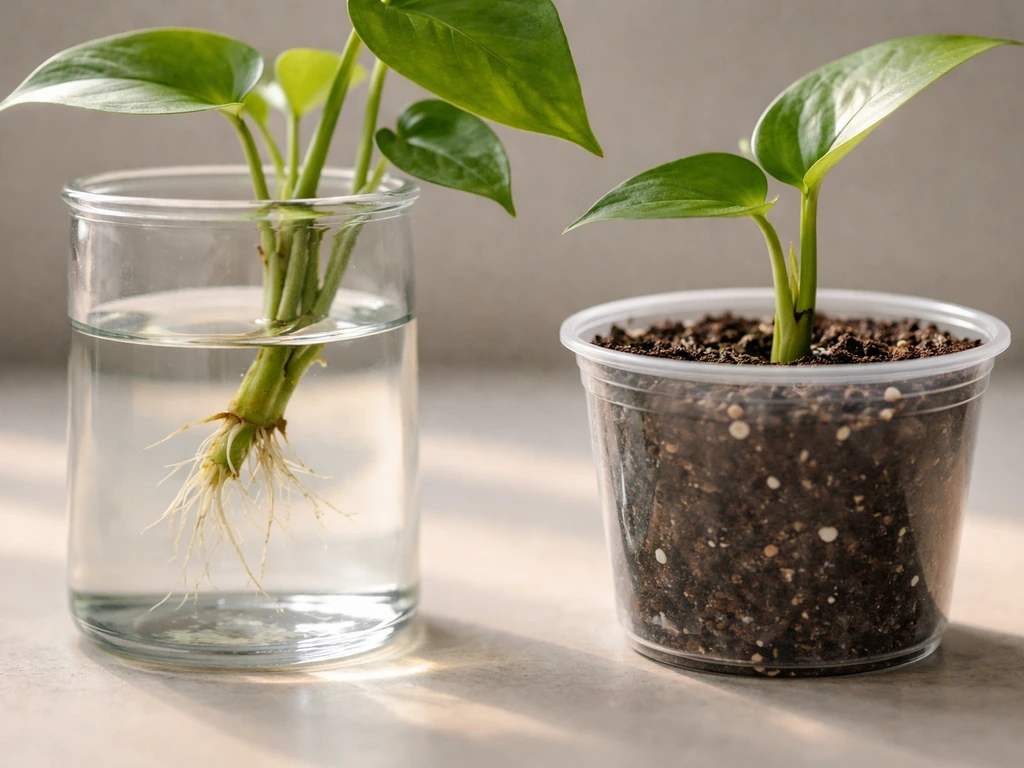
Water propagation works, but the roots that form in plain water are often thicker and less adapted to growing in soil. Iowa State Extension notes this transition shock as a real issue: roots formed in water can struggle to function well once moved to a potting mix. To reduce the shock, transfer water-rooted cuttings to a moist perlite or perlite-and-vermiculite mix before moving them into regular potting soil. Change the water every few days to keep oxygen levels up and reduce bacterial buildup, and keep the jar out of direct sun to slow algae growth.
Hydroponics and soilless media
In hydroponics, the medium is mostly structural, just something to anchor the roots, while the nutrient solution does the feeding. Perlite, expanded clay, rockwool, and coco coir are common choices. Perlite gives excellent aeration. Vermiculite holds more moisture and nutrients and works better in mixes where you want some buffering.
For the nutrient solution itself, pH management is critical. University of Missouri and Oklahoma State University Extension both recommend keeping hydroponic solution pH between 5. 0 and 6. 0, with 5.
5 being the sweet spot for most crops. Outside this range, nutrient ions become unavailable to roots even in a perfectly formulated solution. Track EC (electrical conductivity) alongside pH: most seedlings and young plants do well in the 0. 5 to 1.
5 mS/cm range, stepping up as plants mature and nutrient demand increases.
Terrariums and enclosed containers
Enclosed or nearly enclosed containers trap humidity, which sounds helpful but actually creates conditions that can starve roots of oxygen if you're not careful. Use a well-draining substrate layer at the bottom (like lava rock or coarse gravel), keep the organic layer above it light and airy, and avoid watering on any schedule. Instead, watch for condensation on the glass. If you see heavy fogging on the inside walls, leave the lid off for a few hours. The goal is damp but never saturated.
Fertilizing roots: when more is actually less
One of the most common mistakes beginners make is fertilizing too early and too heavily. Newly forming roots are delicate and can be chemically burned by concentrated fertilizer. University of Missouri Extension is clear on this: propagation media should not contain fertilizer at all. Wait until you see active new growth on a cutting or seedling before introducing any feed. For established plants, fertilize during the active growing season (spring through early fall for most plants) and back off or stop entirely in winter when root activity naturally slows.
When you do fertilize, dilution is your friend. A fertilizer at half the label-recommended strength applied more frequently does less damage and provides more consistent nutrition than a full-strength dose every few weeks. For soil-grown plants, a balanced liquid fertilizer (something with roughly equal NPK numbers, like 10-10-10) works well for general root support. For hydroponics, use a purpose-built hydroponic nutrient solution so that all macro and micronutrients are present in plant-available forms.
Watering well: the difference between roots thriving and rotting
Watering is where most root problems actually start. The goal is to keep the medium consistently moist, meaning damp throughout but never sitting in pooled water and never bone dry. A good general rule for potted plants: water thoroughly until it runs out the drainage holes, then wait until the top inch or two of medium feels dry before watering again. Stick your finger in. If it feels damp, wait. If it feels dry an inch down, water.
Root rot from Pythium and similar water molds kicks in when soil moisture stays at around 70% or more of available water capacity consistently. That's the 'always wet' zone. On the other side, letting a medium dry out completely disrupts the thin water films that roots depend on for absorption and can physically damage root hairs. The practical fix is to match your watering frequency to the plant's actual uptake rate, which means watering less in winter, more in summer, and more for fast-growing or large plants in small containers.
For water propagation and hydroponics, make sure the root zone isn't submerged 100% of the time. In water propagation, keep the stem base just at the waterline rather than deeply submerged. In hydroponic systems, the air-gap above the solution surface and proper oxygenation (via air stones or recirculating pumps) keeps oxygen available to roots that extend down into the nutrient solution.
Container size and pot type shape how roots grow
Roots grow into available space, but too much space can actually work against you. A plant in an oversized pot will have large volumes of wet medium that roots haven't reached yet, and that wet, unoccupied soil stays moist too long, setting up conditions for rot. As a general rule, choose a container that's only 1 to 2 inches larger in diameter than the root ball. When you see roots circling the drainage holes or visibly crowding the surface, it's time to go up one size.
Drainage holes are non-negotiable. No drainage hole means water accumulates at the bottom, oxygen disappears from that zone, and root rot is almost inevitable. If you love a decorative pot without holes, use it as a cachepot by placing the actual growing container (with holes) inside it. Just empty any water that collects at the bottom after watering.
Fabric pots and air-pruning containers like Smart Pots are genuinely useful if you're growing in soil or soilless media. Smart Pot’s FAQ explains how to select an appropriate fabric or root-pruning container size to manage root growth through air pruning and preventing circling. When roots reach the fabric wall, air exposure prunes the tip, which triggers branching and produces a much denser, more fibrous root system. This is why plants in fabric pots tend to establish faster when transplanted: the root architecture is already more developed and better distributed.
Why your roots aren't growing: quick diagnosis and fixes
Most root problems fall into a small number of patterns. Here's how to spot them and what to do immediately.
| Symptom | Likely cause | Quick fix |
|---|---|---|
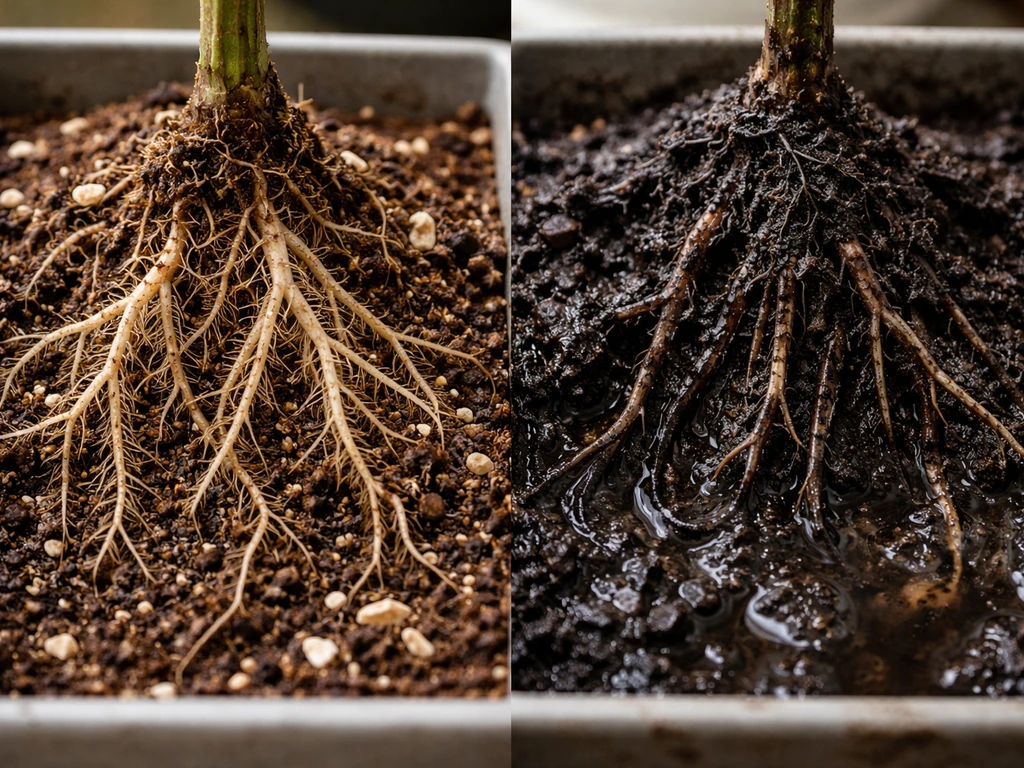
| Roots are dark brown or black, slimy or mushy, possibly smelly | Root rot (Pythium or similar) | Trim off all affected roots with clean scissors, let remaining roots air-dry briefly, repot into fresh dry mix, and hold off watering for a few days |
| No roots forming on cuttings after 3+ weeks | Low light, wrong temperature, medium too wet or too dry, or wrong medium | Move to brighter indirect light, check that root-zone temp is 65–77°F, switch to moist perlite or perlite mix, and cover loosely to hold humidity |
| Roots are stunted or thin, plant looks pale | Nutrient deficiency, pH out of range, or too little light | Test soil or solution pH (aim for 6.0–7.2 in soil, 5.0–6.0 in hydro), check light levels, and introduce a diluted balanced fertilizer if plant is established |
| Plant wilts even with moist soil | Oxygen starvation from waterlogged medium, root rot already underway | Check drainage, confirm no water sitting in saucer, inspect roots for rot, and aerate medium by mixing in perlite |
| Roots circling the pot or coming out of drainage holes | Root-bound, container too small | Repot into a container 1–2 inches larger, gently loosen circling roots before replanting |
| Medium dries out extremely fast, roots look dry or damaged | Container too small, medium has poor water retention, or heat too high | Move to a slightly larger pot, add vermiculite or coco coir to improve water retention, shade from direct hot sun |
Healthy roots are firm, white or light tan, and pliable. If you unpot a plant and the roots look that way, you're in good shape regardless of what the leaves are doing. If roots are dark, soft, or have any sour smell, treat for rot immediately. Catching it early is the difference between losing a few roots and losing the whole plant.
Putting it all together for your setup
The principles are the same whether you're rooting a cutting in a glass of water, growing tomatoes in a hydroponic system, or nurturing a houseplant in a windowsill pot. Roots need moisture without saturation, oxygen without drying out, and dissolved nutrients at the right pH. The medium is your main tool for managing all three. Once you understand why each of these things matters, troubleshooting becomes much simpler: you're almost always chasing the right balance between water and air, with everything else (temperature, light, fertilizer, container) either helping or hurting that balance. Start there, and most root problems either don't happen or are easy to catch early.
If you want to go deeper on related topics, the way roots actually function to support the whole plant, how to encourage root formation on a cutting, and what happens when you trim plants and want new roots to form are all worth exploring alongside this foundation. When you get water, oxygen, and nutrients working together, you are directly answering how roots help a plant grow how to encourage root formation on a cutting.
FAQ
What happens if I only give roots enough water, but the medium has no air spaces?
Roots can still struggle badly, even if the mix looks “not totally flooded.” Oxygen delivery drops when air pores fill with water, so roots respire poorly, then rot accelerates, especially in warm temperatures. The practical fix is to improve aeration (perlite, coarser texture) and verify drainage and pore structure, not just how wet it feels.
How do I tell the difference between underwatering and oxygen starvation?
Underwatering usually means the medium has dried and root hairs can’t maintain the thin water films, roots may look lighter and dry. Oxygen starvation happens when the medium stays wet yet roots are failing, often with dark, soft roots or a sour smell. Use the “dryness test” (top inch dry vs damp) plus a smell and root inspection if plants stall.
Do roots need light to grow, or can I keep them in complete darkness?
Roots do not need light directly, they typically avoid it. However, plants still need enough light above ground so leaves keep producing sugars that fuel root growth. If root growth stalls indoors, check the overall light level and not just whether the pot is in a dark spot.
How much should I water if my plant is in a self-watering pot or automatic wick setup?
Wick or self-watering systems can keep the bottom continuously wet, which raises oxygen risk. Aim for moist from the top into the root zone, not standing water at the base. If you see persistent condensation, a musty smell, or slow growth, reduce reservoir level, improve the mix, and confirm true drainage in the growing insert.
Should propagation media contain fertilizer at all?
For cuttings and newly sprouting seedlings, avoid fertilizer in the rooting medium to prevent chemical burn to delicate new roots. Once you see active new growth, you can start feeding later, and diluted doses are safer than full-strength label rates.
What pH problem causes the most confusion for growers?
A common mistake is assuming “nutrients are in the soil” so pH doesn’t matter. In reality, nutrients can become chemically unavailable when pH shifts outside the usable range. The result looks like deficiency even with adequate fertilization, so test pH before increasing dose.
Is it better to use plain water or nutrient solution during hydroponic establishment?
For hydroponics, nutrient solution is designed to deliver dissolved ions at a controlled pH and EC, so roots get the building blocks they need from day one. Using only plain water can delay growth because roots still need available nutrients, but in general you still must oxygenate well and monitor pH and EC as plants begin uptake.
How often should I change water in water propagation to keep oxygen available?
If roots are submerged in a jar, changing water every few days helps maintain oxygen availability and reduces bacterial buildup. Also keep the jar out of direct sun to slow algae, which can further reduce dissolved oxygen and clog surfaces around developing roots.
Why do water-rooted cuttings sometimes fail after moving to soil?
Roots formed in plain water can have different structure and are less adapted to transfer into a potting mix environment. A common mitigation is to transition gradually by moving the cutting to moist aerated perlite first (or perlite plus vermiculite) before switching to regular soil.
What is a safe way to choose a pot size so roots get oxygen?
Oversized pots leave large volumes of wet medium that roots have not reached, increasing the “always wet” risk for rot. A practical rule is selecting a container only about 1 to 2 inches larger in diameter than the root ball, and sizing up again when roots crowd or circle drainage holes.
Can my medium look moist but still cause root suffocation?
Yes. Fine particles, compaction, or clogged pore spaces can reduce air pockets even when the surface doesn’t look waterlogged. If you suspect this, recheck drainage and mix structure (particle size and pore spaces), not only visual wetness.
At what point should I worry about root rot, and what’s the quickest first step?
If roots turn dark or soft or there is a sour smell, treat as rot immediately. Remove affected roots, improve aeration and drainage, and stop overwatering. Early detection usually saves part of the root system, while delaying often leads to whole-plant collapse.
What temperature is “good enough” for root growth, and when should I use a heat mat?
For many temperate plants, a root zone around 65 to 77°F supports faster growth, but this is not a universal rule for tropical species. If your indoor room is consistently cool during propagation, use a heat mat to keep the medium in-range, and expect slightly cooler air around the stem since reducing leaf transpiration can help establish roots.
In enclosed containers (terrariums or cloches), what’s the main oxygen risk?
Trapped humidity can keep the substrate damp enough that oxygen exchange drops, even if you never fully flood the setup. Watch for heavy fogging on the inside walls, vent briefly to restore airflow, and use a light, airy substrate plan (draining base, airy upper layer) so damp never becomes saturated.