
You can grow decorative plants successfully by matching the plant to your actual light and space conditions first, then setting up proper drainage, watering only when the soil needs it, fertilizing at half strength, and dealing with problems early. That's really the whole system. Everything else in this guide is just filling in the details of those five things so you can do them confidently in your specific situation.
How to Grow Decorative Plants: A Practical Beginner Guide
Marcus Holloway
19 May 2026
Choosing the right decorative plants for your space
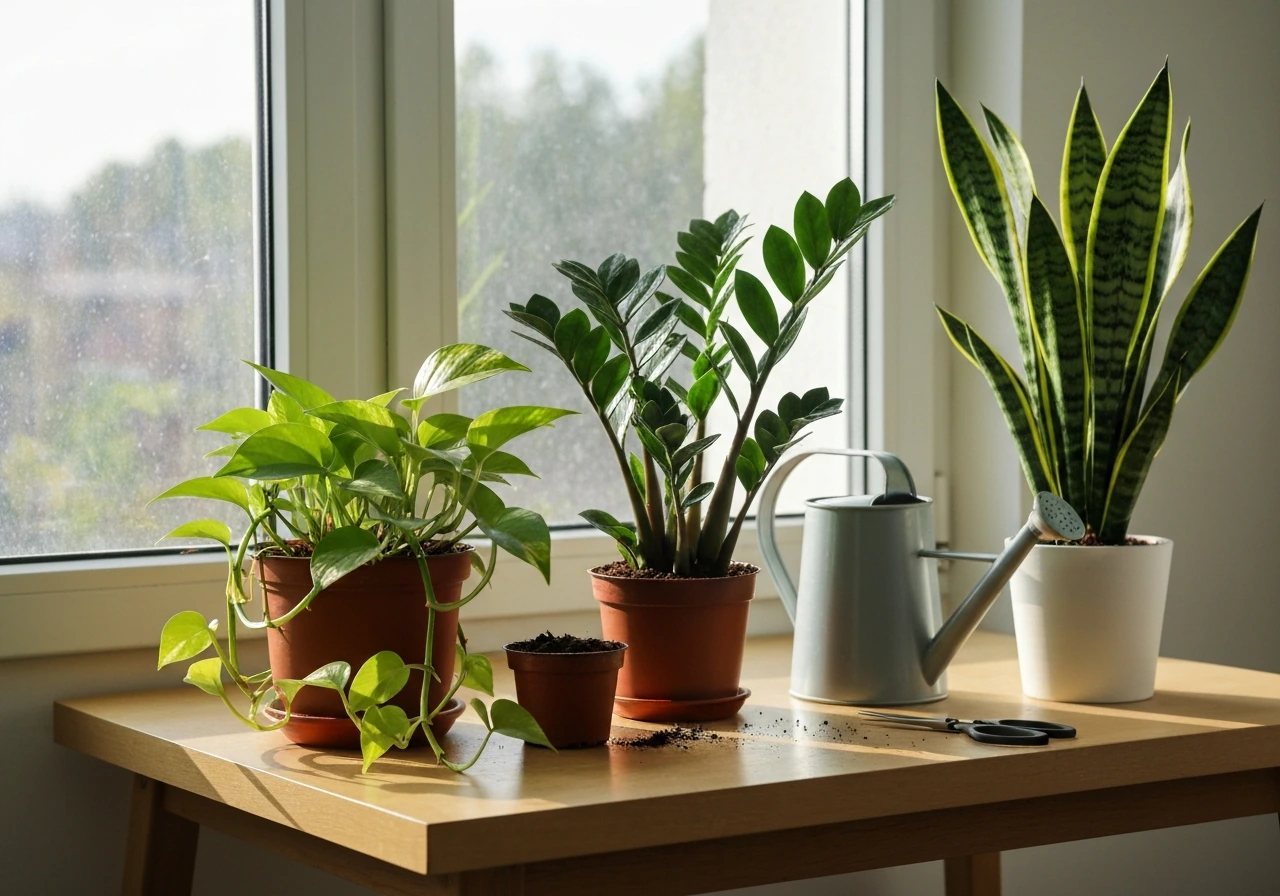
The single biggest reason decorative plants fail is a mismatch between the plant and the spot. Before you buy anything, stand in the room and be honest about the light. A window that faces north or sits behind a tree gives you low light. South- and west-facing windows with no obstructions give you bright, indirect to direct light. Interior rooms that rely mostly on overhead bulbs are often too dim even for plants marketed as 'low light.' That label means 'tolerates lower light,' not 'thrives in a dark corner.'
For genuinely dim spaces, ZZ plants are one of the most forgiving options available. They handle low light, low humidity, and short dry spells without drama. For medium to bright indirect light (a few feet from a window), pothos are a reliable choice, though their variegation fades in low light, which is a useful real-world signal that the plant isn't getting enough. Peace lilies are a great flowering decorative pick for bright indirect light but need about 6 to 10 hours of it daily and should stay away from cold drafts near winter windows.
Beyond light, think about your actual schedule. If you travel or tend to forget plants, pick drought-tolerant species like ZZ plants, snake plants, or succulents. If you have a humidity-controlled room or can mist regularly, you open up options like ferns and calatheas. Small spaces work well with compact growers or vining plants trained up a trellis or pole. Matching the plant to your real conditions rather than your ideal conditions is the move that separates people who keep plants alive from people who cycle through them.
Light, temperature, and watering basics
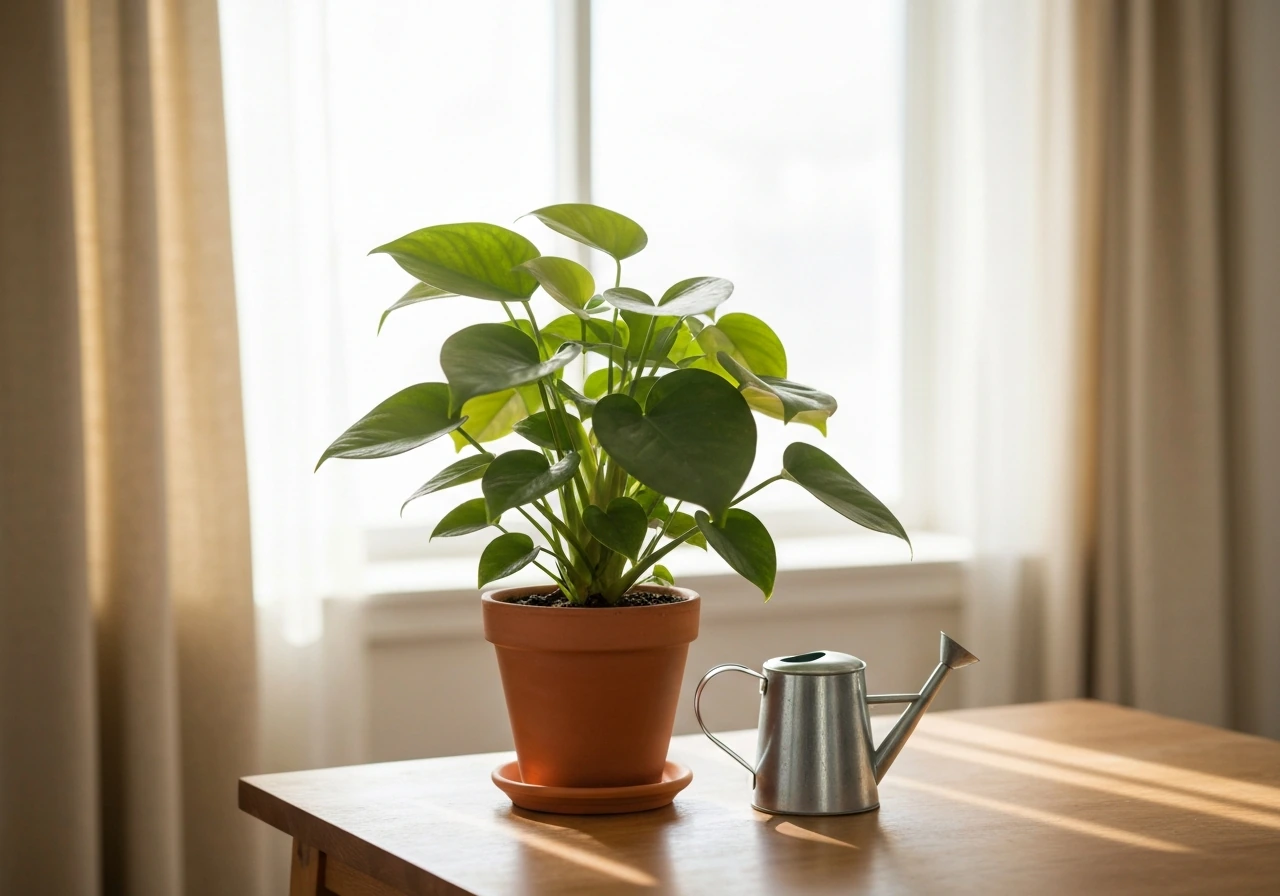
Light is food for plants. More light generally means faster growth, more vibrant color, and better resilience. Most popular decorative houseplants do best in bright, indirect light, meaning bright enough to read comfortably but not direct sun beaming straight on the leaves. Direct afternoon sun through a south or west window can scorch tropical foliage plants. If you're growing something like a peace lily, position it near a window but out of the direct beam.
Temperature is easier to manage than people expect because most popular decorative plants evolved in tropical or subtropical climates that mimic what we keep our homes at. A range of 60 to 80°F (15 to 27°C) covers the majority of houseplants. The main problems come from drafts, air conditioning vents blowing cold air directly on a plant, or a pot sitting on a windowsill in winter where the glass zone gets much colder than the room. Move plants away from those spots during cold months.
Watering is where most people go wrong, and usually in the direction of too much rather than too little. It's far better to underwater than overwater. The standard method is to water thoroughly so it drains freely through the drainage hole, then let the top inch or two of soil dry out before watering again. You're watering the root zone, not the surface. Stick your finger into the soil: if it's still moist below the surface, wait. If it's dry two inches down, water. Peace lilies will dramatically wilt when too dry but recover quickly after a good watering, which makes them an easy plant for learning to read thirst cues.
Soil, pots, containers, and the drainage rules you can't skip
Every container your decorative plant lives in must have a drainage hole. This is non-negotiable. Standing water at the bottom of a pot suffocates roots by depleting oxygen in the growing medium, and that leads to root rot. If you love a decorative pot without drainage, use it as a cachepot: put your plant in a plain nursery pot with holes, then set that inside the decorative container. Empty the cachepot after watering.
You may have heard to put gravel at the bottom of a pot to 'improve drainage.' Skip it. Research from UC Master Gardeners shows this actually reduces the usable soil depth and brings the saturated zone closer to your roots, making drainage worse. If you need better aeration for dry-condition plants like succulents and cacti, amend the potting mix itself with perlite or coarse sand, keeping soil-based components to no more than about a third of the total mixture. For most tropical foliage plants, a standard quality all-purpose potting mix works well on its own.
Pot size matters too. Going too big too fast means excess soil stays wet long after watering, raising root rot risk. A general rule is to repot into a container only one to two inches larger in diameter than the current one. Terracotta pots dry out faster than plastic or glazed ceramic, which is ideal for succulents and plants prone to overwatering issues, but means more frequent watering for moisture-loving species.
Feeding and fertilizing for healthy growth
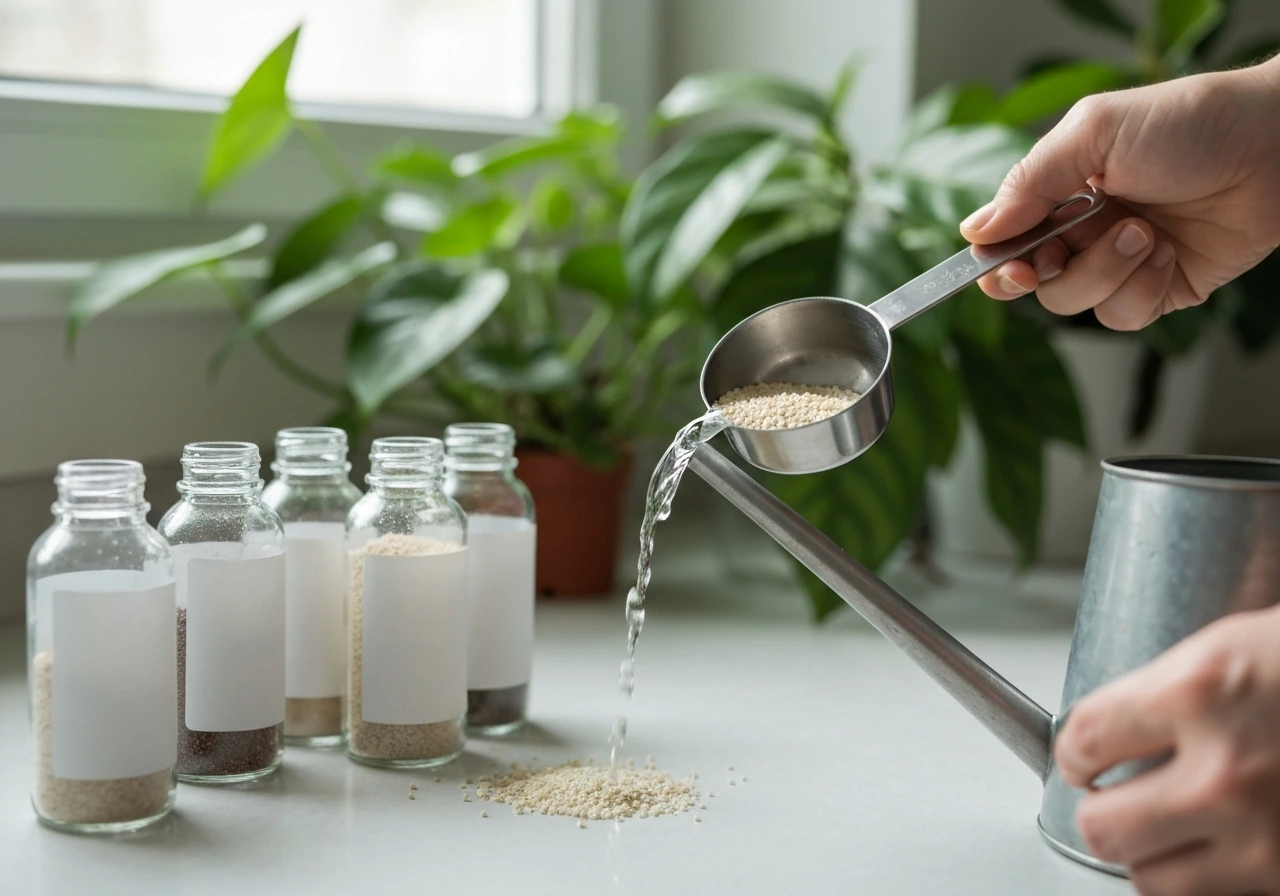
Decorative plants grown indoors grow slower than plants outside, which means they need less fertilizer than the product label suggests. The standard approach recommended by both Illinois Extension and Iowa State Extension is to use a general fertilizer at half or quarter of the recommended label strength. Going full strength indoors risks salt buildup in the soil, which shows up as brown leaf tips and eventually stunted growth.
For most foliage decorative plants, a balanced fertilizer like a 10-10-10 or 20-20-20 NPK formula covers the bases. If you're growing flowering ornamentals, a formula with higher middle number (phosphorus, like a 10-30-20) supports bloom development better. Either way, start at half strength and observe the plant over a few weeks before deciding to increase.
Frequency depends on the product: liquid fertilizers applied every two weeks during the growing season (spring through early fall) is a common rhythm, while slow-release granular products might only need one application every three to four months. During winter when light is low and growth slows significantly, back off fertilizing almost entirely. One important rule: if you've just repotted or bought a new plant, wait about a month before feeding it. Most commercial potting mixes already include a starter fertilizer charge, and adding more on top of that stresses the plant rather than helping it.
| Fertilizer Type | Best For | Application Frequency | Strength to Use |
|---|---|---|---|
| Balanced liquid (10-10-10 or 20-20-20) | General foliage plants | Every 2 weeks in growing season | Half to quarter label strength |
| Bloom-booster liquid (10-30-20) | Flowering ornamentals like peace lily | Every 2 weeks during active growth | Half label strength |
| Slow-release granular | Low-maintenance feeding for any type | Once every 3–4 months | As directed, or use sparingly |
Planting, repotting, and propagation basics
When planting a new decorative plant, fill the pot partially with moistened potting mix, position the root ball so the top sits about an inch below the rim, then fill around the sides and firm gently. Water thoroughly after planting to settle the mix around the roots, and keep it in a spot with moderate indirect light for the first week or two while it adjusts. Avoid fertilizing during this window.
Repotting is needed when you see roots circling the bottom of the pot, poking out of drainage holes, or when water runs through almost instantly (a sign the roots have taken over all the space). Spring is the ideal time because the plant is entering its active growth phase. Size up by just one to two inches in pot diameter, refresh the mix, and settle the plant at the same soil depth it was growing at before. After repotting, hold off on fertilizing for about a month.
Propagation is one of the most satisfying parts of growing decorative plants, and it doesn't have to be complicated. Water propagation is the most beginner-friendly method for vining plants like pothos. Take a cutting just below a node (the little bump on the stem where roots form), remove the lower leaves so no foliage sits in the water, and place it in clean room-temperature water in a bright spot.
At 65 to 75°F (18 to 24°C), you'll typically see root nubs forming within 7 to 14 days and transplant-ready roots around the 3 to 4 week mark. Change the water every few days to keep it fresh. For other decorative plants, stem cuttings in potting mix, division at repotting time, or starting from seed are all options depending on the species.
Pruning, training, and keeping pests out
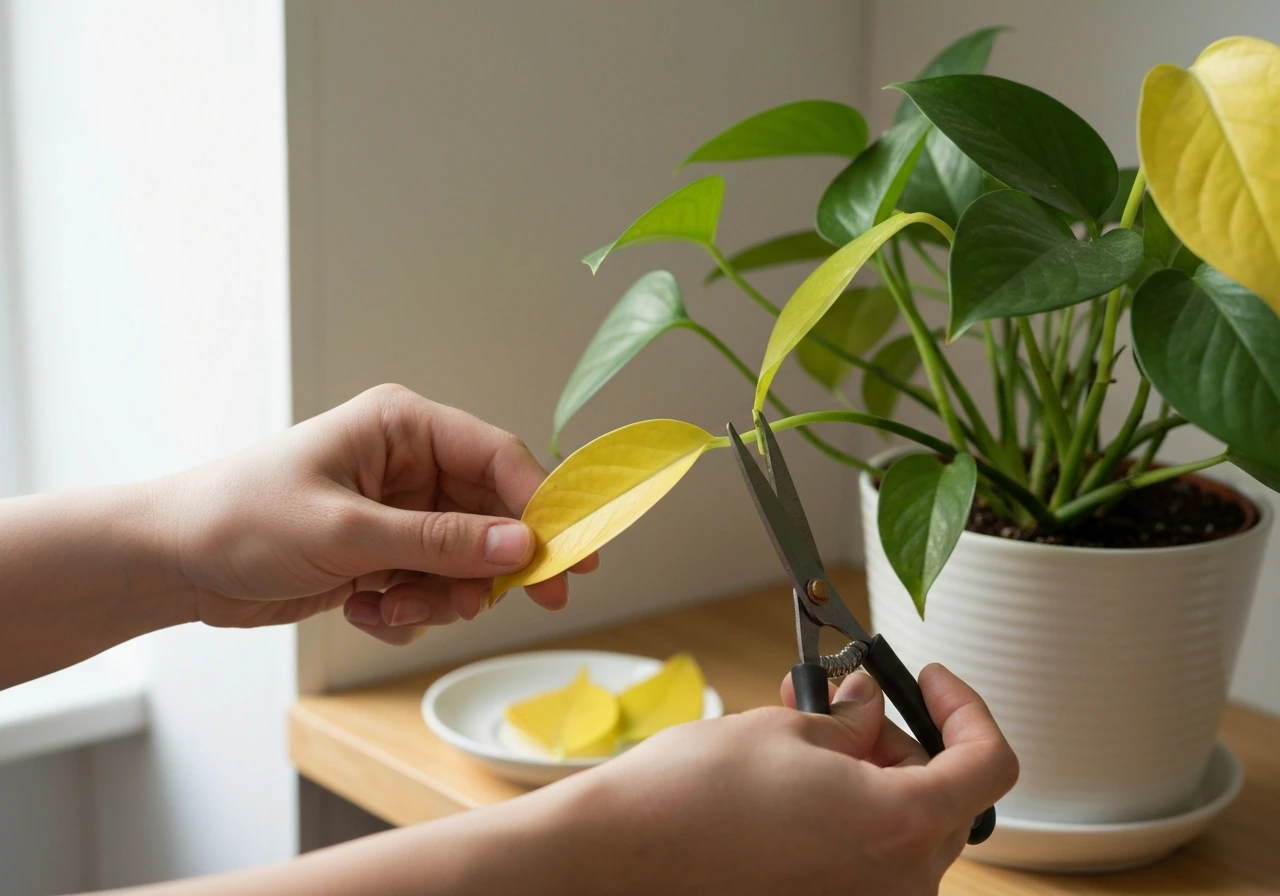
Pruning isn't just cosmetic, though it definitely helps decorative plants look their best. Removing dead, yellowing, or damaged leaves keeps the plant directing energy toward healthy growth. For bushy plants like peace lilies, cutting spent flower stems down to the base keeps the plant tidy and encourages new blooms. For vining plants like pothos, pinching back the tips encourages branching and a fuller appearance instead of long straggly vines.
Training is how you shape a plant's growth direction. Climbing or trailing plants can be guided onto a moss pole, trellis, or wire frame using soft ties or clips. The key is to redirect growth early, when stems are young and flexible, rather than trying to bend mature woody growth. This is particularly useful for decorative plants in small spaces where you want vertical growth instead of sprawl.
Pests are a fact of plant life, not a sign of failure. The most common ones on decorative houseplants are mealybugs, spider mites, scale, aphids, and fungus gnats. Inspect new plants before bringing them indoors, check the undersides of leaves regularly, and deal with problems as soon as you spot them. For mealybugs, pick them off by hand, prune heavily infested parts, then apply insecticidal soap or horticultural oil.
A strong spray of water knocks back exposed populations on harder-leaved plants. For fungus gnats, yellow sticky traps catch the adults, and products containing Bacillus thuringiensis israelensis (BTI, sold in products like Mosquito Dunks) treat the larvae in the soil. After applying soap or oil treatments, keep the plant out of direct sun for about 24 hours to avoid leaf burn. [Powdery mildew shows up as white patches on leaves and stems](https://greenhouse.
cornell. edu/pests-diseases/disease-factsheets/powdery-mildew/): remove affected parts immediately, improve air circulation around the plant, and apply a fungicide if it's spreading.
Growing in different mediums: terrariums, water, and hydroponics
Most of this guide assumes you're growing in standard potting mix, but decorative plants adapt well to other mediums, each with its own care adjustments.
Terrariums
Terrariums are beautiful but tricky for drainage. Because there's no hole for excess water to escape, you have very little room for watering error. Apply water sparingly with a spray bottle or a thin straw, and wipe condensation off the glass walls to prevent rot and mold. If you see standing water in the base layer, you've overwatered. Oklahoma State Extension notes that roots can suffocate in oxygen-depleted medium in terrariums, which is exactly the mechanism behind rot. Choose plants that tolerate humidity (ferns, mosses, small tropical foliage plants) and avoid succulents in closed terrariums. Commercial potting media often already includes a starter fertilizer charge, so hold off on additional feeding initially.
Water growing and propagation
Beyond propagation, some decorative plants like pothos and peace lilies can be grown long-term in water. If you're also wondering how to grow dried plants, the key is storing and rehydrating them safely so they keep their shape grown long-term in water. Use a clean container, keep the water level consistent (roots need to stay submerged but leaves shouldn't sit in water), and change the water every one to two weeks to prevent stagnation and algae. In water-only growing, nutrients have to come from a diluted liquid fertilizer since there's no soil to supply them. Use a very diluted solution (a quarter of normal label strength) added to the water every few weeks during the growing season.
Hydroponics
Hydroponic setups grow decorative plants in an inert medium like clay pebbles or rockwool with nutrient-rich water delivered directly to the roots. This removes soil from the equation entirely. Because the medium has no nutrients of its own, you manage feeding completely through the water solution, which requires more attention to nutrient ratios than soil growing does. The upside is faster growth, no soil pests like fungus gnats, and precise control over what the plant gets. Decorative foliage plants like pothos, philodendrons, and peace lilies transition to hydro relatively well. If you're already curious about growing decorative plants in unconventional setups, hydroponics is a natural next step from water propagation.
Seasonal care and troubleshooting common problems
Decorative plants don't need the same care year-round. In spring and summer, light is stronger, growth is faster, and plants need more water and regular fertilizing. In fall and winter, growth slows dramatically, light intensity drops, and most of the problems people blame on 'mysterious causes' are really just low light combined with overwatering that the plant can no longer handle. Cut watering frequency by roughly a third in winter and stop fertilizing until you see new growth resume in late winter or early spring.
Most houseplant problems come back to a handful of root causes. UC IPM makes the point clearly: most houseplant declines are due to improper care, and improper watering is at the top of the list. Use this quick-reference breakdown when something looks off:
| Symptom | Most Likely Cause | Fix |
|---|---|---|
| Yellowing leaves | Overwatering, poor drainage, or low light | Check soil moisture, ensure drainage, move to brighter spot |
| Wilting despite moist soil | Root rot from overwatering | Check roots, cut rotted sections, repot in fresh mix |
| Brown leaf tips | Salt buildup from over-fertilizing or low humidity | Flush soil with clean water, reduce fertilizer strength |
| Leggy, pale growth | Insufficient light | Move closer to window or add a grow light |
| White powdery patches | Powdery mildew fungus | Remove affected leaves, improve airflow, apply fungicide |
| Tiny flying insects around soil | Fungus gnats | Let soil dry more between waterings, use BTI treatment, add sticky traps |
| Sticky residue or cottony clusters | Mealybugs or scale | Remove manually, treat with insecticidal soap or horticultural oil |
| Faded variegation | Too little light | Move to brighter indirect light |
One thing worth normalizing: plants die sometimes, even for experienced growers. It doesn't mean you lack a green thumb. Once you’ve mastered these basics, you can apply the same process to how to grow exotic plants with more demanding light, temperature, and humidity needs green thumb. It usually means the conditions weren't quite right, and now you have better information for the next one. The gardeners and houseplant enthusiasts who have thriving collections didn't start that way. They just kept adjusting based on what the plants told them, which is exactly what this guide equips you to do.
If your interest in decorative plants expands beyond common houseplants, the same foundational principles here apply to other areas like growing native plants for your local landscape, growing exotic plants with more specific climate needs, or even preserving specimens through drying techniques. The core skills carry over; the specific variables just shift.
FAQ
How can I tell whether my decorative plant needs more light or just better watering?
If your room is dim, use the plant’s “failsafe” signals to course-correct. Slow growth, smaller leaves, and leaf color fading usually mean light is insufficient, not that you should water more or fertilize harder. Move the plant closer to the brightest window, rotate it every 1 to 2 weeks for even growth, and pause fertilizing until you see improvement.
My plant looks wilted, but the soil is damp. What should I do?
Overwatering often looks like “wilting,” but the soil stays wet or smells sour. Check with your finger at least 2 inches down, and confirm the pot has drainage. If the mix is still moist, wait, do not top up with a small amount of water, and consider repotting into fresh mix if the plant has been wet for many days.
Do I need to prune decorative plants if I think the problem is watering or light?
Yes. Without trimming dead or damaged leaves, a plant can keep trying to support tissue that no longer functions, which slows recovery after light or watering issues. Remove yellowing or mushy foliage and any spent flower stems, then give the plant stable conditions (moderate indirect light and appropriate watering) before changing multiple variables at once.
What do salt buildup symptoms like white crust or brown leaf tips mean, and how do I fix them?
If you see white crust on the soil surface or brown leaf tips, that’s often salt buildup from fertilizer or hard water. Flush the pot with extra water until it drains freely, then resume fertilizing at lower strength (half or quarter) and only during the active growth season. In very hard-water areas, using filtered or distilled water occasionally can reduce recurrence.
How often should I water, can I just mist to keep plants happy?
It depends on the method. For water propagation, change the water every few days and use room-temperature water. For soil-grown plants, “more frequent” watering is not the answer, wait for the top inch or two to dry. Also avoid misting as a substitute for watering unless you are targeting humidity-loving species in addition to proper soil moisture.
What temperature problems should I watch for in winter and summer?
Most decorative houseplants tolerate typical indoor temperatures, but they dislike sudden drafts and temperature swings. Keep plants away from heating or AC vents and do not let pots sit directly on cold windowsill glass in winter. If your home runs cooler at night, move the plant slightly back from the window during cold months.
How do I know it’s time to repot, and how big should the new pot be?
Start by confirming root health before deciding. If roots are circling or you see them through drainage holes, it’s time. If water runs straight through quickly, that often means the plant is root-bound or the mix has degraded and repotting into fresh mix helps. When repotting, match the previous soil depth and size up only 1 to 2 inches in pot diameter.
I want to try a new decorative plant, what’s the safest way to introduce it to my home?
For beginners, the safest approach is to scale up gradually. Choose a container with a drainage hole, keep the plant in bright indirect light, and use diluted fertilizer. Then watch for variegation loss (in variegated plants), slow growth, or consistent drooping as feedback before increasing nutrients or changing the light again.
Can I use decorative pots without drainage holes if I put the plant inside another pot?
Mixing a decorative pot with a drainage-cache setup is usually fine, but never allow standing water in the outer container. After watering, empty the cachepot after excess drains. A common mistake is forgetting the decorative sleeve needs emptying, which quietly leads to oxygen-poor roots.
Why do terrariums rot faster than regular houseplants?
Terrariums can work well for humidity-tolerant plants, but closed setups are unforgiving. Use only small, slow-growing plants, water sparingly with a spray or thin tool, and wipe condensation to reduce mold risk. If you ever see standing water in the bottom layer, you likely overwatered, and you should give the terrarium time to dry rather than “balancing” it with more water.
If I grow decorative plants long-term in water, what changes in care compared with soil?
For hydro or long-term water growing, the key difference is feeding. Soil is not providing nutrients, so you need a diluted liquid fertilizer at about a quarter label strength during the growing season. Also keep leaves out of the water so stems and foliage do not rot, and change water regularly to prevent algae and stagnation.