Gardening documentation is simply a growing log combined with a step-by-step grow plan: you write down what you planted, where, when, and how you cared for it, then use those notes to repeat what worked and fix what didn't. It doesn't need to be fancy. A notebook, a notes app, or even a folder of dated photos will do the job. The goal is to build a personal reference that tells you exactly what your specific space, your specific plants, and your specific habits produce, so every growing season gets easier than the last.
Gardening Documentation: How to Grow Plants Step by Step

Marcus Holloway
6 May 2026
What your growing log should actually include
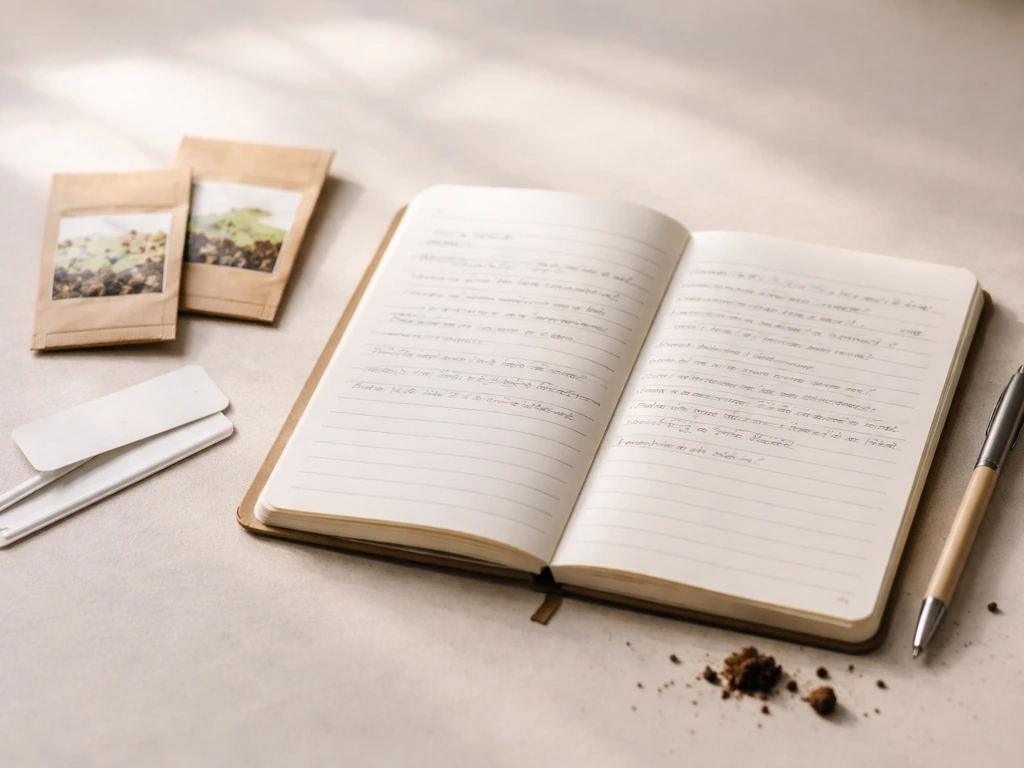
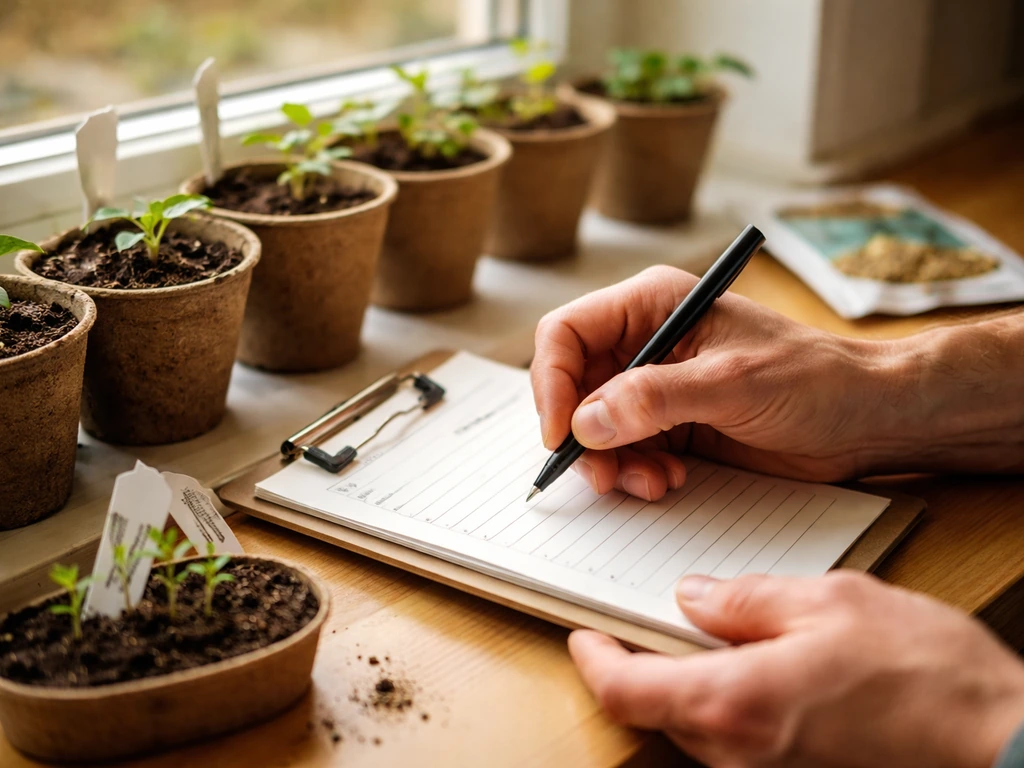
A good growing log captures the evidence behind every decision you make. Penn State Extension recommends tucking physical items directly into your journal: seed packets, plant tags in a plastic sleeve, and soil test results. That way, the reasoning behind what you did is right there next to your notes, not lost in a drawer somewhere. NC State Extension takes it further, recommending that you record the plant variety and source, soil conditions, weather events, and even wildlife encounters, because all of those details become clues when something goes wrong later.
For each plant or growing area, try to capture these core details every time:
- Plant name, variety, and where you got it (seed packet, cutting, nursery purchase)
- Date planted or started, and the specific location (bed, container, shelf, grow tent)
- Soil or growing medium used, including any amendments with brand name, nutrient amounts, quantity applied, and date
- Watering schedule and any changes you made
- Fertilizer type, rate, and date of application
- Pest or disease treatments including the active ingredient, rate, and date
- Photos taken on a consistent schedule (same angle, same time of day helps a lot)
- Observations: leaf color, new growth, wilting, any unusual signs
Iowa State Extension specifically calls out photos as one of the most underused documentation tools. A dated photo lets you compare a plant across weeks and years, and it gives you something concrete to show someone when you're trying to diagnose a problem. Take one when you plant, one every one to two weeks during active growth, and one whenever something looks off. You'll be surprised how useful that visual timeline becomes.
One more thing worth adding: your soil test results. OSU Extension points out that meaningful soil data depends on sampling at the same time each year and keeping those records. Drastic changes between test results often mean the sampling method was inconsistent, not that the soil dramatically changed. Penn State Extension notes that soil test kits are available through their extension office and commercial firms, and the sample submission form should be kept with your results so you know the context of what was tested.
Choosing plants that actually fit your environment
Before you document a single thing, you need to pick plants that have a realistic chance in your specific conditions. If you want more specific tips to grow flowering plants, use the same log approach to refine light, soil, and watering based on what your plants actually do. This is where a lot of beginners set themselves up to fail, not because they lack skill, but because they chose a plant that needed what their space simply can't provide.
Start with light. Walk through your space at different times of day and note where sunlight actually hits and for how long. A south-facing window in a house gets more direct light than a north-facing apartment balcony. Most vegetables and fruiting plants need six or more hours of direct sun. Leafy greens and many herbs tolerate partial shade. Tropicals like pothos and snake plants handle low indoor light. Be honest in your log about what you actually have.
Next, check your hardiness zone if you're growing outdoors or in an unheated space. The USDA Plant Hardiness Zone Map is the standard tool for this: it categorizes locations by average annual extreme minimum winter temperature in 10-degree Fahrenheit zones (with half-zones included). Knowing your zone tells you which perennials are likely to survive winter in your area, and it helps you set realistic expectations for your growing season length.
Finally, consider space honestly. A five-gallon container can support a single determinate tomato plant but not a sprawling indeterminate variety. A terrarium can house a fern but not a fiddle-leaf fig. Log your available space dimensions (square footage of a bed, container volume, shelf dimensions under a grow light) and match that to the mature size listed on seed packets or plant tags. Getting this right upfront saves a lot of frustration later.
Building a step-by-step grow plan
Starting from seed or cuttings
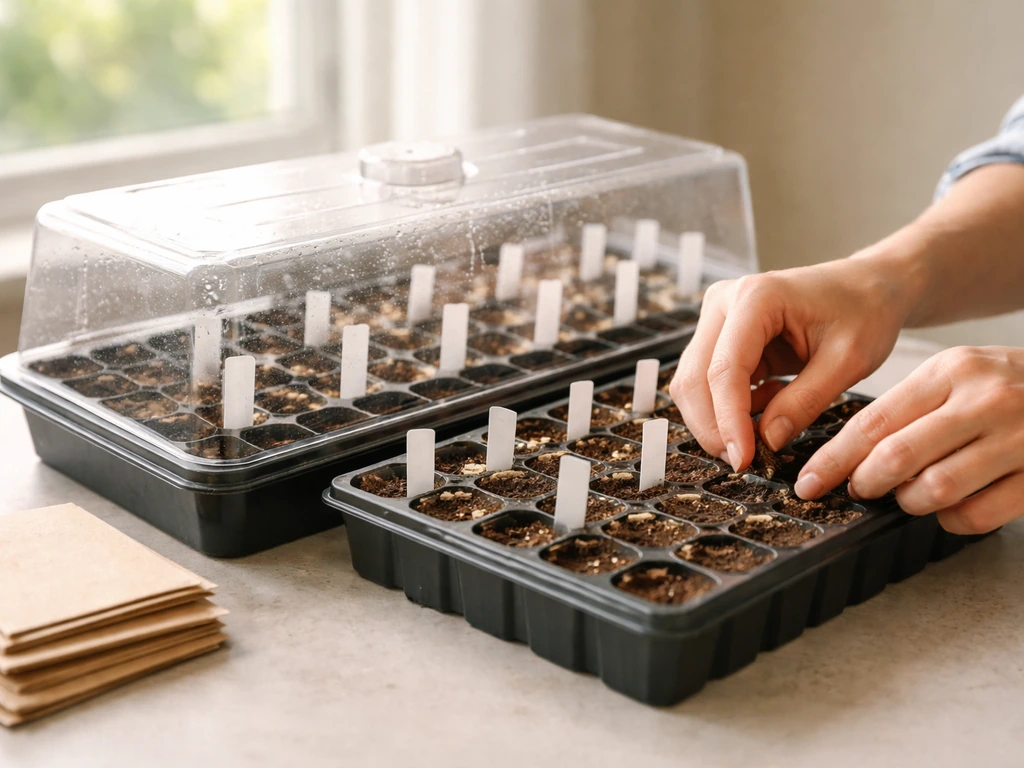
The key timing calculation for starting seeds indoors comes from UAF Cooperative Extension: subtract the weeks to maturity from your average last spring frost date to figure out when to start seeds inside. For example, if your last frost is May 1 and your tomatoes need eight weeks indoors before transplanting, you start seeds around March 6. Write this calculation in your log every year. Label every seed tray with the variety name and the date you started it. NDSU also recommends labeling saved seeds with variety and collection date so you can track germination rates over time as seeds age.
For cuttings, document the parent plant, the date you took the cutting, the rooting medium you used (water, perlite, soil mix), and how long rooting took. That information is gold when you want to propagate the same plant again or troubleshoot why a cutting failed.
Transplanting without killing your seedlings
Hardening off is the step most beginners skip, and it's usually why transplants die or stall. Penn State Extension defines it as gradual acclimation to outdoor conditions, sun, wind, and cool nights, and recommends doing it over 10 to 14 days before transplanting. University of Maryland Extension adds a practical temperature rule: don't put tender seedlings outside when temperatures are below 45 degrees Fahrenheit. Start with an hour or two of morning shade, then build up to full-day outdoor exposure across two weeks. Log the hours outside and conditions each day.
When it's time to transplant, Penn State Extension recommends doing it on a cloudy day or in the late afternoon and early evening. This reduces transplant shock because the plant isn't simultaneously dealing with heat, direct sun, and the disruption of its root zone. Note the transplant date, weather conditions, and how the plant looked two to three days after. That post-transplant check-in is one of the most important log entries you'll make.
Feeding and watering routines
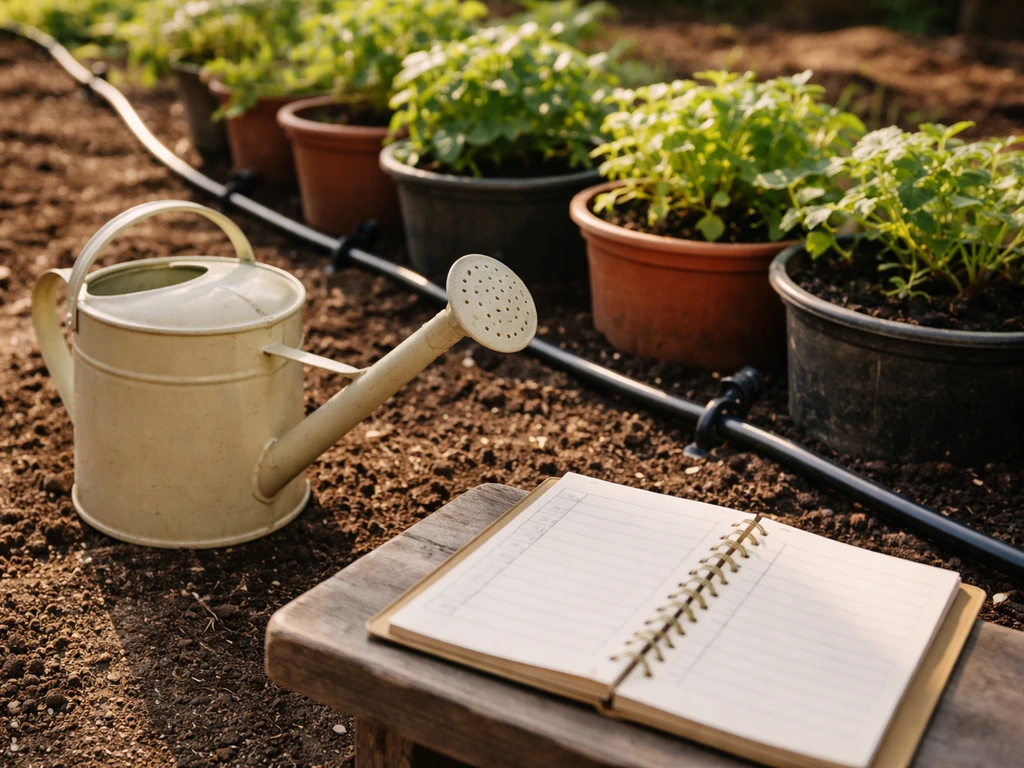
Build your watering and feeding schedules into your log as a template, then record every deviation from that template and why. Most watering problems come from inconsistency, not the wrong frequency. A plant that gets three days of drought followed by a heavy soak behaves differently than one on a steady schedule. For example, NDSU’s Garden Journal guidance says you should document significant weather events like hail, frosts, and drought so you can understand how they affected your plants. Log the date, how much you watered, and whether the soil was dry, moist, or wet at the time. For fertilizer, NC State Extension recommends recording the brand name, nutrient amounts (the N-P-K numbers), the amount applied, the location, and the date. This level of detail lets you connect feeding decisions to plant outcomes weeks later.
Growing in different mediums (and how documentation changes)
The growing medium you choose changes what you need to track. Here's how documentation shifts across the most common setups:
| Growing Medium | Key Variables to Document | What Changes |
|---|---|---|
| Outdoor soil beds | Soil test results, amendments, rotation history, weather events | Track crop rotation to reduce disease; NDSU notes that if tomatoes grew in a spot this year, certain related crops should be kept out of that area for multiple years |
| Containers | Container volume, mix composition, watering frequency, drainage behavior | Containers dry out faster than beds; log water checks more frequently, especially in summer heat |
| Water-grown / aquaponics-style | Water pH, temperature, nutrient solution changes, fish load if applicable | No soil buffer means problems escalate faster; daily or every-other-day checks are typical |
| Hydroponics | Nutrient solution EC and pH, reservoir temperature, solution change dates, light schedule | Precision matters more here; log every solution change and any adjustments to nutrient ratios |
| Terrariums | Humidity levels, watering dates, glass condensation observations, plant growth rate | Closed terrariums need far less watering; log the last water date and watch condensation as your humidity gauge |
For water-based setups and hydroponics, your log essentially becomes a system log. You're tracking the chemistry of the environment, not just the plant. Even a basic note like 'pH was 6.2, adjusted up to 6.5 with X product on Y date' gives you a trail to follow if growth stalls. Terrariums are almost the opposite: they're low-intervention, and your documentation mainly confirms that you're not over-watering a self-regulating system.
Tracking progress and troubleshooting with your records
Your log is most powerful when something goes wrong. Instead of guessing, you have a timeline. Here's how to use it systematically when a plant starts struggling:
- Pull up your recent entries and look for anything that changed in the past one to two weeks: new fertilizer, a watering schedule shift, temperature drop, new location, repotting.
- Check the most recent photo against an earlier one. Is the problem getting worse fast, or has it been creeping in slowly? Fast decline usually points to root issues, overwatering, or a sudden environmental shift. Slow decline points to nutrient imbalance or chronic light problems.
- Match the visual symptoms to likely causes: yellowing lower leaves often signals nitrogen deficiency or overwatering; brown crispy tips usually mean low humidity or salt buildup from fertilizer; wilting despite wet soil almost always means root rot.
- Change one variable at a time and document the change with the date and reasoning. This is the part most people skip. If you change the water schedule and the fertilizer simultaneously, you won't know which one helped.
- Check in three to seven days and log what you see. Plants respond slowly, so resist the urge to change something again before you've given the first adjustment time to work.
For pests and diseases, log what you saw, when you saw it, and what treatment you used, including the active ingredient, rate, and application date. Iowa State Extension specifically recommends capturing this level of detail because it lets you evaluate whether a treatment actually worked and whether the problem recurred in a later season. If you treated with a pyrethrin spray in week four and the aphids came back in week six, that's a pattern worth knowing.
Don't skip the growth check-ins even when everything looks fine. A weekly note that says 'looking healthy, two new leaves, no signs of stress' is just as useful as a troubleshooting entry. It establishes what normal looks like for that plant in your environment, which makes it much easier to spot the early signs of a problem before it becomes serious.
Seasonal and long-term documentation: making next year easier
At the end of each season or growing cycle, set aside 20 to 30 minutes to do a review. This is where your documentation pays off the most. Go back through your log and mark the wins (what grew well, what you'd grow again, what timing worked), the losses (what failed and what you think caused it), and the open questions (things you're not sure about yet).
Build a rotation map from your notes. NDSU specifically recommends using your journal to plan crop rotation so you can reduce disease pressure by tracking where specific plant families grew each year. If you planted nightshades (tomatoes, peppers, eggplant) in a particular bed this year, your log tells you to avoid planting related crops there for the next several years. The same logic applies to containers: if a container grew basil all season and basil developed downy mildew, you know to either replace the mix or choose a different plant for that container next time.
Create a simple timeline document (a table or a calendar page) that maps out next season's start dates based on this season's actual last-frost date and how your seed-starting timing worked out. Did you start tomatoes too early and end up with leggy seedlings under artificial lights for too long? Log that and adjust the start date by one to two weeks next year. Did your transplants go out a week before the last frost and handle it fine? That tells you your local microclimate may be slightly warmer than the average, and you can push timing earlier with confidence.
If you're growing year-round indoors, especially in hydroponics or under grow lights, your seasonal review becomes a system audit: how did your nutrient ratios perform, what was your average EC, did you have any recurring pH swings, and what light schedule produced the best results? Write it down. That information is your operating manual for the next grow cycle.
The broader how-to steps for actually growing plants, the specific four-step or five-step frameworks, and the tips on growing flowering plants specifically all connect naturally to what you're building here with your documentation system. If you want a clearer template for timing and tasks, use these 4 steps to grow a plant as a starting point, then tailor your entries using your log. Use a clear, step-by-step approach so you can follow a simple five-step plan for growing plants from start to harvest. The same approach also works great if you're looking for tips on how to grow plants in your own space. Think of your log as the container that holds all of those step-by-step processes together and makes them repeatable in your specific environment, not just in theory.
Start small if this feels like a lot. Pick one plant, one location, and one season. Write down the date you started, take a photo, and note what you did each week. Grow plants by starting with a clear plan, choosing the right variety for your conditions, and then following consistent watering, feeding, and light routines while you document results. By the time that plant finishes its cycle, you'll have something genuinely useful, and you'll naturally want to add more detail the next time around. These steps to grow plants can be repeated and refined each season as you learn what works in your garden. That's how a documentation habit builds: one plant, one season, one honest set of notes.
FAQ
How do I handle documentation when I miss a week or two of notes?
If you skip entries, add a “gap note” where you resume (what you last remember, any visible changes since, and weather or schedule disruptions). Then anchor future notes to repeatable events like “first true leaves,” “first watering after dry,” or “treatment date,” so the log still forms a useful timeline.
What should I do if my soil test results are inconsistent year to year?
Use your log to verify that sampling matched the same depth and the same part of the bed or container mix. If the sampling location or timing changed, treat the results as “context changes” and don’t rush to assume the soil itself flipped overnight.
How often should I take photos for best troubleshooting without overdoing it?
Keep a consistent cadence tied to plant stage: one photo at planting, one at the start of active growth (or after transplant), then weekly during the fastest growth period. Add extra photos only when you see a new symptom (yellowing, spots, wilting), and include a frame reference (same angle/distance each time).
What details matter most when a pest issue comes back after treatment?
Record the growth stage, the number of days between treatment and recurrence, and whether the pest population changed in location (new growth versus older leaves). Also note the exact application method (spray coverage, time of day, whether you rinsed), because “same product, different method” can look like a treatment failure in your log.
How should I document fertilizer if I use compost or slow-release products instead of liquid feed?
Still log nutrient inputs, but convert them to something traceable: product name, application date, total amount, and where it went (top-dress, mixed into medium, or banded). If you cannot get N-P-K from the label, log the product type and rate you used so you can compare outcomes later.
Do I need to log watering every day, even if nothing seems to change?
Not necessarily. Many gardeners get better results by logging at “decision points” rather than daily: the day you water, the volume or method, and what the soil moisture felt like before watering (dry, slightly dry, moist, wet). If you use a moisture meter, log the reading and the calibration or brand so comparisons stay meaningful.
How do I document “hardening off” when the weather keeps changing?
Use your log to capture the actual conditions each day (hours outside, wind exposure, cloud cover, and minimum overnight temperature). If a day is unusually cold or windy, note it as a deviation, then resume the schedule from the last “comfortable” baseline rather than following the calendar blindly.
What if I’m growing multiple plants together, like in a bed or hydroponic tank?
Group documentation by zone or system. For beds, log common factors per bed (soil amendments, irrigation changes, pest treatments applied). For mixed plantings, also record which species showed symptoms first, since the earliest affected plant often points to the cause.
How do I set up labels and dates so saved seed tracking stays reliable?
Label saved seeds with variety and collection date immediately after harvesting, then also note the plant parent (if known) and storage start date. If you test germination, record the germination rate over time (first count date and final count date), not just “it sprouted.”
What is the best way to review my log without getting overwhelmed?
Do a structured review: pick one category to focus on (timing, water, light, nutrients, pests) and answer three questions, what improved, what worsened, and what decision I would change next time. Then select only one or two measurable adjustments for the coming season so your next grow cycle has clear targets.