Growing rare plants is absolutely doable, even if you've killed a few plants before. The key is understanding what "rare" actually means for your specific plant, sourcing it responsibly, and then matching its environment as closely as possible. This guide walks you through every step: finding the plant legally, setting up the right conditions, picking a growing method, propagating more plants from what you have, and troubleshooting when things go sideways. Follow these steps and you'll go from nervous first-timer to someone with a genuinely impressive rare-plant collection.
How to Grow Rare Plants: Step-by-Step Care Guide
Marcus Holloway
18 Apr 2026
What makes a plant "rare" (and how to source it ethically)
"Rare" is not one single thing. In conservation science, NatureServe uses a global ranking system where a G1 rank means critically imperiled (typically 1 to 5 known wild occurrences), G2 means imperiled (6 to 20 occurrences), and G3 means vulnerable (21 to 100 occurrences). In the horticultural world, though, "rare" usually just means hard to find in commerce, not necessarily endangered in the wild. A plant can be rare at your local nursery but common in its native habitat, or vice versa. Knowing which category your plant falls into matters a lot for how you source it.
Sourcing is where a lot of well-meaning growers accidentally do harm. Wild-collecting protected plants is illegal and genuinely damaging to ecosystems. Internationally, CITES (the Convention on International Trade in Endangered Species) governs the trade of at-risk species through three appendices. Appendix I species cannot be commercially traded at all.
Appendix II and III species can be traded legally, but only with proper permits from the exporting country. USDA APHIS enforces these rules at the U. S. border alongside the U.
S. Fish and Wildlife Service, and vendors sometimes don't even know they need those permits, so the burden is on you as the buyer to ask the right questions. For international movement regulation and importer/exporter requirements, see the U. S.
Fish & Wildlife Service’s “Information for Importers & Exporters” page [the U. S. Fish and Wildlife Service](https://www. fws.
gov/apps/program/office-of-law-enforcement/information-importers-exporters). If a deal seems impossibly cheap for a plant that should be expensive and rare, that's your cue to dig deeper before purchasing.
The safest and most sustainable way to source rare plants is through reputable specialty growers, botanical garden plant sales, and established online communities that trade legally propagated cuttings or divisions. Many rare plants that are fussy in the wild actually grow beautifully in cultivation when given the right conditions, so there's rarely a reason to pull from wild populations. Look for sellers who can tell you the propagation history of the plant, not just the country it came from. When in doubt, stick to cultivated specimens.
Setting up the right growing conditions
Rare plants are often fussy because they evolved in very specific niches. Your job is to replicate those niches well enough that the plant doesn't feel like it's fighting for survival. You don't need a professional greenhouse to do this, but you do need to pay attention to four variables: light, water, temperature, and humidity. Get these right and most other problems become minor. Get them wrong and even good fertilizer and expensive soil won't save the plant.
Light
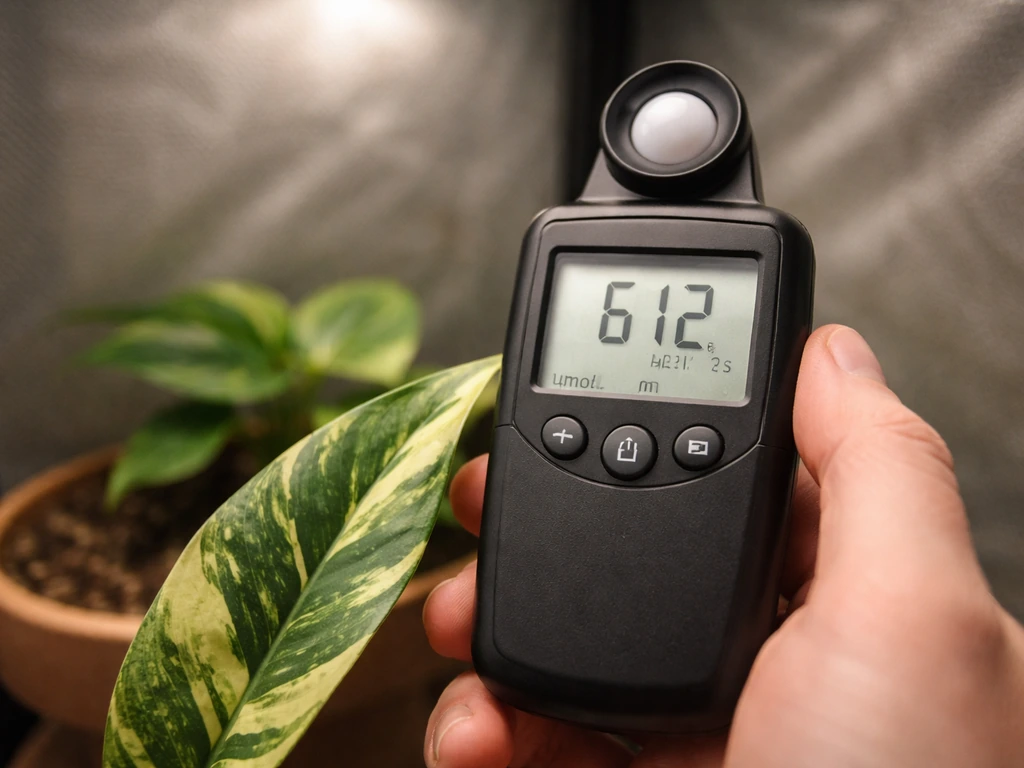
Light is the variable most beginners underestimate. Plants use PAR (photosynthetically active radiation), measured in µmol·m⁻²·s⁻¹, to photosynthesize. Consumer lux meters are useful for general comparisons, but a PAR sensor gives you a more accurate read of what the plant is actually receiving. As a practical rule: most tropical rainforest understory plants (bird of paradise relatives, rare aroids, begonias) want 50 to 200 µmol·m⁻²·s⁻¹, while Mediterranean or alpine species want 400 to 1,000 µmol·m⁻²·s⁻¹ or more.
If you're growing indoors, a bright south- or west-facing window may hit 200 to 400 µmol at peak on a clear day, but that drops sharply even a meter back from the glass. A quality grow light with a timer solves this reliably. Aim for 12 to 16 hours of light per day for most tropical species; less for plants that need a seasonal rest.
Water
Overwatering kills more rare plants than any pest or disease. The simple test: push your finger about 2 cm into the soil. If it's still moist, wait. Most rare tropical plants want the top layer to dry slightly between waterings, while succulents and cacti want the entire root zone to dry out.
A few species, like carnivorous plants, want to sit in standing water. Research your specific plant's native habitat; if it grows in a cloud forest with 90% humidity and daily mist, it needs consistent moisture but not waterlogged roots. If it grows on rocky slopes in seasonal drought, let it dry right out between waterings. Water quality matters too: many sensitive rare species are damaged by fluoride or chlorine in tap water.
Let tap water sit overnight, or use filtered or rainwater.
Temperature and humidity
Most tropical rare plants want daytime temperatures between 18°C and 28°C (65°F to 82°F) and dislike sudden drops below 15°C (59°F). Cold drafts from windows or air conditioning vents are a common problem in apartments. A digital thermometer placed near the plant (not across the room) will reveal surprises. Humidity is equally critical: use a hygrometer to measure actual relative humidity at plant level, not just the room in general.
Many rare tropicals want 60% to 80% relative humidity. You can raise humidity with a pebble tray filled with water, a small humidifier, or by grouping plants together. Avoid misting directly onto leaves as a primary humidity strategy; it creates wet spots that invite fungal disease without raising ambient humidity meaningfully.
Choosing a growing method: soil, water, or terrariums
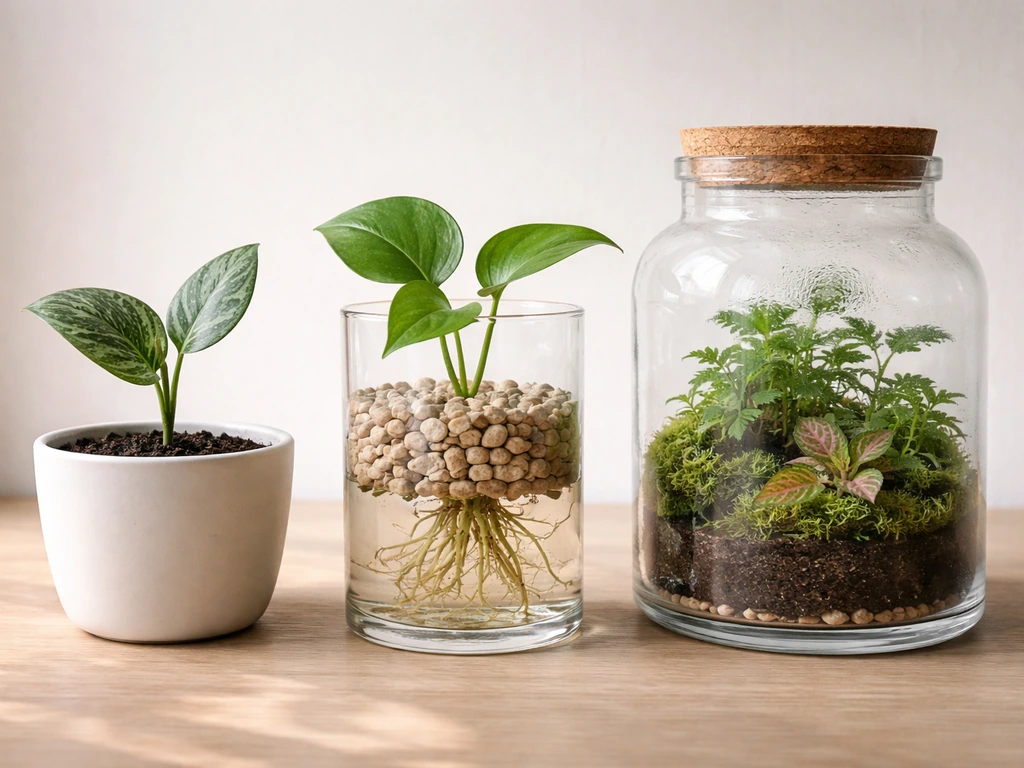
There is no single best growing method for rare plants. The right choice depends on the specific species, your space, and how much time you can realistically give to maintenance. Here's an honest comparison of the three main approaches.
| Method | Best for | Key advantages | Main risks |
|---|---|---|---|
| Soil/containers | Most rare tropicals, succulents, alpine species | Familiar, forgiving buffer for over/underwatering, wide media options | Overwatering, soil compaction, root rot if drainage is poor |
| Water propagation/hydroponics | Aroids, some orchids, fast-rooting tropical cuttings | Visible root development, reduced pest pressure in sterile setups, great for propagation | Nutrient balance is harder to manage; not ideal for long-term for all species |
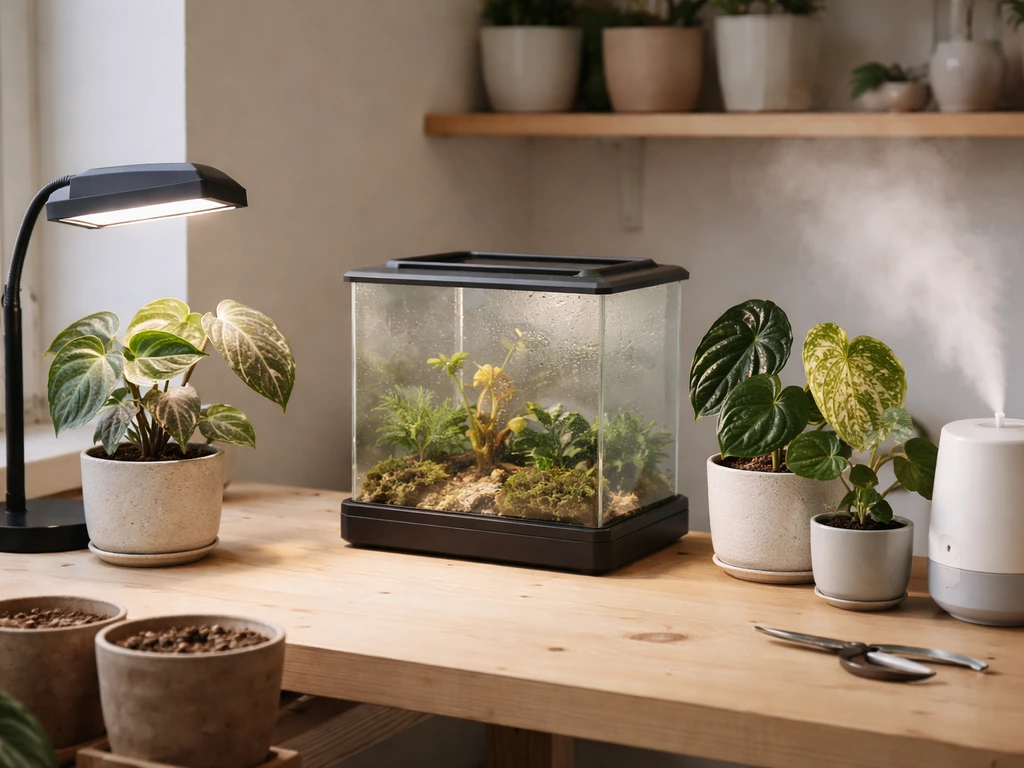
| Terrariums/enclosed containers | Miniature rare tropicals, ferns, mosses, carnivores | High humidity maintained passively, compact space use, low-maintenance once balanced | Overheating, fungal outbreaks if ventilation is wrong, hard to repot when needed |
For most beginners, start with soil in a well-draining container. A mix of high-quality potting soil cut with perlite (roughly 60/40) gives you drainage insurance against overwatering while still holding enough moisture for tropical species. If you're drawn to terrariums, that's a fantastic path for many miniature rare plants, and you can read more about how to grow ornamental plants in decorative container setups to build that skill set first. Water propagation is best treated as a transitional step before moving cuttings into a permanent medium, rather than a long-term home, unless you're specifically running a hydroponic system.
Propagation: getting from one plant to many
One of the smartest things you can do with a rare plant is learn to propagate it before you need to. If the original plant struggles, a backup cutting or division is priceless. Different species respond to different propagation methods, so matching the method to the plant matters.
Cuttings
Stem cuttings are the most common method for rare tropical plants like aroids, hoyas, and many rare begonias. Take a cutting with at least one node (the bump on the stem where leaves and roots emerge), let the cut end callous for a few hours, then place it in water, moist perlite, or sphagnum moss. Keep it warm (22°C to 26°C), humid, and in bright indirect light. Most tropical cuttings root in 2 to 6 weeks. Rooting hormone (indole-3-butyric acid, available as a powder or gel) can speed things up, but many species root fine without it.
Seeds
Seeds are slower but give you the most plants from the least material. Many rare species have specific germination requirements: some need stratification (a cold period to break dormancy, mimicking winter), some need scarification (scratching the seed coat), and some need fresh seed because viability drops quickly. Always research germination requirements for the specific species rather than guessing. Use a sterile seed-starting mix, maintain consistent warmth and moisture, and be patient. Some rare species take 30 to 90 days to germinate.
Division
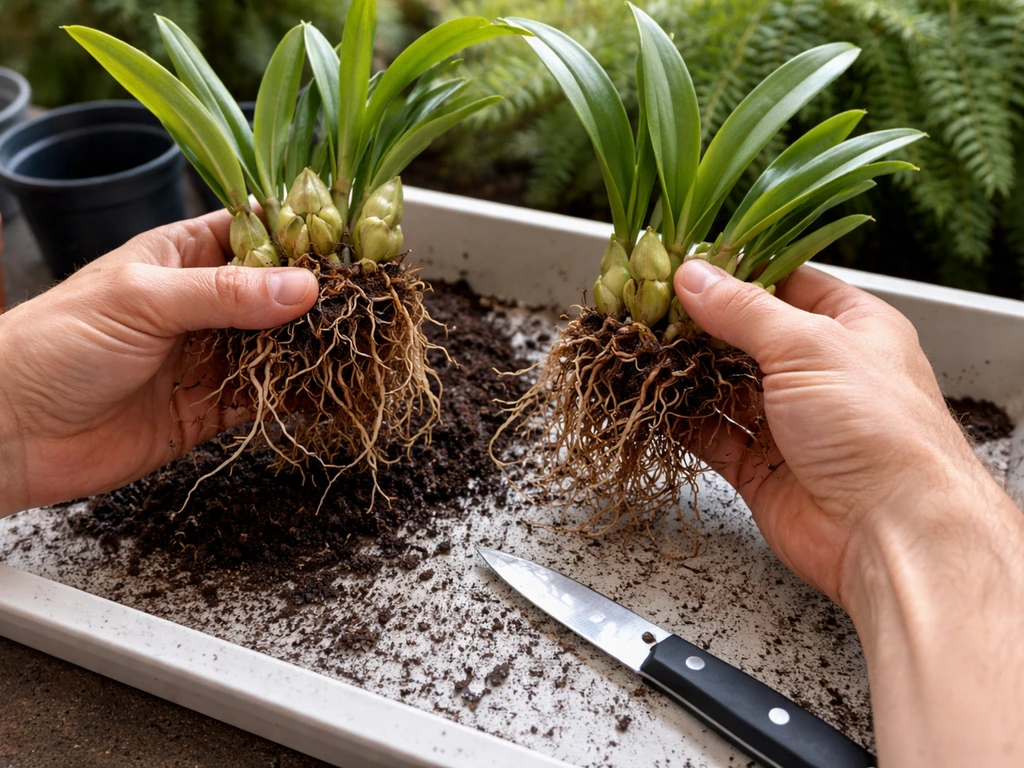
Clumping plants, orchids with multiple pseudobulbs, and many ferns can be divided when they're actively growing and large enough to survive the split. Use a clean, sterilized blade. Each division needs at least two to three healthy growth points to re-establish well. After dividing, treat the cut surfaces with powdered cinnamon or a dilute hydrogen peroxide solution to prevent infection, and keep the divisions in high humidity while they settle. This is also the method most commonly used when growing medicinal plants that spread vegetatively, like many mints or root-dividing herbs.
Preventing and treating common problems
Rare plants are not necessarily more fragile than common ones, but because they're harder to replace, mistakes feel higher-stakes. The good news: most problems are preventable with consistent monitoring and basic hygiene. Think of this as integrated pest management (IPM), a holistic approach that emphasizes prevention, healthy growing conditions, and prompt action over routine chemical spraying. IPM prioritizes the least disruptive interventions first and escalates only if needed.
Pests
The most common rare-plant pests are spider mites, thrips, fungus gnats, mealybugs, and scale. Inspect every new plant carefully before it goes near your collection. A 30-day quarantine period for new arrivals is not overkill; it's just sensible. Check the undersides of leaves, the soil surface, and where leaves meet the stem. At the first sign of pests, start with the least-toxic options: insecticidal soap, neem oil, or horticultural oil applied directly to affected areas. These disrupt pests physically rather than through systemic toxins, which is safer for sensitive rare species. Repeat treatments every 5 to 7 days for at least three cycles to break the pest lifecycle.
Disease
Root rot (caused by Pythium and Phytophthora species) is the most common disease in rare plants and is almost always a watering problem, not a soil problem. If your plant suddenly wilts despite moist soil, suspect root rot immediately. Unpot, remove all mushy roots, let the remaining healthy roots air-dry for an hour, and repot in fresh, dry medium. Fungal leaf spots are usually a humidity-plus-poor-airflow issue. Trim affected leaves, improve airflow with a small fan, and avoid wetting foliage. Bacterial infections look similar but spread faster and smell unpleasant; treat by removing affected tissue aggressively and applying a copper-based bactericide if needed.
Nutrient issues and environmental stress
Yellow leaves are not always a nutrient deficiency; they can mean overwatering, underwatering, too little light, or root bound conditions. Before adding fertilizer, rule out environmental causes first. If the plant has been in the same mix for over a year and is growing actively, a dilute balanced liquid fertilizer (half the label rate) every two to four weeks during the growing season is a safe starting point.
Brown crispy leaf tips usually mean low humidity or fluoride sensitivity; brown mushy patches usually mean cold damage or overwatering. Transplant shock is common after repotting and looks like sudden wilting or leaf drop; keep the plant out of direct light, maintain high humidity, and hold off on fertilizer for at least four weeks.
Care routines that actually keep rare plants thriving long-term
Long-term success with rare plants comes down to building consistent habits rather than heroic rescue efforts. The plants that die are almost always the ones that get ignored for two weeks and then overwatered to compensate. Set a weekly check-in: look at each plant, feel the soil, check the undersides of leaves, and note anything unusual. This sounds small, but it catches problems at the size of a pinhead rather than at the point of no return.
- Water based on soil feel, not a fixed schedule. Seasons change, growth slows in winter, and watering needs shift accordingly.
- Fertilize during active growth (typically spring and summer for most species) and stop or reduce significantly in fall and winter.
- Repot when roots circle the bottom of the pot or push through drainage holes, typically every 1 to 2 years for fast growers, less often for slow ones. Go up only one pot size at a time.
- Acclimate plants slowly to new environments. Moving a plant from low light to bright light over 2 to 3 weeks prevents leaf scorch. Moving from indoors to outdoors? Start in full shade and increase sun exposure gradually over 10 to 14 days.
- Clean leaves periodically with a damp cloth to remove dust, which blocks light and hides pests.
- Rotate the pot a quarter turn every week or two so all sides get equal light and the plant grows evenly.
Some rare plants, especially alpine or temperate species, need a true seasonal rest period to perform well. Pushing them to grow year-round with extra heat and light actually weakens them. If you're interested in working with plants that have complex seasonal needs, the guidance on how to grow alpine plants is worth reading; the dormancy and cold stratification principles there transfer directly to many other rare cool-climate species.
Troubleshooting and scaling up your rare-plant collection
Even experienced growers lose rare plants sometimes. Normalize it. What separates people who build great collections from people who give up is how quickly they diagnose what went wrong and apply that lesson to the next plant. Keep simple notes: when you watered, when you fertilized, what the plant looked like, and what you changed. A phone photo once a week takes ten seconds and gives you a visual record that's invaluable when you're trying to figure out whether that yellowing started before or after you adjusted the light.
When a plant is declining and you can't figure out why, work through this order of checks before doing anything dramatic: light level, watering frequency and drainage, temperature and humidity at plant level, root health (unpot and look), and then pests and disease. Most problems trace back to one of the first three. Only after eliminating environmental causes should you suspect disease or nutrition. And if you have a plant that has died or appears completely beyond saving, don't just throw it out immediately: the guidance on how to grow dead plants (reviving plants that appear dead) walks through emergency recovery steps that have saved plants most people would have composted.
Scaling up your collection doesn't have to mean buying more. Propagation is how serious rare-plant growers build depth. Once you can reliably root cuttings and divide plants, you can trade within the rare-plant community, swap cuttings with other enthusiasts, and access species you'd never find in a store. For CITES-related questions (including endangered plant species), USDA APHIS lists trade contacts on its trade contacts page. Online rare-plant communities, local botanical society sales, and specialty grower newsletters are all excellent sources that come with built-in knowledge sharing.
Your immediate next steps
- Identify your target plant by its botanical name and look up its native habitat conditions (light, humidity, temperature, soil type, and seasonal patterns).
- Source it from a reputable cultivated-plant seller; ask about propagation history and whether any CITES permits are required for the species.
- Set up your growing space before the plant arrives: check actual light levels with a PAR meter or a good lux meter app, measure humidity with a hygrometer, and confirm the temperature range near where the plant will live.
- Choose your growing medium based on the species' needs and your experience level; for most beginners, a well-draining soil mix in a container with drainage holes is the right starting point.
- Quarantine any new arrival for 30 days away from your existing plants before integrating it.
- Start a simple plant log: date, watering, any observations. Review it monthly.
- Once your plant is established, take your first cutting or note division opportunities to build a backup.
FAQ
How do I tell whether a “rare” plant is rare because it’s hard to find, or because it’s endangered in the wild?
Ask the seller for the plant’s conservation status and source type. Look for information on whether it’s cultivated stock (grown from previous horticultural propagation) versus wild-collected, and request proof of legal acquisition paperwork when applicable. A plant can be “rare” locally but still common in habitat, and the care urgency and sourcing risks differ.
What’s the safest way to buy rare plants when I’m worried a vendor might not know the legal requirements?
Use a short checklist before paying: confirm CITES status if relevant, ask whether the shipment includes any required permits, and request the plant’s provenance (cultivated and where it was propagated). If the seller cannot answer or won’t provide basics like permit details or propagation history, treat it as a red flag and don’t purchase.
Should I quarantine every rare plant even if it looks healthy?
Yes. Quarantine is mainly for early detection, since eggs, hidden mites, and fungus gnat larvae can be present before you see symptoms. Keep the plant in a separate spot for about 30 days, water it last compared with your collection, and avoid sharing tools or potting media between plants.
What’s the biggest mistake people make with rare plants after they bring them home?
Overcorrecting immediately. A common pattern is changing light, humidity, and watering all at once, which makes it impossible to diagnose the cause of stress. Move the plant to a stable spot with familiar conditions for a week or two, then adjust only one variable at a time.
How do I know if my light is strong enough if I don’t have a PAR meter?
Use distance and plant response as your proxy. If you don’t have PAR hardware, start by placing the plant closer to the light gradually while watching for specific signs, leaf stretch (too little light) versus bleached or crispy edges (too much). Keep a simple log of distance and any symptoms to avoid guessing.
Can I grow rare plants on a windowsill without grow lights?
Sometimes, but it’s inconsistent across seasons and often drops off quickly with distance from the glass. If you try it, rotate the plant weekly so it doesn’t lean and keep it away from cold drafts and overheated spots. For long-term reliability, a timed grow light is usually easier than relying on variable daylight.
How should I adjust watering during winter or low-light periods?
Reduce frequency and rely on the soil dryness test rather than your summer routine. In cooler, darker periods, many rare plants use less water and are more vulnerable to root issues. If your plant is in a warmer, brightly lit setup, changes may be smaller, but still confirm by feeling the root-zone moisture.
What should I do if my rare plant keeps getting leaf spots or the leaves look wet but I’m not sure why?
Treat wetness and airflow as separate problems. Avoid misting as the primary humidity strategy, water at the base, and add gentle airflow (for example, a small fan) so foliage dries faster. If spots spread quickly, remove affected leaves early to slow progression.
Do I always need high humidity for tropical rare plants?
Not always. Many tropical plants prefer humidity, but the ideal range is species-specific and airflow matters as much as humidity. If you raise humidity using a humidifier, ensure you still have ventilation to prevent fungal leaf issues. Measure humidity near the plant and adjust gradually.
Is fertilizer helpful for rare plants right away after repotting?
Usually not. After repotting, skip fertilizer until the plant resumes active growth, because stress plus salt buildup can worsen decline. A practical rule is to wait at least four weeks (or longer if the plant is still dropping leaves), then start at half strength during the growing season.
How can I tell nutrient problems from environmental problems when leaves yellow?
First eliminate the top environmental causes: light level, watering pattern, and root health. Yellowing that follows recent changes in watering frequency or light placement is typically environmental. If roots are healthy and conditions are stable for several weeks, then consider a mild feeding adjustment rather than jumping straight to strong fertilizer.
What’s the fastest way to check for root rot without damaging the plant more than necessary?
Unpot only when you have clear warning signs such as sudden wilting with moist media, mushy roots, or a sour smell. Remove all affected roots, air-dry the healthy portion briefly, and repot into fresh, drier medium. After treatment, keep light and warmth moderate and watering conservative to encourage recovery.
How often should I inspect for pests, and where should I look first?
Inspect at least weekly, more often when you add new plants or notice tiny webbing, stippling, or slow new growth. Start with the undersides of leaves, leaf-to-stem junctions, and the soil surface where fungus gnat larvae can be present. Early intervention is far easier on sensitive species.
Can I use the same potting mix for all rare plants?
No. Even within “rare tropicals,” needs differ for moisture retention and drainage. A mix that works for one plant can keep another too wet and trigger rot. Match the medium to the native habitat pattern, for example drier alpine species usually need a much faster-draining setup.
When is propagation worth it, and when should I wait?
Propagate when the parent plant is actively growing and stable, not when it is newly purchased or actively declining. For cuttings or divisions, the plant needs enough reserves to recover. If the plant is stressed from shipping or major environmental changes, focus on stabilization first.
If my cutting won’t root, what’s the first thing to troubleshoot?
Check temperature and moisture balance. Too-cold conditions slow rooting dramatically, and overly wet media often causes rot before roots form. Ensure the cutting has a warm, stable temperature range and that the medium is moist but not waterlogged, then reassess after a couple of weeks.
Are there any rare plants where seeds are a bad starting point for beginners?
Yes. Some species require very specific timing and exact germination conditions (like strict stratification length or fresh viability). If you’re new, start with plants that tolerate more straightforward methods or that are already offered as propagated material, then expand into seed-propagated species once you can control temperature and humidity precisely.