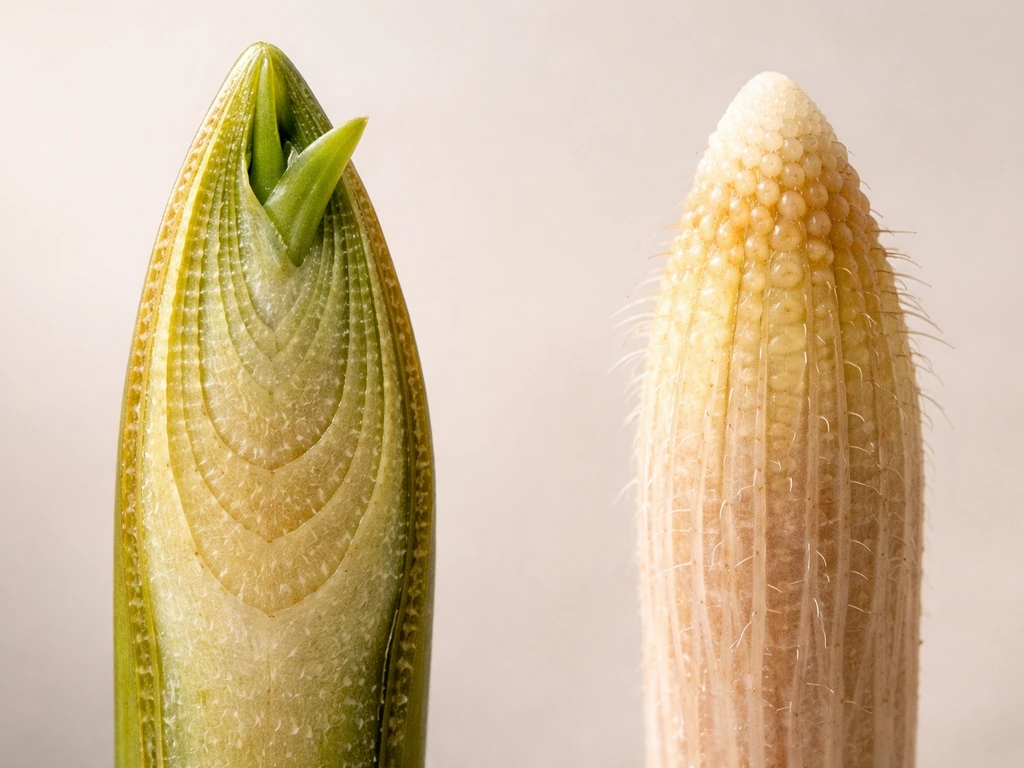
Plants grow at their tips because that is where their youngest, most active cells live. Whether you are talking about a shoot reaching toward your window or a root pushing through potting mix, the growth engine is the same: a tiny cluster of dividing cells called the apical meristem, tucked right at the tip. In perennial plants, the apical meristems, including shoot and root apical meristems, are self-perpetuating regions that keep producing new cells as long as the plant survives. Understanding what is happening there, and what those cells need to keep dividing, is the fastest shortcut to figuring out why your plant is thriving, stalling, or struggling.
How Do Plants Grow at Their Tips Step by Step Guide
Marcus Holloway
10 Apr 2026
Plant tips 101: apical meristems and where new growth actually comes from
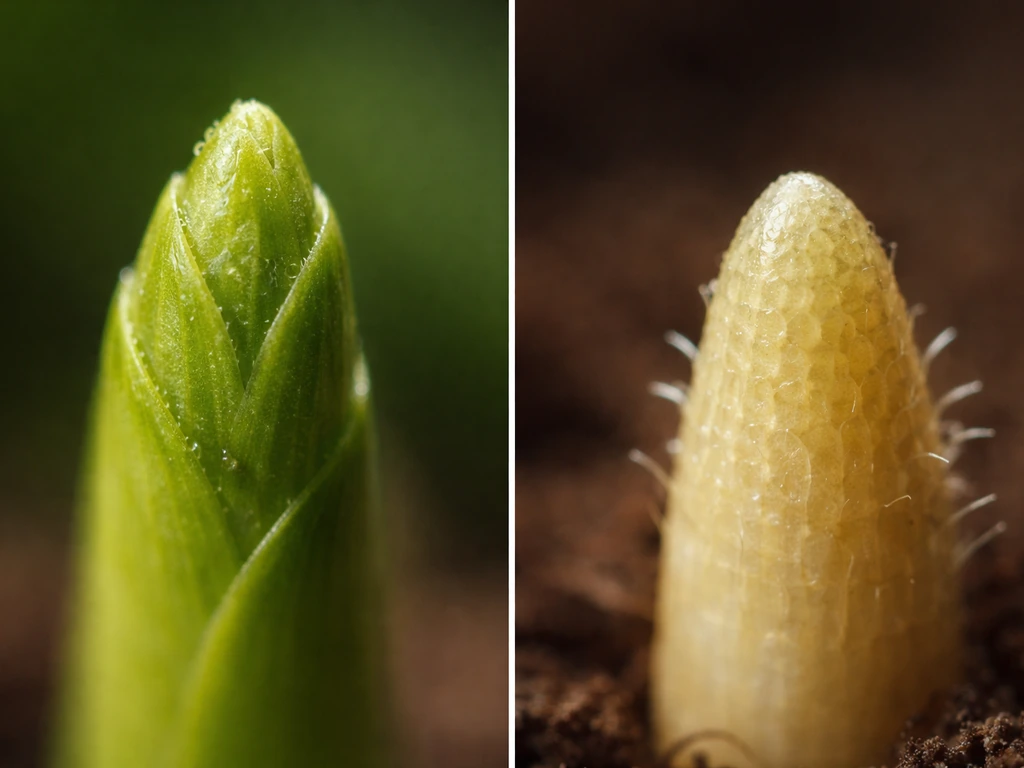
Think of the apical meristem as a factory that never closes. It sits at the very tip of every shoot and every root, and it is the only place on a plant where brand-new cells are being manufactured from scratch. Everything else on the plant, every existing leaf, stem segment, and root hair, was once a product of that factory.
On the shoot side, the shoot apical meristem (SAM) is organized in layers. The outer layers divide rapidly and produce leaf primordia (the tiny bumps that become leaves) and all the lateral organs you eventually see. The inner core maintains the stem-cell population that keeps the whole operation running. On the root side, the root apical meristem sits behind a protective root cap, which acts like a helmet, shielding the dividing cells as the root pushes through soil or growing media. Immediately behind the meristem are three zones you can think of as an assembly line: the zone of cell division, where new cells are made; the zone of elongation, where those cells stretch and push the tip forward; and the zone of maturation, where cells differentiate into root hairs, vascular tissue, and everything else the root needs to function.
If you want a visual sense of how this unfolds over time, exploring how plants grow pictures can make these zones click in a way that text alone sometimes cannot. Seeing the root tip zones side by side with actual microscope images is genuinely helpful for beginners.
The practical takeaway here is that tip cells are your most vulnerable and most valuable plant real estate. Anything that damages those meristematic cells, physical injury, disease, drought stress, waterlogging, or extreme temperature, interrupts growth in a way that cells further back on the plant simply cannot fix by themselves. Protect the tip, and you protect the future of that shoot or root.
How hormones and signals control tip growth (apical dominance, auxin, and branching)
Here is where things get genuinely interesting, and where understanding the biology pays off directly in your garden or living room. The growing shoot tip is not just adding new tissue; it is also running a chemical broadcasting system that tells the rest of the plant what to do.
The main signal is auxin, specifically a molecule called indole-3-acetic acid (IAA). The shoot apex produces auxin continuously and sends it down the stem. As long as auxin levels are high in the stem, lateral (side) buds stay dormant. This is apical dominance: the tip dominates, and the branches wait. Remove or damage the tip, and auxin drops, which is the green light for side buds to activate and start growing. That is exactly why pinching the tip of a basil plant makes it bushy instead of tall and leggy.
Auxin does not act alone though. Two other hormones balance its influence. Cytokinin, produced mostly in the roots and transported upward, actively promotes bud outgrowth. When cytokinin levels rise in a bud, that bud tends to activate and push out a new shoot. Strigolactone is the third player, and it works with auxin to suppress branching, signaling through receptor genes that tell axillary buds to stay put. So branching is not simply "auxin on, buds off" but rather a three-way negotiation between auxin, cytokinin, and strigolactone. Gibberellin can also join the conversation in some species, sometimes promoting elongation of a dominant shoot and sometimes interacting with the branching network in more complex ways.
Ethylene is another hormone worth knowing. Under stress, like when roots are waterlogged or tissues are damaged, ethylene production spikes and can reinforce apical dominance or suppress growth in young tissues. If your plant has been stressed and the new tip growth looks stunted or twisted, elevated ethylene is often part of the story.
For a broader look at how all these processes fit together, how do plants grow covers the full picture of plant growth from germination onward, which gives good context for why tip growth is so central to the whole system.
The practical implication of all this hormone biology is simple: when you prune, pinch, or train a plant, you are directly manipulating its hormonal balance. Timed correctly, that is a powerful tool. Timed wrong, for example cutting back hard right before a plant needs to establish new roots, it creates stress without the payoff.
What tip growth needs: light, water, nutrients, oxygen, and temperature
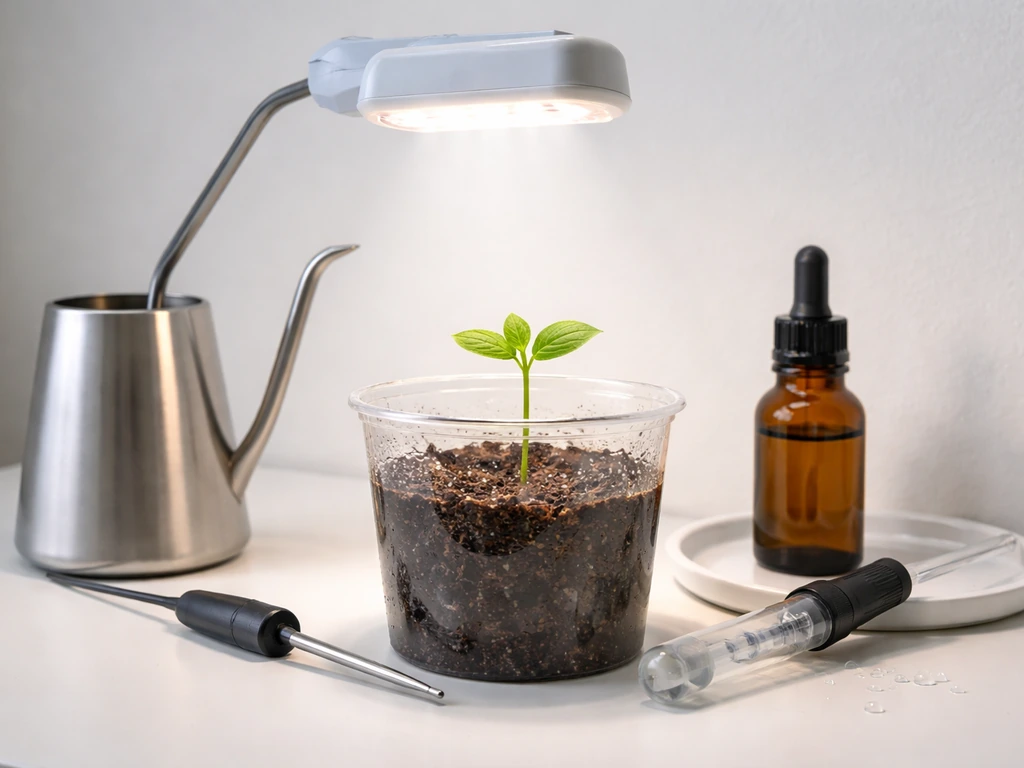
Meristematic cells divide and elongate only when their basic resource needs are met. None of these factors work in isolation, but here is what each one does and what happens when it falls short.
Light
Light is the energy source that powers photosynthesis, which in turn supplies the sugars meristematic cells need to divide and build new tissue. For most houseplants and edibles, the shoot tip will orient itself toward the strongest light source through a process called phototropism, driven by auxin redistribution. Low light does not just slow photosynthesis; it actually causes auxin to accumulate on the shaded side of the shoot, making the tip bend toward light and sometimes causing uneven, stretched growth (etiolation). For practical indoor growing, photosynthetic photon flux density (PPFD) targets matter. Flowering and fruiting plants typically need 200 to 400+ PPFD for healthy tip growth. If you are supplementing with grow lights, keeping them at the right distance and giving 12 to 16 hours of light per day covers most common houseplants and herbs.
Water
Cell elongation in the tip zones is driven almost entirely by water pressure (turgor). Cells take in water, swell, and push the tip forward. Even mild water stress noticeably slows elongation. But too much water is just as harmful, because waterlogged roots are starved of oxygen, and without oxygen the root apical meristem cells begin to die. This is one of the most common and underappreciated causes of stunted or dying root tips in houseplants.
Nutrients
Nitrogen drives cell division and protein synthesis in meristems, making it the nutrient most directly linked to tip growth rate. Calcium is critical for cell wall formation in new cells, and deficiencies show up fast at the youngest growth points because calcium does not move easily within the plant once it is locked into older tissue. Potassium regulates water movement into cells, supporting turgor-driven elongation. Phosphorus supports root tip development specifically. A balanced fertilizer or well-managed nutrient solution keeps all these available simultaneously.
Oxygen
Root apical meristems are surprisingly sensitive to oxygen levels. Research has shown that dropping root-zone oxygen to around 4% can directly cause root apical meristem cell death. Poor drainage, compacted soil, or stagnant water in a hydroponic reservoir are the most common ways home growers accidentally suffocate root tips. Maintaining dissolved oxygen above 6.0 mg/L in hydroponic systems and ensuring your potting mix drains freely is not optional for healthy root tip growth.
Temperature
Cell division rates are temperature-dependent. Most tropical houseplants and common vegetables have meristems that divide most actively between roughly 65 and 80 degrees Fahrenheit (18 to 27 degrees Celsius). Cold drafts from windows in winter or hot air from heating vents can slow or damage tip growth noticeably, especially in sensitive new growth. Root-zone temperature matters independently of air temperature; cold roots in an otherwise warm room still slow growth.
How to encourage healthy tip growth in soil and pots
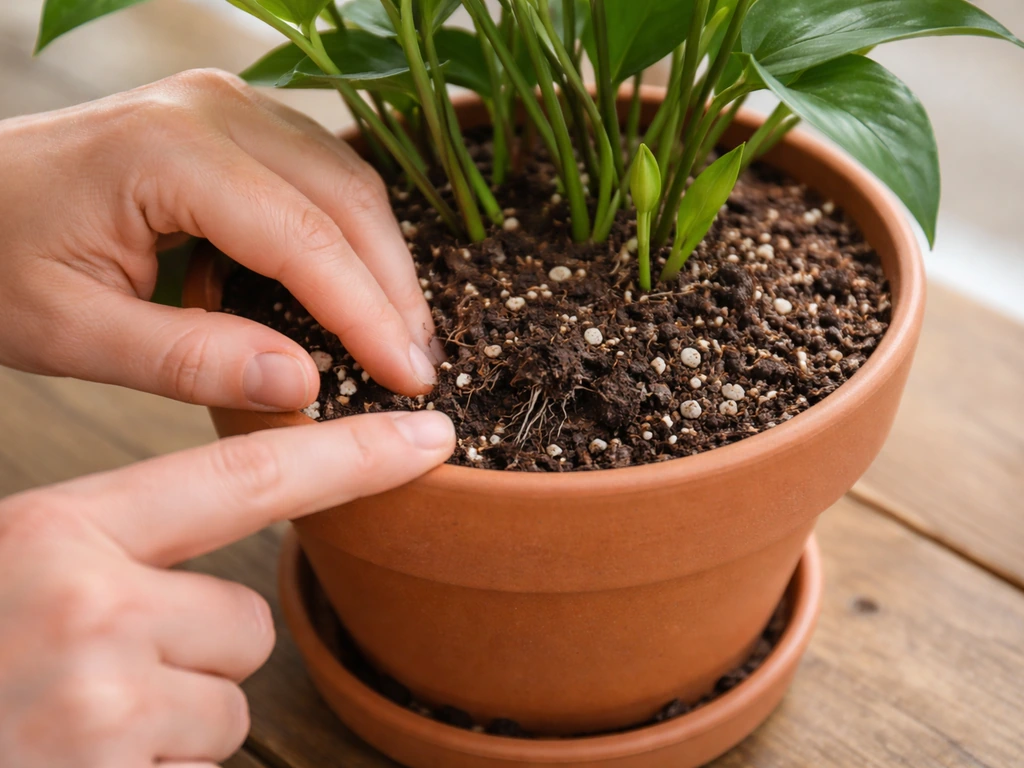
Soil growing gives you the most familiar toolkit, but it also hides the most problems. Here is what to focus on if your potted plants are showing slow or poor tip growth.
Start with your potting mix. Garden soil straight from outside is almost always too dense for containers. It compacts, drains poorly, and suffocates root tips. A good potting mix for containers combines peat or coco coir with perlite or vermiculite to keep things light and well-drained. This is not a minor detail: poor drainage leads directly to root hypoxia, which kills the meristematic cells you are trying to protect. If your soil smells sour or stays wet for more than a week after watering, it is time to repot into a better mix.
Check whether your plant is pot-bound. When roots circle the inside of the pot or push out of drainage holes, they have no room to elongate and new tip growth stalls. The fix is repotting into a container one to two sizes larger and gently loosening or trimming the root ball so roots can spread into fresh mix. If you notice the tight, tangled root situation, how does a plant grow step by step can give you a clearer picture of how root tip elongation connects to the overall growth sequence and why giving those roots room matters so much.
For fertilizing, the goal is consistency rather than intensity. Leaching your potting media occasionally by watering thoroughly until water runs freely from the drainage holes helps flush accumulated salts that can burn new root tips. After any period of stress or repotting, wait a week or two before resuming fertilizer so the tips can settle before you push them with nutrients again.
Light placement is easy to overlook indoors. Rotate your pots a quarter turn every week or two so the shoot tip does not bend permanently toward the window. If you are using grow lights, position them directly overhead rather than to the side so the tip grows upright and strong rather than angling toward the light source. For encouraging bushier growth with more lateral shoots, pinch the very tip of the main stem once it has established a few leaf nodes. This drops auxin levels, releases lateral buds from apical dominance, and redirects energy into branching.
Humidity matters more than most people realize for shoot tip health. The newest leaves at the tip have the thinnest cuticle and are most vulnerable to drying out. In dry indoor air (below about 40% relative humidity), leaf tips on new growth are often the first place you see browning. A pebble tray with water under the pot or grouping plants together raises local humidity without overcomplicating your setup.
How to encourage healthy tip growth in water culture, hydroponics, and terrariums
Each of these growing environments changes what your tip growth depends on, so the care adjustments are specific and worth knowing before problems start.
Water culture and hydroponics
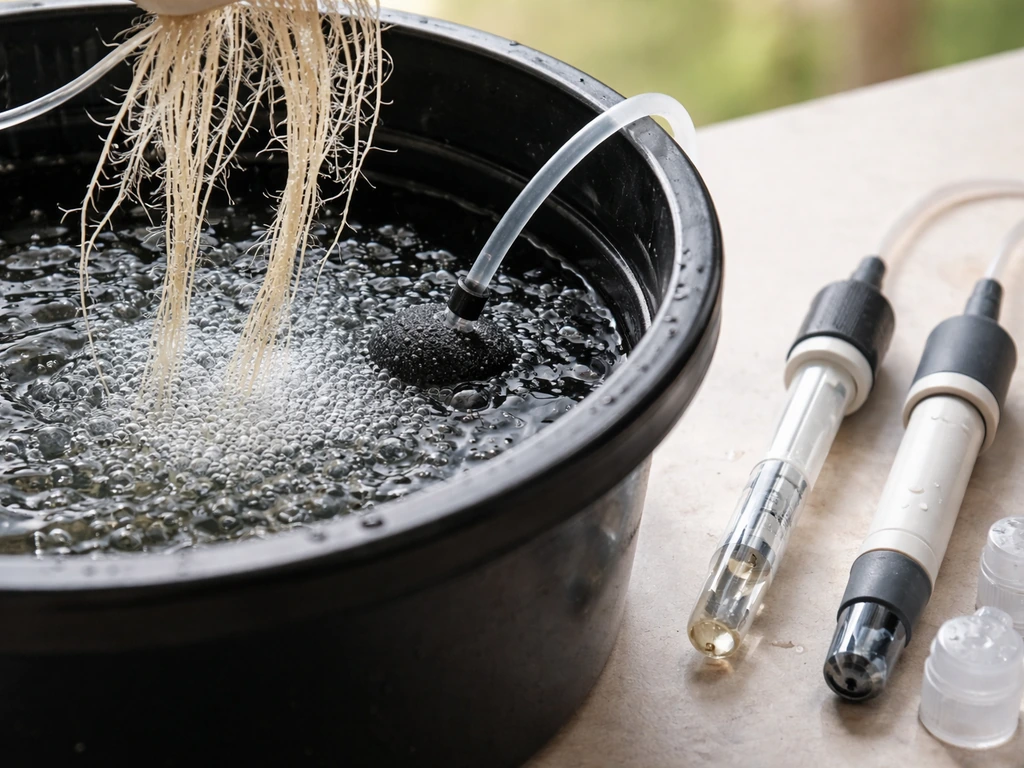
In any system where roots grow in solution, oxygen is your number one priority. Root apical meristems need dissolved oxygen to survive, and stagnant water depletes it fast. Systems with regular recirculation or aeration maintain dissolved oxygen above 6.0 mg/L, which is what you are aiming for. A simple air stone and pump in a deep water culture setup or frequent top-watering cycles in an ebb-and-flow system both accomplish this. Without enough oxygen, root tips turn brown, become slimy, and stop growing, even when everything else looks fine.
pH and EC (electrical conductivity) are the other two dials you need to manage. Most crops grow best with a nutrient solution pH between 5.5 and 6.5, with many growers targeting 5.8 to 6.2 as a sweet spot. Outside this range, nutrient uptake becomes patchy even if your solution has everything in it. EC in the range of 1.0 to 2.0 mS/cm covers most leafy greens and houseplants in hydroponics; fruiting crops can handle slightly higher. Check pH and EC at least every few days, and top up with fresh solution rather than just plain water to keep the balance steady. For a more complete look at how leaf and shoot development interact with these hydroponic parameters, the article on how do plants grow leaves connects the nutrient uptake side of this to what you actually see appearing at the shoot tip.
Temperature of the nutrient solution also matters. Warm water holds less dissolved oxygen and encourages algae and pathogen growth. Keeping your reservoir between 65 and 72 degrees Fahrenheit (18 to 22 degrees Celsius) protects both oxygen levels and root tip health.
Terrariums
Terrariums create their own microclimate, and the biggest mistake is treating them like regular pots. In a closed terrarium, moisture cycles within the container, which means overwatering builds up fast with no way to escape. Excess moisture cuts off oxygen to roots the same way waterlogged soil does, and root apical meristems suffer the same damage. Signs of trouble include mushy stems near the base, a foul smell, and roots that look brown and slimy rather than white and firm.
Humidity in a well-balanced closed terrarium is naturally high, which is great for tropical plants that want 70 to 90% relative humidity around their shoot tips. High humidity reduces water loss through stomata, which helps young new growth stay turgid and extend normally. But if the walls are perpetually dripping and there is never a dry period, it is a sign of too much water. Open the lid for a few hours to ventilate, and scale back watering. A well-balanced terrarium should show gentle condensation during the day that clears partially at night.
The drainage layer at the bottom of a terrarium is not optional decoration; it is what separates the root zone from any standing water that accumulates. Use a layer of pebbles or lava rock, a mesh barrier, and then an appropriate substrate. Plants with active tip growth in terrariums also benefit from indirect bright light rather than direct sun through glass, which can overheat the enclosed space and damage the tender new growth.
Comparing tip-growth care across growing environments
| Factor | Soil / Pots | Hydroponics / Water Culture | Terrariums |
|---|---|---|---|
| Oxygen at root tips | Ensure free drainage; use perlite/vermiculite in mix | Maintain dissolved oxygen above 6.0 mg/L via aeration or recirculation | Use drainage layer; avoid overwatering; ventilate lid if roots look slimy |
| Nutrient delivery | Balanced fertilizer; leach salts periodically | Target pH 5.5–6.5, EC 1.0–2.0 mS/cm; check every few days | Use nutrient-rich substrate; minimal additional feeding needed |
| Watering | Water when top inch of soil is dry; ensure drainage holes | Top up reservoir; avoid letting roots dry between cycles | Water sparingly; condensation on walls = moisture is cycling correctly |
| Light for shoot tips | Rotate pot; use grow lights overhead at correct PPFD | Position lights directly overhead; 12–16 hours for most crops | Bright indirect light; avoid direct sun through glass |
| Humidity for new growth | Pebble tray or plant grouping if air is dry | Not usually a concern; focus on solution temperature | High humidity built in; ventilate if condensation is excessive |
| Pruning / pinching | Pinch tip to promote branching; avoid pruning stressed plants | Pinch once roots are established and growth is vigorous | Prune to control size; avoid over-pruning in small volumes |
Common tip-growth problems and quick troubleshooting steps
Most tip-growth problems fall into a handful of recognizable patterns. Here is how to read what you are seeing and what to do about it.
Stunted or no new tip growth
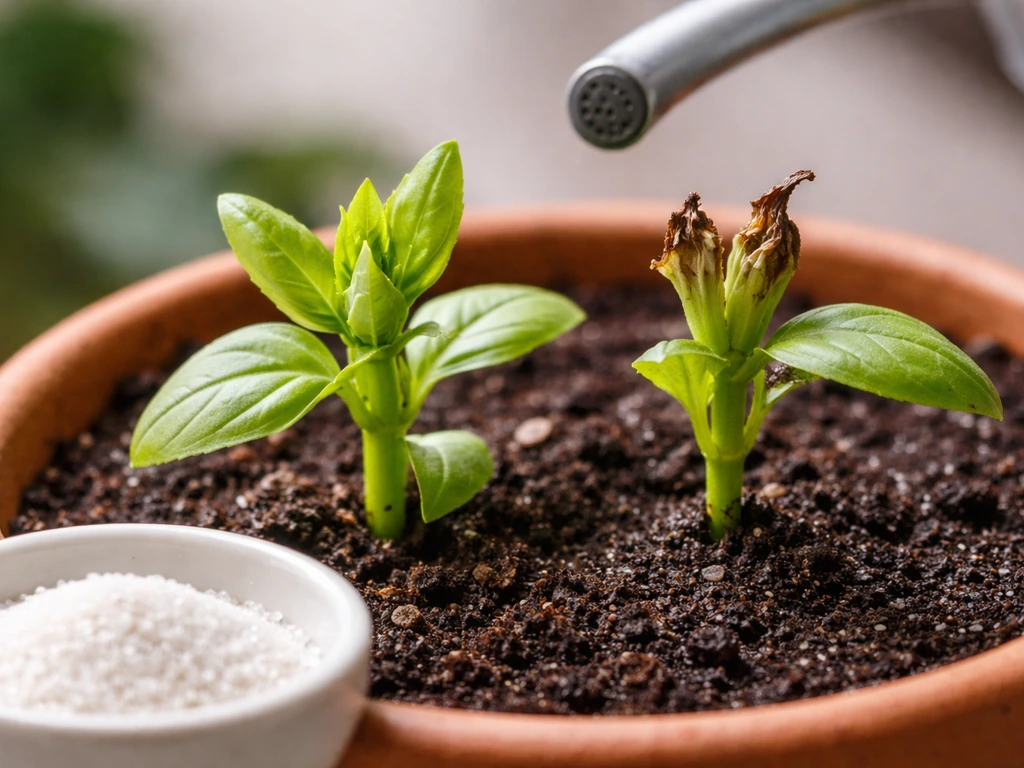
The most common cause is root-zone oxygen deprivation from overwatering or compacted media. Check your soil: if it is wet more than a week after watering and has a musty smell, your root tips are likely suffocated. Repot into fresh, well-draining mix. In hydroponics, check dissolved oxygen and recirculation. A pot-bound plant is the second most common culprit: roots coiled tightly with no room to elongate will simply stop producing new tip growth at any meaningful rate. Repot and loosen the root ball.
Brown or necrotic shoot tips
Brown tip die-off on new growth is almost always a calcium issue, a humidity issue, or both. Calcium does not translocate to young tissue easily, so deficiency shows up at the newest growing points first as tip burn or necrosis. Make sure your fertilizer or nutrient solution contains calcium, and check that pH is in range so calcium is actually available. Low humidity compounds this because young leaves transpire less efficiently and tissue desiccation hits the tip first. Raise humidity and check your nutrition before assuming it is a disease.
Curling or distorted new growth
Curling at the shoot tip often signals pest activity (spider mites, aphids, or thrips love tender meristematic tissue) or herbicide/chemical damage. Inspect the undersides of the newest leaves with a magnifying glass. If you see nothing, consider whether any sprays or chemical residues have come into contact with the plant recently. Persistent curl with no pests and no chemical exposure can also indicate copper deficiency or boron deficiency in the nutrient supply.
No lateral shoots or branching after pruning
If you pruned a tip and weeks later there is still no branching, the plant may be too stressed to redirect energy into lateral bud development. Make sure light, water, and nutrients are adequate. Cytokinin activity at the buds needs to be high enough to overcome remaining auxin in the system, and a stressed plant running low on resources delays that process. Be patient, ensure good care, and avoid the temptation to prune again until you see signs of bud swell.
Slow root tip growth in water or hydroponics
White, healthy root tips should be visible and extending in any water-based system. Brown, slimy, or non-extending root tips in hydroponics usually mean low dissolved oxygen, a pH that is too far off (blocking nutrient uptake), or a pathogen like Pythium. Address oxygen first (air stone, recirculation), then check pH, then consider a hydrogen peroxide flush if there is evidence of root rot. For the biology of what makes this process work normally and go wrong, the reference article on how do plants grow wikipedia offers a solid foundational overview of the cellular processes behind root elongation.
Wrong-time pruning that suppresses growth
Pruning a plant that is already stressed, newly repotted, or in the middle of a low-light winter period often makes tip growth worse, not better. The plant needs its existing photosynthetic capacity to generate the energy for new meristematic cell division. Cutting back hard at the wrong time removes that capacity before the plant can compensate. As a general rule, prune when the plant is actively growing and healthy, not as a rescue measure when it is already struggling.
Quick diagnostic checklist: what to check today
- Look at the roots first, not the leaves. Healthy root tips are white, firm, and extending. Brown, slimy, or circling roots need to be addressed before anything else will fix the shoot.
- Check your soil or media moisture. Push your finger two inches into the pot. If it is still wet and has been for more than a week, drainage or overwatering is your primary problem.
- Evaluate your light. Is the shoot tip reaching and bending dramatically toward one direction? That is a sign of insufficient light. Move the plant closer to your source or add supplemental lighting.
- Check your pH if you are growing in hydroponics or water culture. A meter (not strips) is worth the investment. Anything outside 5.5 to 6.5 is locking out nutrients no matter how well-balanced your solution is.
- Look at the newest leaves closely (with a magnifier if possible). Distortion and curling suggests pests or micronutrient problems. Tip burn suggests calcium or humidity issues. Pale yellowing suggests nitrogen or iron deficiency.
- Consider whether you have pruned recently. If tip growth stalled right after a haircut and the plant was not in peak health, give it three to four weeks with good light and consistent watering before expecting visible new growth.
- Check temperature at the root zone, not just in the room. Cold windowsill in winter, warm roots from a heat mat, or a heating vent blowing directly on leaves can all distort tip growth independently of your air temperature.
The more time you spend watching your plants closely at the tip, the faster you will catch these problems before they become serious. Tip growth is a real-time feedback signal: when conditions are right, you will see new leaves unfurling, root tips extending, and fresh growth every week. When something is off, the tip is usually the first place the plant tells you. Learn to read it and you will spend far less time guessing and far more time actually growing. For a broader framework on how all of this connects to the full plant life cycle, the walkthrough in how do plants grow wikipedia is a useful companion once you have got the tip-growth specifics nailed down.
FAQ
If a plant looks healthy overall, can tip growth still be failing?
Tip growth can continue even when the rest of the plant looks “fine,” but it will usually slow before you see obvious wilting. A practical check is to look for new leaf emergence (unfurling) or fresh root extension, not just overall greenness.
Does pinching or pruning always fix leggy growth at the tip?
No. Auxin drives apical dominance, but tip activity also depends on resources (light for sugars, water for turgor, oxygen for root tips, and nutrients). If any of those are limiting, removing the tip may create branching but growth overall stays weak.
When is the worst time to prune if my goal is to improve tip growth and branching?
You typically want your pruning to coincide with active growth, when sugars are being produced and meristems can recover. A common mistake is pruning right after a transport shock or during low-light winter, which removes the plant’s current energy source and delays bud activation.
Can my plant keep growing from the tip even if it is not getting enough light?
Yes, especially in low light: the tip can keep growing while the plant becomes etiolated, meaning leaves may be smaller, internodes longer, and the growth direction can be “aimed” at light. Rotate pots and, if needed, increase light intensity rather than only trimming.
Why does my plant get browning or necrosis at the youngest leaf tip even though I fertilize?
Calcium-related tip burn is often made worse by uneven moisture (drying then wetting) because new tissues lose water easily. Keep watering consistent, ensure good drainage, and verify the nutrient mix includes calcium, not just nitrogen and potassium.
What should I fix first in hydroponics when root tips stop extending?
For hydroponics, oxygen issues often show up as roots going brown and slimy before above-ground symptoms become obvious. If you see root tip stagnation, prioritize dissolved oxygen and reservoir hygiene before changing fertilizer strength or pH repeatedly.
What’s a sign that overwatering is harming root tip growth rather than helping it?
In compacted or soggy media, roots cannot supply enough oxygen, and the root apical meristem may die back even if you keep watering. If the pot stays wet beyond about a week, repot into a mix that drains quickly rather than “trying harder” with watering.
How do I tell whether curled new growth is pests, chemical damage, or a nutrient problem?
If the tip remains curled or distorted after pest checks, consider chemical exposure (spray drift, residues, harsh soaps) and nutrient micronutrient gaps such as boron or copper. Also confirm your plant is not outgrowing its pot, which can stress meristems and alter new-leaf shape.
Are root tips more sensitive in hydroponics than in soil, and why?
Root tips generally require a well-aerated environment, so a closed, stagnant system increases risk. Use aeration, good drainage in media, and avoid allowing reservoirs to sit warm and unmoving, since warmer water holds less oxygen and encourages pathogens.
I pruned the tip, but weeks later there are no new side branches, what now?
When a plant is stressed, it may hold off on bud outgrowth because auxin levels and overall resource scarcity interfere with cytokinin-driven activation. Give it time for recovery after the last pruning or repot, and don’t prune repeatedly while buds are only beginning to swell.
Could being root-bound stop tip growth even if I water and fertilize correctly?
Pot-bound plants often “stall” because roots cannot elongate into fresh, oxygenated space. Loosening or trimming circling roots and upgrading container size one to two increments usually restores tip growth faster than adding more fertilizer.
Why does my terrarium tip growth decline even though humidity is high?
Yes. In enclosed terrariums, moisture can trap humidity and reduce oxygen at the root zone, leading to tip issues that look similar to other problems. The cure is usually improving airflow (venting), correcting watering frequency, and confirming there is an actual drainage layer.