Plants grow in soil because soil gives them four things they cannot live without: water, oxygen, nutrients, and physical support. Get all four right and almost any plant will thrive. Get even one of them wrong and growth stalls, leaves yellow, or roots rot. This guide walks you through exactly what has to happen underground for growth to work, and then gives you concrete steps to make it happen in your garden bed, raised bed, or container today.
How Do Plants Grow in Soil: Key Inputs and Setup Tips
Marcus Holloway
8 Apr 2026
Why plants need soil in the first place
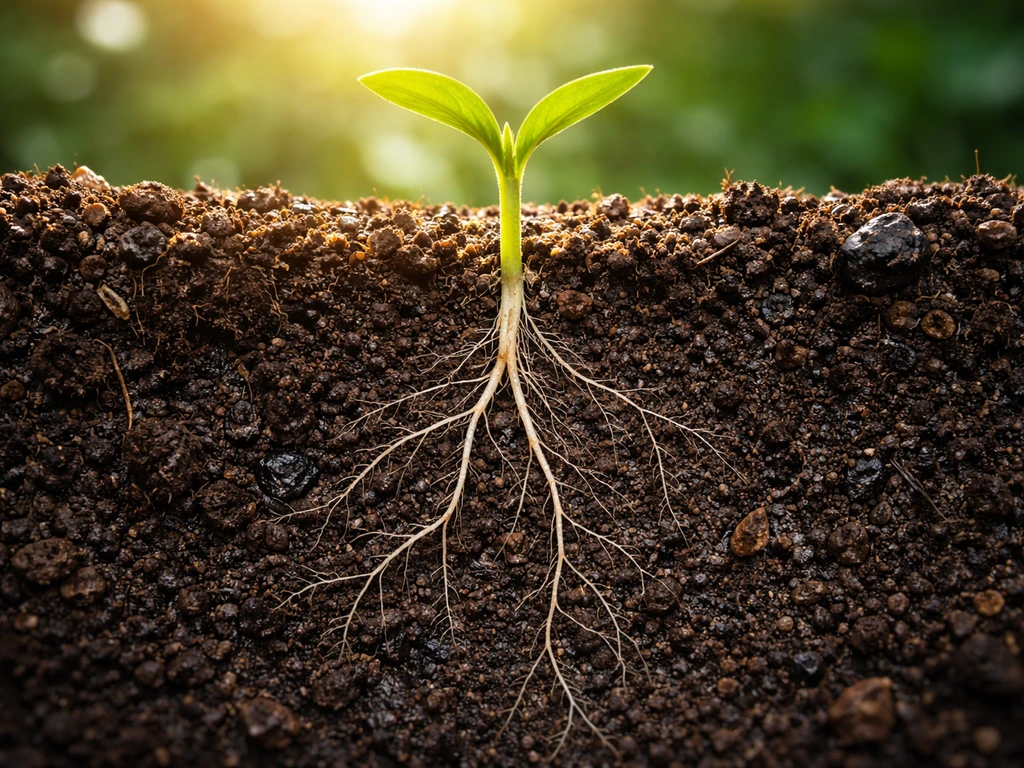
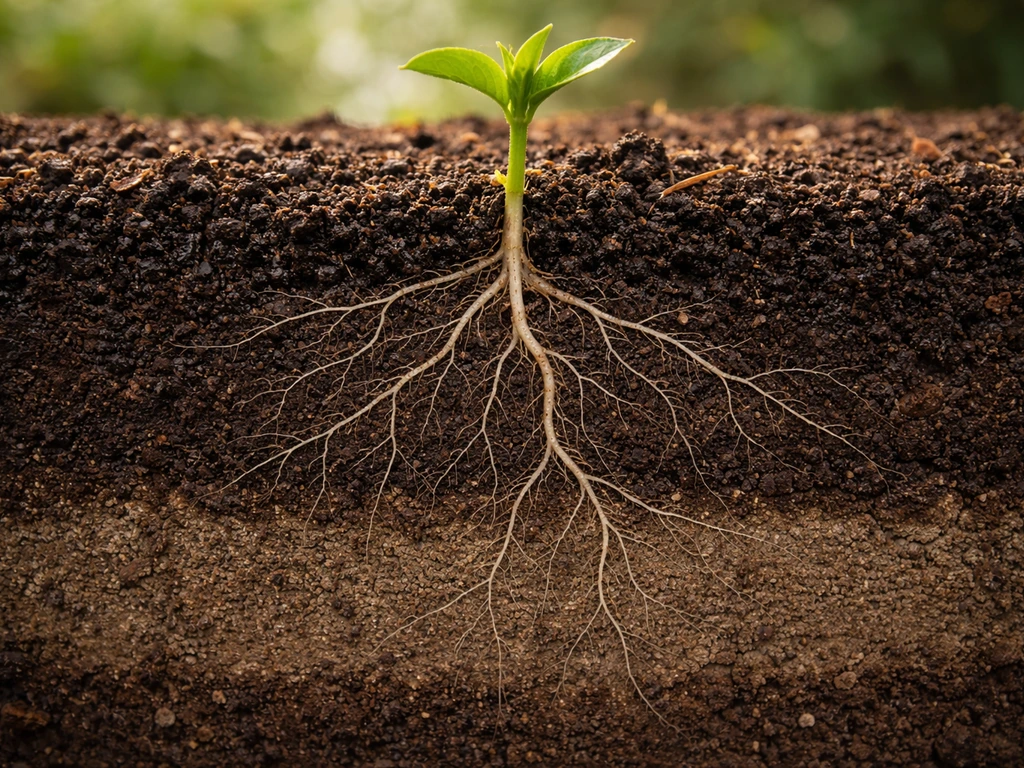
Think of soil as a life-support system, not just a place to stick a plant. A plant's shoot system (stems, leaves, flowers) needs the sun to make food through photosynthesis. But that whole above-ground process only works if the roots are constantly delivering water and dissolved minerals from below. Soil is the reservoir and delivery mechanism for both of those things.
Soil also anchors the plant so wind and gravity don't knock it over. That sounds obvious, but a plant whose roots can't grip firm soil particles will topple or spend energy stabilizing itself instead of growing. Beyond anchorage, soil is a living ecosystem. Billions of bacteria, fungi, and other microbes break down organic matter into the mineral forms plants can actually absorb. Without that microbial activity, even nutrient-rich material sitting in the soil stays locked up and unavailable to roots.
If you've ever wondered whether you could skip soil entirely, the answer is yes in some specialized systems, but those systems (like hydroponics) have to manually supply everything soil normally handles for free. That's why growing plants in soil remains the most beginner-friendly starting point: nature does a lot of the heavy lifting once you set conditions up correctly.
How roots actually pull water, oxygen, and nutrients
Roots are not passive straws. They actively grow toward water and nutrients through a process called tropism, and they have tiny root hairs (single cells that extend outward from the root surface) that dramatically increase the surface area available for absorption. A single rye plant studied in classic botany research had an estimated 14 billion root hairs. That surface area is what makes efficient uptake possible.
Water moves into roots by osmosis: because the concentration of dissolved minerals inside root cells is higher than in the surrounding soil water, water naturally flows inward across the root membrane. Nutrients hitch a ride with that water, or are actively transported across root cell membranes when the plant needs more of a specific mineral than osmosis alone delivers. This is why soil moisture matters so much: roots can only absorb dissolved nutrients, not dry powder sitting on soil particles.
Oxygen is the part most beginners forget. Roots need oxygen to respire (produce the energy that powers nutrient uptake). If the air spaces in soil fill up with water and stay flooded, roots suffocate within hours to days. This is exactly why overwatering kills plants even though water is something they need. The water isn't the problem; the absence of oxygen that comes with standing water is. Roots in oxygen-deprived soil cannot pump nutrients, so the plant starves even in perfectly fertilized soil.
How soil properties control plant growth
Texture and structure
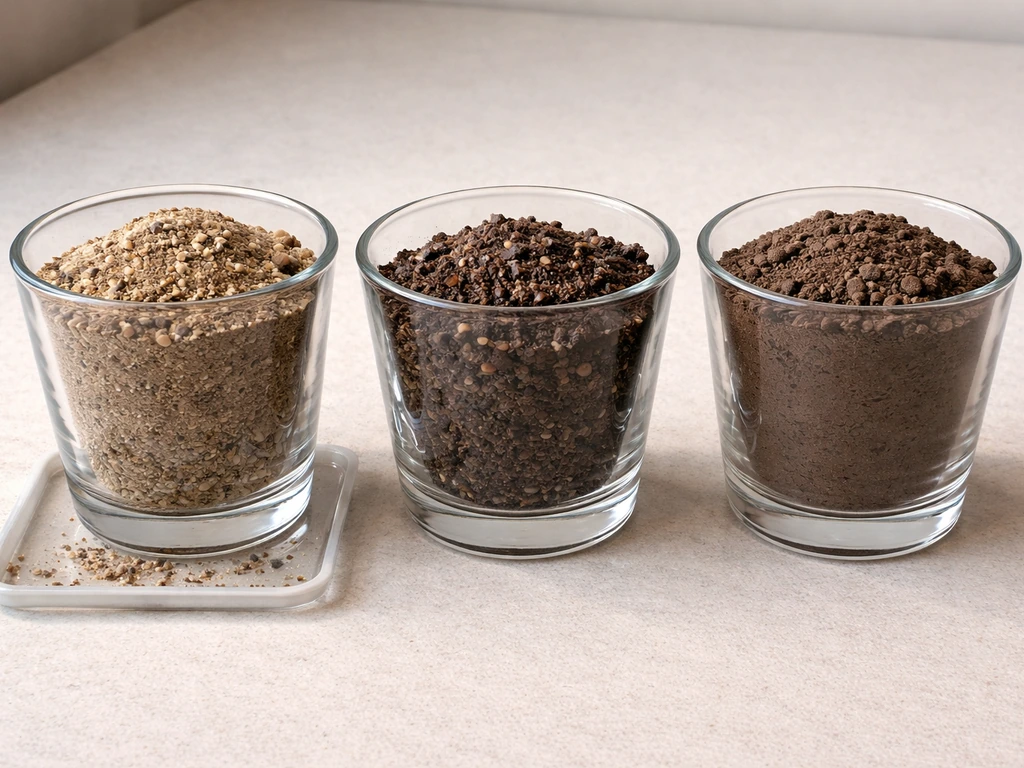
Soil texture refers to the relative proportion of sand, silt, and clay particles. Sandy soil drains fast and holds little water or nutrients. Clay soil holds a lot of water and nutrients but drains poorly and compacts easily. Loam (a balanced mix of sand, silt, and clay) is considered ideal for most plants because it holds enough moisture and nutrients while still draining excess water and staying aerated.
Soil structure is about how those particles clump together into aggregates. Good structure creates a crumbly, workable texture with plenty of pore space. Poor structure means tight, dense layers that roots struggle to penetrate. One key measure of this is bulk density: the weight of dry soil per unit volume. USDA Forest Service data puts the practical root-growth threshold at around 1.4 g/cm³ for most plants. SDSU Extension puts ideal soil porosity at roughly 50%, which corresponds to a bulk density of about 1.33 g/cm³. Real field soils typically range from 1.23 to 1.67 g/cm³ depending on depth and management, so compaction is a very real and common problem. If your soil feels like paving material when dry, bulk density is likely too high for roots to push through.
Drainage and aeration
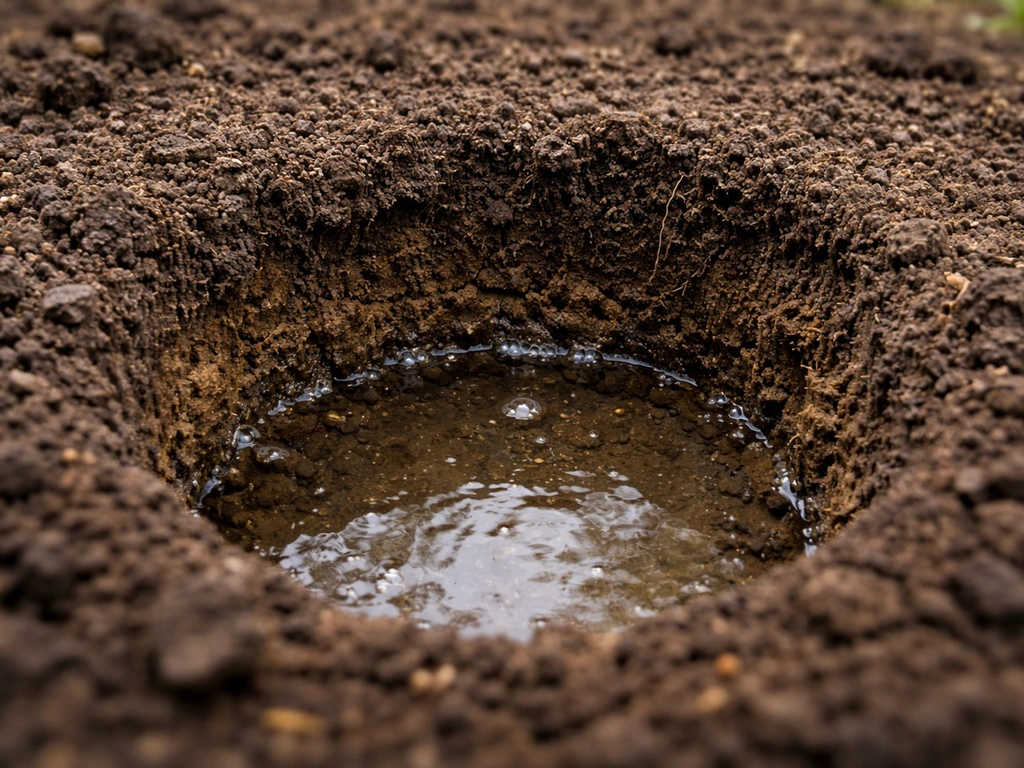
After you water, the large pores in soil drain quickly and refill with air. The small pores hold water against gravity, which is what roots drink between waterings. The balance between these two pore sizes determines whether your soil drains well or stays waterlogged. For containerized plants, University of Arkansas greenhouse research recommends targeting 10 to 20 percent air-filled pore space after irrigation, with most good container mixes naturally landing between 10 and 30 percent. The University of Arkansas notes that while there are no absolute recommendations, an air-filled pore space of about 10 to 20 percent is generally recommended for most containerized greenhouse crops. If your potting mix stays soggy for more than a day or two after watering, air-filled porosity is too low and roots will struggle.
In garden beds, you can check drainage with a simple test: dig a hole about 12 inches deep, fill it with water, let it drain completely, refill it, and time how fast the water drops. More than 1 inch per hour is generally acceptable for most vegetables and flowers. Less than 0.5 inches per hour signals drainage problems worth addressing before planting.
Soil chemistry: pH, nutrients, and organic matter
Soil pH is a scale from 0 to 14 that measures acidity or alkalinity, with 7 being neutral. Most vegetables and flowers grow best between pH 6.0 and 7.0, with many flowering plants preferring the slightly acidic end of that range. pH matters because it controls how available nutrients are to roots. Oregon State University’s Forage Information System notes that a pH range of about 6 to 7 is generally most favorable for plant growth because many nutrients are readily available there. Iron, manganese, and several other minerals become chemically locked up in alkaline soil (above 7.5). Phosphorus becomes unavailable in strongly acid soil (below 5.5). A plant sitting in soil with the wrong pH will show deficiency symptoms even when those nutrients are physically present.
You can test pH cheaply with a meter from a garden center (around $10 to $20) or with a mail-in soil test through your local cooperative extension office. To lower pH (acidify), add elemental sulfur or acidifying fertilizer. To raise it, add ground limestone. These corrections take weeks to months to fully register, so test early and adjust before planting if you can.
Plants need 17 essential nutrients in total, but the big three are nitrogen (N), phosphorus (P), and potassium (K). Nitrogen drives leafy green growth. Phosphorus supports root development and flowering. Potassium strengthens stems and disease resistance. Beyond those, calcium and magnesium are critical secondary nutrients, and trace elements like iron, zinc, and boron are needed in smaller amounts. Organic matter (compost, aged manure, leaf mold) is the most reliable way to supply a broad-spectrum nutrient profile while also improving soil structure and microbial life. If you want to understand how to make good soil for plants to grow, adding compost consistently is the single most impactful step you can take.
Setting up your planting space so roots can establish
Containers
Container size directly limits root volume, which limits the whole plant's size and water-holding capacity. A tomato planted in a 5-gallon pot will survive but struggle; the same plant in a 15-gallon container will thrive. As a general rule, match pot diameter to the expected mature root spread of the plant. Always use containers with drainage holes. A pot without a drainage hole will eventually drown roots, no matter how carefully you water. Use a quality potting mix formulated for containers, not garden soil, which compacts in pots and blocks drainage.
Raised beds and in-ground beds
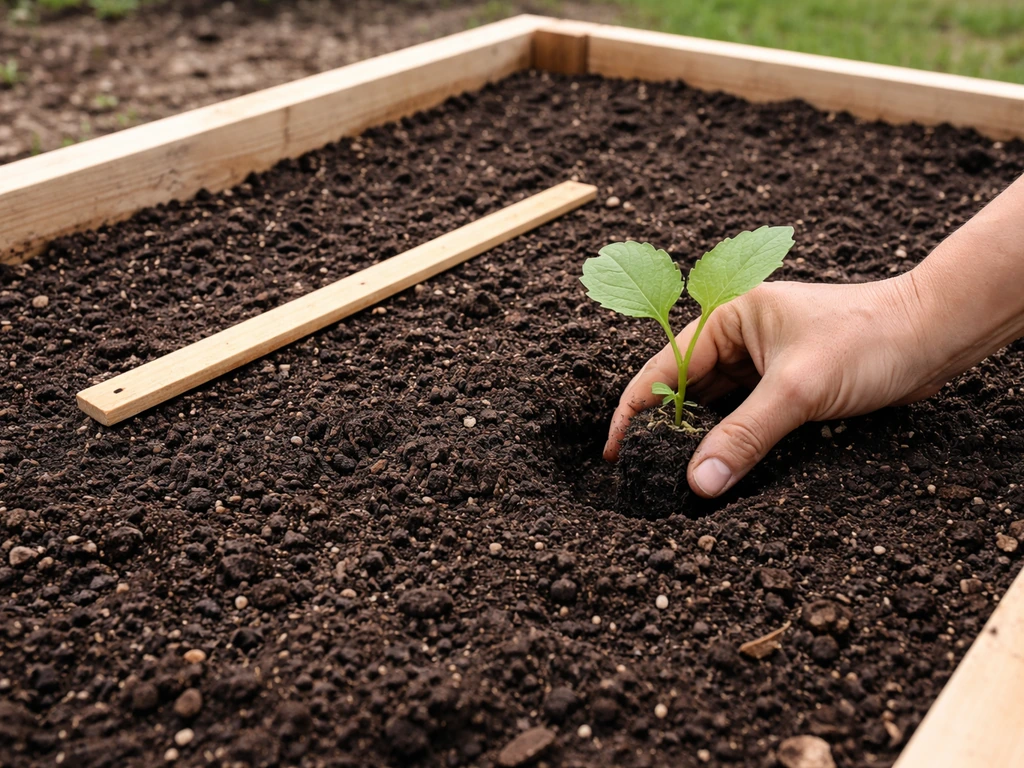
For raised beds, 12 inches of good soil depth handles most vegetables. Deep-rooted crops like carrots, parsnips, and tomatoes benefit from 18 to 24 inches. Fill with a mix of topsoil, compost, and a coarse amendment like perlite or coarse sand (roughly 60/30/10 by volume) to hit that ideal balance of moisture retention and drainage. Avoid walking in the bed after planting because foot traffic compacts soil quickly and undoes the structure you worked to create.
Planting depth and spacing
Planting too deep buries the stem in permanently moist soil, which invites rot. Planting too shallow exposes roots to drying and temperature swings. The general rule is to plant at the same depth the seedling was growing in its nursery pot, with the exception of tomatoes, which can be buried deeper because they form roots along their buried stems. For spacing, crowded plants compete for water, nutrients, light, and air circulation. Spacing is not just a comfort issue; it directly affects how much soil volume each plant's roots can claim.
Watering and feeding for steady growth
The most reliable watering method is checking soil moisture before watering rather than following a fixed calendar. Push your finger an inch or two into the soil. If it feels dry at that depth, water thoroughly. If it still feels moist, wait. For most container plants, this check-and-water cycle lands somewhere around every 2 to 4 days in warm weather and every 7 to 10 days in cool weather, but those are loose estimates: actual frequency depends on pot size, plant size, humidity, and soil type.
When you water, water deeply rather than lightly. A shallow sprinkle wets only the top inch, which encourages roots to stay near the surface where they're vulnerable to drying. Water until it runs out of the drainage hole (for containers) or until you've applied the equivalent of about an inch of rain (for beds). That encourages roots to follow moisture deeper into the soil profile, building a more resilient root system.
For feeding, a balanced slow-release fertilizer mixed into the soil at planting gives a consistent background supply of nutrients over 3 to 6 months. Supplement with liquid fertilizer every 2 to 4 weeks during active growth if plants look pale or growth slows. Cut back on feeding in late fall and winter when growth naturally slows, because unused nutrients can build up as salts and actually harm roots. A simple NPK fertilizer label like 10-10-10 works for general use; switch to a bloom formula (lower N, higher P and K) when plants are setting flowers and fruit.
Soil types side by side
| Soil type | Drainage | Nutrient retention | Aeration | Best for | Main fix needed |
|---|---|---|---|---|---|
| Sandy soil | Very fast (may dry out too quickly) | Low | Excellent | Root vegetables, drought-tolerant plants | Add compost to improve retention |
| Clay soil | Very slow (prone to waterlogging) | High but often locked up | Poor | Established shrubs, some perennials | Add organic matter, grit; reduce compaction |
| Loam | Moderate (ideal balance) | Good | Good | Most vegetables, flowers, and shrubs | Maintain with annual compost additions |
| Potting mix (container) | Fast (designed to drain) | Moderate (needs regular feeding) | Good initially | Container plants of all types | Refresh or replace after 1 to 2 seasons |
| Red/laterite soil | Moderate to fast | Low (iron-heavy, often acidic) | Good | Tropical plants, some fruit trees | Amend with compost; check and adjust pH |
If you're working with a specific challenging soil type, it's worth diving deeper. For instance, helping plants grow in clay soil requires a different strategy than managing sandy or loam soil, and the fixes aren't always obvious. Similarly, if you're dealing with iron-rich laterite ground, understanding growing plants in red soil can save you a lot of trial and error.
Troubleshooting when plants won't grow in soil
Before you panic or buy more fertilizer, work through the most common causes in order. Most growth failures come back to one of five problems: compacted soil, poor drainage, wrong pH, incorrect watering, or nutrient issues. Here's how to diagnose each one quickly.
- Stunted growth with hard, dense soil: compaction is the likely cause. Roots physically cannot push through soil with bulk density above about 1.5 g/cm³. Break up the top 12 inches with a fork, add compost, and avoid walking on planting areas. For a more thorough approach to rebuilding soil from scratch, reading about how to grow soil (building soil health over time) gives a solid foundation.
- Yellow leaves with soggy soil: overwatering or drainage failure. Check that containers have working drainage holes and that beds aren't sitting in low spots that collect water. Lift a handful of soil: if it drips or forms a tight ball that won't crumble, it's waterlogged. Let it dry out, improve drainage, and reduce watering frequency.
- Yellow leaves with dry soil: underwatering or nutrient deficiency. If the soil is bone dry, water deeply and consistently for a week before assuming nutrients are the issue. If moisture seems fine and yellowing persists, test pH and check for nitrogen deficiency (general yellowing from older leaves upward) or iron deficiency (yellowing between leaf veins on new growth, often caused by high pH).
- Wilting despite moist soil: root rot from overwatering or fungal disease. Remove the plant, inspect roots (healthy roots are white to tan and firm; rotten roots are brown, mushy, and smell bad). Trim rotted roots, let them air briefly, replant in fresh well-draining mix, and hold off watering for a few days.
- Slow growth with no obvious symptoms: check light first (most growth problems get blamed on soil but are actually light deficiency), then check pH. Plants in the wrong pH range can look basically fine but grow painfully slowly because they're working hard to extract locked-up nutrients.
Salt buildup from synthetic fertilizers is another underappreciated problem, especially in containers. White crusty residue on the soil surface or pot edges is a classic sign. Flush containers thoroughly with water (enough to run through the pot two or three times its volume) every month or two to leach excess salts out. In beds, cutting back on fertilizer and watering deeply solves most salt accumulation issues.
Your next practical steps
If you're starting from scratch, the fastest path to success is: test your soil or use a quality premixed growing medium, check pH and adjust if needed, mix in compost before planting, set up proper drainage, and water based on what the soil tells you rather than a rigid schedule. That covers the four fundamentals (water, oxygen, nutrients, support) that plants need from soil.
If you're working with existing soil that has been giving you trouble, start with a drainage test and a pH test before spending money on fertilizer. Fixing structure and pH unlocks nutrients that are already there. Adding more fertilizer to compacted, waterlogged, or wrong-pH soil almost never fixes the problem and often makes it worse. The good news is that soil improves fast with consistent additions of organic matter: a single season of compost, proper watering, and reduced compaction can transform struggling soil into something roots genuinely love to grow in.
FAQ
If nutrients are in the soil, why do my plants still show deficiency symptoms?
Plants mainly absorb water and nutrients through active root uptake across root cell membranes, but the “how” depends on nutrient type. N, P, and K (and many micronutrients) must be in dissolved form in soil water, so dry soil prevents uptake even if nutrients are present. In consistently moist, well-aerated soil, root hairs and root growth increase contact area, which improves absorption efficiency.
Does fertilizing always fix nutrient problems in soil-grown plants?
Yes, even if the soil “has nutrients,” the plant can still starve if oxygen is missing or if nutrients are chemically unavailable. Two common causes not solved by adding fertilizer are (1) waterlogged soil that suffocates roots and (2) wrong pH that locks up minerals, especially iron in alkaline conditions and phosphorus in very acidic conditions.
My plants wilt even though I watered, what’s going on?
A sudden droop right after watering is a common confusion. Overwatering reduces oxygen in pore spaces, so roots can’t deliver water properly, leading to wilting despite wet soil. Check by pushing a finger 1 to 2 inches into the soil, and if it stays wet and cool for a day or two, drainage or aeration is likely the issue.
What should I do if my soil drains too slowly or my container mix stays wet?
For beds, work the drainage test result into your plan: if water takes longer than about 1 inch per hour to drop, improve drainage before planting (for example, add coarse amendments, reduce compaction, and keep organic matter additions consistent). For containers, the practical fix is often switching to a container mix with enough coarse particles and confirming the pot has drainage holes, since stuck moisture quickly creates oxygen-deprived root conditions.
How often should I test soil pH and adjust it?
In most home gardens, you should avoid trying to “chase” pH with frequent small adjustments. Soil pH changes slowly because the amendments dissolve and react over time, so test, correct, wait the recommended period (weeks to months), then plant. If you need faster results, focus first on using the right amendments and improving soil structure, because better root growth can mask mild availability issues while pH catches up.
How do I prevent salt buildup from fertilizer in containers?
Slow-release fertilizer provides a steady background supply, but it can also contribute to salt buildup in containers if you fertilize heavily or don’t leach. If you see white crust on soil surface or pot edges, flush containers thoroughly with enough water to run out of the drainage holes two or three pot volumes, then scale back feeding and keep watering based on soil moisture.
Can I grow plants without soil if I want a simpler setup?
You can, but it is easy to get wrong for “soil” systems because hydroponics replaces oxygen and nutrient delivery with a controlled solution. If you try to mimic hydroponics without measuring, plants often suffer from either oxygen deprivation at the roots or nutrient imbalance. A safer alternative is to improve soil’s four fundamentals, especially oxygen and nutrient availability, rather than switching systems mid-season.
How does planting depth affect how plants grow in soil?
Sometimes, root problems come from planting depth and soil moisture contact. Planting too deep keeps the stem and crown in permanently moist, oxygen-poor conditions that encourage rot. Plant at the same depth as the nursery pot for most crops, and for tomatoes bury deeper only because they form roots along the buried stem.
How can I tell if compacted soil is the reason roots won’t grow?
Compaction isn’t just a texture problem, it directly reduces pore space for air and makes roots struggle to penetrate. A quick sign is soil that feels like paving material when dry, and longer-term symptoms are stunted plants plus frequent “wilting” even with adequate watering. The fix is to avoid foot traffic, reduce tilling that creates hard layers, and build structure with consistent compost plus coarse amendments where needed.
Does mulching change how I should water and check soil moisture?
Mulch helps, but it changes how quickly soil dries and how much oxygen reaches the surface. If you use mulch that traps too much moisture in cool weather or around young seedlings, the top may stay wet too long and oxygen can be limited. Use mulch according to plant and season, and still perform the “finger check” before watering.
Why does crowding plants make soil problems worse?
If you have multiple plants and spacing is tight, each plant competes for the same soil volume, which reduces water and nutrient access per root system. That shows up as patchy growth or early stress that looks like a watering or fertilizer issue. Correct spacing usually improves soil aeration and makes watering feel more consistent across plants.