You can absolutely grow healthy plants in clay soil, but you have to work with its quirks instead of ignoring them. The core fixes are improving drainage and aeration by adding organic matter, avoiding working the soil when it's wet, and choosing plants that can handle heavier ground while you build up the soil over time. None of this requires expensive equipment or a complete garden overhaul. Most gardeners see a real difference within a single growing season.
How to Help Plants Grow in Clay Soil Step by Step

Marcus Holloway
11 May 2026
What clay soil actually does to your plants
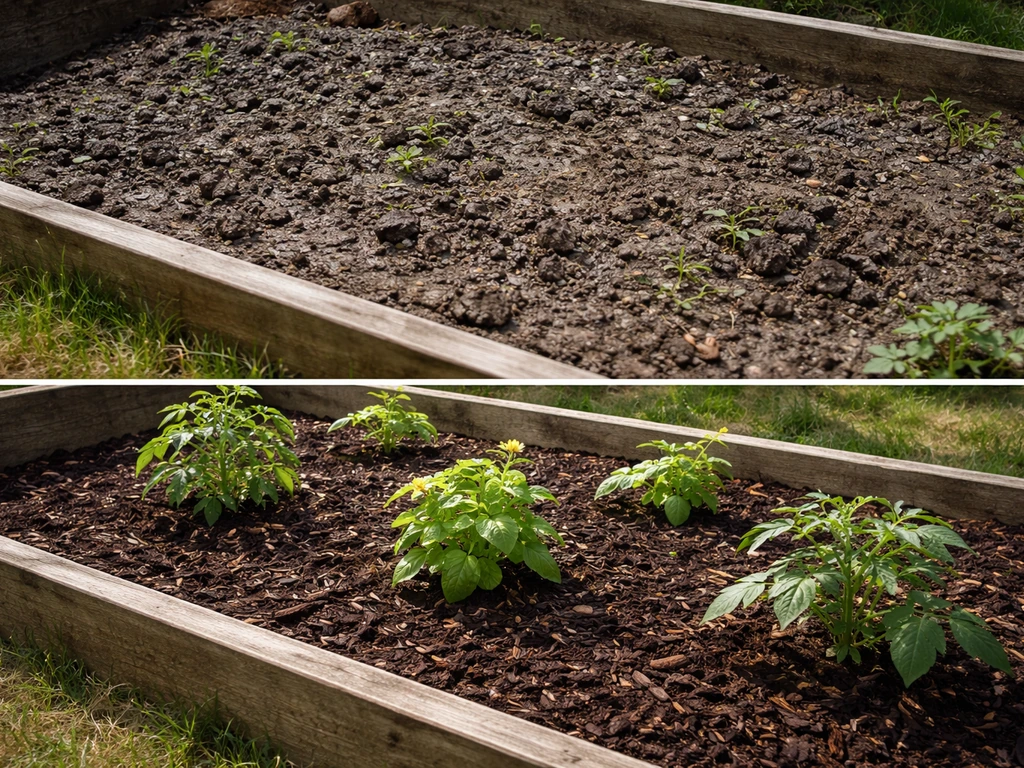
Clay soil is made up of extremely fine particles packed tightly together. That tight packing is the root of almost every problem you'll run into. Water moves through clay at a crawl, somewhere between 0.01 and 0.blank" rel="noopener noreferrer">5 inches per hour in most clay soils. For comparison, sandy loam can absorb water several times faster. What that means practically: after rain or watering, clay holds water in the root zone long after it should have drained away.
The waterlogging problem is more than just wet feet. When pore spaces fill with water and stay full, oxygen can't reach the roots. Roots need oxygen just as much as they need water, and when they can't get it, they start to suffocate. You'll see slow growth, yellowing leaves, and eventually root rot, even though the soil looks moist and seemingly fine. Compaction makes this worse. Clay that's been walked on, driven over, or dug when wet loses its structure almost entirely, and pore space collapses. Research from Penn State Extension found that root growth starts declining at around 100 psi of soil resistance and essentially stops at 300 psi. Heavily compacted clay can hit those numbers easily.
Clay does have one genuine advantage worth keeping: it holds nutrients well. Those fine particles carry a negative charge that attracts and holds positively charged nutrient ions like calcium, magnesium, and potassium. Sandy soils flush nutrients through and away; clay hangs onto them. So while drainage is your biggest challenge, fertility is often your smallest. That's actually a useful starting point.
Diagnose your clay soil before you do anything else
Before you start hauling in amendments, spend 20 minutes figuring out exactly what you're dealing with. The fixes for mildly heavy clay are different from the fixes for a compacted, waterlogged nightmare.
The squeeze test
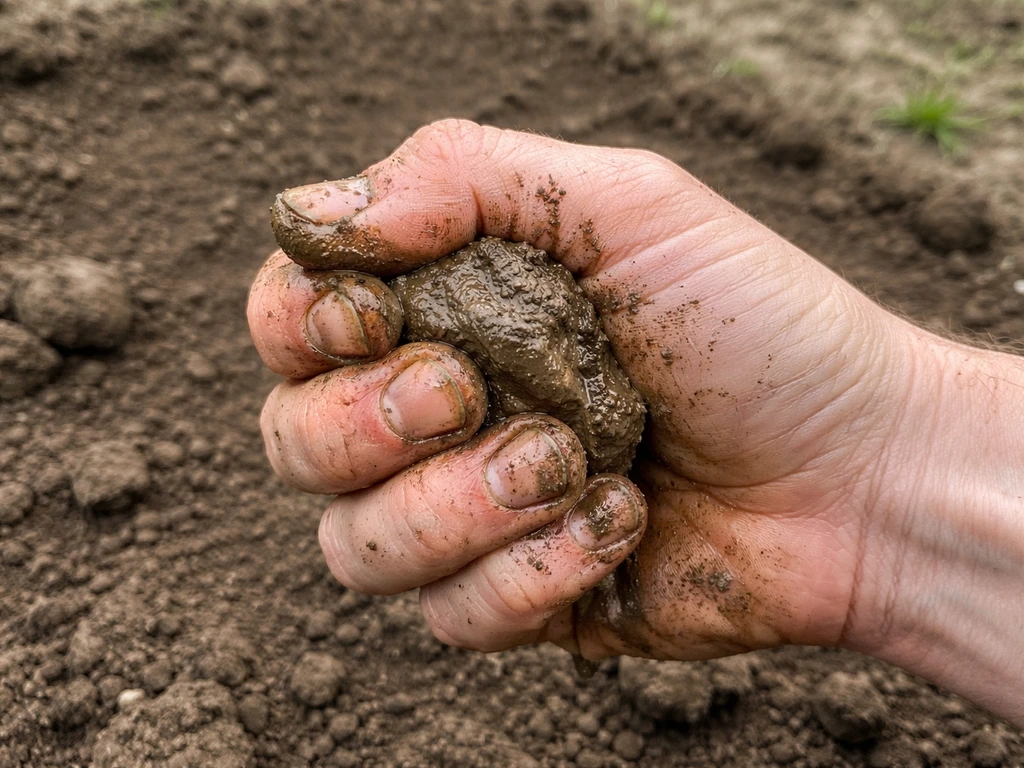
Grab a handful of moist (not soaking wet) soil and squeeze it into a ball. Open your hand. If the ball holds its shape and feels slippery or sticky, you've got significant clay content. Now poke it with your finger. If it crumbles easily, your structure is still decent. If it stays solid and smooth like modeling clay, compaction is a real issue and you'll need to focus there first.
The drainage (percolation) test
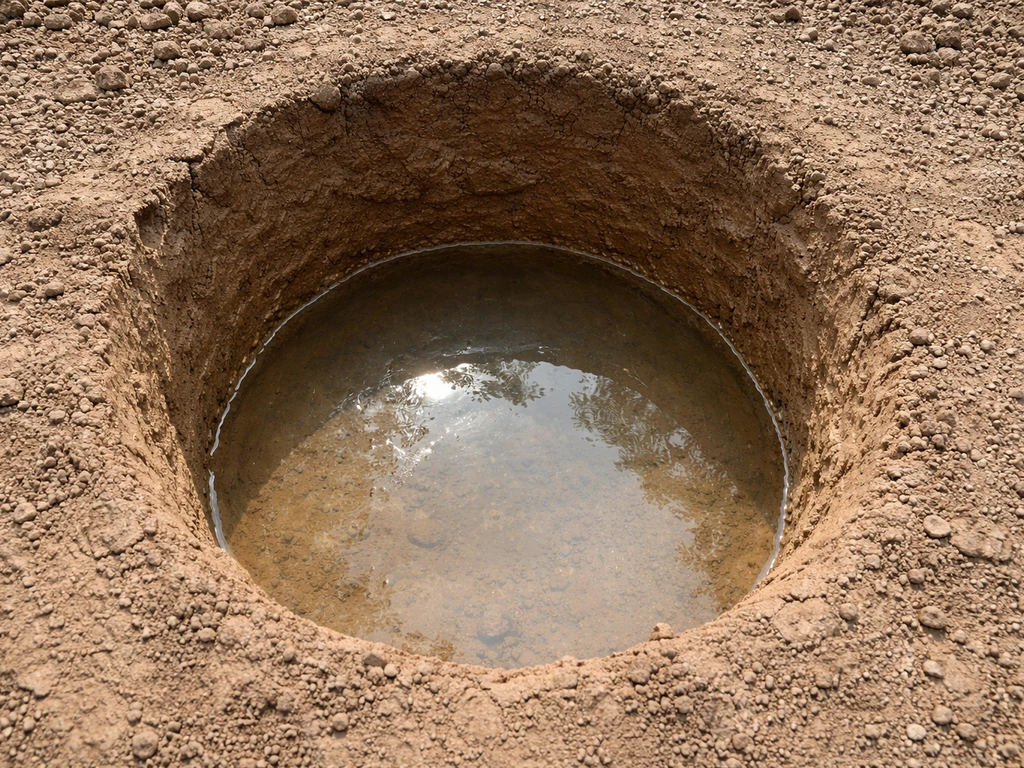
- Dig a hole about 12 inches deep and 12 inches wide.
- Fill it with water and let it drain completely. This saturates the surrounding soil, which gives you a realistic result.
- Fill it with water again and note the time.
- Check back every hour and measure how far the water level has dropped.
- If the water drains at less than 1 inch per hour, you have poor drainage. If it's still sitting there after 12 hours, you have a serious drainage problem that needs structural fixing, not just organic matter.
A quick note on pH
Clay soils often run slightly alkaline, especially in drier regions, though they can be acidic in wetter climates. A cheap soil pH test kit from any garden center will tell you in minutes. Most vegetables and ornamentals want a pH between 6. If your goal is how to grow plants in red soil, pH affects nutrient availability the same way, so confirm it with a soil test before planting pH between 6. 0 and 7.. 0 and 7.0. If your clay is sitting above 7.5, nutrient availability drops off even though those nutrients are present, because they lock up in forms roots can't absorb. Sulfur can lower pH over time; lime raises it. Get the number before you start adding amendments, because it changes what you reach for.
How to actually improve clay soil structure
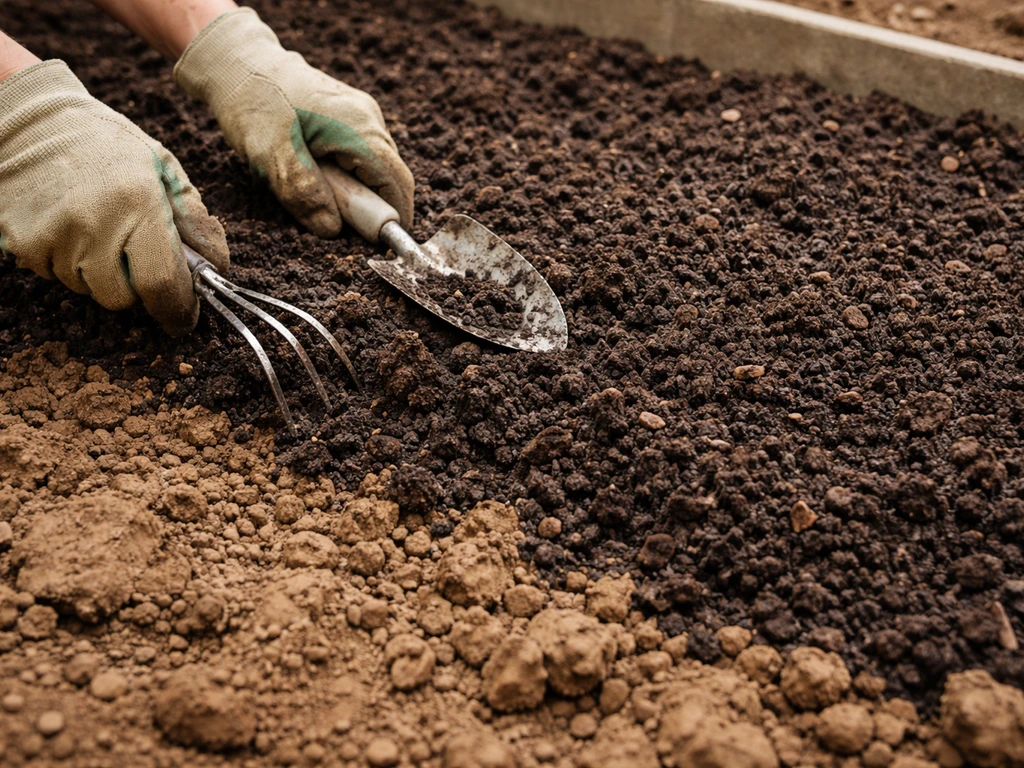
The single most effective thing you can do for clay soil is add organic matter, and then keep adding it every year. Organic matter acts like a sponge and spacer at the same time. It creates air pockets, improves drainage, feeds soil biology, and helps clay particles clump together into aggregates instead of sitting in a dense sheet. Those aggregates are what give soil good tilth, meaning that crumbly, workable quality you're aiming for.
What to add and how much
- Compost: This is your best all-around amendment. Work 3 to 4 inches of finished compost into the top 12 inches of soil. Do this every fall or spring, and don't skip years.
- Aged wood chips or bark: Good as a surface mulch that slowly breaks down and feeds the soil without compacting it the way fresh wood can.
- Leaf mold: Decomposed leaves are excellent for improving soil texture and are free if you have trees nearby.
- Coarse sand: Only in very large quantities (at least 50% by volume) does it actually help. Adding a small amount of sand to clay creates something closer to concrete than garden soil, so skip it unless you're doing a full soil replacement.
The one rule you have to follow
Never work clay soil when it's wet. This is the mistake that undoes months of improvement in one afternoon. When you dig, till, or walk on wet clay, you collapse the pore structure and create a dense, compacted layer that can take years to recover. Wait until the soil passes the squeeze test and crumbles when you poke the ball. If it smears, come back in a day or two. Colorado State University Extension research on soil tilth makes the point clearly: overworking or working wet clay destroys the aggregate structure that makes good drainage possible in the first place.
Should you till at all?
Light initial tilling to incorporate amendments is fine. Deep, repeated rototilling is not. It brings up compacted subsoil, disrupts soil biology, and in clay, often makes compaction worse over time by breaking aggregates down into fine particles. Once you've worked in a good initial round of compost, switch to a no-till or minimal-till approach: top-dress with compost and let earthworms and soil microbes do the mixing for you.
Planting methods that give you a real head start
Raised beds and berms
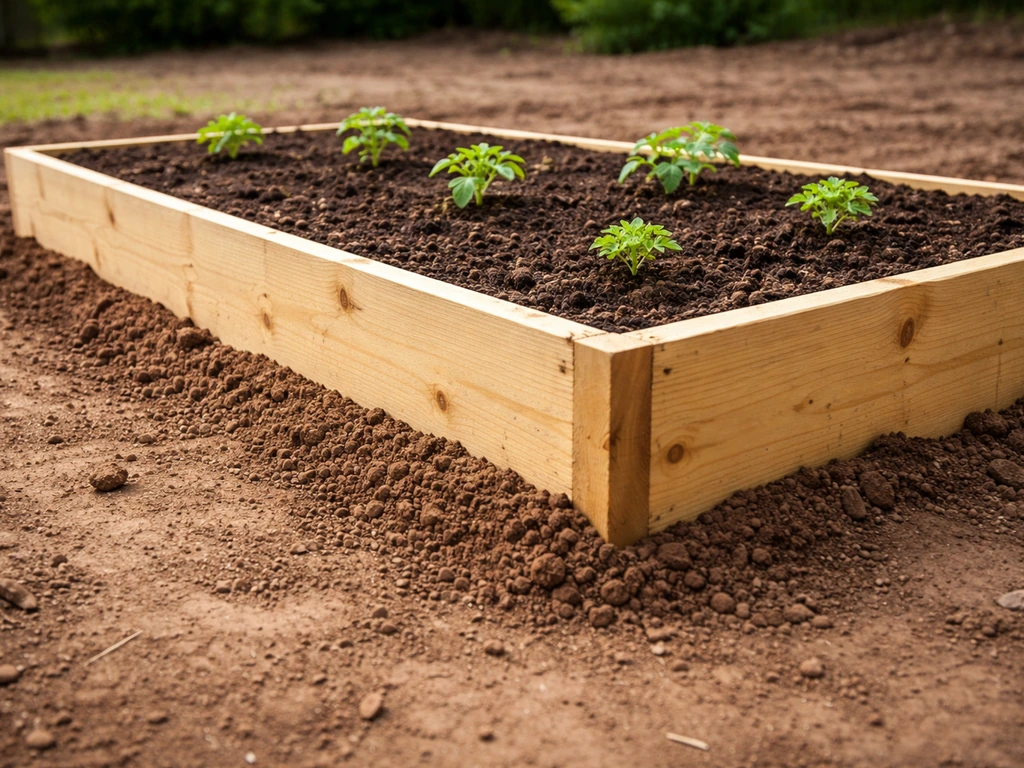
If your drainage test showed water sitting for more than 4 to 6 hours, raised beds are the fastest solution. You're essentially giving plant roots a better environment while the native clay improves underneath over time. A raised bed just 10 to 12 inches deep filled with a good mix of compost and topsoil makes an immediate difference. Berms work the same way for larger shrubs and trees: mound the soil 12 to 18 inches higher than the surrounding grade and plant on top, so roots start above the worst of the drainage problem.
Planting depth matters more in clay
Plant slightly higher than you normally would in clay, not deeper. Set the crown of trees, shrubs, and perennials about 1 to 2 inches above the surrounding soil grade. Water drains away from a slight mound instead of pooling around the stem. This is especially important in the first season before you've had a chance to improve the soil much.
Spacing and mulch
Give plants a little more space than the tag suggests in clay. Better airflow reduces disease pressure, which is higher when drainage is poor. For mulch, apply a 2 to 3 inch layer of wood chips or shredded leaves around plants, keeping it an inch or two away from stems. Mulch slows evaporation, moderates soil temperature, and most importantly breaks down over time and feeds organic matter into that clay underneath. It also prevents the hard surface crust that forms on bare clay after rain and blocks water from infiltrating at all.
Watering and feeding when you have clay
Water slowly and less often
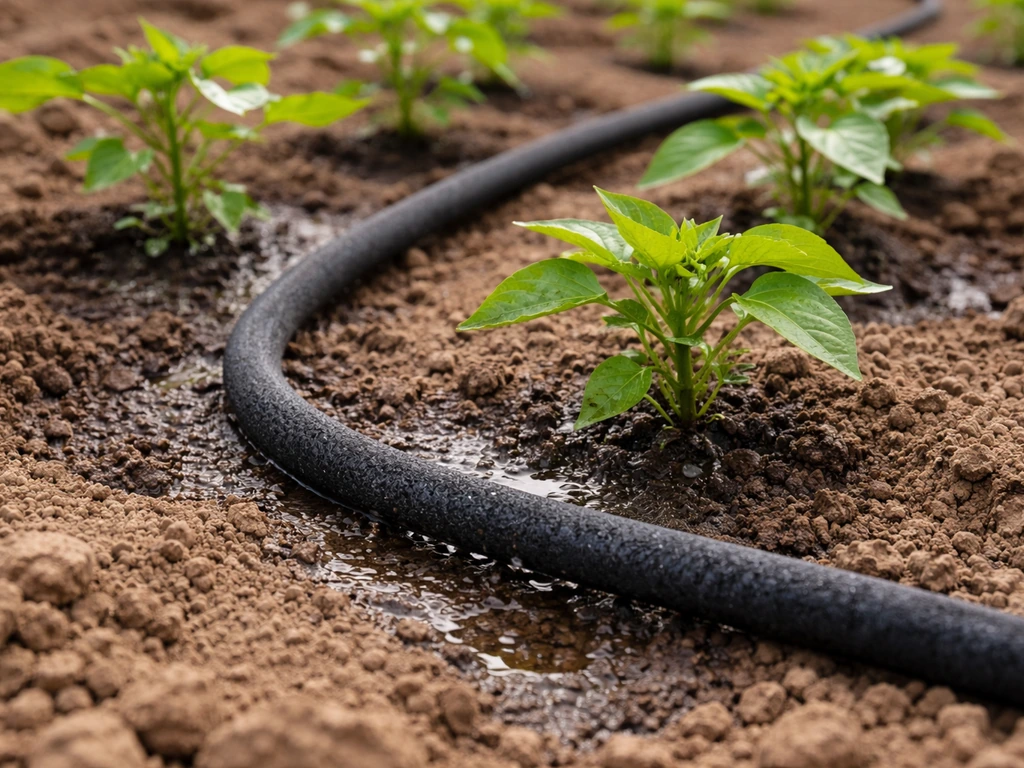
Because clay absorbs water at 0.5 inches per hour at best, anything faster than that runs off the surface instead of soaking in. Drip irrigation or a soaker hose set to low flow is ideal. If you're using a sprinkler or hose, water in cycles: run it for 15 minutes, wait 30 minutes for the water to absorb, then water again. The goal is deep, infrequent watering that pushes moisture down into the root zone without flooding it.
Between waterings, check the soil before you water again. Stick your finger 2 to 3 inches into the soil. If it's still moist, wait. Clay holds moisture much longer than other soil types, and the most common watering mistake in clay is overwatering simply because the surface looks dry while the lower layers are still saturated. This is the setup for root rot.
Feeding strategy for clay
Because clay holds nutrients well, you usually don't need to fertilize as heavily as you would in sandy soil. Start with a soil test if you can, but if not, a light application of balanced slow-release fertilizer (something like a 10-10-10 granular) in spring is a reasonable starting point. Avoid heavy doses of fast-release nitrogen, which can stimulate leafy growth faster than the root system can support, especially while roots are still dealing with drainage issues. Compost is actually your best fertilizer in clay because it releases nutrients slowly and continues improving soil structure at the same time.
Plants that thrive in clay (and ones to avoid)
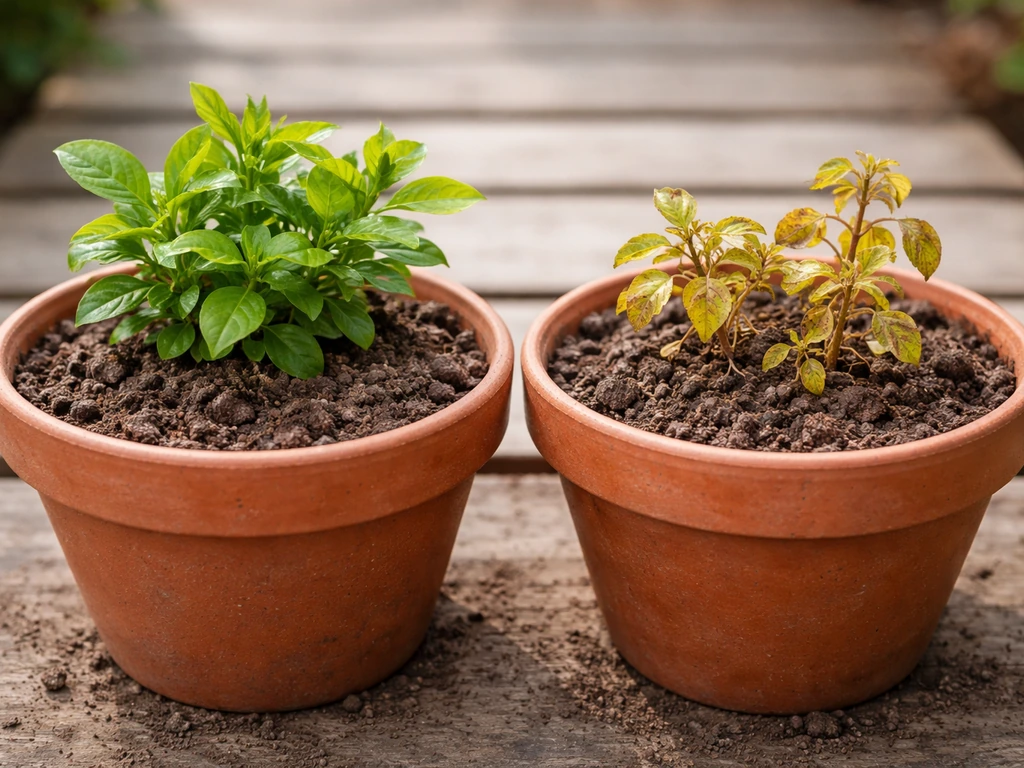
Plant selection is one of the fastest wins available to you. Some plants genuinely tolerate or even prefer heavier soils, while others will struggle no matter how much you amend. Matching your plants to your soil while you work on improvement makes everything easier.
| Category | Good Choices for Clay | Avoid in Clay |
|---|---|---|
| Trees & Shrubs | Oak, willow, dogwood, elderberry, viburnum, hawthorn | Lavender, rosemary, most conifers in wet clay |
| Perennials & Flowers | Rudbeckia, coneflower (Echinacea), aster, daylily, hostas, ornamental grasses | Lavender, yarrow, most Mediterranean herbs |
| Vegetables | Brassicas (cabbage, broccoli, kale), beans, squash, potatoes | Carrots, parsnips, radishes (need loose soil for roots) |
| Ground Covers | Creeping Jenny, pachysandra, ajuga, clover | Sedum varieties, many succulents |
| Fruits | Currants, gooseberries, most apple rootstocks | Blueberries (need acidic, well-drained soil) |
Root vegetables like carrots and parsnips are worth a special mention: they need loose, deep soil to form properly. In clay, they fork, stunt, or rot before they develop. If you want root vegetables, grow them in raised beds or containers with amended soil rather than trying to fight the clay directly. This is a case where changing the growing environment is smarter than trying to change the soil fast enough for one season.
Troubleshooting common clay soil problems
Waterlogged soil and soggy roots
If you're seeing standing water after rain that takes more than 24 to 48 hours to drain, you need a structural fix. Short term: add more compost and raise the planting areas into mounds or berms. Medium term: install a French drain or a dry creek bed to redirect water away from the planting area. If the problem is a compacted hardpan layer below the surface (common in clay), a broadfork or subsoiler can break it up without destroying surface structure.
Stunted growth and yellowing leaves
Stunted growth combined with yellowing, especially starting on older leaves, usually points to either waterlogging (oxygen deprivation at the roots) or a pH-related nutrient lockout. Check your drainage first. If the soil isn't waterlogged, test the pH. Yellowing that starts on younger leaves and moves outward can suggest iron or manganese deficiency, which happens when clay pH climbs above 7.5. An application of chelated iron or a soil acidifier can help, but fixing the underlying pH issue is the long-term answer.
Root problems you can actually see
If you pull a plant and see brown, mushy roots with a sour smell, that's root rot from overwatering or poor drainage. There's no saving roots that are already gone, but you can save the plant if there are still some white, firm roots attached. Trim off the dead roots, let the plant dry slightly, and replant in better-draining conditions. For in-ground plants, this means improving the spot before you replant.
Hard surface crust blocking water
Clay soil forms a dense crust after rain that water just beads off. The fix is simple: mulch prevents crust from forming in the first place. If the crust is already there, break it up lightly with a hand cultivator and apply a layer of mulch immediately. Bare clay in a garden bed is a problem waiting to happen every time it rains.
Soil that never seems to improve
Building clay soil takes time, typically two to three seasons of consistent compost additions before the structure noticeably changes. If you're not seeing progress, check two things: first, are you adding enough organic matter (most people add far too little, a 1-inch layer instead of 3 to 4 inches)? Second, are you avoiding compaction? All the compost in the world won't help if you're walking on the beds regularly or working the soil wet. Permanent paths between beds and a strict no-foot-traffic rule on planting areas makes a bigger difference than most people expect. If you want to dig deeper into building great growing medium from the ground up, the principles of how to make good soil for plants to grow apply directly here, just adapted for clay as your starting point. These same principles also explain how plants grow in soil, since roots rely on water, oxygen, and nutrient availability to establish and thrive.
FAQ
How can I tell if my clay problem is poor drainage or compaction (hardpan) below the surface?
After a rain, dig 6 to 10 inches down in the wet spot and check whether the lower layers are still saturated 24 hours later. If water is still present deep down, you likely have a structural drainage or hardpan issue, not just surface wetness, and you may need raised berms, a drain, or subsoiling/broadfork (when the soil is not wet).
Should I add sand to clay soil to “loosen it up”?
Usually no. Mixing sand into clay can increase density and still leave poor pore space, so water and oxygen movement may not improve much. The more reliable approach is to increase organic matter and encourage aggregation, then use raised beds if you need immediate drainage for plants.
What’s the best organic matter to add to clay (compost, manure, leaf mold, peat)?
Compost is typically the safest all-around choice, because it improves structure while adding nutrients. Manure can be helpful but go easier on fresh, high-salt mixes, and avoid uncomposted inputs that can burn roots. Leaf mold and shredded leaves work well for long-term aggregation, but they can be slower to break down than compost.
How deep should I amend clay beds with compost, and do I need to dig it in?
For meaningful improvement, aim to incorporate compost into the top 3 to 4 inches initially (or use repeated top-dressings if you are minimizing till). You do not need deep digging every year, and in clay, minimal disturbance helps prevent the pore structure from collapsing.
Can I mulch heavily on clay, and will it make drainage worse?
Heavy mulch is usually beneficial, as long as it stays away from stems by about an inch or two and it is not piled into a thick mat that stays soggy for weeks. Wood chips and shredded leaves typically improve infiltration over time; thick plastic-like layers that trap water can worsen surface waterlogging.
Is fall the best time to improve clay soil, or should I do it in spring?
Both work, but fall often helps because you can add compost and let winter cycles and biology start forming aggregates before planting. Spring top-dressing is also effective, just be careful not to work wet ground, and wait until the soil crumbles when poked.
How do I avoid killing plants with overwatering when the surface dries but clay is still wet?
Use a finger-check 2 to 3 inches down before watering, and consider adding a simple moisture check schedule (for example every 2 to 4 days at first, depending on weather). If that deeper layer is still moist, delay watering, even if the top looks dry, because clay often stays saturated below.
What should I do if my raised beds are filled with good soil, but surrounding clay still stays wet and causes problems?
Treat the raised bed as the growing zone, then manage water at the edges. Consider shaping berms or adding mulch and a slight slope so runoff moves away, and if water persists in the area for 24 to 48 hours, install a lateral drainage route like a French drain or dry creek bed.
Do clay soils need less fertilizer, and how should I adjust without a soil test?
In many cases you can start lighter because clay holds nutrients longer, but do not skip fertilizer entirely if plants show deficiency. If you have no test, use a small amount of balanced slow-release in spring, then reassess after 4 to 6 weeks rather than front-loading high nitrogen.
What pH symptoms are most reliable clues, and when should I avoid using sulfur or lime blindly?
Yellowing plus poor growth can point to pH-related nutrient lockout, especially when pH is above 7.5. Do not apply lime or sulfur based on guesswork, pH changes can take time and affect nutrient balance, so confirm with a soil test before adjusting.
Can trees and shrubs survive in clay, and what planting depth is safest?
They can, but planting too deep is a common failure mode because it keeps the crown in wetter conditions. Keep the crown slightly above the surrounding grade (about 1 to 2 inches), and water deeply but infrequently during establishment to reduce the chance of crown and root rot.
How should I handle irrigation if I’m using sprinklers on clay?
Avoid long continuous runs that keep the root zone saturated. Use shorter cycles with absorption time between them, and aim to deliver water that soaks down rather than pooling at the surface, since clay runoff can start quickly when the intake rate is exceeded.