Most plants stall for one of five reasons: not enough light, incorrect watering, poor soil or a cramped root system, missing nutrients, or an uncomfortable environment. Fix the right one and you'll see new growth within days to a few weeks. The trick is diagnosing which problem you're actually dealing with before you start changing things, because throwing fertilizer at a plant that's drowning in soggy soil won't help anyone. If you want to learn how to grow healthy plants, use this same diagnostic approach so you fix the underlying cause before adding anything else throwing fertilizer.
How to Encourage Plants to Grow Faster: Fix Common Stalls
Marcus Holloway
2 May 2026
Know what your plant needs: light, water, nutrients, and space
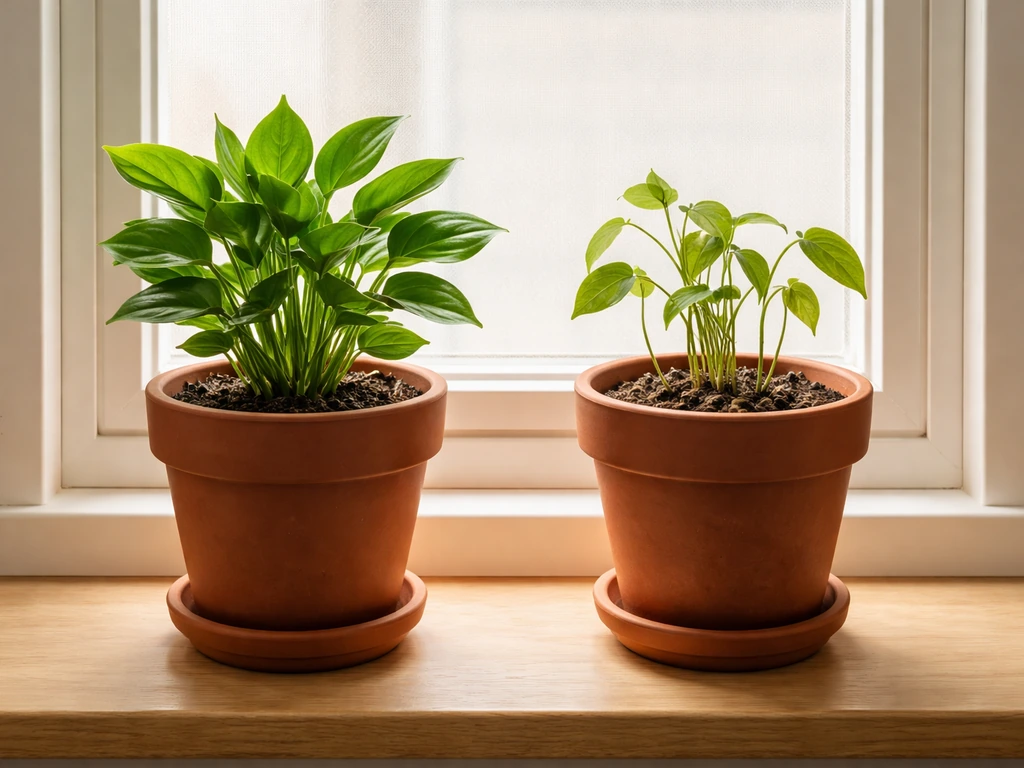
Think of plant growth as a chain with four links: light, water and the medium it grows in, nutrients, and physical space for roots to expand. All four have to be good enough at the same time. A plant getting perfect light but sitting in compacted, nutrient-depleted soil will still look tired. One link breaks the whole chain.
Light powers photosynthesis, which is the engine behind every new leaf, root, and stem. Water carries dissolved nutrients into cells and keeps tissues firm. The growing medium (whether that's potting mix, a soilless blend, or a hydroponic substrate) gives roots something to anchor into while delivering oxygen and moisture in the right ratio. Nutrients are the raw materials for building new tissue. And roots need room to spread, because a cramped root system simply can't support vigorous top growth. Knowing these four basics means you can look at a struggling plant and immediately start narrowing down the cause instead of guessing.
Diagnose why it's not growing: common growth blockers
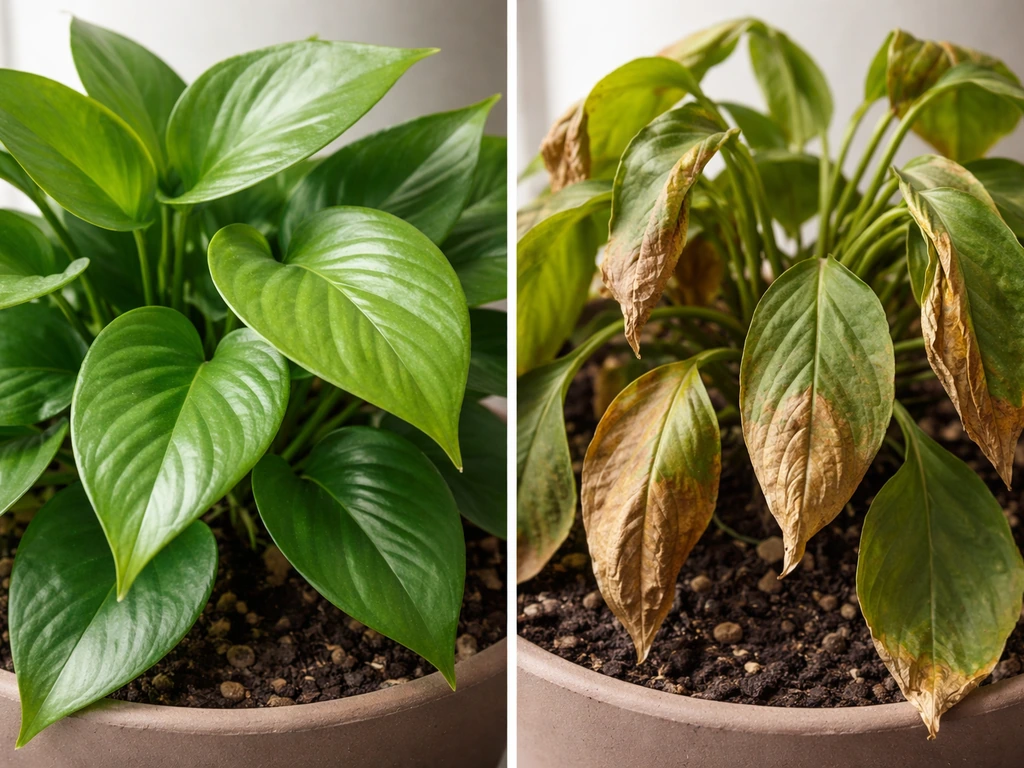
Before you adjust anything, spend two minutes looking at your plant closely. The leaves tell most of the story. Here's what common problems look like in practice:
| What you see | Likely cause | Quick check |
|---|---|---|
| Wilting, brown or crispy leaf edges, flowers dropping fast | Underwatering or too much direct heat | Poke finger 2 inches into soil: bone dry? |
| Yellow lower leaves, soggy soil, mushy stem base | Overwatering or root rot | Does the soil smell sour? Are roots brown and mushy? |
| Leggy, stretched stems reaching toward a window | Not enough light | How many hours of direct or bright indirect light per day? |
| Brown scorched patches or washed-out pale leaves | Too much direct sun or light too close | Is the plant touching or within inches of a hot window or bulb? |
| Slow growth, small new leaves, dull color | Nutrient deficiency or rootbound plant | When did you last fertilize? Are roots poking out drainage holes? |
| Crispy leaf tips, curling edges in winter | Low humidity or cold drafts | Is the plant near a heater vent or cold windowpane? |
One important caveat: some nutrient deficiencies look almost identical to each other or to environmental stress. A phosphorus deficiency can show up as stunted growth and defoliation that looks a lot like drought stress. So diagnose in order: rule out light and watering issues first, because they're most common and easiest to fix, before assuming a fertilizer problem.
Adjust light for faster, steadier growth (indoors vs outdoors)
Light is the single most overlooked factor for indoor growers. A spot that looks bright to human eyes often delivers a fraction of what a plant actually needs. Here's how to get it right without overthinking it. If your goal is truly how to grow beautiful plants, use this same light guidance to fine-tune brightness, distance, and daily timing so your plant gets steady energy for strong growth.
Indoors: windows and grow lights
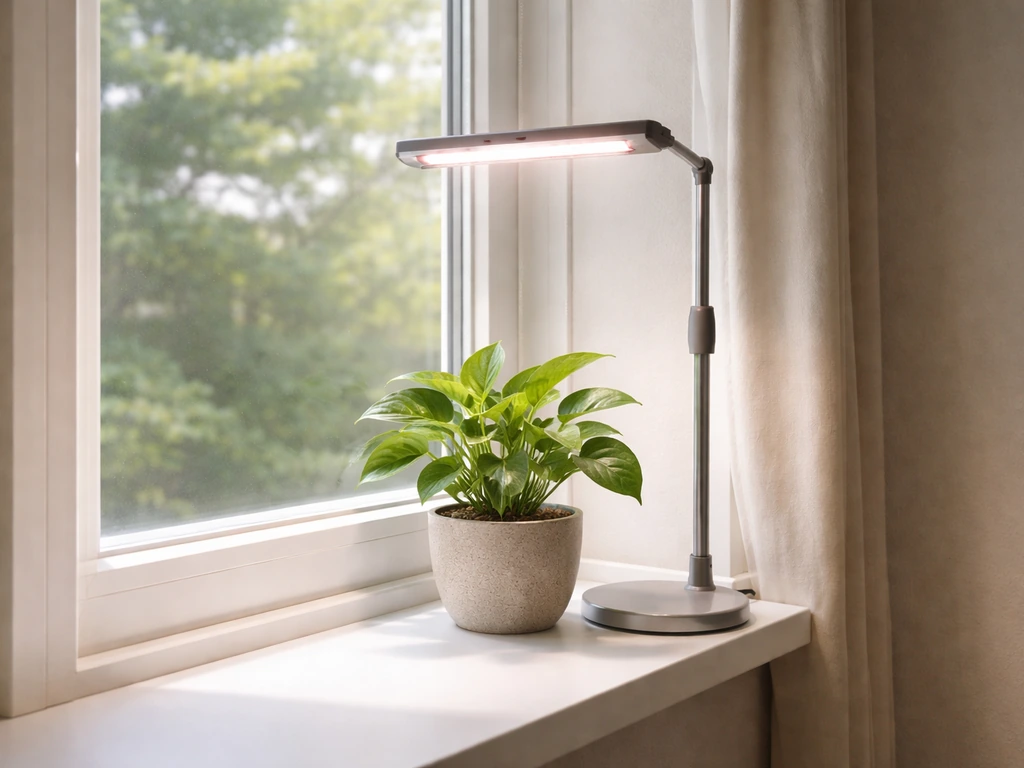
South-facing windows give the most light in the northern hemisphere. East- and west-facing windows give decent morning or afternoon light. North-facing windows are low-light zones, good only for very shade-tolerant plants. If you're relying on natural window light, move the plant as close to the glass as possible without letting cold winter drafts or direct midsummer sun scorch the leaves. The RHS notes that strong direct sun causes brown scorched patches and a washed-out appearance, so if your plant sits in a south-facing window, a sheer curtain can diffuse the intensity without cutting too much.
For grow lights, distance matters a lot because light intensity (measured as PPFD, photosynthetic photon flux density) drops off quickly as you move further from the bulb. For most foliage houseplants, positioning the light 12 to 24 inches above or away from the plant hits a practical sweet spot for intensity. Go closer for high-light plants like herbs and succulents, further for lower-light tropicals. Run the light for 12 to 16 hours per day if you're supplementing or replacing natural light entirely, and use an inexpensive timer so you're not relying on memory.
Outdoors: matching the plant to the spot
Outdoors, light adjustment is mostly about placement. Move shade-lovers out of full afternoon sun and sun-lovers away from the north side of a building. If you're growing in containers (which most small-space gardeners are), this is easy: just move the pot. Introduce plants to more sun gradually over one to two weeks to avoid sudden sun scorch, especially if they've been living inside.
Watering and soil/medium basics: get moisture right without rot
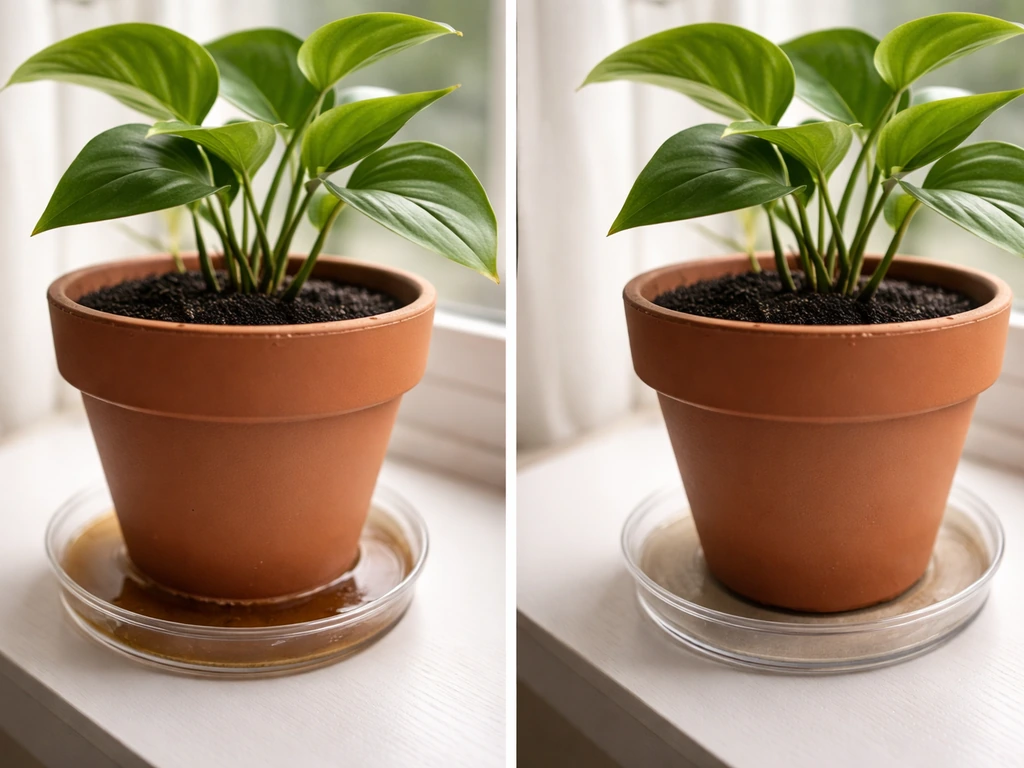
Overwatering kills more houseplants than almost anything else, and it's almost always a timing problem rather than a volume problem. The fix isn't to water less at each session, it's to water less frequently and to check the soil before you water at all.
The finger test that actually works
Cornell Cooperative Extension gives a reliable rule: push your finger about 2 inches into the soil. If the first inch is dry but the second inch is still moist, don't water. Wait until both the first and second inches feel dry before watering. This is a better guide than any calendar schedule because it accounts for temperature, humidity, pot size, and season all at once. When you do water, water thoroughly until it runs out the drainage holes, then let it drain fully. Never let a pot sit in standing water, as OSU Extension is clear that this leads directly to root rot.
Bottom watering and soilless mixes
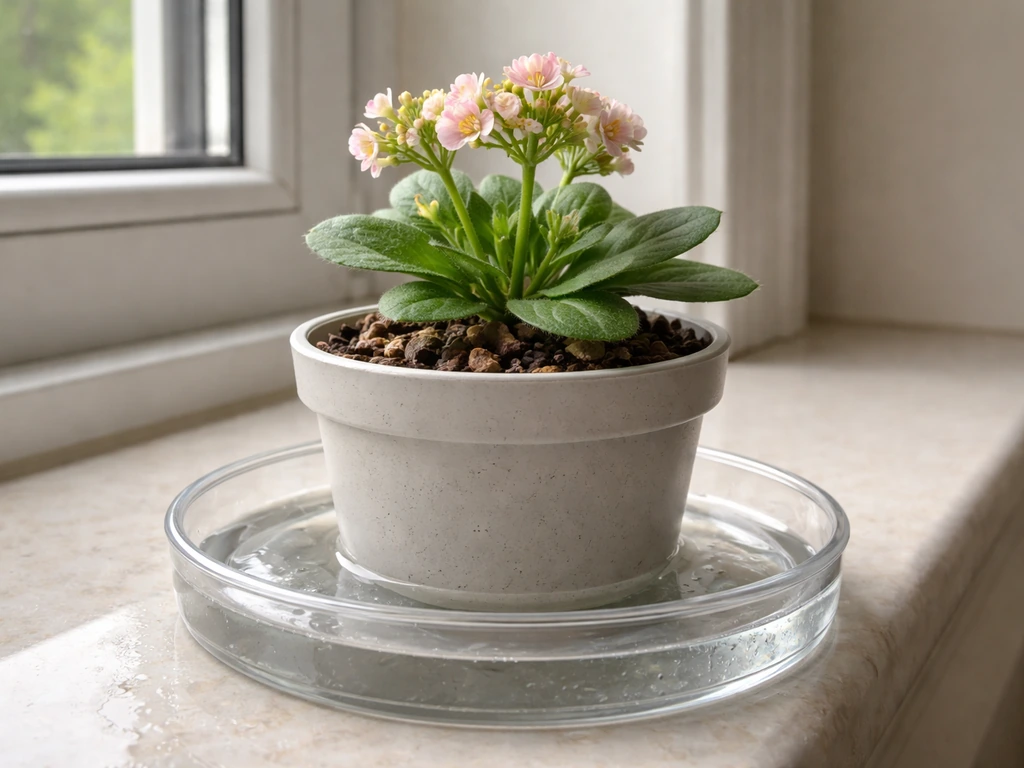
If you're growing in a soilless mix (peat/perlite blends are common) or you have a plant with fuzzy leaves like African violets, try bottom watering: set the pot in a shallow tray of water for 20 to 30 minutes and let the medium soak it up from below, then remove and drain. This keeps moisture off sensitive foliage and ensures the lower root zone gets saturated evenly.
Choosing a growing medium that works with you
Most quality commercial potting mixes are already soilless. They're typically a combination of peat moss or coco coir plus perlite or vermiculite, which balances water retention with drainage and aeration. This isn't just a preference thing: peat-based mixes avoid the soilborne diseases you'd risk with garden soil, and the aeration components stop roots from suffocating in waterlogged material.
Penn State Extension also notes that when the soil space stays filled with water long enough, plants lack oxygen at the root zone, contributing to root rot waterlogged material. If you want to mix your own, a simple half sphagnum peat moss and half perlite blend works well for most houseplants.
If you're using garden soil in a container, sterilize it first and amend it heavily for drainage, or just use a proper potting mix and skip the hassle. For hydroponics setups, roots need oxygen delivered directly to the root zone, either through aerated nutrient solution or an air stone, because there's no soil to hold pockets of air.
Feed correctly: fertilizing schedules and nutrient balance
Fertilizer is not plant food in the way most people picture it. Plants make their own food through photosynthesis. Fertilizer supplies the raw mineral nutrients (nitrogen, phosphorus, potassium, and trace minerals) that the plant uses to build new tissue. Too little and growth slows or stops; too much and you can burn roots, create salt buildup in the soil, and actually damage the plant.
When and how much to fertilize
Start feeding in spring, when day length and light levels increase and plants shift into active growth. A practical starting point: a balanced, water-soluble houseplant fertilizer at half strength, applied every 2 to 4 weeks. OSU Extension notes that houseplant fertilizer should be completely soluble in water so it distributes evenly. If you're in a new container with fresh potting mix, you can wait 2 to 6 weeks before starting fertilizer, since most mixes include some starter nutrients already. In winter or in rooms with low light, cut back significantly or stop fertilizing altogether: plants aren't actively growing much and can't use the nutrients, which means they build up in the soil as salts.
Signs you're over- or under-feeding
Phosphorus deficiency can cause slow, stunted growth and leaf drop. Nitrogen excess can overstimulate leafy growth at the expense of roots and overall plant health, and it makes plants more vulnerable to pests and stress. White crusty deposits on the soil surface or around drainage holes are a salt buildup sign and a cue to flush the soil with plain water or dial back fertilizer concentration. A good rule of thumb: if you're not sure whether to fertilize, wait. Under-fertilizing a healthy plant for a few extra weeks causes much less damage than burning roots with excess salts.
Temperature, airflow, and humidity to support active growth
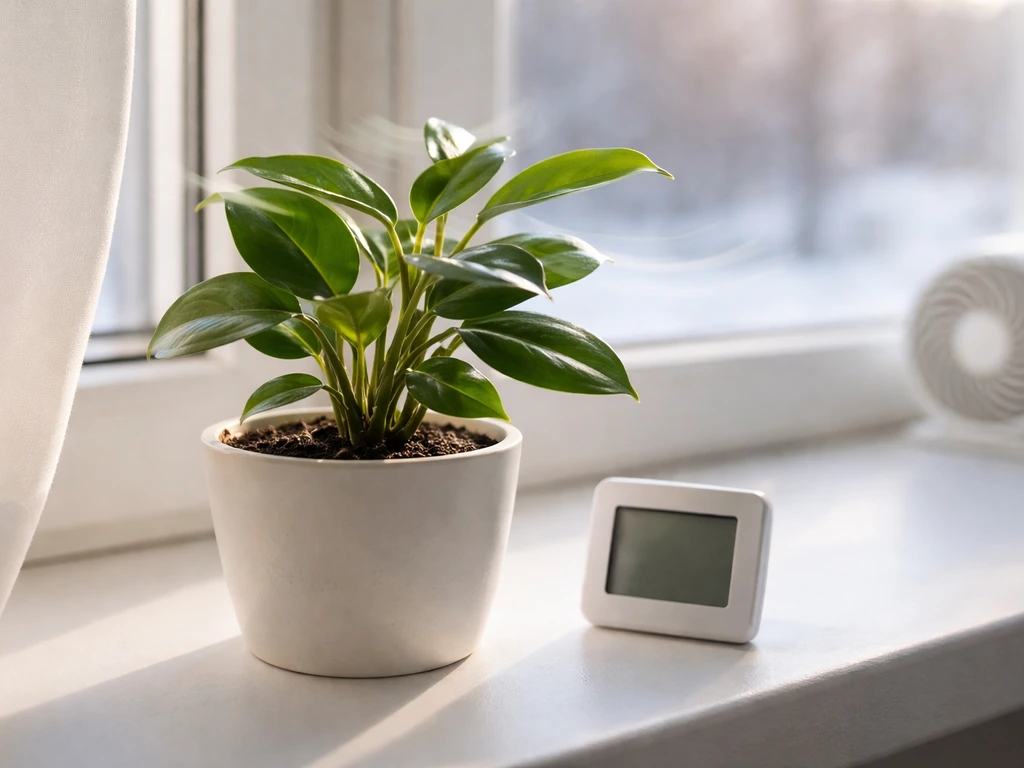
Plants are sensitive to their environment in ways that aren't always obvious. A plant sitting on a windowsill in January might look like it's getting light, but if cold air is seeping through the glass and chilling the roots, growth will stall completely.
Temperature: the ranges that keep growth moving
University of Maryland Extension is direct about this: excessively high or low temperatures stop growth and can cause spindly appearance, leaf drop, and plant failure. Most tropical houseplants prefer daytime temperatures between 65 and 80°F (18 to 27°C). Keep plants away from heating vents, cold drafts, and windowpanes that drop below 50°F at night in winter. One useful technique for flowering plants: a nighttime temperature 10 to 15°F cooler than the daytime reading helps the plant recover from moisture loss during the day and can improve flower color and longevity.
Humidity: why it matters more in winter
Most houseplants prefer relative humidity in the 40 to 60% range. Tropical species, including many ferns, calatheas, and carnivorous plants, often do better at 70 to 80%. Indoor air in winter, especially with central heating running, frequently drops to 20 to 30%, which causes crispy leaf tips, browning edges, and slowed growth. A small humidifier near your plants is the most reliable fix. A tray of water with pebbles under the pot adds some moisture as it evaporates, which helps in mild cases. Grouping plants together raises local humidity slightly as they transpire.
Airflow: don't skip this one
Gentle air movement does two things: it strengthens stems over time (plants actually sense wind and build stronger cell walls in response), and it reduces the stagnant, humid pockets that invite fungal problems. Penn State Extension recommends spacing plants to allow air to circulate, especially when you're running a humidifier. A small fan on a low setting, running a few hours a day, is enough. You're going for a light breeze, not a wind tunnel.
Potting, roots, and transplant timing for healthier growth
A rootbound plant is one where the roots have filled the pot so completely that there's little soil left to hold water or nutrients. It's one of the most common reasons an otherwise well-cared-for plant stops growing. The fix is repotting, but how and when you do it matters.
How to know it's time to repot
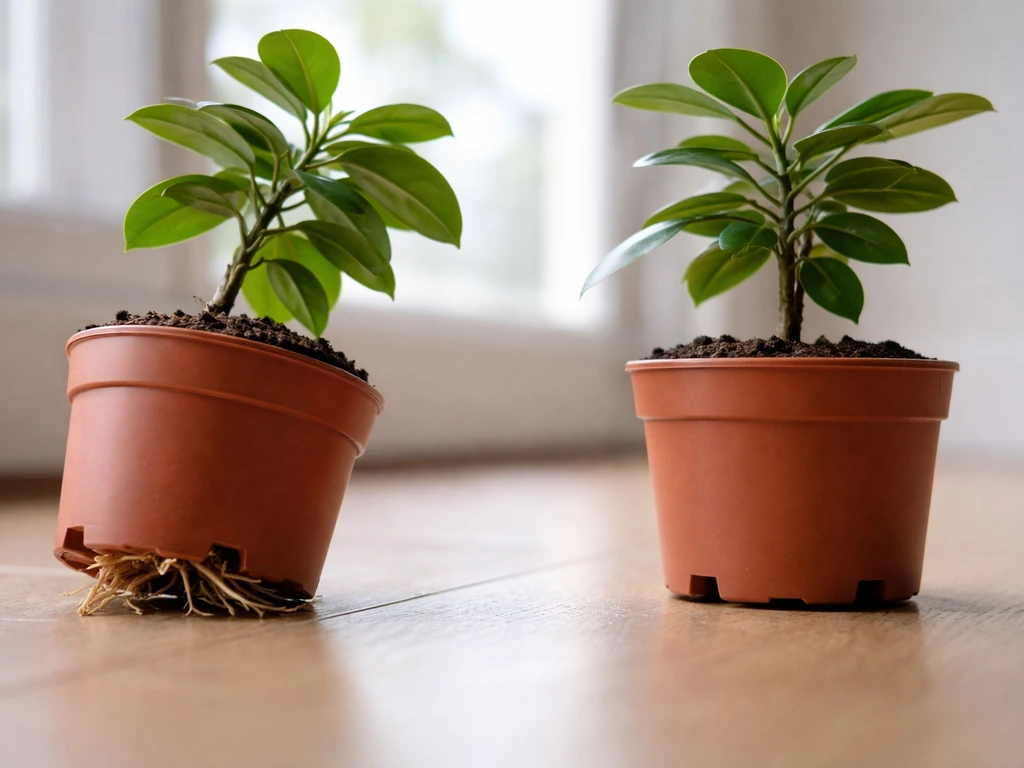
Look for roots growing out of the drainage holes at the bottom of the pot, or a pot that keeps tipping over because the plant has become top-heavy relative to the container. These are reliable signals. You can also slide the plant out of its pot: if you see more roots than soil, it's time. Penn State Extension confirms that when roots grow through drainage holes or become pot-bound, repotting into a slightly larger container is the right move.
Choosing the right size pot
This is where a lot of people go wrong: bigger is not always better. The RHS specifically warns against overpotting, where you put a small plant into a much larger container. The problem is that roots can't reach the outer edges of the fresh compost before it stays wet for too long, which leads to rot. Go only one pot size up (roughly 1 to 2 inches larger in diameter). That gives roots room to expand without leaving a large zone of permanently soggy, root-free soil.
Best practices when repotting
- Use a pest- and disease-free potting mix, not garden soil straight from outside unless it's been sterilized and amended for drainage.
- Make sure the new pot has drainage holes. No drainage is the fastest route to root rot.
- Water the plant a day before repotting so roots are hydrated but the soil isn't completely wet and falling apart.
- Time repotting to spring or early summer when the plant is entering active growth and can recover quickly.
- After repotting, hold off on fertilizer for 4 to 6 weeks if the new potting mix includes starter nutrients.
A simple checklist: start here today
If your plant isn't growing the way you want, run through this list in order. If you want to learn how to grow lucky plants specifically, start by diagnosing light, watering, soil, nutrients, and space like this guide explains. Fix one thing at a time, wait a week or two, and observe before changing something else. Changing multiple variables at once makes it impossible to know what actually worked.
You can use these basics to learn how to grow happy plant at home by matching light, watering, nutrients, and space to your specific plant. Use this guide to troubleshoot each issue step by step, which is the same approach you can use when learning how to grow beautiful plants.
- Check light: is the plant getting at least a few hours of bright indirect light or supplemental grow light coverage each day? If not, move it or add a light.
- Check moisture: stick your finger 2 inches into the soil. Water only if both inches are dry. If the soil is soggy, hold off and let it dry out fully.
- Check drainage: does the pot have drainage holes? Is it sitting in standing water? Fix drainage before anything else.
- Check the roots: are roots circling out of the drainage holes or is the plant top-heavy? If yes, plan a repot into the next size up.
- Check your fertilizing: are you in active growing season (spring/summer)? If yes and you haven't fertilized in months, add a half-strength balanced fertilizer. If it's winter or a low-light room, skip fertilizer for now.
- Check temperature and humidity: is the plant near a vent, cold draft, or sitting on a cold windowsill in winter? Move it to a stable spot. If it has crispy edges, add a humidifier or pebble tray.
- Add gentle airflow: if you don't have any air movement near your plants, run a small fan nearby on low for a few hours each day.
Growing plants well is mostly about paying attention. Most problems show up in the leaves before they become serious, and most fixes are genuinely simple once you know what to look for. If you want to go deeper on specific plant types, it's worth exploring how proper growing fundamentals apply differently to species with unique needs, whether that's getting a single species to thrive or building a healthier collection overall. Start with one change today, watch for new growth over the next two to three weeks, and adjust from there.
FAQ
Should I fertilize if my plant growth has stalled?
Yes, but do it in the order you diagnose. If light and soil moisture are already wrong, fertilizer can worsen the problem by adding salts or stimulating growth you cannot support. A practical rule: correct light placement and watering first, then wait 1 to 2 weeks before feeding again, especially if the plant previously looked stressed or slowed.
How long should I wait to fertilize after repotting?
It depends on whether you changed the root zone or just the environment aboveground. After you repot, salts and mix nutrients can be present, so many plants do best waiting 2 to 6 weeks before the first feed, then using half strength. If you did not repot and the mix is older, you may need a light feeding, but only after you confirm watering, light, and drainage are correct.
How can I tell if I’m watering enough to reach the roots?
A simple way to tell if the “right amount” of water is actually reaching roots is to always water until it drains out, then empty any excess in the saucer. If it drains immediately but the plant still wilts, the problem is often root issues (compact roots or poor mix) or underwatering between sessions, not just the volume you pour.
When should I use bottom watering, and when should I avoid it?
Bottom watering is most helpful when the top of the mix stays dry while the plant suffers, or when foliage is sensitive to moisture. Avoid bottom watering if your water quality is very hard or salty, because salts can accumulate over time. Also, always remove the pot and let it drain fully after soaking.
What should I do if my potting mix stays wet too long?
Use a quick “drainage check” rather than relying on the label. After watering, the pot should drain and not remain waterlogged for long. If water sits in the bottom for a long time, add aeration to the mix (for example perlite) or switch to a true potting mix, then re-check finger moisture before watering again.
How long should I wait before concluding my plant still isn’t improving?
Watch how the plant responds after a change. If growth remains stalled for 3 to 4 weeks with no signs of new leaves or root activity, the issue is likely not just timing or a minor imbalance, it may be light deficiency, temperature extremes, or root crowding. In that case, rerun the checklist in order and consider repotting if roots are outgrowing the container.
Can temperature and humidity cause the same symptoms as poor watering?
Yes, especially with indoor light and air movement. A plant placed in bright light but paired with very cold nighttime temperatures can stall, even if the leaves look normal during the day. Similarly, low humidity plus cold drafts can cause slow growth and leaf tip browning even with correct watering.
Should I keep a fixed fertilizing schedule year-round?
A feeding schedule is less reliable indoors than seasonal light and actual growth. If your room stays dim in winter, nutrients will build up and can lead to salt crusting or root stress. Instead of feeding on a calendar, feed only when the plant is actively growing (new leaves or steady growth), and reduce or stop when growth visibly slows.
Why would my plant grow slower after repotting into a bigger container?
Overpotting is a common culprit, particularly with slow-growing plants. If the pot is much larger, the mix stays wet while roots are still small, which can suppress growth. Choose a container only about 1 to 2 inches wider in diameter and ensure the pot has drainage holes.
What signs mean my plant needs repotting because it’s rootbound?
Look for rootbound indicators that affect both water and nutrient uptake, such as roots circling densely, roots pushing out drainage holes, or the plant tipping because it is top-heavy. If you see these signs, repotting into a slightly larger container is usually the missing “space” link for better growth.
What should I do if I see white salt deposits on the soil?
If you see a white crust near the surface or around drainage holes, that can indicate salt buildup. Flush with plain water by watering through until it runs out the drainage holes, then let the pot drain fully before returning it to its spot. After flushing, reduce fertilizer concentration and confirm you are not watering on a rigid schedule.
Is it safe to cool plants at night to encourage flowering?
A nighttime temperature drop can help flowering plants, but avoid chilling sensitive tropicals. Use a modest drop (about 10 to 15°F) only if your nights still stay within the plant’s comfortable range, and keep the plant away from cold window glass. If leaves start dropping or the plant looks limp, revert to a steadier temperature.
How much air movement is enough, and how do I avoid drying plants out?
A gentle fan can help, but there is a limit. Aim for a light, indirect breeze that runs intermittently, not constant strong airflow that dries soil too quickly or stresses leaves. Increase airflow gradually if humidity is high, and space plants so air can circulate between them.