
You can grow Mimosa pudica successfully indoors or outdoors by giving it bright light (at least 4-6 hours of direct sun daily), warm temperatures (65-85°F), consistently moist but well-drained soil, and a light feeding routine. The tricky part isn't any one care step, it's understanding why this plant behaves the way it does, so you can tell the difference between normal movement and real distress. Once you get that, everything else clicks into place.
How to Grow a Sensitive Plant Mimosa Pudica Step by Step

Marcus Holloway
8 Apr 2026
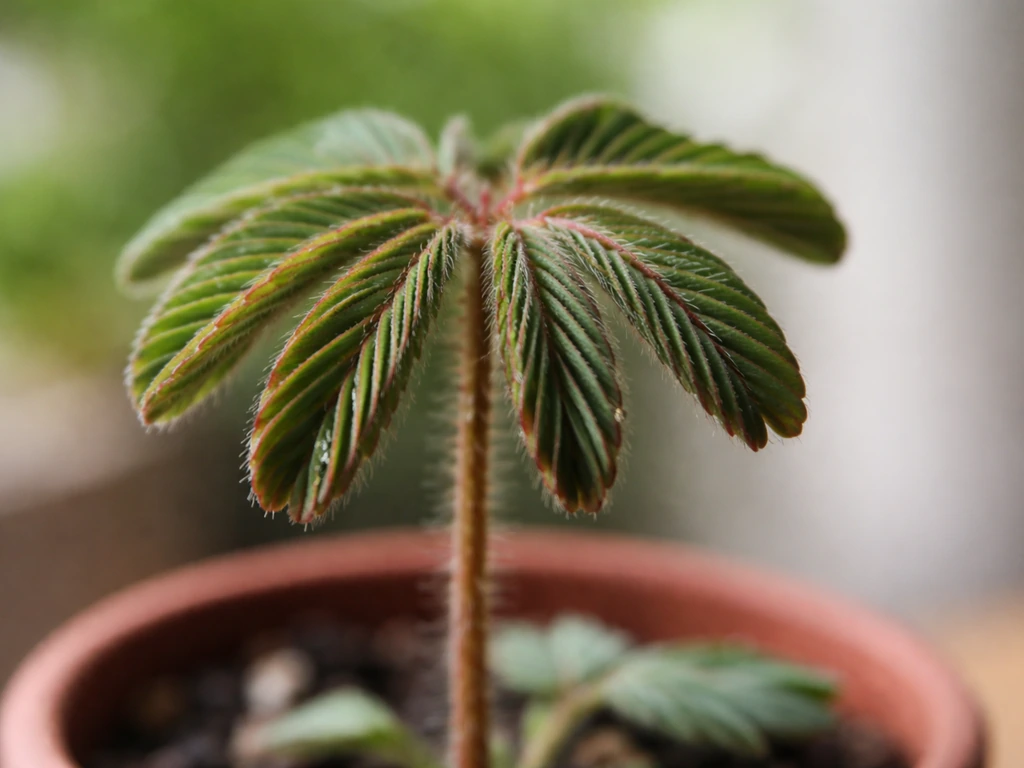
Meet the sensitive plant and what actually makes it "sensitive"
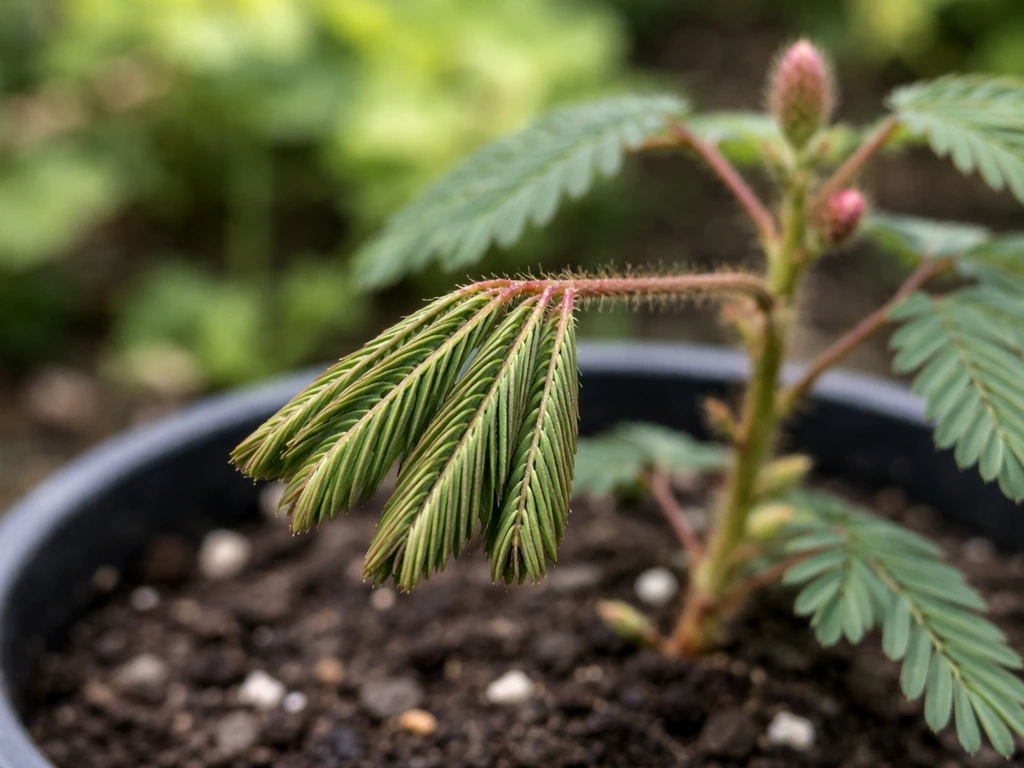
Mimosa pudica's famous folding trick is called thigmonasty, and it's not a defense gimmick or a party trick, it's a real physiological response driven by specialized tissue at the base of each leaflet called the pulvinus. When you touch the leaf, mechanosensitive ion channels in the pulvinus fire off electrical signals (essentially action potentials, similar to what happens in your own nerves), which trigger a rapid redistribution of potassium ions and water. The cells on one side of the pulvinus lose turgor, and the leaflet collapses inward within seconds. The whole system resets after a few minutes as ions and water flow back and turgor is restored, which is why the leaves reopen on their own without any input from you.
Knowing this matters practically because the plant also closes at night through a separate process called nyctinasty, which is controlled by its internal clock rather than touch. Nyctinastic leaf movement in Mimosa pudica follows a blank" rel="noopener noreferrer">circadian rhythm, as reported in studies of its physiological rhythmic changes. Nyctinasty is a circadian, internal clock, controlled daily leaf movement that responds to the light, dark cycle rather than direct touch blank" rel="noopener noreferrer">internal clock rather than touch. So if you check your plant after dark and the leaves are folded, that's perfectly normal. But if leaves stay shut during the day and aren't reopening after a reasonable time, that's a sign something in the environment is off, not just a quirk of the plant. A genuinely healthy, well-cared-for Mimosa pudica is reactive and recovers quickly from stimulus. A stressed one closes sluggishly, stays closed too long, or stops responding altogether. That distinction will save you a lot of unnecessary troubleshooting later.
Light, temperature, and humidity: the big three
Light is the variable that trips up most indoor growers. Mimosa pudica is a subtropical plant, and it wants real, direct sunlight for a meaningful chunk of the day. Aim for a south- or west-facing window that gets at least 4-6 hours of direct sun. If you're in a low-light apartment, a grow light placed 6-12 inches above the plant running 12-14 hours a day will do the job, but don't expect the same vigor as a plant sitting in a sunny windowsill. Leggy, stretched growth is almost always a light problem, not a soil or watering problem, keep that in mind.
Temperature should stay between 65°F and 85°F (18-29°C). Mimosa pudica stops growing and becomes sluggish below 60°F, and anything below 50°F will damage it pretty fast. Don't put it near a cold window in winter or an air conditioning vent in summer. It can handle average household humidity (40-50%) reasonably well, but it genuinely thrives with higher humidity closer to 60-70%. If your home is dry, a pebble tray with water under the pot or a small humidifier nearby makes a visible difference in how lush the foliage looks. Misting the leaves directly is fine occasionally but won't substitute for ambient humidity.
Starting from seed vs. transplanting: how to get strong seedlings
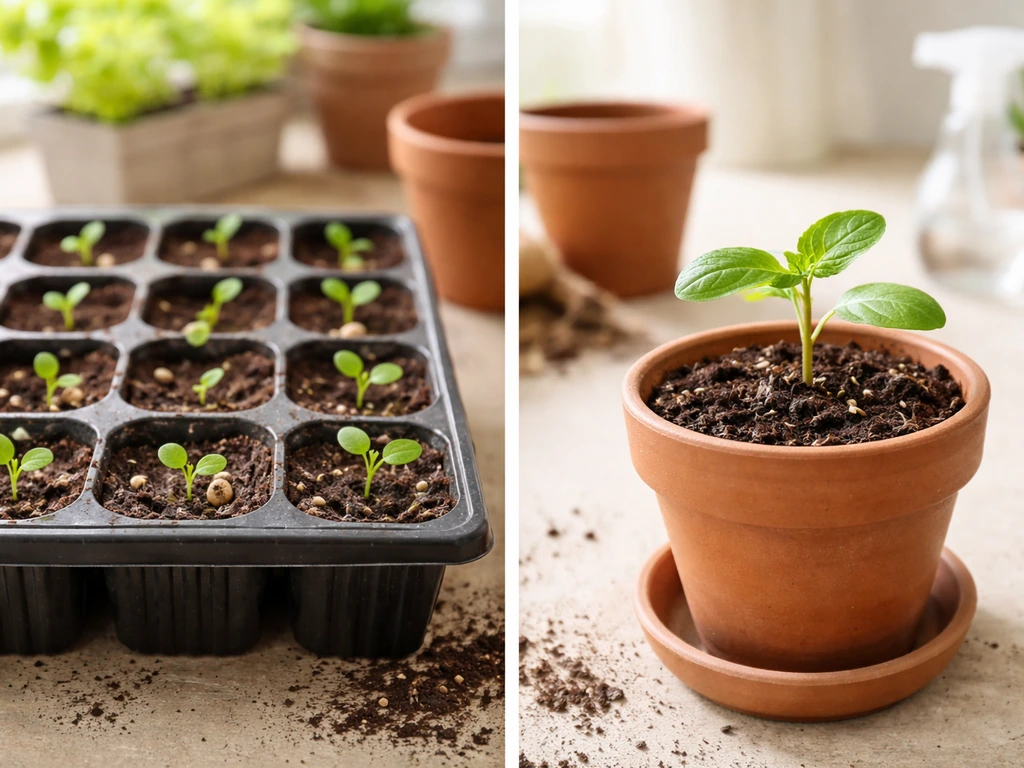
Mimosa pudica is most commonly grown from seed, and the good news is the seeds germinate reliably when you give them a head start. The seed coat is hard, so scarification is your first step: rub the seeds lightly between two pieces of fine-grit sandpaper, or nick them gently with a nail file, then soak them in warm water for 24 hours before planting. Skip this step and you'll see inconsistent, frustratingly slow germination.
For the seed starting mix, use a light, well-draining medium, a 50/50 blend of perlite and standard potting mix works great. Sow seeds about 1/4 inch (6mm) deep, keep the medium consistently moist (not soggy), and maintain a temperature of at least 70°F. Seeds typically germinate in 7-14 days under warm conditions. A seedling heat mat under the tray is genuinely useful here and makes a noticeable difference in germination speed. Once seedlings have two sets of true leaves, they're ready to pot up into their own small containers. Be gentle with the roots during transplanting, Mimosa pudica doesn't love being disturbed at this stage.
If you're buying an established plant rather than starting from seed, the transition from nursery conditions to your home is the most vulnerable period. Give the plant a week or two to adjust before you start poking it for the touch response. Getting plants to grow after a repotting or environmental change is often about patience more than any single care adjustment, give it time to settle.
The right soil mix
For mature plants, a mix of two parts quality potting soil, one part perlite, and one part coarse sand or fine bark creates the drainage and aeration this plant needs. Mimosa pudica roots hate sitting in compacted, poorly draining soil. Heavy, moisture-retaining mixes that work well for tropical foliage plants will slowly suffocate this one. A slightly acidic to neutral pH, between 6.0 and 7.0, is ideal. If you're repotting, terracotta pots are a good call because they breathe and help prevent excess moisture retention.
Watering and drainage: the difference between droop and real trouble
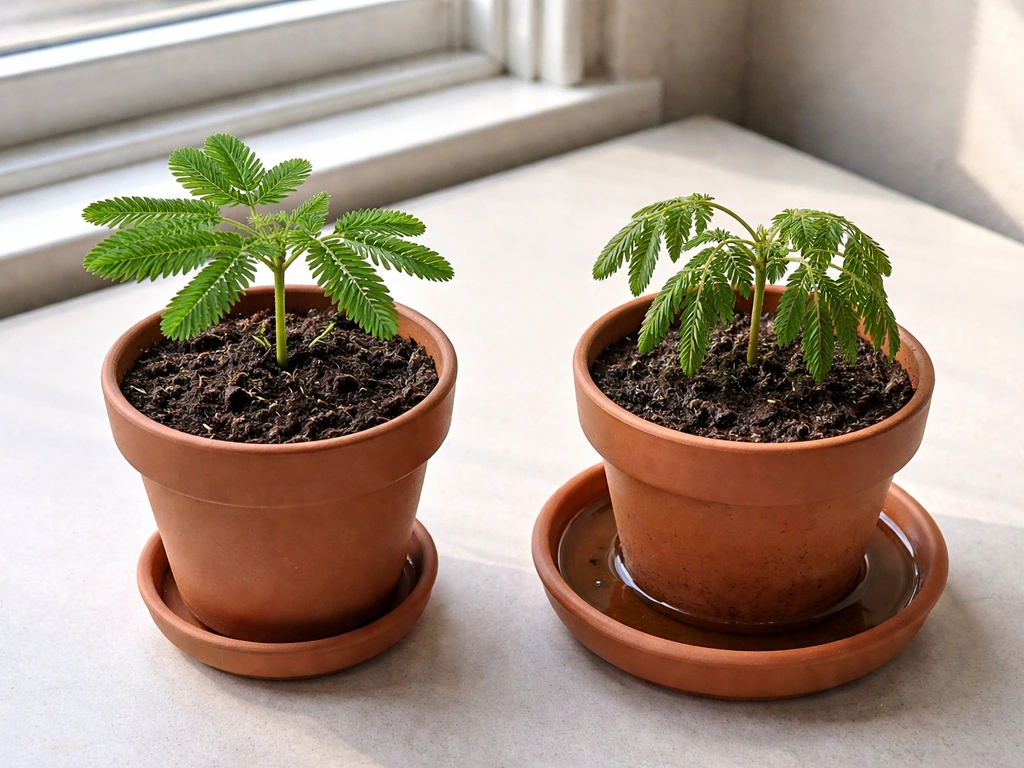
Here's the thing about watering Mimosa pudica: it wilts dramatically when both underwatered AND overwatered, which confuses a lot of people. The key is to water when the top inch of soil is dry, then water thoroughly until it runs freely from the drainage hole. Don't let the pot sit in standing water, empty saucers within 30 minutes of watering. In summer, especially in warm sunny conditions, you may be watering every 2-3 days. In winter, especially if the plant goes semi-dormant, you may stretch to once a week or even longer.
The classic overwatering mistake is watering on a fixed schedule without checking the soil first. A good drainage setup prevents the worst consequences, but even a well-draining mix will become waterlogged if you're watering too frequently. If leaves are yellowing and drooping and the soil feels wet to the touch below the surface, pull back on watering immediately and check the roots for any soft, brown, mushy areas. Catching root rot early means you can trim affected roots, let them dry slightly, and repot into fresh mix. Waiting too long is usually what kills the plant, not the rot itself.
Feeding: keep it simple and light
Mimosa pudica is not a heavy feeder. Overfeeding, especially with high-nitrogen fertilizers, pushes sappy, weak growth that's more susceptible to pests and doesn't look great. During the active growing season (spring through early fall), fertilize once every 3-4 weeks with a balanced, water-soluble fertilizer diluted to half the recommended strength. A 10-10-10 or similar balanced NPK formula works well. Don't fertilize at all in winter when growth slows or stops.
If you want to follow how to grow plants properly from a nutrient standpoint, the principle that applies here is that less is more when the plant isn't actively growing. A light, consistent feeding schedule during the growing season prevents nutrient deficiency without pushing the kind of soft, overextended growth that weak light and too much nitrogen can produce together. Signs of overfertilizing include brown leaf tips, salt crust on the soil surface, and suddenly sluggish touch response.
Your ongoing care routine: pruning, repotting, and the annual cycle
One thing growers don't always expect: Mimosa pudica tends to behave like an annual or short-lived perennial, especially when grown indoors. In its second year, it's common for the plant to become woody, leggy, and less vigorous. This isn't always a problem you've caused, it's just the plant's natural cycle. Many growers simply start fresh from seed each spring rather than trying to revive an aging plant, and that's a completely valid approach.
That said, pruning helps. Cutting leggy stems back by up to one-third in early spring encourages bushier, more compact growth. Make clean cuts just above a leaf node with clean scissors. If the plant is becoming very woody and not responding, don't pour energy into it, save some seeds from the spent pods (they're easy to collect) and start new plants. This is one of those species where encouraging plants to grow sometimes means starting a new generation rather than trying to rehabilitate an old one.
Repotting is needed when roots start circling the drainage holes or poking through the bottom. Move up one pot size at a time (typically from a 3-inch to a 4-inch pot, for example). Going too large too fast gives the roots too much wet soil to sit in between waterings. Spring is the best time to repot, just as new growth starts. After repotting, hold off on fertilizing for about a month to let the roots settle into the new medium without chemical stress.
In winter, especially in cooler homes, the plant may go semi-dormant, dropping leaves, slowing growth, and looking a bit sad. Reduce watering significantly and stop fertilizing. It should bounce back in spring when temperatures rise and day length increases. Think of it like a happy plant that just needs a rest, not a plant that's dying. As long as the stems stay green and firm, it's still alive.
When things go wrong: fixes for the most common problems
The plant won't close when touched
This is the most alarming thing for new growers, but it usually has a straightforward cause. If the plant is healthy and the leaves are open but not responding to touch, check these in order: first, is it nighttime or has the plant been repeatedly stimulated recently? Constant touching exhausts the turgor mechanism and the plant needs time to recover between stimulations. Second, is the temperature too low? Below 60°F, the movement response becomes very sluggish or stops. Third, is the plant severely underwatered? Without enough water in the system, there's nothing to redistribute through the pulvinus and the mechanism doesn't work. Fix the most obvious environmental issue and give it 24-48 hours before reassessing.
Leggy, stretched growth
Long internodes, thin stems, and sparse leaves all point to insufficient light. Move the plant to a brighter spot or add a grow light. Prune leggy stems back to encourage branching. Leggy growth caused by low light won't self-correct without addressing the root cause, just moving the plant without pruning will give you a taller, leggier plant. Trim it, move it, and watch for denser new growth within a few weeks.
Drooping leaves when the soil is moist
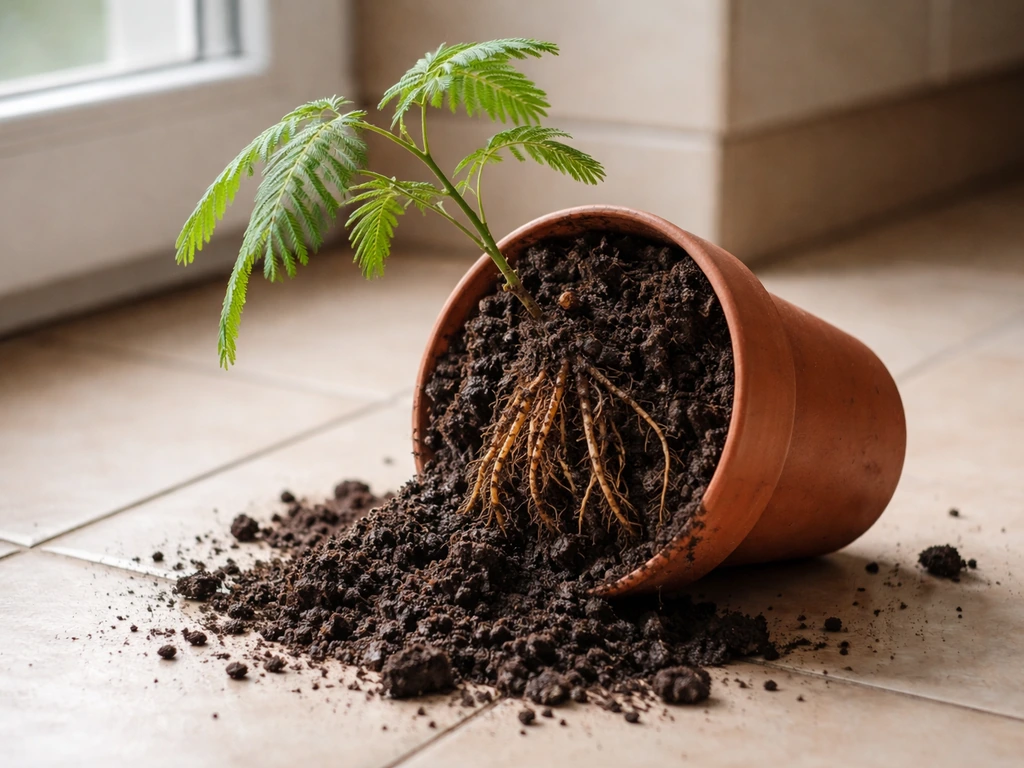
If the soil is wet and the plant is drooping, you're almost certainly looking at root stress from overwatering or poor drainage. Check the roots. If they're brown and mushy, you have root rot. Unpot the plant, trim any rotten roots with sterile scissors, let the root ball air dry for a few hours, and repot into fresh well-draining mix. If the roots look pale and firm, the soil may just be too compacted and waterlogged without visible rot yet, repotting into a better mix and backing off watering will resolve it.
Pests
Mimosa pudica is susceptible to spider mites (especially in dry indoor conditions), fungus gnats (from overwatering), and occasionally mealybugs. Spider mites show up as fine webbing on the undersides of leaves and a stippled, dull look to the foliage. Increase humidity, wipe leaves down with a damp cloth, and treat with insecticidal soap or neem oil. Fungus gnats breed in moist soil, let the top inch dry out more between waterings and use yellow sticky traps to catch adults. Mealybugs appear as white cottony masses at leaf joints and can be treated with rubbing alcohol on a cotton swab followed by a neem oil spray.
Poor seed germination
If your seeds aren't germinating after two weeks, the most likely causes are skipping scarification, temperatures that are too cool (below 70°F), or the seed starting mix staying too wet. Check all three. Old or improperly stored seeds are also a factor, fresh seeds from a reputable supplier will always outperform old seeds from a forgotten packet. Starting over with fresh seeds and a heat mat usually solves this immediately.
Quick reference: Mimosa pudica care at a glance
| Care Factor | What It Needs | Common Mistake |
|---|---|---|
| Light | 4-6 hours direct sun or 12-14 hrs grow light | Too little light, causing leggy growth |
| Temperature | 65-85°F (18-29°C) | Cold drafts or temps below 60°F |
| Humidity | 60-70% ideal, 40-50% tolerable | Dry indoor air slowing growth |
| Watering | When top inch of soil is dry; drain fully | Fixed schedule without checking soil |
| Soil | Potting mix + perlite + coarse sand (2:1:1) | Heavy, moisture-retaining mix |
| Fertilizer | Half-strength balanced feed every 3-4 weeks (spring-fall) | Overfeeding with high nitrogen |
| Repotting | One size up in spring when root-bound | Potting up too large at once |
| Germination | Scarify + soak seeds, 70°F+, 7-14 days | Skipping scarification, cool temps |
The bigger picture: what healthy growth actually looks like
A thriving Mimosa pudica is a genuinely rewarding plant to grow. The leaves respond with visible snap and recovery, new leaflets unfurl regularly, the stems stay compact and self-supporting, and in good conditions the plant will produce small pink puffball flowers that are genuinely charming. If you want to understand the broader principles that apply here, many of the same fundamentals that go into growing healthy plants in general apply: good light, appropriate water, adequate drainage, and feeding only what the plant can use.
Mimosa pudica is a great gateway plant, actually. Because it gives you instant visible feedback (the touch response), you can see when it's stressed faster than with almost any other houseplant. If you've been drawn to plants that have symbolic meaning alongside their beauty, it's worth knowing that some growers pair it with other meaningful species, the practice of growing lucky plants alongside responsive ones like Mimosa creates an interesting mixed container display. The key is matching care needs across your collection so nothing gets neglected.
Don't be discouraged if your first plant doesn't make it through its second year. That's common and expected. Collect seeds, start fresh in spring, and apply what you learned from the first round. Growing beautiful plants consistently comes down to iteration, each attempt teaches you something that makes the next one better. With Mimosa pudica, a second attempt almost always looks noticeably better than the first, because you stop second-guessing the normal touch response and start focusing on the actual care variables that matter.
FAQ
Can I grow a sensitive plant in a pot year-round?
Yes, but expect less consistent “snap” indoors. If you grow it in a pot, give it the strongest light you can, rotate it weekly, and keep the soil slightly drier between waterings in winter because cooler nights slow recovery of the pulvinus.
How long should it take for Mimosa pudica to reopen after I touch the leaves?
Watch for the “rhythm,” not a one-time response. A healthy plant should close on touch and reopen within a few minutes; if it stays folded for much longer repeatedly, it usually points to low temperature, low water, or chronic over-stimulation.
What should I do if my sensitive plant stopped responding after I touched it a lot?
Let the plant recover and use a “no touch” period. If you touched it many times in one day, stop for 24 to 48 hours, keep temperatures above 60°F, and ensure the top inch of soil has moisture to support normal pulvinus action.
How do I know when to water my sensitive plant indoors?
Don’t use a calendar alone. Check the top inch of soil first, and water thoroughly only when it is dry, then empty the saucer within 30 minutes. In dim or cool rooms, watering frequency can drop dramatically compared with warm, sunny spots.
My plant is open but growing leggy. Should I adjust watering or fertilizer first?
Small light changes can cause big behavior changes. If leaves are staying open but growth is weak, first increase direct light and reduce nitrogen rather than changing watering or supplements, because low light plus rich fertilizer is a common combo that leads to leggy, fragile plants.
Can I increase germination success without a heat mat?
Yes, but choose the right temperature for the method. Scarify and soak, then germinate warm (at least 70°F) in a light, well-draining medium, and keep moisture consistently moist, not wet. Cooler germination often looks like “no germination,” even when seeds are still alive.
Is it safe to fertilize right after repotting?
Avoid fertilizing on newly repotted plants for about a month, and use diluted balanced fertilizer during active growth only. If you see salt crust or tip browning, flush the soil with clean water and pause feeding to reset the root zone.
What pot size should I use when repotting a mature sensitive plant?
Repotting too large is a common mistake. Move up only one pot size at a time, and use a mix that drains fast. Oversized pots stay wet longer, which raises the risk of root rot even if you “water carefully.”
Do I need to mist the leaves to keep it healthy?
Use humidity, not frequent leaf misting, as your main tool. In dry homes, a pebble tray or small humidifier near the plant helps more than daily misting, and good airflow reduces pest pressure like spider mites.
My plant droops but the soil is wet. How do I tell if it is root rot?
For problems with drooping, do a quick root check. If soil is wet and drooping happens, inspect for mushy brown roots, trim with sterile scissors if needed, then repot into fresh, well-draining mix. If roots are pale and firm, focus on drainage and watering reduction first.
How can I tell normal night folding from a true stress problem?
If leaves are closed only at night, that is normal. If they stay closed through the day, double-check three things in order: repeated recent stimulation, temperature below 60°F, and soil too dry.
What is the fastest way to control spider mites on a sensitive plant?
Spider mites and mealybugs often worsen on dry, stressed plants. In the early stage, wipe undersides of leaves, increase humidity, and treat with insecticidal soap or neem, repeating as directed, because eggs can hatch after the first treatment.
How do I stop fungus gnats without harming the plant?
Fungus gnats usually reflect consistently wet soil, not “bad luck.” Let the top inch dry more between waterings, remove standing water, and use yellow sticky traps to reduce adults while you correct the moisture level.
Will a sensitive plant live for many years indoors, or is it usually short-lived?
Yes, but it may not behave the same. Water sensibly and keep light strong, then expect the growth cycle to be shorter indoors, often making the plant look like it declines after year one to two.
When is the best time to prune Mimosa pudica for a fuller shape?
If you want a denser plant, prune in early spring by cutting leggy stems back to just above a leaf node, up to about one-third. Skip heavy pruning during cool, low-light periods because new growth may be slow.