
The term "lucky plant" is a catch-all, and the answer to how you grow one depends almost entirely on which plant is actually sitting on your windowsill. Get that sorted first and the rest of the care becomes straightforward. The good news: all the most common lucky plants are pretty forgiving once you understand their basic needs, and you can absolutely keep one thriving in a small apartment with average indoor conditions.
How to Grow Lucky Plants: A Step-by-Step Care Guide

Marcus Holloway
13 Apr 2026
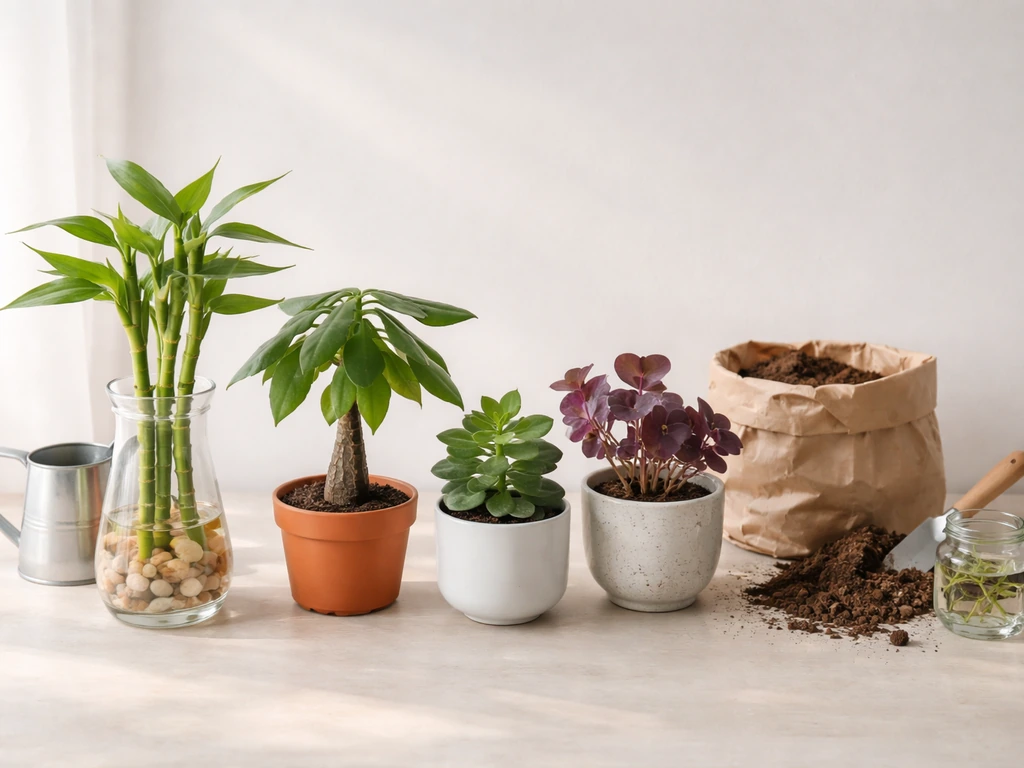
Which "lucky plant" do you actually have?
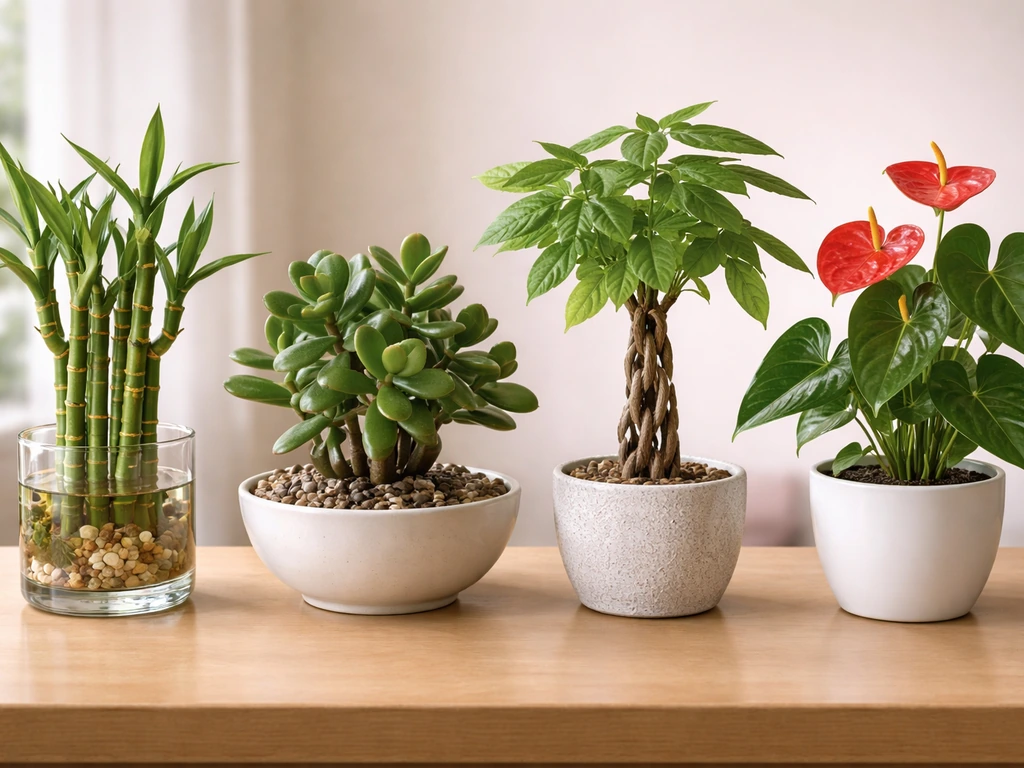
Four plants get sold under the "lucky" label more than any others, and their care is different enough that it's worth identifying yours before you do anything else. Here is a quick rundown of the most common ones.
- Lucky bamboo (Dracaena sanderiana): Green stalks, sometimes curled or braided, usually sold standing in water with pebbles. Despite the name, it is not bamboo at all. It is a Dracaena, and it lives happily without any soil.
- Money tree (Pachira aquatica): A braided trunk with large, palm-like leaves. Sold in soil, often with a decorative pot. Grows quite large if you let it.
- Jade plant / money plant (Crassula ovata): A thick-stemmed succulent with shiny, oval leaves. Very drought tolerant. Sometimes called a money plant or lucky plant in Asian households.
- Oxalis (Oxalis triangularis or similar): Clover-shaped leaves, often purple. Sometimes sold as a lucky clover. Goes dormant seasonally, which confuses a lot of new growers.
Once you know which one you have, the rest of this guide will make a lot more sense. If you are still not sure, look at the roots or the base: water-grown stalks with pebbles are almost always lucky bamboo, braided trunks mean money tree, chunky glossy leaves on a woody stem mean jade, and clover-shaped foliage means Oxalis.
Light and where to put your lucky plant
Light is the one thing you cannot substitute, so placement matters more than any other decision you will make. The good news is that most lucky plants sit somewhere in the "bright indirect" zone, not the "full sun on a south-facing roof" zone.
Lucky bamboo (Dracaena sanderiana)
Think blank" rel="noopener noreferrer">rainforest canopy: bright, filtered light with no direct afternoon sun hitting the leaves. A spot a few feet back from an east- or west-facing window works well. Direct sun will scorch the leaves quickly and turn them yellow or brown at the tips. Avoid placing it directly on a windowsill that gets harsh midday or afternoon sun, and keep it away from air conditioning vents and heating units, which dry out the air and stress the plant with temperature swings.
Money tree (Pachira aquatica)
Same general rule: bright, indirect light. Avoid putting it where direct sun hits the leaves, because leaf scorch happens faster than you expect. A north-facing window usually does not give it enough light, so aim for east or west exposure, or a few feet from a bright south-facing window with a sheer curtain as a buffer.
Jade plant (Crassula ovata)
This one actually wants direct sun. Aim for at least four to six hours of direct sunlight daily. A south-facing windowsill is ideal in the northern hemisphere. If the jade is getting too little light, the stems will stretch toward the window and new growth will look weak and spindly. If you are struggling with low-light conditions across any of your plants, understanding how encouraging plants to grow through smart light adjustments can help you make the most of what you have.
Oxalis
Oxalis prefers bright, indirect light indoors. The interesting thing about Oxalis is that its leaves fold up at night (called nyctinasty) and respond strongly to day length, which drives its dormancy cycle. If yours suddenly drops its leaves, it is probably not dead. It is probably just going dormant, and light conditions are usually the trigger.
Watering and growing media for each type
This is where the lucky plant group really splits apart. Some of these plants live in water, some need very fast-draining soil, and one will rot quickly if you are too generous with moisture. Getting this right is the single biggest factor in whether your plant lives or dies.
Lucky bamboo in water
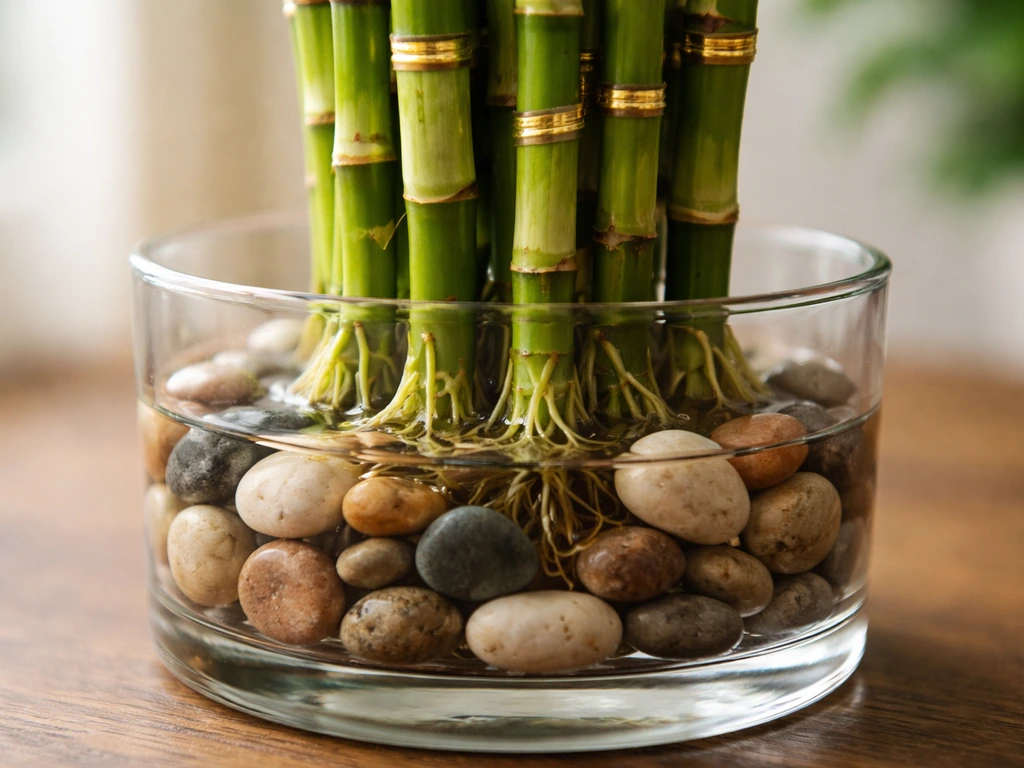
Classic lucky bamboo setups use a container filled with pebbles and enough water to cover the roots. The stalks stand upright in the pebbles. If yours is set up this way, change the water about once a week and rinse out the container at the same time. Stagnant water breeds bacteria and algae, which will yellow the roots and eventually rot the stalks. Use filtered or distilled water if possible, as lucky bamboo is sensitive to the fluoride and chlorine in tap water, which causes brown leaf tips over time. If you choose to grow it in soil instead (which is fine), water about every 10 days in summer and less in winter.
Money tree in soil
Water your money tree when the top inch of soil feels dry to the touch, or when the soil volume is about 50 to 75 percent dry. The classic method is the "big gulp" approach: water thoroughly until it drains out the bottom, then let it mostly dry out before watering again. Do not keep the soil constantly moist. Use a well-draining, peat-based potting mix, and make sure the pot has drainage holes. Moderate to high humidity suits it well, but average indoor humidity is usually acceptable.
Jade plant in very well-draining soil
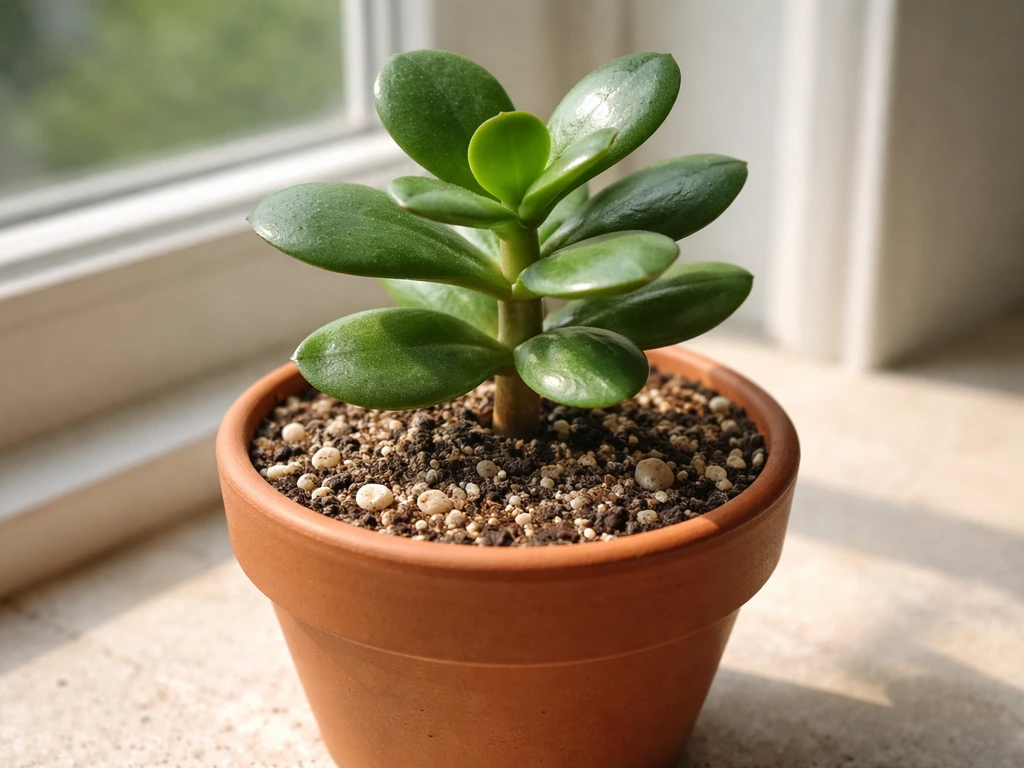
Jade plants are succulents, which means they store water in their leaves and stems. Overwatering is by far the most common mistake with jade, and the plant will look fine right up until the roots rot completely. Use a cactus or succulent mix, or cut standard potting soil with 30 to 50 percent perlite. Let the soil dry out almost completely between waterings. If you are unsure, wait another few days. Erring on the side of underwatering keeps jade plants alive far longer than erring on the side of too much water.
Oxalis in regular potting mix
Oxalis likes a well-draining standard potting mix. When you water, saturate the soil thoroughly so a little water runs out the bottom of the pot, then let the top portion dry out before watering again. During dormancy, reduce watering significantly. Some bulb-type Oxalis can be dried out completely while dormant. The key is not to keep watering it like normal when it goes dormant, because the soil staying wet with no active plant growth is a recipe for rot and fungus gnats.
Temperature, humidity, and seasonal shifts
Most lucky plants are tropical or subtropical in origin, so they want the same temperatures you find comfortable in a home. Here is a quick comparison of what each plant prefers.
| Plant | Ideal Temperature | Humidity | Winter Notes |
|---|---|---|---|
| Lucky bamboo | 16–27°C (61–81°F) | Average indoor levels are fine | Reduce watering; no fertilizer; keep away from cold drafts |
| Money tree | 16–24°C (60–75°F) | Moderate to high; misting helps | Growth slows; water less frequently |
| Jade plant | 15–24°C (60–75°F) | Low to average; does not need humidity | Dormancy period; water very sparingly |
| Oxalis | Above 4°C (40°F) | Around 50% or higher preferred; tolerates lower | Likely dormant; stop or drastically reduce watering |
The biggest seasonal mistake people make is continuing to care for their plant the same way in winter as they do in summer. Growth slows down, roots are not pulling water as fast, and humidity indoors tends to drop when the heating goes on. Lucky bamboo in particular is sensitive to cold drafts and sudden temperature changes, so move it away from windows that get icy overnight.
For healthy growth, lucky bamboo (Dracaena sanderiana) is typically kept in the warm range of about 65, 95°F (18, 35°C), using fluorescent or LED grow lights if natural light is insufficient Lucky bamboo in particular is sensitive to cold drafts and sudden temperature changes.
If you are learning to grow plants properly, adjusting your care seasonally is one of the most impactful habits to build.
Fertilizing and when to repot
Feeding your lucky plant
None of these plants are heavy feeders, and overfeeding causes its own set of problems (salt buildup, burned roots, yellow leaves). The general rule is: feed lightly during active growth in spring and summer, and stop feeding entirely in fall and winter.
- Lucky bamboo: A very diluted liquid fertilizer once every few weeks during the growing season is plenty. If grown in water, even a few drops of liquid fertilizer is enough. Over-fertilizing water-grown lucky bamboo is a common cause of algae and yellowing.
- Money tree: Use a general-purpose balanced liquid fertilizer at half strength, once a month in spring and summer only.
- Jade plant: Use a diluted balanced fertilizer during active growth, but feed more frequently only when the plant is visibly growing well. If growth has slowed or stopped, hold off.
- Oxalis: Light feeder. One application of liquid fertilizer at quarter strength (about a quarter teaspoon per gallon) once a month during active growth in winter and spring is enough.
When to repot
For jade plants, repot every two to three years, or sooner if the plant is becoming top-heavy or the roots are circling visibly out of the drainage holes. Go up one pot size at a time, not three sizes at once, because too much extra soil holds moisture the roots cannot use and increases rot risk. Money trees and lucky bamboo in soil benefit from repotting every two to three years as well. Oxalis bulbs can be divided when repotting, which is also how you propagate them. Water-grown lucky bamboo does not need repotting in the traditional sense, but you may want to move it to a larger vessel if the roots are crowded.
Diagnosing and fixing common problems
Yellow leaves, drooping, and slow growth are the three complaints I hear most from people growing lucky plants. Almost all of them come back to the same handful of causes. Growing healthy plants is largely about catching these problems early, before they become irreversible.
Yellow leaves
This is the most common complaint and the most ambiguous symptom. The cause depends on the plant. For lucky bamboo, yellow leaves or stalks usually mean too much direct sun, fluoride in the tap water, or stagnant water that has not been changed. For money tree and jade, yellow leaves almost always mean overwatering or soggy roots. For Oxalis, sudden yellowing and leaf drop often just means dormancy is starting, not that you killed it. Check the roots before panicking: mushy brown roots mean rot, which usually requires cutting off the affected sections and repotting. Firm white or tan roots mean the plant is probably fine and you just need to adjust your watering.
Drooping or soft stems
Drooping in lucky bamboo usually means the stalks are not supported properly or are sitting in too little water. Drooping in money tree or jade typically signals either extreme underwatering or, more commonly, root rot from overwatering. Feel the soil: bone dry and pulling away from the edges of the pot means the plant is thirsty, give it a thorough drink. Wet, compacted, foul-smelling soil means you need to back off and possibly repot.
Pests: fungus gnats and spider mites
Fungus gnats are the most annoying pest for soil-grown lucky plants, and they are almost always caused by soil that stays too wet near the surface. The larvae live in moist soil and damage roots. Fix the watering first, let the top two inches of soil dry out between waterings, and use sticky yellow traps to catch the adults. Spider mites tend to show up on plants that are in dry indoor air, especially in heated rooms in winter. Look for fine webbing on the undersides of leaves. Wipe leaves down with a damp cloth and increase humidity. For serious infestations, a diluted neem oil spray works well.
Slow or stalled growth
If your lucky plant is just sitting there doing nothing, work through this checklist: Is it getting enough light? Is it the growing season (spring or summer)? Has it been fed recently? Is it root-bound in a pot that is too small? Slow growth in winter is completely normal and not a sign of a problem. Slow growth in spring or summer usually points to insufficient light or a plant that has outgrown its container. If you want to understand the broader mechanics of getting plants to grow more vigorously, focusing on root health and light levels will give you the biggest gains.
How to propagate lucky plants
Propagation is one of the most satisfying parts of growing plants, and all four common lucky plants can be multiplied at home without any special equipment. The method depends on the species.
Lucky bamboo: stem cuttings in water
Lucky bamboo is one of the easier Dracaena species to propagate. Take a stem cutting that has at least one node (the raised ring on the stalk), remove the lower leaves, and place the cut end in a clean glass of water. You will start to see white root growth within a few weeks. Change the water every five to seven days to prevent bacterial growth in the cutting's water environment. Once the roots are a few centimeters long, the cutting can stay in water permanently or be potted up into soil. Using a clean, sharp blade for the cut reduces the chance of disease getting in.
Money tree: stem cuttings in soil
Money tree can be propagated from stem cuttings, but there is an important caveat: do not try to root Pachira aquatica cuttings in water. The stems rot easily in water before they have a chance to root, and the success rate is very low. Instead, take a cutting with two or three leaf nodes, let the cut end dry and callous over for a few hours, then plant it in slightly moist but well-draining soil. Keep it warm, in bright indirect light, and resist the urge to overwater while it roots. Think of it like growing a sensitive plant from scratch: patience and restraint with water matter more than anything else.
Jade plant: leaf or stem cuttings
Jade is wonderfully easy to propagate. You can use a single healthy leaf or a small stem cutting. Let the cut or broken end dry out for a day or two until a callous forms, then lay the leaf flat on dry succulent mix or press the stem cutting into it. Do not water for the first week. Roots and a tiny new plant will emerge from the base of the leaf over the next few weeks to months. Stem cuttings root faster than individual leaves. Keep the cutting in bright indirect light while it establishes.
Oxalis: bulb division
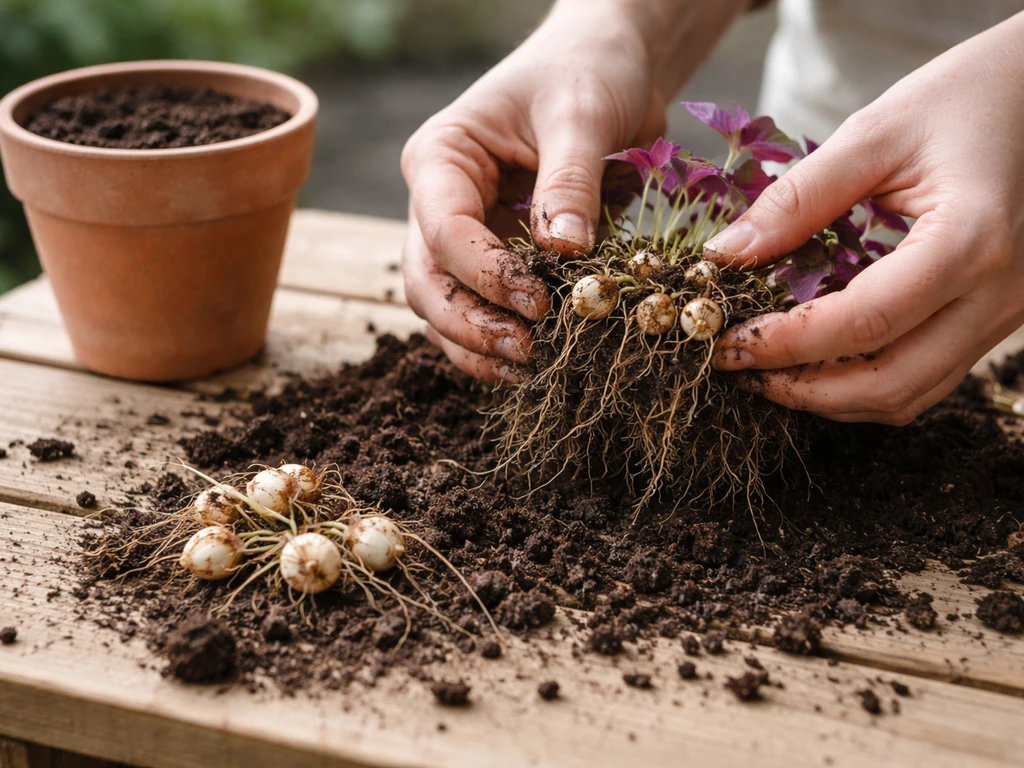
Oxalis grows from small bulbs or rhizomes underground. The easiest way to propagate it is to divide the bulbs when repotting, usually when the plant comes out of dormancy. Gently separate the bulb clusters, pot each section up in fresh well-draining soil, water lightly, and put them somewhere warm and bright. They will typically sprout within a few weeks. This is also a good time to refresh the soil and give the plant a fresh start for the growing season. If you have been growing your Oxalis for a while and want to level up your overall plant care routine, the same principles that apply to growing beautiful plants apply here: good drainage, appropriate light, and restraint with fertilizer.
Your ongoing care checklist
Here is a practical, ongoing checklist you can refer back to as you settle into a routine. The goal is to build simple habits that keep your lucky plant growing without you having to think too hard about it. This is the kind of low-effort, high-reward approach that makes growing a happy plant feel natural rather than like a chore.
- Check the soil or water once a week: Is the soil dry enough to water? Is the water in your lucky bamboo container clean and at the right level?
- Look at the leaves while you water: Any yellowing, spots, or drooping? Catching problems early is the fastest way to fix them.
- Rotate the plant every few weeks so all sides get even light exposure, especially near a window.
- In spring (around now), restart fertilizing at the recommended dilution and frequency for your specific plant.
- In fall, stop fertilizing and reduce watering frequency to match the plant's slower growth.
- Repot when the plant looks cramped, roots are coming out the drainage holes, or it has been more than two to three years since the last repot.
- Propagate in spring or early summer when the plant is actively growing and roots establish fastest.
Lucky plants are a genuinely good starting point for anyone new to houseplants. They are resilient, widely available, and the problems you will run into are almost always fixable. If you want to go deeper on the fundamentals behind what makes any plant thrive, spending some time understanding how to grow healthy plants from the roots up will pay off across everything you grow, not just lucky plants.
FAQ
How do I know when to water if the schedule in the guide doesn’t match my home?
In most homes, the most reliable approach is to match your plant to its water system and treat watering as an on-demand task. If it is lucky bamboo in pebbles and water, keep the roots covered but do not top off daily, instead replace the water about weekly. For soil plants, water only when the specific dryness check for that plant is met (jade almost dry almost all the way, money tree when the top inch is dry), because “a little each day” quickly turns into overwatering.
Can I use tap water for lucky plants, or do I need filtered water?
Yes, but only if your “tap water” problem is being managed. For lucky bamboo, letting tap water sit out overnight can reduce some chlorine, but fluoride is not reliably removed, so switch to filtered or distilled water if you notice browning leaf tips. For jade, money tree, and Oxalis, water quality is less dramatic than drainage and light, but very hard water can still contribute to salt buildup over time, so leaching the pot occasionally (watering through until it drains) helps.
What happens if I fertilize lucky plants too much or at the wrong time?
Fertilizer is not only “how much,” it is also “how often and when.” Use a diluted, balanced feed only during active growth (spring and summer), and stop entirely in fall and winter. If you suspect overfeeding, flush the pot with clean water to reduce salt buildup, then return to lighter feeding next growing season. If your plant is not growing, assume it is a light or seasonal issue first, not a nutrition issue.
How do I decide whether my lucky plant actually needs repotting?
Repotting should be driven by root behavior, not calendar dates. If roots are circling the drainage holes, the plant feels unstable and top-heavy, or water drains unusually fast or slow, then repot. When you do size up, go up one pot size at a time for soil plants, because too much extra soil increases moisture retention and raises rot risk. For Oxalis, division during repotting is often best after it comes out of dormancy.
My plant has yellow or drooping leaves, how do I tell if it is overwatering versus something else?
Not all “lucky plant” problems are overwatering. First identify the plant and check roots if symptoms persist. Yellow leaves on bamboo often point to direct sun, tap water issues, or stagnant water, while yellowing on money tree and jade usually ties to soggy roots. Drooping plus wet, foul soil suggests rot risk and a need to back off and possibly repot, whereas drooping with bone-dry soil suggests underwatering and a thorough soak.
My Oxalis is dropping leaves, is it dying or going dormant?
Oxalis leaf drop is frequently dormancy rather than decline, especially if light changes with seasons or you relocate the pot. During dormancy, reduce watering substantially, keep the plant in bright light if you are maintaining healthy bulbs, and avoid the “keep it constantly moist” mistake that leads to rot and fungus gnats. When new growth returns, gradually resume normal watering rather than resuming full watering immediately.
What should I do if my lucky plant gets sunburned?
If the leaves look scorched, move the plant away from direct sun and reassess placement with a simple test: observe whether direct afternoon rays hit the foliage. For sunny windowsills, “sheer curtain” placement often works, but a few feet back from an east or west window is usually safer. Also check for temperature stress from drafts, heating units, or AC vents, because heat and dry air can worsen tip burn and leaf yellowing.
How do I prevent fungus gnats, and what’s the first fix if I see them?
For soil-grown plants, the biggest fungus gnat prevention step is never letting the top layer stay wet. Let the top couple inches dry before watering again, and use sticky yellow traps to break the adult cycle. If you already have an infestation, address watering first, then consider a mild treatment like neem oil only if the problem persists, because gnat larvae are thriving mainly in consistently damp soil.
Can I switch all lucky plants from soil to water to make care easier?
Yes, but the method matters. Lucky bamboo can be kept in water long-term after rooting, but still needs weekly water changes (and clean containers) to avoid bacteria and algae. Soil-based lucky plants do not benefit from staying in water or decorative “wet feet,” because roots need oxygen, drainage holes matter, and constantly moist soil leads to rot.
My lucky plant is not growing, what are the most common reasons in winter versus summer?
There is no single “lucky plant” that loves constant low light. In general, low-light slow growth usually means insufficient light rather than a watering problem. For jade, stretching and weak new growth suggests too little light, while Oxalis needs bright indirect light to stay healthy through cycles. If winter growth stops, do not increase fertilizer, instead focus on moving the plant to the brightest safe spot for that species.