You can absolutely grow thriving plants in an office. The trick is matching the right plant to your actual light level, setting it up in a properly drained pot, and building a dead-simple care routine that works around a busy schedule. Most office plant failures come down to three things: picking a plant that needs more light than your desk gets, overwatering because the pot has nowhere for water to go, and guessing instead of checking whether the soil is actually dry. Fix those three things and you're already most of the way there.
How to Grow Office Plants: Step-by-Step Care Guide

Marcus Holloway
21 May 2026
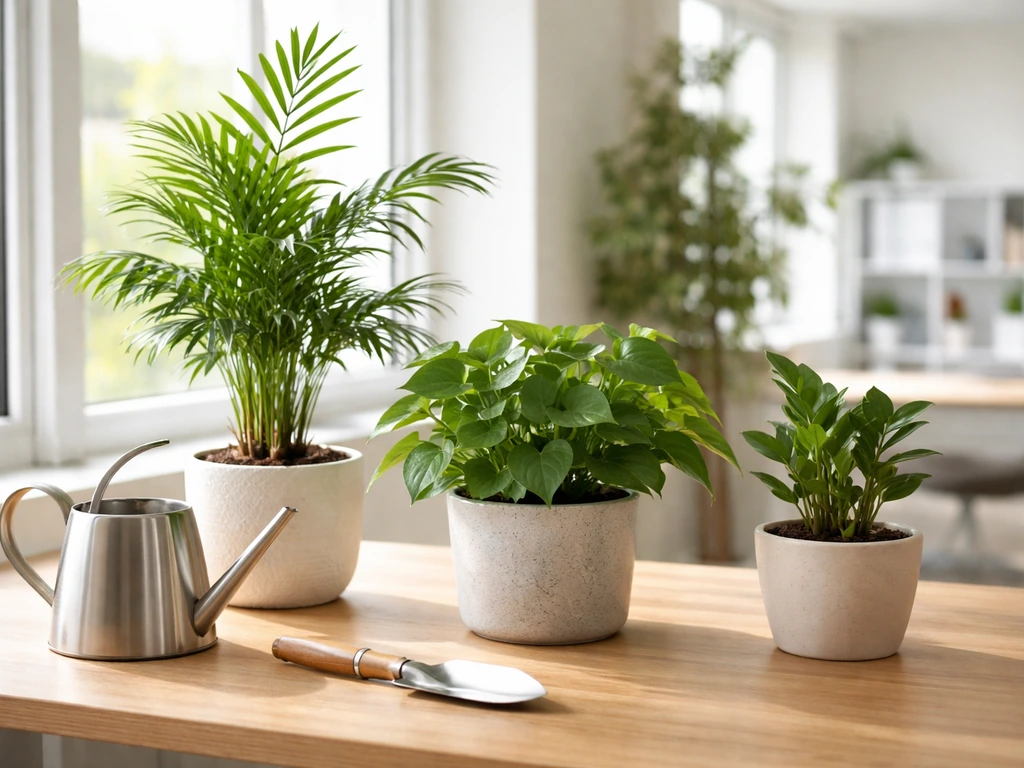
Choose the right office plants for your light and space
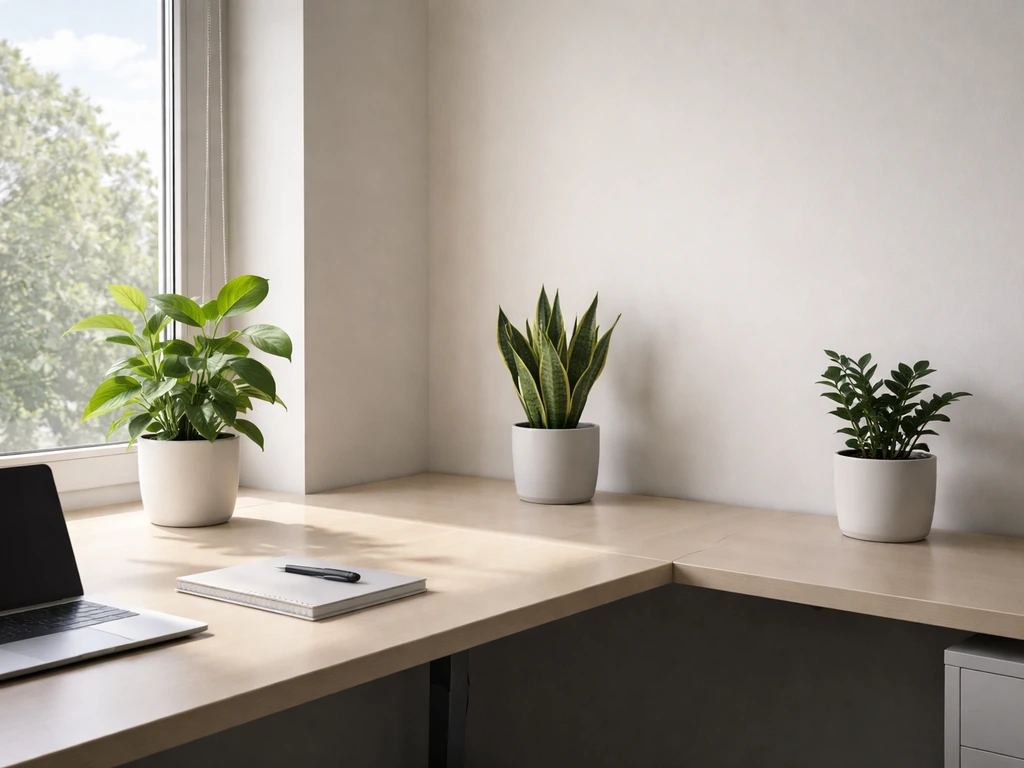
Before you buy anything, figure out your light situation honestly. Indoor light is measured in foot-candles, and the difference between a desk near a window and one in the middle of a room is enormous. A general working classification used by extension horticulturists: high light is 1,000 foot-candles or more (right next to a sunny window), medium light is roughly 500–1,000 foot-candles (a few feet from a window or under strong overhead fixtures), and low light is 50–500 foot-candles (interior desks, hallways, meeting rooms). You don't need a meter to estimate this. If you can read comfortably without turning a lamp on, you're in at least low-to-medium light. If the space feels dim even during the day, you're in true low light and your plant choices narrow considerably.
Here are the most reliably forgiving office plants matched to those light levels:
| Plant | Light Tolerance | Watering Style | Size |
|---|---|---|---|
| ZZ Plant | Low to medium | Let soil dry completely between waterings; can go weeks without water | Compact; 2–3 ft typical |
| Snake Plant | Low to bright indirect | Water only when soil is fully dry; can go 4–6 weeks in low light | Varies; many compact cultivars |
| Pothos | Low to medium | Water when top 50% of soil is dry | Trailing; easy to manage |
| Peace Lily | Low to medium | Every 4–12 days depending on light level | Dwarf types 12–15 in; can reach 6 ft |
| Spider Plant | Medium | Let soil dry 50–75% before watering | Medium; produces offshoots |
| Cast Iron Plant | Low | Water sparingly; very drought-tolerant | Slow growing; stays manageable |
If your office has no natural light at all, stick with ZZ plants, snake plants, or cast iron plants. These are the ones professionals use in windowless lobbies and bathrooms because they genuinely tolerate low light without collapsing. Peace lilies are one of the few flowering plants that will actually bloom in low light, which makes them worth considering if you want some visual payoff. Just know that the lower the light, the slower everything grows and the less often you'll need to water, which is actually a plus in a busy office.
For space, think about your desk footprint realistically. A small pothos in a 4-inch pot takes up almost no room and trails beautifully off a shelf. A peace lily 'Sensation' cultivar can grow up to 6 feet tall and wide, which is a very different commitment. If you're working with a small corner or bathroom counter, look for dwarf or compact varieties specifically.
Set up containers, soil/medium, and drainage the right way
This is where most beginners go wrong without realizing it. Drainage is not optional. If water can't escape the bottom of the pot, it sits around the roots and causes rot, and the symptoms look almost identical to underwatering (wilting, yellowing), which tricks people into watering even more. Every pot should have at least one drainage hole.
If you want to use a decorative ceramic pot without a hole (a cachepot), place your plant in a plain nursery pot inside it and leave a gap between the nursery pot's drainage hole and the bottom of the decorative container. That gap lets water drain away from the roots instead of pooling underneath. Check after every watering and dump out any water that collects in the outer pot.
Pot size matters more than most people think. A pot that's too big for the root ball holds far more water than the roots can use, which leads to the same soggy-soil problem as no drainage. When repotting, go up only one pot size at a time, and set the root ball so it sits about an inch or two below the new pot rim. That headspace lets water pool briefly at the top and soak down through the soil rather than running straight over the sides.
For potting mix, use a commercial indoor potting mix labeled for houseplants. These are sterilized and formulated for good drainage. Avoid garden soil entirely. If your plants are prone to sitting wet (common in low-light offices where you're watering less often), you can mix in a small amount of perlite to improve drainage. For succulents or snake plants, a cactus/succulent mix is a better base.
Placement strategy: where to keep plants in an office
The best spot for any plant is the one that comes closest to matching its light needs without putting it in direct sun through a window (which can scorch most common houseplants). South and west-facing windows give the most light. East-facing windows give softer morning light that suits medium-light plants well. North-facing windows or interior desks away from windows are true low-light spots.
Light drops off fast as you move away from a window. Roughly speaking, a plant 10 feet from a window gets about half the light of one 5 feet away. So if your desk is in the middle of the room, don't assume a distant window counts as adequate light. When in doubt, move the plant closer and watch how it responds over a few weeks.
Temperature and airflow also matter. Most office plants are comfortable in the same range humans prefer, around 60–80°F, but they hate drafts from air conditioning vents and heating units directly blowing on them. Cold drafts from windows in winter are another common cause of yellowing and leaf drop. Keep plants away from direct vents and away from the edge of windowsills where cold air leaks in.
One easy habit that makes a real difference: rotate your plant a quarter turn every week or two. Office plants grown near a single light source will lean toward it and get uneven growth. Rotating keeps the plant growing evenly and means every part of the canopy gets some light exposure over time.
A simple watering routine (and how to avoid common mistakes)
Stop watering on a fixed schedule. Water based on what the soil actually tells you. Stick your finger an inch or two into the soil. If it feels moist, leave it alone. If it feels dry at that depth, it's time to water. This one change will prevent the majority of office plant problems.
How much to water when you do water: pour enough that water flows out of the drainage hole at the bottom. This means the entire root zone got moistened, not just the top inch. If your pot is sitting in a saucer, empty the saucer within 30 minutes so the roots aren't sitting in standing water. Some extension guidance suggests watering with roughly twice the volume of the potting soil as a general measure, but drainage confirmation is the real signal.
Here's how the timing breaks down for common office plants as a starting reference:
- ZZ plant: water only when soil is completely dry; in low-light offices this might be every 3–6 weeks
- Snake plant: fully dry soil before watering; can go 4–6 weeks between waterings in low light
- Pothos: water when the top 50% of the soil feels dry, roughly every 1–2 weeks in medium light
- Peace lily: every 4–7 days in bright indirect light, 7–12 days in lower light
- Spider plant: let the soil dry out 50–75% before watering
If you're a forgetful waterer (most office plant owners are, honestly), consider a self-watering pot or a wick system. These let the plant draw up water from a reservoir at its own pace, which is a genuinely useful solution for people who travel for work or work hybrid schedules. They're widely available and inexpensive, and they remove the guesswork of timing entirely for low-to-medium-water plants like pothos and peace lilies.
One more thing: water the soil, not the leaves. Wet foliage in a low-airflow office can invite fungal problems, and it's unnecessary. Aim the water at the base of the plant.
Fertilizing, light needs, and basic long-term care
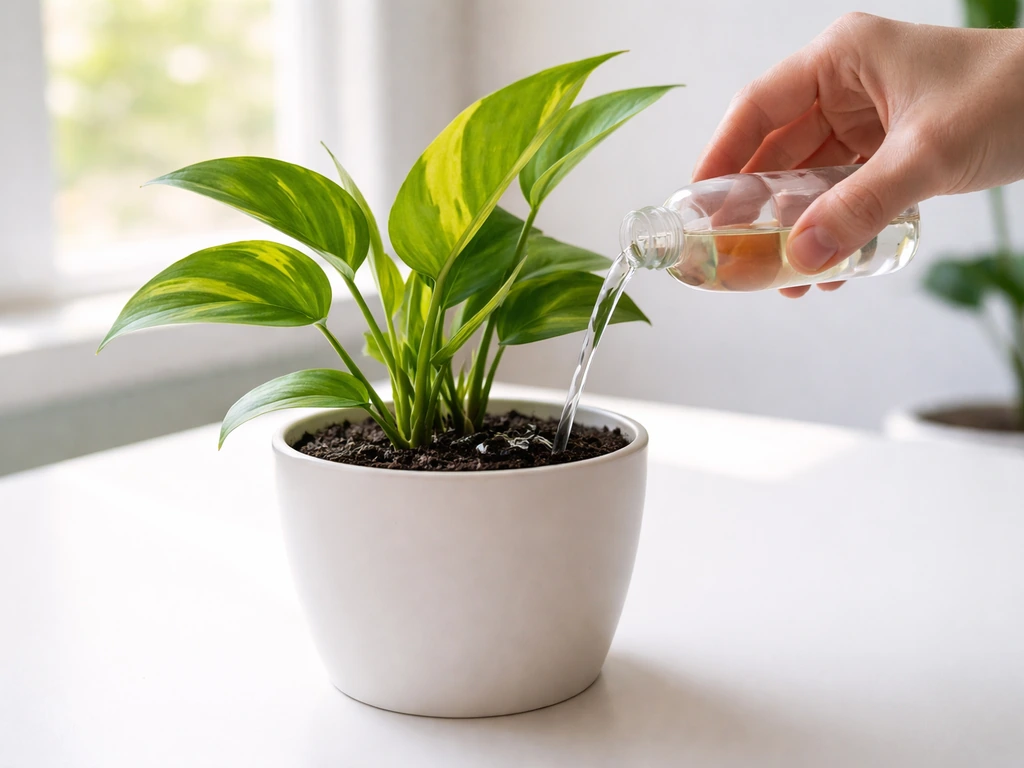
Office plants don't need heavy fertilizing. A monthly application of a balanced liquid houseplant fertilizer, diluted to half strength, is plenty during the active growing season (roughly spring through early fall). In winter, when growth slows down, you can stop fertilizing entirely or drop to once every 6–8 weeks at most. Starting back up in spring, begin at half strength every 2–4 weeks as growth resumes rather than jumping straight to full doses.
More fertilizer is not better. Salt buildup from over-fertilizing shows up as brown leaf tips and crusty white deposits on the soil surface or pot edges. If you see this, flush the soil with plain water until it runs clear from the drainage holes, and then hold off on fertilizing for a month.
On the subject of light: office fluorescent or LED overhead lighting does provide some usable light for low-light plants, but it's generally weaker than natural window light. If your office has only artificial light, choose your plants from the low-light category and don't expect fast growth. If you want to boost growth for a plant that's not quite getting enough, a small clip-on grow light placed 6–12 inches above the plant for 12–14 hours a day makes a meaningful difference without looking out of place on a desk.
Humidity is a quiet stressor in offices, especially in winter when heating systems dry the air significantly. Most common office plants prefer 40–60% humidity. You probably won't hit that in a typical office in January. Simple fixes: group plants together so they share moisture through transpiration, set pots on a tray of pebbles with a little water in it (the evaporation raises local humidity), or use a small desktop humidifier near your plant cluster.
Common office plant problems and fast fixes
Most office plant problems fall into a small number of categories. Here's how to diagnose and respond to the ones you're most likely to encounter:
Yellowing leaves
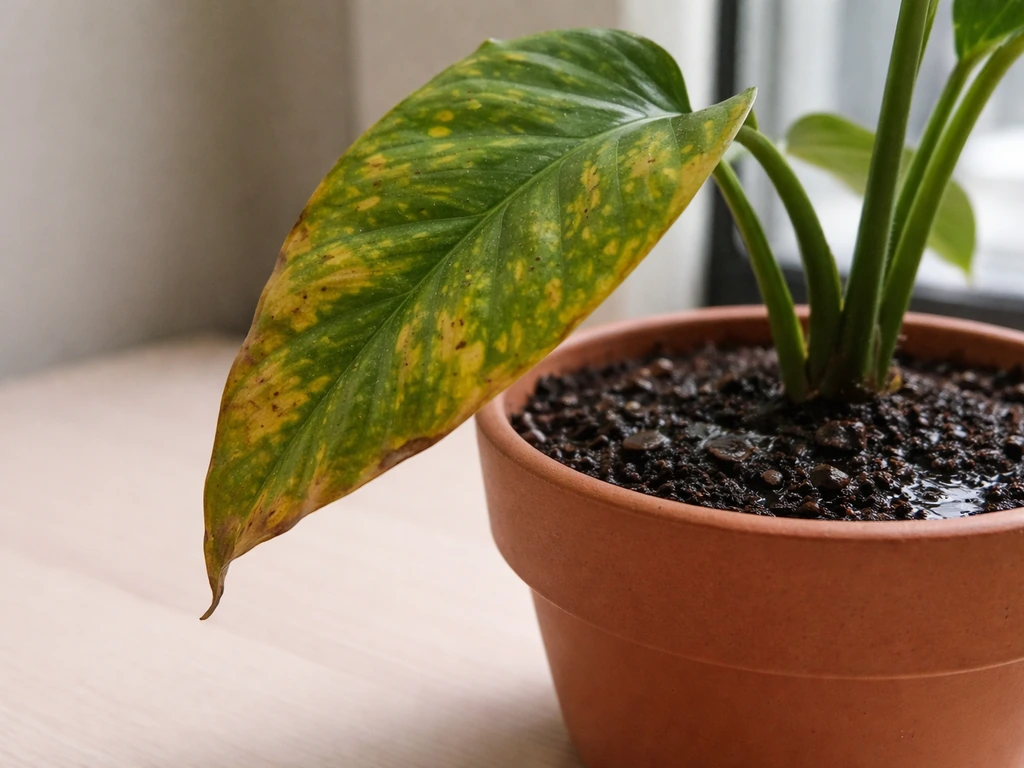
The most common cause is overwatering, specifically roots sitting in soggy soil. Check the soil: if it's wet and the pot feels heavy, ease off watering and make sure the drainage hole isn't blocked. Lower and inner leaves yellowing first is a classic overwatering pattern. However, yellowing can also mean underwatering, which is why checking the soil is always step one before doing anything else. Overwatering and underwatering can look almost identical from the outside, but the soil will tell you which one you're dealing with.
Brown, crispy leaf tips or edges
This usually points to dry air, salt buildup from fertilizer, or the plant sitting next to a heating or AC vent. Move the plant away from direct airflow, check whether the soil has a white crust (salt buildup), and increase humidity if possible. Brown tips don't reverse once they appear, but new growth should come in clean once you fix the underlying cause.
Wilting or drooping
Check the soil immediately. Dry and pulling away from the pot edges means underwatering. Give the plant a thorough drink and it should perk up within a few hours. Wilting with wet, heavy soil means root rot from overwatering. In that case, ease off water, improve drainage, and if the roots smell bad and feel mushy when you unpot the plant, trim the damaged roots and repot into fresh, dry mix.
Leggy, stretched-out growth
Long, sparse stems reaching toward the nearest light source mean the plant isn't getting enough light. If your goal is how to make indoor plants grow bigger, increasing light is usually the fastest and most noticeable place to start not getting enough light. Move it closer to a window or supplement with a grow light. You can trim leggy stems back to encourage bushier growth on most common office plants including pothos, spider plants, and peace lilies.
Fungus gnats
If you see tiny flies hovering around the soil, you almost certainly have fungus gnats. Their larvae live in the top half-inch of moist potting soil and thrive on consistently wet conditions. The fix is simple: let the top inch or two of soil dry out completely between waterings. The larvae can't survive in dry soil. You can also place yellow sticky traps near the pot to catch adults while you're correcting the moisture situation. This is one more reason why overwatering is the enemy of office plant success. If you want to grow plants indoors without bugs, start by preventing overwatering so fungus gnats and other pests have fewer opportunities to take hold how to grow plants indoors without bugs.
Other common pests (spider mites, mealybugs, scale)
Spider mites show up as fine webbing on the underside of leaves, often in hot, dry conditions. Mealybugs look like small white cottony clusters in leaf joints. Scale appears as brown bumps on stems. For all of these, start with wiping down leaves with a damp cloth or a diluted neem oil solution. Isolate affected plants immediately so pests don't spread to your other plants. Catching these early makes them far easier to deal with.
Optional growing methods for offices (water propagation, hydroponics/LECA, terrariums)
If you want to go beyond a standard potted plant, there are a few alternative setups that work especially well in office environments. These aren't required for success, but they solve some common office problems in interesting ways.
Water propagation
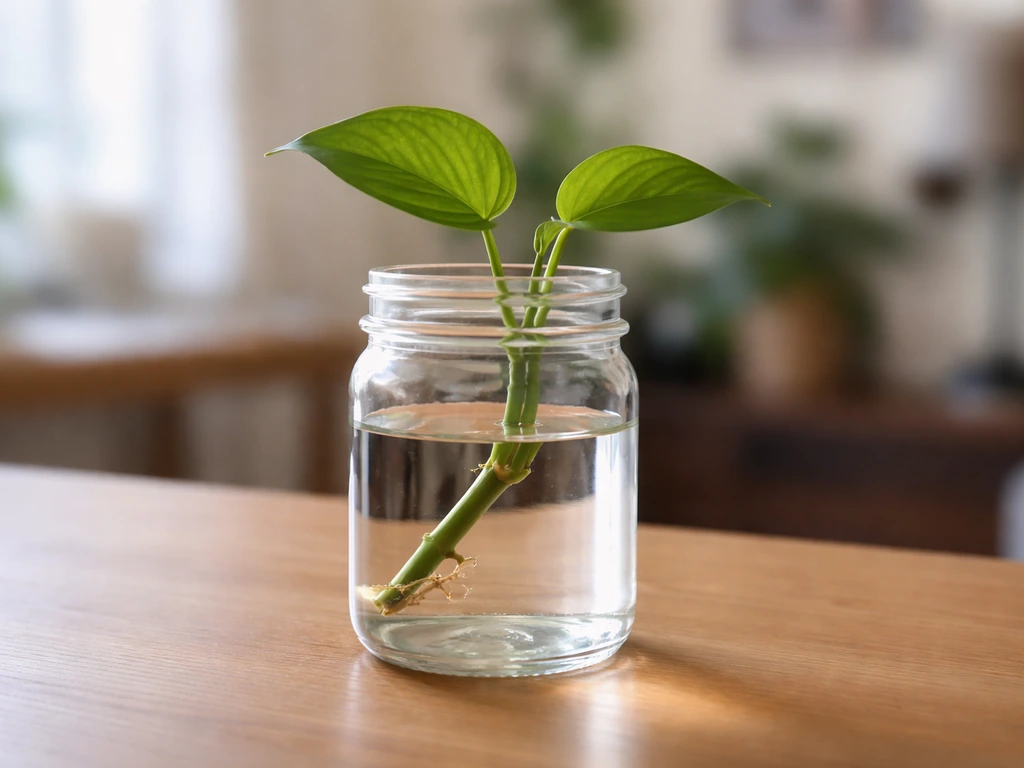
Pothos, philodendrons, and some other common office plants root readily in a glass of water. Cut a stem just below a node, remove any leaves that would sit below the waterline, and place it in a clear glass near a window. Pothos cuttings typically root within 3–6 weeks. Change the water every week or so to prevent oxygen depletion and bacterial buildup. Water-propagated cuttings can stay in water indefinitely if you keep nutrients topped up with a diluted liquid fertilizer, or you can pot them into soil once the roots are a few inches long. A cluster of water-rooted cuttings in a clear vase is one of the easiest and cleanest-looking desk plants you can set up.
Hydroponics and LECA
Growing plants in LECA (lightweight expanded clay aggregate) or a passive hydroponic setup is genuinely well-suited to office environments. The clay balls don't stay soggy the way soil does, which dramatically reduces the risk of root rot and fungus gnats. The reservoir-based watering system also means you can leave for a week without your plant drying out. Pothos, peace lilies, and monsteras all adapt well to LECA. The setup requires transitioning plants from soil (washing all soil off roots carefully) and using a diluted hydroponic nutrient solution instead of regular fertilizer, but once it's running it's lower maintenance than soil in many ways.
Terrariums
A small closed or semi-open terrarium is a genuinely space-efficient option for a desk or windowsill. Sealed terrariums create their own humidity cycle, which works well for moisture-loving small plants like mosses, fittonia, and small ferns. The key is choosing plants that stay small, grow slowly, and tolerate higher humidity. Terrariums and bottle gardens are generally best suited to small, slow-growing plants that enjoy high humidity, and if the air is very dry they can wilt faster than roots can replace lost moisture plants that stay small, grow slowly, and tolerate higher humidity. Avoid drought-tolerant plants like succulents in a sealed terrarium; they'll rot. Open terrariums work for a wider range of small plants and still look great on a desk without taking up much space. Just note that if your office air is very dry, an open terrarium will lose moisture quickly and need more frequent attention.
These alternative setups pair nicely with exploring techniques covered in guides on growing plants in water or unconventional mediums, as well as ideas for keeping plants compact and thriving in small indoor spaces, which are worth looking at if any of these approaches appeal to you. If you're planning for small indoor spaces, choosing compact plants and matching light will help them stay healthy indoors.
Your action plan for today
Here's what you can actually do right now to get started or fix what's already not working:
- Assess your light honestly: stand at your desk and look toward the nearest window. Is it direct sun, indirect light from a few feet away, or a dim interior spot? Match your plant choice to that reality using the table above.
- Choose one forgiving plant to start: ZZ plant or snake plant if your light is low; pothos or peace lily if you have more light. Don't start with five plants at once.
- Check your container: does it have a drainage hole? If not, either get a pot that does or set up the cachepot system described above.
- Use a quality houseplant potting mix and don't overpot: your plant's new pot should be only slightly larger than its current root ball.
- Set a check-in reminder instead of a watering schedule: every 5–7 days, stick your finger in the soil. Water only if dry. This replaces any calendar-based watering plan.
- If something looks wrong, check soil moisture first before doing anything else: wet soil plus yellowing means back off watering; dry soil plus drooping means water thoroughly now.
That's the whole foundation. You don't need a lot of gear or expertise to grow office plants well. You just need a plant matched to your light, a pot that drains, and the habit of checking before watering. Everything else, from fertilizing schedules to grow lights to LECA setups, is something you can layer in once the basics are working.
FAQ
How can I tell if my office is actually “low light” for plant health, not just dim to me?
Use a simple consistency check: sit at your desk for an hour during daytime and notice whether you can read without straining and without turning on a lamp. If you need task lighting most of the time or the room looks darker in late afternoon even with the lights off, treat it as true low light and pick low-light plants, because indoor plants often decline gradually when they are only “barely” getting by.
What’s the safest first plant to try if I’m unsure about my light and I travel a lot?
Start with a plant that tolerates both missed waterings and low light, like snake plant or ZZ plant. Then add a practical safety net, either a self-watering pot or a reservoir system, because inconsistent schedules are the biggest trigger for root problems in offices even when you have the right plant for the light.
If my decorative pot doesn’t have drainage, can I still grow the plant in it?
Yes, but only if you use it as a cachepot. Keep the plant in a nursery pot with drainage inside the decorative container, leave an air gap between the two, and empty any pooled water within 30 minutes after watering. If you cannot confirm standing water is cleared quickly, avoid cachepots.
How do I know whether I should repot, or just adjust my watering?
Repot when drainage is failing, roots are visibly circling the pot, or the soil stops absorbing water and instead runs off. If the soil stays wet for many days, repotting into the correct mix and only one pot size up usually fixes the water retention. If the soil dries normally and leaves decline anyway, the issue is likely light or airflow rather than pot size.
What watering method works best when several plants share one bathroom or office window?
Water each pot individually based on soil moisture, not by timing and not by “same day for everyone.” Turn the finger-check into a routine, and consider weighing pots: light pots usually mean dry mix, heavy pots mean water is still in the root zone. This prevents the common mistake where one plant’s schedule causes another plant to stay soggy.
Can I use tap water for office plants, or will it cause brown tips and buildup?
Most offices can use tap water, but if your water is hard (high mineral content) you may see crusty deposits or recurring brown leaf tips. If that happens, flush the soil occasionally and consider using filtered or dechlorinated water. Also, avoid fertilizing on top of salt buildup, since that often worsens tip burn.
Do fluorescent or LED office lights count enough for “low light” plants?
Often, yes for survival but not for fast, healthy growth. If plants grow slowly, get leggy, or pale at the edges, that’s usually a sign the light intensity or duration is too low, even if the room feels bright. In that case, use a small clip-on grow light with a consistent daily schedule rather than relying on overhead lighting alone.
What humidity target should I aim for, and how do I measure it realistically?
Aim for roughly 40–60% humidity. For measuring, use an inexpensive indoor hygrometer placed near your plant cluster (not in a random spot near a vent). Then choose the fix that matches the cause: grouping plants for shared transpiration, a pebble tray for local humidity, or a small humidifier if the office air is consistently dry.
How do I handle yellowing leaves when I’m unsure if it’s from too much water or too little?
Check soil moisture first at the depth you normally water to, not just the top surface. Wet and heavy soil points to overwatering or blocked drainage, while dry and pulling away from the pot edges points to underwatering. If soil is wet, do not water again until it has dried and consider unpotting if there’s any smell or mushy roots.
What should I do if I see fungus gnats in an office plant?
Let the top inch or two of soil dry out completely between waterings, because larvae need consistently moist conditions. Yellow sticky traps help catch adults, but the long-term fix is changing the moisture pattern. If the infestation is severe, you may need to refresh the top layer or repot into drier, better-draining mix.
How can I prevent pests in a low-maintenance office setup?
Quarantine new plants for about two weeks and inspect the underside of leaves for webbing or tiny spots. Keep wiped leaf-care part of your routine, since dust can hide early pest problems. Also, avoid soaking the foliage, because wet leaves can attract secondary issues in low-airflow offices.
Do LECA or hydroponic-style setups require different nutrients than soil?
Yes. Once you switch from soil to LECA or passive hydro, use a diluted hydroponic nutrient solution rather than regular houseplant fertilizer, which is designed for soil nutrient dynamics. Also, transition carefully by washing all soil off roots, because leftover soil can introduce pathogens and disrupt the new medium’s water behavior.
Is it normal for plants to “reset” after moving them to a new office location?
Yes, mild stress for a few weeks can be normal after relocation, especially if light levels differ or if drafts change. However, consistent leaf drop with soft stems or persistent pale yellowing usually indicates ongoing mismatch in light, watering frequency, or airflow. Track changes by moving the plant closer or closer to stable conditions rather than making multiple changes at once.