Most indoor plants grow slowly (or stop growing entirely) because of one or two fixable problems: not enough light, inconsistent watering, or a pot and soil setup that's quietly strangling the roots. Fix those, and you'll see real size gains within weeks. The good news is that none of these fixes require a greenhouse or a horticulture degree. You just need to know where to look first.
How to Make Indoor Plants Grow Bigger: A Practical Guide
Marcus Holloway
16 May 2026
Quick diagnosis: why your indoor plants aren't getting bigger
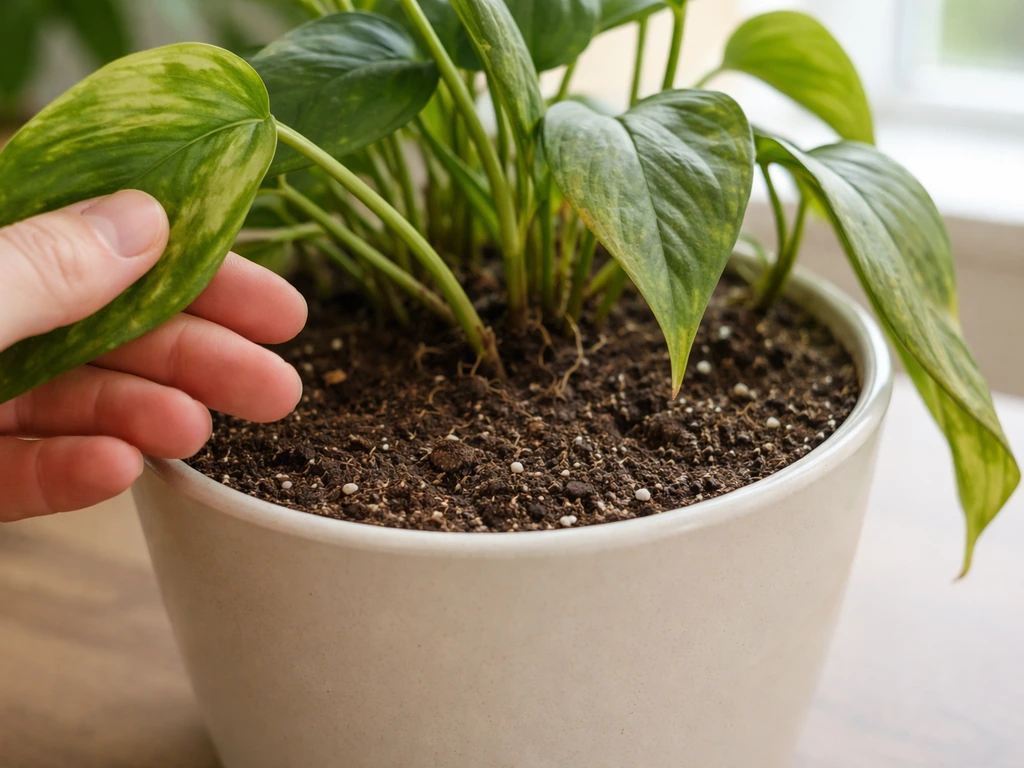
Before you change anything, spend five minutes observing your plant like a detective. Excessively slow growth is almost always a symptom, not the root problem itself. You want to match what you see to the actual cause, so you're not guessing and possibly making things worse.
Run through these questions in order:
- Is the plant near a window, or is it sitting in a dim corner? If you can barely read a book by the plant's light, it almost certainly isn't getting enough to drive real growth.
- When did you last water, and what did the soil feel like before you did? Poke your finger two inches into the soil. Consistently soggy soil suffocates roots. Bone-dry soil shuts down nutrient uptake.
- When did you last repot or fertilize? If the plant has been in the same pot and soil for more than a year or two without feeding, it's running on empty.
- Do the leaves look clean and firm, or are they pale, speckled, sticky, or dropping? Pests and disease quietly drain a plant's energy before you notice growth has stalled.
- What's the temperature and humidity near the plant? A drafty windowsill in winter or a vent blowing dry air can halt growth even when everything else seems right.
If you spot sticky residue on leaves or tiny moving dots on the undersides, pests (like spider mites or scale insects) may be the culprit draining your plant's energy. Penn State Extension notes that pests and disease are common causes of poor indoor plant health, including sap-feeding insects such as spider mites blank" rel="noopener noreferrer">pests (like spider mites or scale insects). If you want to keep pests from coming back, learn how to grow plants indoors without bugs using a few simple prevention and treatment steps. Deal with those first before trying to push growth, because no amount of fertilizer fixes a plant under pest attack. Once you've ruled out pests and disease, the sections below walk you through each major growth lever, starting with the biggest one.
Light: amount, distance, and how to choose the right setup
Light is the single biggest variable controlling how large your indoor plant can get. Plants convert light into the energy that builds every new leaf, stem, and root. Without enough of it, nothing else you do (better soil, more fertilizer, perfect humidity) will move the needle much. The challenge indoors is that light drops off dramatically as you move away from a window, faster than most people expect.
Understanding your windows
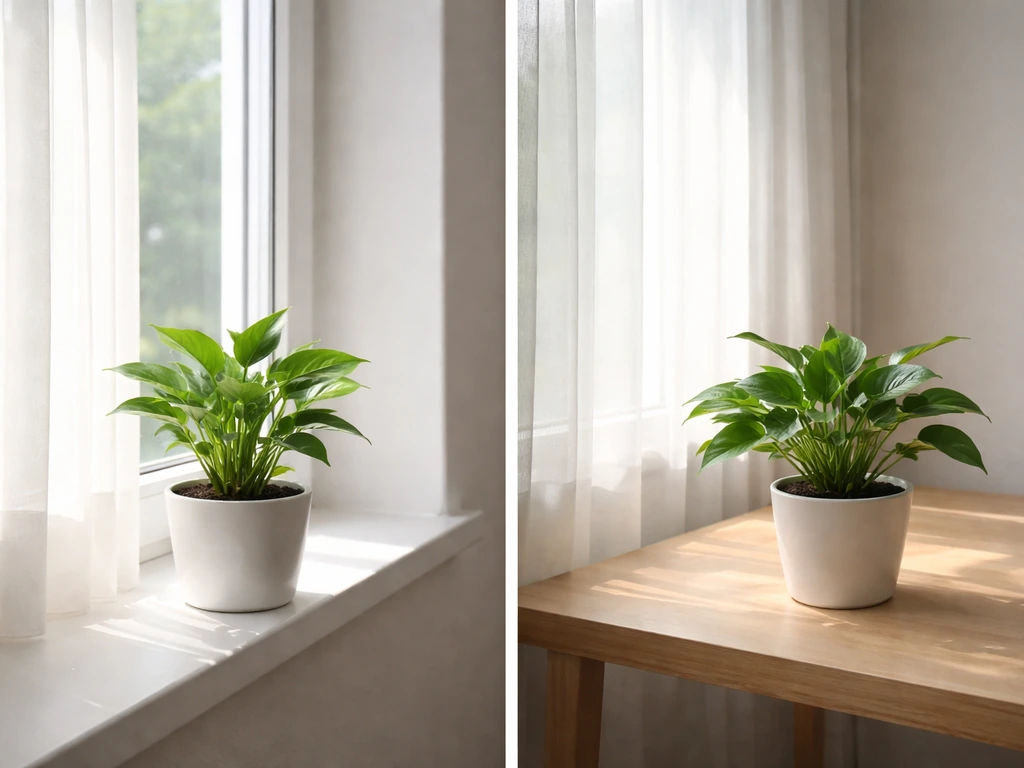
Window direction is your fastest way to estimate how much light a spot gets. South-facing windows get the most light throughout the day and are the best choice for most actively growing houseplants. East-facing windows get gentle morning sun, which suits medium-light plants well. West windows get warm afternoon sun, which works for most tropical foliage plants. North windows get the least light and are really only suitable for low-light plants like snake plants, which naturally grow as understory plants in dim forest floors. Most growth-hungry plants (pothos, monsteras, fiddle-leaf figs, rubber plants) will plateau or stall in a north-facing room.
Distance from the window matters enormously. A plant sitting right on a south-facing sill can receive 1,000 foot-candles or more on a bright day. Move that same plant six feet back and you might drop to 100 foot-candles. Succulents, for example, typically need ten or more hours of bright indirect light daily to grow well indoors, which means they really do need that prime windowsill spot, not the coffee table across the room.
When to add a grow light
If your windows are small, north-facing, or blocked by buildings and trees, a grow light is one of the best investments you can make. Modern LED grow lights are inexpensive, don't run hot, and can be dialed to the right spectrum for leafy growth. Fluorescent grow lights are another reliable and budget-friendly option. The key factors are duration (most tropical foliage plants do well with 12 to 16 hours of artificial light per day) and distance (follow the manufacturer's recommendation, but most LED panels work best 12 to 24 inches above the canopy). Set a timer so you're not relying on memory, and remember that photoperiod (how long light is on each day) matters just as much as intensity for consistent growth.
| Window Direction | Light Level | Best For | Grow Light Needed? |
|---|---|---|---|
| South-facing | High (bright direct or indirect) | Most tropicals, succulents, herbs | Rarely |
| East-facing | Medium (gentle morning sun) | Pothos, peace lily, ferns | Sometimes in winter |
| West-facing | Medium-high (warm afternoon sun) | Rubber plants, dracaenas, spider plants | Sometimes in winter |
| North-facing | Low | Snake plants, ZZ plants, cast iron plant | Often yes, for faster growth |
Watering and nutrients: feeding for bigger growth
Watering mistakes are the second-most common reason indoor plants stay small, and the tricky part is that both overwatering and underwatering can cause almost identical symptoms: drooping, yellowing, and stalled growth. The difference is in the soil and the roots.
Getting watering right
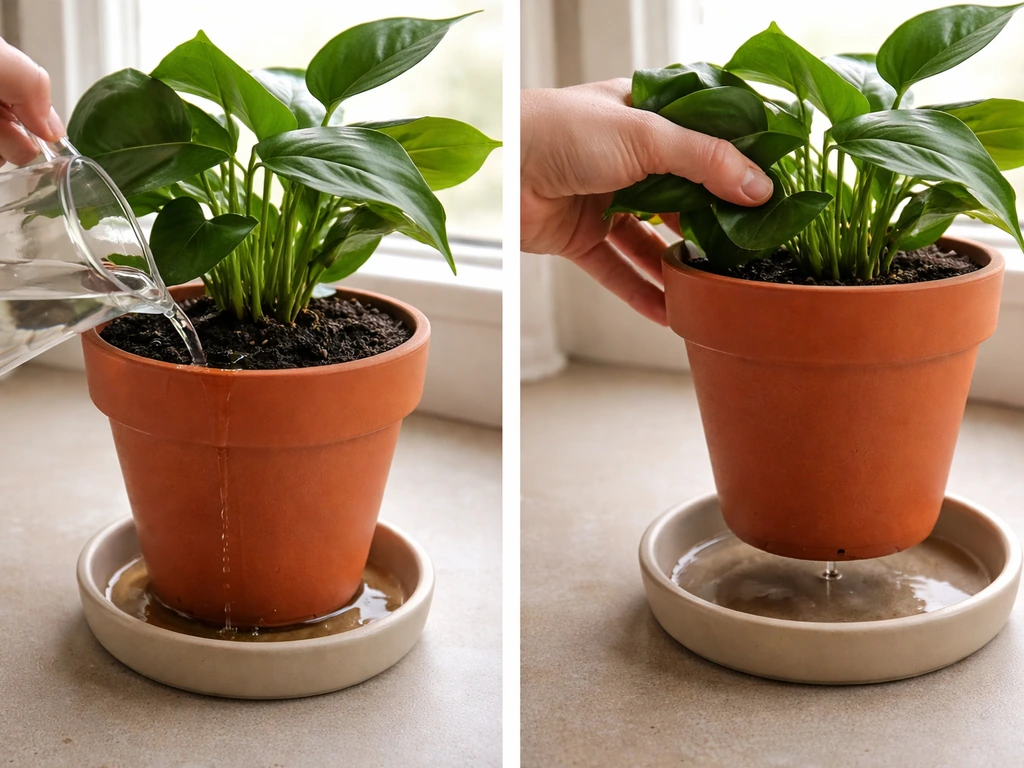
For most tropical houseplants, the goal is to water thoroughly when the top one to two inches of soil are dry, then let excess water drain completely. Never let the pot sit in standing water for more than 30 minutes. Roots need oxygen as much as moisture, and waterlogged soil cuts off that oxygen supply. If your plant is in a dark, cool spot, the soil dries more slowly, so you'll water less often. If it's under a grow light or in a warm room, it may need water more frequently. There's no universal schedule. Check the soil, not the calendar.
Fertilizing for real growth
Soil nutrients deplete over time, especially in a pot where there's no natural replenishment happening. If your plant has been in the same soil for more than six months without fertilizing, it's almost certainly nutrient-deficient, which puts a hard cap on how big it can get. During the active growing season (roughly spring through early fall), fertilize most tropical houseplants every two to four weeks with a balanced liquid fertilizer, like a 10-10-10 or 20-20-20 formula diluted to the rate on the label. Don't assume more fertilizer equals faster growth. Over-fertilizing causes salt buildup in the soil, which actually burns roots and slows growth. If you see a white crusty residue on the soil surface or around drainage holes, flush the soil thoroughly with plain water to wash out those salts. In winter, most houseplants slow down naturally, so cut back fertilizing or stop it entirely until spring.
- Use a balanced liquid fertilizer (10-10-10 or similar) during the growing season
- Dilute to the label's recommended rate, or even half-strength if your plant shows any signs of stress
- Fertilize every two to four weeks from spring through early fall
- Flush soil every few months to prevent salt buildup
- Skip or reduce fertilizing in winter when growth naturally slows
Soil vs other mediums: repotting choices that drive size
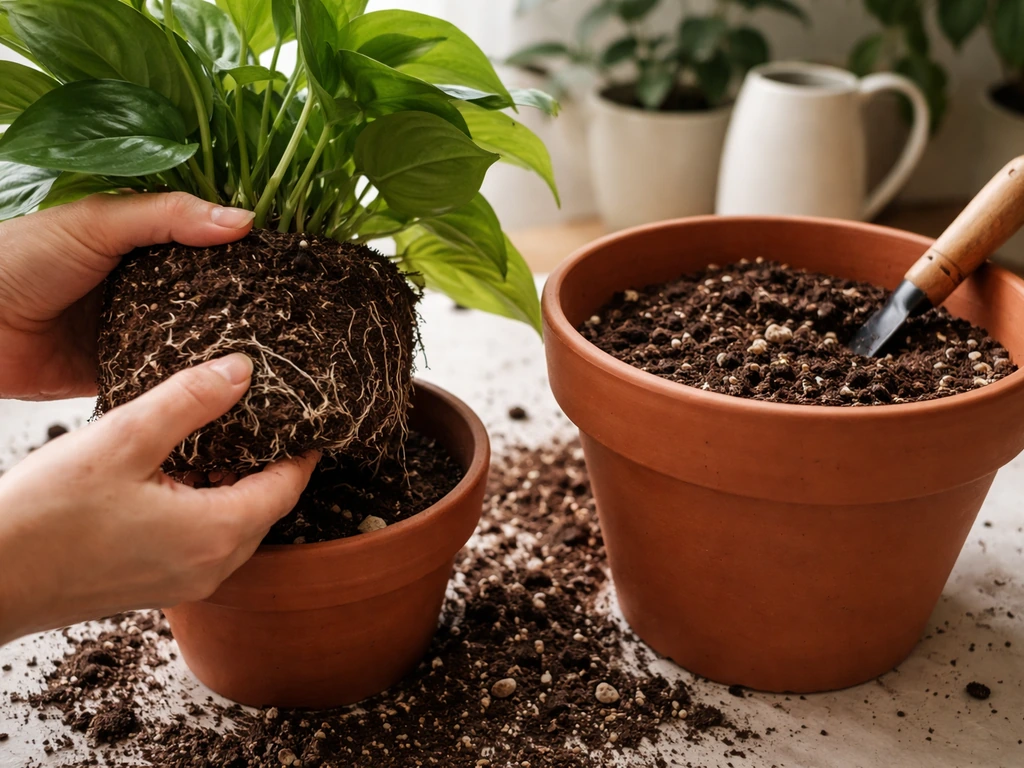
The medium your plant grows in directly controls how fast and how large it can get. A rootbound plant in exhausted potting mix is like a teenager trying to grow in shoes two sizes too small. Repotting into fresh medium and a slightly larger container is sometimes the single change that unlocks months of new growth.
Soil-based growing
For most houseplants, a well-draining potting mix is the foundation. Avoid using outdoor garden soil in pots because it compacts, drains poorly, and can introduce pests. A quality indoor potting mix (often peat or coco coir-based) combined with perlite (around 20 to 30 percent by volume) keeps roots aerated and healthy. Repot when you see roots circling the bottom of the pot, poking out of drainage holes, or when the plant dries out unusually fast after watering. Go up one pot size at a time (usually two inches in diameter), because a pot that's too large holds excess moisture that the roots can't use, increasing rot risk.
Water and hydroponics
Growing plants in water or in a hydroponic system can actually accelerate growth compared to soil, because roots get direct access to nutrients and oxygen without having to push through dense medium. In simple water propagation setups, you'll need to add a diluted liquid fertilizer once roots establish (plain water alone won't sustain growth). In true hydroponic systems, a nutrient solution replaces soil entirely, and plants can grow significantly faster because there's no nutrient bottleneck. The tradeoff is more active management: you need to monitor pH (ideally 5.5 to 6.5 for most plants), top off the reservoir, and change the solution regularly to prevent algae and salt buildup.
Terrarium growing
Terrariums are a different beast. The enclosed or semi-enclosed environment creates its own humidity and moisture cycle, which suits moisture-loving plants like fittonia, moss, and small ferns. The growth constraint in terrariums is usually size: the glass walls limit how large plants can get, and overcrowding is a common issue. Use a shallow layer of drainage material (like leca or gravel) under the growing medium to prevent waterlogging, and trim plants regularly to keep the ecosystem balanced rather than one plant dominating.
Humidity, temperature, and airflow: the overlooked growth boosters
Most tropical houseplants evolved in environments with warm temperatures and relatively high humidity. The average home, especially in winter with heating running, can drop to 20 to 30 percent relative humidity, which is genuinely stressful for many plants. Leaf edges turn brown and crispy, growth slows, and new leaves emerge smaller than they should. Ideal humidity for most tropical houseplants is between 50 and 70 percent. You don't need to hit that number perfectly, but getting above 40 percent makes a real difference.
The most effective way to raise humidity locally is a small humidifier placed near your plants. Grouping plants together also helps because they release moisture through their leaves, creating a slightly more humid microclimate around each other. Misting is often recommended but has limited lasting effect (the moisture evaporates in minutes) and can promote fungal issues on some plants. Pebble trays with water are a middle-ground option that adds some ambient moisture without the risk.
Temperature-wise, most tropical houseplants grow best between 65 and 80 degrees Fahrenheit. Avoid placing plants near heating or air conditioning vents, cold drafts from windows in winter, or exterior doors that open frequently. Consistent temperature swings, even if the average is okay, stress plants and slow growth. A plant sitting on a cold windowsill in January may be getting great light but losing that gain to cold stress on its roots.
Airflow is the third piece most people overlook entirely. Gentle air circulation strengthens stems (plants actually develop thicker stems in response to slight movement, a process called thigmomorphogenesis) and prevents the stagnant, humid pockets where fungal problems thrive. A small fan on low, set to oscillate across your plants for a few hours a day, is genuinely useful, especially in terrariums or grow tent setups where air doesn't circulate naturally.
Pruning, training, and pot size: structural growth tricks
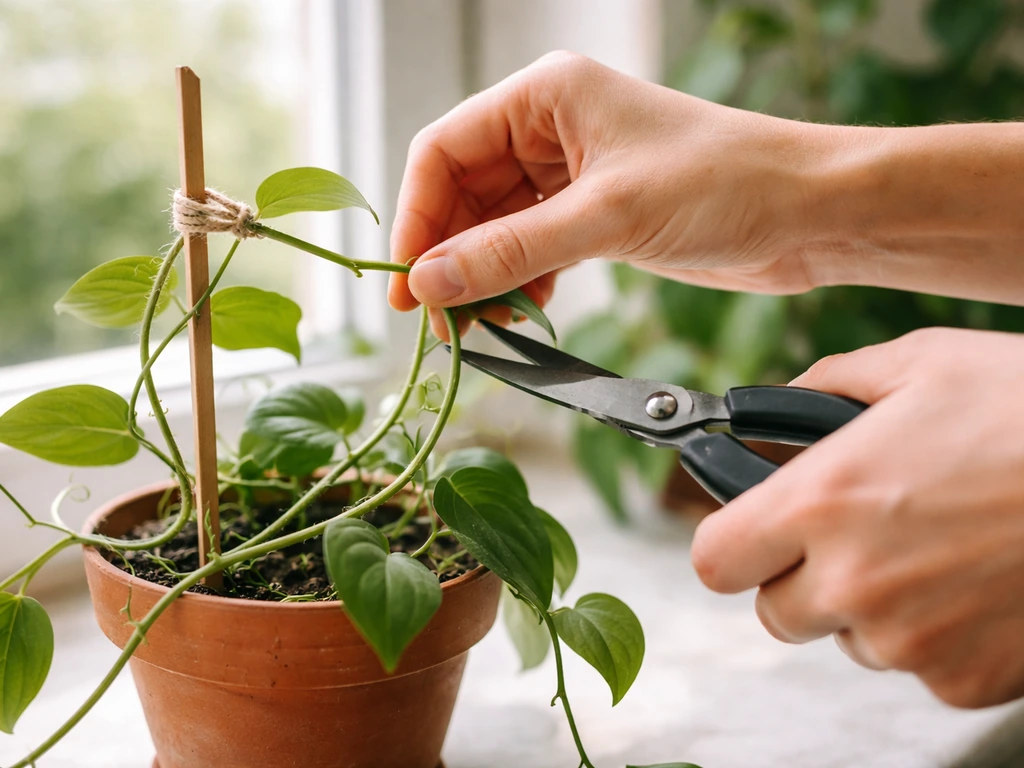
This is where growing big plants gets a little strategic. Pruning sounds counterintuitive (you're cutting the plant to make it bigger?) but it works. When you cut back a leggy or damaged stem, the plant redirects its energy into new growth at the cut point and elsewhere. Pinching out the growing tip on a stem encourages the plant to branch, making it fuller and denser rather than just taller. For plants like pothos, philodendrons, and basil, regular pinching keeps them bushy and vigorous.
Training is the next level. Vining plants like monsteras, pothos, and hoyas can be guided up a moss pole or trellis, which does two things: it allows the plant to grow larger aerial roots (which pull in additional moisture and nutrients) and it mimics the plant's natural climbing habit, which often triggers larger leaf production. A monstera growing up a moss pole will produce noticeably bigger, more fenestrated leaves than the same plant left to trail.
Pot size is both a growth driver and a risk factor. Going up one size at a time (two inches in diameter for most plants) gives roots room to expand without sitting in excess wet soil. The timing matters too: repot in spring when the plant is entering its active growth phase and can recover quickly. Repotting in winter when growth is slow can leave disturbed roots sitting in cold, wet soil for weeks, which invites rot. If you're trying to grow particularly large plants indoors, it's also worth looking into strategies specifically for big plants, since they have their own considerations around pot weight, stability, and soil volume management. If you're trying to grow particularly large plants indoors, it's also worth looking into strategies specifically for big plants grow particularly large plants indoors strategies specifically for big plants (destination).
Troubleshooting stalled growth by plant type and symptoms
When growth stalls, the symptom pattern usually points directly at the cause. Here's a practical guide to matching what you see to what's actually wrong:
| Symptom | Most Likely Cause | What to Do |
|---|---|---|
| Leggy stems reaching toward one direction | Insufficient light | Move closer to a window or add a grow light; rotate the pot weekly |
| Yellowing lower leaves with wet soil | Overwatering or root rot | Let soil dry out fully; check roots and trim any mushy ones; repot into fresh mix |
| Yellowing leaves with dry soil | Underwatering or nutrient deficiency | Water thoroughly; resume a fertilizing schedule if you've skipped it |
| Pale, washed-out leaf color | Too little light or overly depleted soil | Improve light conditions and fertilize with a balanced formula |
| Crispy brown leaf edges | Low humidity or dry air from heating/AC vents | Add a humidifier; move plant away from vents and drafts |
| Sticky residue on leaves or stems | Sap-feeding pests (scale, aphids, mealybugs) | Isolate plant; treat with insecticidal soap or neem oil; repeat weekly |
| Tiny speckling or webbing on leaf undersides | Spider mites | Increase humidity; treat with insecticidal soap; improve airflow |
| No new growth for months despite good conditions | Rootbound in too-small pot | Repot into a container two inches larger with fresh potting mix |
| Sudden leaf drop | Temperature shock, drafts, or abrupt relocation | Move to a stable spot; maintain consistent temps between 65-80°F |
| New leaves much smaller than old ones | Low light, root restriction, or nutrient depletion | Assess light, repot if rootbound, fertilize through growing season |
A few plant-specific notes worth calling out: snake plants are genuinely tolerant of low light but will grow much faster with more of it (don't mistake their toughness for a preference for dim spots). Succulents that aren't getting ten-plus hours of bright light will etiolate, stretching toward any available light source and losing their compact shape. Ferns and moisture-loving plants in dry homes often stall not from light or feeding issues but purely from humidity stress. Rubber plants and fiddle-leaf figs are sensitive to being moved and may drop leaves after relocation, which is a stress response, not necessarily a sign something is fundamentally wrong.
The pattern that works for almost every situation: start with light, confirm watering is dialed in, rule out pests, then layer in nutrients and environmental adjustments. If you are growing plants in an office, apply the same basics and tailor light, watering, and humidity to your workspace how to grow office plants. Most plants respond within two to four weeks of a real fix, and watching that first flush of new growth appear after a successful diagnosis is honestly one of the most satisfying things about growing plants indoors.
FAQ
How fast should my indoor plant grow bigger after I fix light and watering?
Most noticeable size change shows up in about 2 to 4 weeks, but the “first evidence” might be different from the final result. You’ll often see new leaf formation before you see bigger mature leaves, and slower-growing plants can take longer. If you see no new growth after a full month, recheck light placement distance and confirm the soil is drying in the expected range.
What’s the fastest way to tell if my plant needs more light or more water?
Light shortage usually causes slower growth with smaller or fewer new leaves, while watering issues typically show soil and root clues. If the plant is drooping but the soil is still wet, it’s often overwatering or poor drainage, not thirst. If the plant is drooping and the soil is dry an inch or two down, it’s more likely underwatering. For accuracy, check the soil moisture at the same time each day for 2 to 3 days, since indoor conditions swing with temperature and season.
Should I increase fertilizer to force bigger growth if my plant isn’t getting larger?
Usually not. If light, pests, or watering are off, extra fertilizer can make the situation worse by increasing salt buildup. A safer decision aid is this: only fertilize after you’ve confirmed new growth is starting and the plant is actively growing, then use the label rate. If you already see crusty white residue on soil or around drainage holes, flush first rather than adding more nutrients.
How do I know whether my pot is too large or whether my plant is just naturally slow-growing?
A pot that’s too large often stays wet far longer than expected and can lead to consistently soggy soil even if you water on schedule. Signs include slow drying, musty soil smell, and roots that look dark or mushy. Natural slow growers may grow steadily but take longer between visible changes. The quick test is to observe drying time: if the top couple inches stay wet for many days indoors, downsize or refresh the mix.
Can I prune my plant to make it grow bigger, or will pruning stunt it?
Pruning can increase fullness by redirecting energy, but only if you prune at the right time and remove the right parts. For most houseplants, do pruning during spring through early fall so the plant can replace tissue. Avoid cutting into dead, rotting stems without sterilizing tools, and never remove more than a moderate portion of healthy foliage at once, especially for stress-prone plants like fiddle-leaf figs.
Where should I place a grow light for maximum leaf size, not just survival?
Distance is usually the difference between “alive” and “actively growing bigger.” Place lights close enough to deliver usable intensity, then adjust based on leaf response. If leaves bleach or scorch, move the light farther or reduce duration. If growth is still sluggish, increase daily light time (commonly 12 to 16 hours for many tropicals) or bring the light closer within the manufacturer’s recommended range.
Is misting enough to grow bigger tropical plants in dry homes?
Misting is typically short-lived because moisture evaporates quickly, so it rarely solves humidity stress for growth. If you’re aiming for bigger leaves, prioritize a small humidifier near the plants and use grouping to build a local microclimate. You can use misting as a temporary “bridge” during very dry spells, but don’t rely on it as the main strategy for steady growth.
What’s the best way to repot if I want bigger plants but I’m afraid of root stress?
Repot in spring when growth resumes, and go up just one size (often about 2 inches wider in diameter). Keep the root ball intact as much as possible, and refresh only when the mix is exhausted or compacted. After repotting, avoid immediately changing everything at once. Keep light and watering consistent for the first couple of weeks, then fine-tune once you see normal new growth.
My plant has yellow leaves, how do I decide if it’s overwatering, underwatering, or something else?
Yellowing alone is ambiguous. Pair it with soil condition: yellow leaves plus wet soil points to overwatering or poor drainage, while yellow leaves plus very dry soil points to underwatering or root stress from drought. Also check for pests like scale or spider mites on undersides before you chase watering. If the yellowing is concentrated in older leaves and the plant otherwise looks stable, it can also be nutrient-related, in which case you should consider fertilizing during active growth rather than changing the watering routine.
Will switching to water or hydroponics always make my indoor plant grow bigger?
Not always, and it depends on the plant type, the setup quality, and ongoing management. Hydroponics can speed growth, but it requires consistent monitoring like pH and regular solution changes to avoid algae and salt issues. For many people, the simplest “faster growth” approach is improving light and soil aeration first, since water culture can be more labor-intensive and unforgiving if parameters drift.
How can I tell if pests are the reason my plant is staying small?
Look for energy-draining evidence beyond slow growth: sticky residue, stippling, webbing, or tiny insects on leaf undersides are stronger clues than appearance alone. Pests can also cause uneven growth where new leaves look smaller or distorted. If you suspect pests, treat them first and don’t rely on fertilizer as a substitute, then repeat checks weekly for at least a month.
Do some plants need a different approach to grow bigger indoors?
Yes. Snake plants tolerate dim light but won’t reach bigger size quickly in low-light corners. Succulents usually need long stretches of bright light to avoid stretching and losing compact form. Ferns and other moisture-loving plants can stall primarily from humidity stress, even when light and fertilizer are correct. If your plant type is one of these, tailor the “main lever” first, then adjust watering and feeding.