You can grow plants successfully inside your home right now, even if you've killed every plant you've ever owned. The secret isn't a green thumb, it's matching the right plant to your real conditions, setting it up correctly from day one, and learning a few simple habits around watering and light. Most indoor plant failures come down to three things: wrong plant for the space, too much water, or not enough light.
How to Grow Plants in Your House: Beginner Guide
Marcus Holloway
3 May 2026
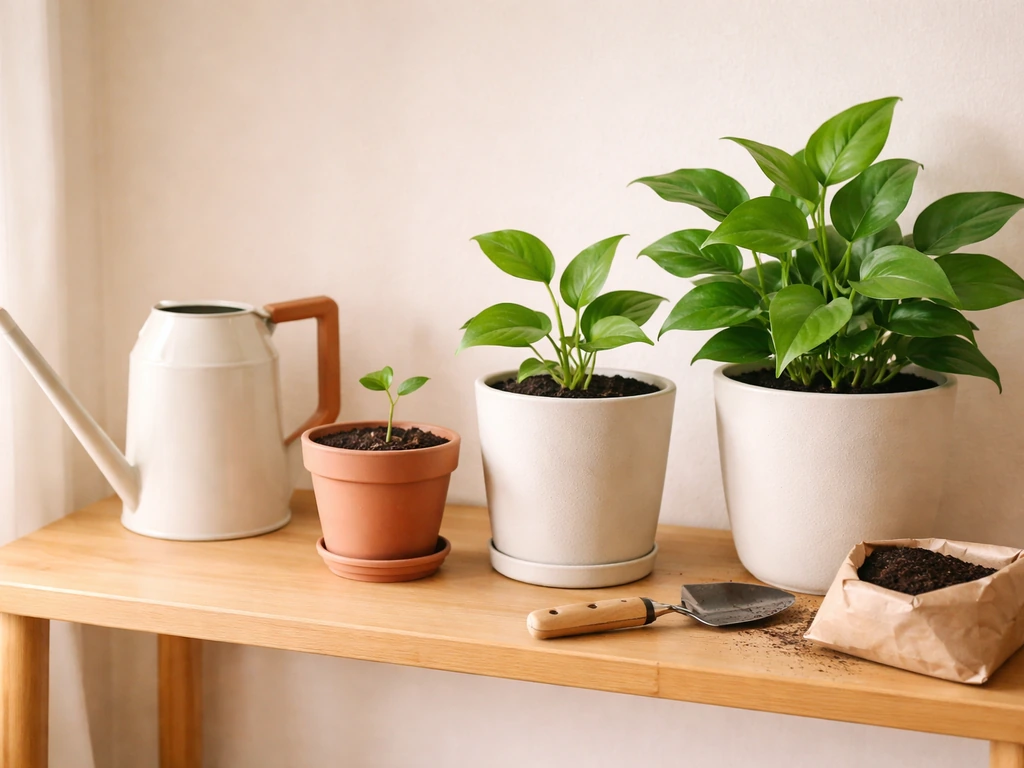
A consistent approach to light, watering, and setup is how to help houseplants grow strong and healthy. Fix those, and you're most of the way there. Air-purifying plants can help improve indoor air quality, and with the right light, watering, and potting mix you can keep them thriving air purifying plants.
Choosing the right plants for your light and space
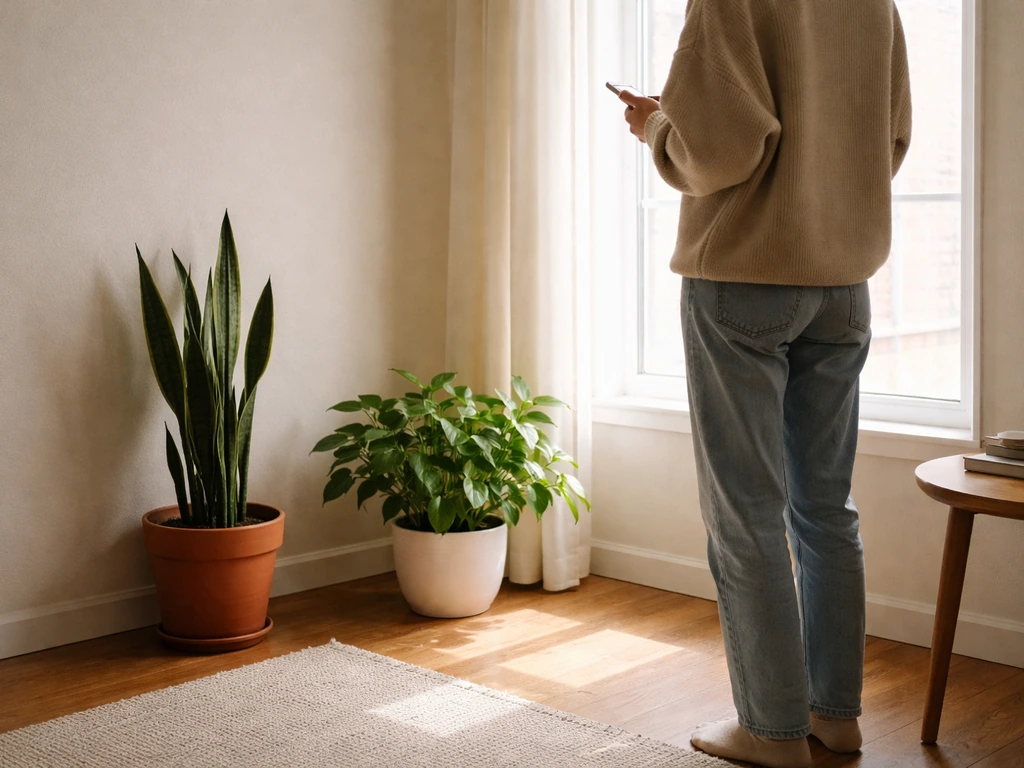
Before you buy anything, walk around your home and honestly assess your light. North-facing rooms or spaces more than 8 feet from a window are genuinely low-light. South and west-facing windows with no obstructions give you the best natural light indoors. Once you know what you're working with, choose plants that match, not plants you wish you had the conditions for.
If your space is dim, the snake plant (Dracaena trifasciata, formerly Sansevieria) is one of the toughest options available. It tolerates lower light better than almost anything else you can grow indoors, and it's very forgiving of irregular watering. Pothos, ZZ plants, and cast iron plants also handle low light well. For brighter spots near south or west windows, you open up to succulents, herbs, citrus, and most tropical foliage plants like monsteras and philodendrons.
Space matters too. A small apartment calls for compact growers, hanging plants, or shelving arrangements. Wall-mounted planters, tiered plant stands, and window boxes let you stack plants vertically and make the most of limited square footage. If you're short on floor space, consider smaller-scale options like terrariums or growing plants in water, both of which we'll cover later.
| Plant | Light Needed | Watering Frequency | Best For |
|---|---|---|---|
| Snake plant | Low to bright indirect | Every 2–6 weeks | Beginners, low-light rooms |
| Pothos | Low to medium indirect | Every 1–2 weeks | Beginners, hanging or trailing |
| ZZ plant | Low to bright indirect | Every 2–3 weeks | Forgetful waterers |
| Monstera | Bright indirect | Every 1–2 weeks | Statement plants, bright rooms |
| Succulents/cacti | Bright direct or indirect | Every 2–4 weeks | Sunny windowsills |
| Herbs (basil, mint) | Bright direct | Every few days | Kitchen windows |
Setting up your indoor plants the right way
The single biggest setup mistake beginners make is skipping drainage. Pots without drainage holes trap water at the roots and cause rot, it's one of the most reliable ways to kill a houseplant. If you love a decorative pot that has no drainage hole, the fix is simple: plant into a plain nursery pot with holes, then drop that pot inside your decorative one. Empty the outer pot after watering so the plant never sits in standing water.
For potting mix, don't use garden soil indoors, it compacts, drains poorly, and can introduce pests. A quality indoor or all-purpose potting mix works for most tropical houseplants. Succulents and cacti need a mix with extra grit or perlite added to improve drainage. Orchids need bark-based mix. Matching the medium to the plant makes a real difference in how often you need to water and how healthy the roots stay.
When picking a container size, bigger is not always better. Oversized pots hold excess moisture that roots can't absorb quickly, which invites rot. A general rule: choose a pot that's only 1–2 inches larger in diameter than the plant's current root ball. For placement, keep plants away from cold drafts (open windows in winter, air conditioning vents) and heating vents, which dry the air aggressively. A stable environment matters more than a perfect one.
How to water indoor plants (and the mistakes most people make)
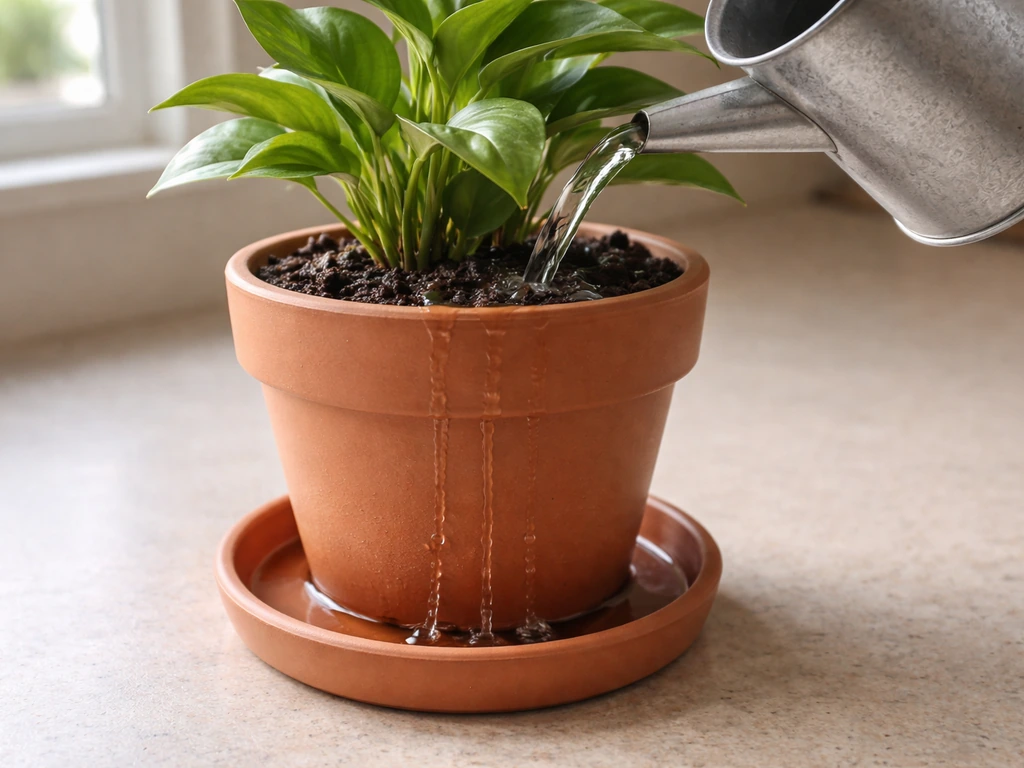
Overwatering is the number one killer of houseplants, and it doesn't mean you watered too much in one session, it means you watered too often. The fix is simple: check the soil before you water, not the calendar. In a r/gardening discussion about watering, people stress that “dry” is subjective and recommend methods like feeling soil moisture or using weight to judge when to water [check the soil before you water, not the calendar. ](https://www.
reddit. com/r/gardening/comments/1tjpouw/watering_question/). For most tropical houseplants, water when the top inch or two of soil feels dry. For succulents and cacti, let the soil dry out completely between waterings.
The watering frequency changes with the season, pot size, plant species, light levels, and how warm or humid your home is, so there's no universal schedule that works for everyone.
When you do water, do it thoroughly. Water from the top, soak the soil until water drains freely out the bottom, and then let the excess drain into the saucer, don't leave the plant sitting in that pooled water. This approach encourages roots to grow deep. Shallow, frequent sips of water keep roots near the surface and make plants less resilient.
Bottom watering (setting the pot in a tray of water and letting the soil absorb it from below) is another good option, especially for plants that don't like wet foliage. After 20–30 minutes, remove the pot and let it drain. This technique works great for African violets, succulents, and seedlings.
Reading the signs of watering problems
- Yellowing leaves, mushy stems, or soggy soil: classic overwatering — let the soil dry out fully before watering again, and check that drainage is working
- Wilting with dry, pulling-away-from-the-sides soil: underwatering — give a good deep soak
- Crispy brown leaf tips on otherwise healthy plants: usually low humidity or inconsistent watering, not a disease
- Mold on the soil surface: too-frequent watering or poor airflow — scrape off the top layer and reduce watering
Light and temperature basics that actually affect growth
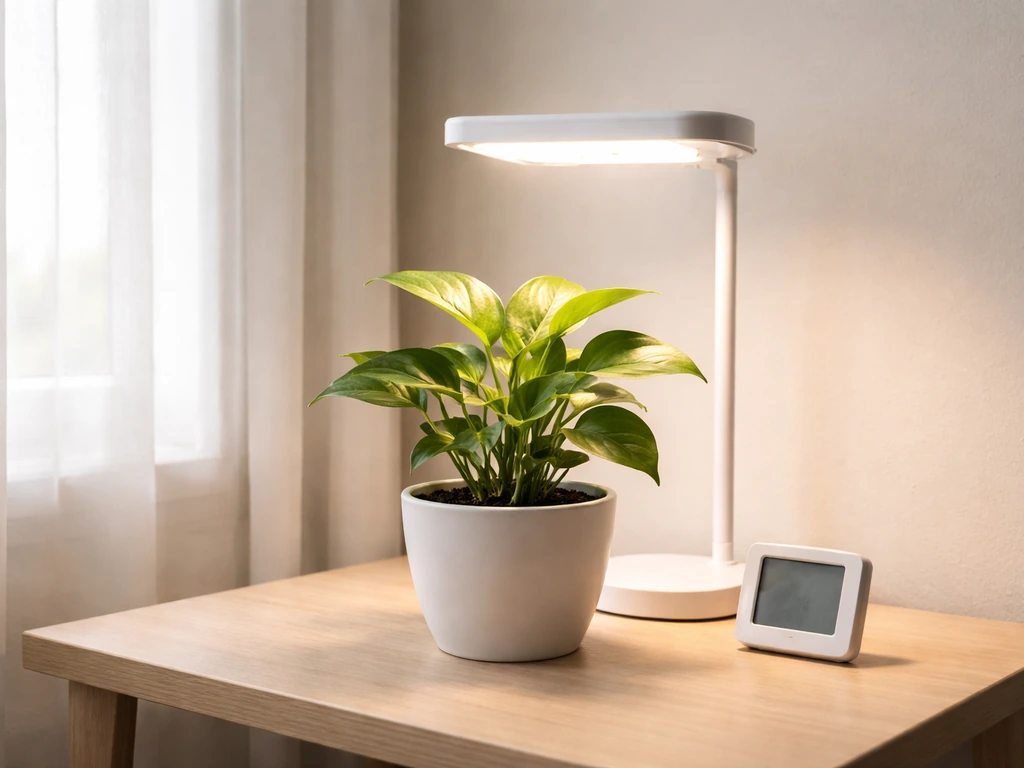
Light is plant food, without enough of it, nothing else you do will matter much. Indoors, light is measured in foot-candles, which is just a way of describing how bright the light is at the level of the plant itself. Most foliage houseplants do best in the 500–1,000 foot-candle range, and more light generally means better, faster growth. A bright south-facing window on a clear day can hit 1,000+ foot-candles right at the glass. Three feet back from that same window, you might be down to 200–300. That difference is huge for plants.
If your home is naturally dim, grow lights are one of the most worthwhile investments you can make. Full-spectrum LED grow lights have gotten cheap and effective. A simple clip-on or bar-style LED running 12–14 hours a day can substitute for natural light well enough to grow herbs, leafy plants, and even some fruiting plants. If your plants are stretching toward the window, growing leggy and pale, that's your signal that they need more light, not more fertilizer. If you want small plants to build bigger buds, lighting is usually the first lever to pull more light.
Temperature is simpler than most guides make it sound. Most common houseplants are happy in the same range humans are comfortable in, roughly 65–80°F during the day. Flowering plants often appreciate a slightly cooler night, ideally around 55–60°F, which can actually encourage blooming. The thing to avoid is sudden temperature swings: cold drafts from open windows in winter, or hot blasts from heating vents, stress plants and cause dropped leaves, leaf curl, and poor growth. Consistent temperature matters more than hitting a perfect number.
Feeding your indoor plants: fertilizer schedules and spotting deficiencies
Indoor plants can't pull new nutrients from the ground the way outdoor plants can, so you need to give them some. But more is not better, overfertilizing burns roots and causes crusty white salt residue to build up on the soil surface. If you see that white crust, scrape away the top inch of soil and back off on feeding.
A simple, effective approach: use a balanced liquid fertilizer (something like a 10-10-10 or 20-20-20 NPK ratio) at half the strength recommended on the label, every 2–4 weeks during spring and summer when plants are actively growing. Ease off or stop feeding entirely in fall and winter when most houseplants slow down. You can't make up for lost growth in winter by feeding more, the plant just isn't ready to use it, and the excess sits in the soil causing problems.
What nutrient deficiencies look like
- Pale yellow leaves across the whole plant: likely nitrogen deficiency — time to fertilize
- Yellow leaves with green veins (especially younger leaves): iron or magnesium deficiency — try a fertilizer with micronutrients
- Purple or reddish undersides on leaves: phosphorus deficiency, or the plant is cold
- Overall slow growth with no obvious cause: check light first, then consider whether the plant needs repotting or feeding
Growing methods for indoor spaces: soil, water, hydroponics, and terrariums
Soil in pots is the standard starting point and works well for the vast majority of houseplants. But it's not the only option, and depending on your space, schedule, or goals, one of the alternatives might actually suit you better.
Growing plants in water
Some plants, pothos, philodendrons, impatiens, coleus, and many herbs, root and grow happily in a jar of water. It's low-maintenance, endlessly watchable, and practically foolproof for propagating cuttings. Take a 4–6 inch cutting just below a node, remove any leaves that would sit below the waterline, and place it in a clear glass or vase. Change the water every week or two to keep it fresh and oxygenated.
The main ongoing issue is algae: if you see green growth on the inside of the glass, scrub it off with a cloth or old toothbrush during your weekly water change. Keep the glass out of direct sun to slow algae growth. Plants grown in water indefinitely tend to stay smaller than soil-grown versions, and they'll need a diluted liquid fertilizer every few weeks once roots are established.
Hydroponics indoors
Hydroponics takes the water-growing concept further, using a structured system to deliver nutrient-rich water directly to roots in a soilless growing medium (like clay pebbles, rockwool, or coco coir). It sounds complicated but beginner systems like Kratky (passive, no pump needed) or simple wick systems are very manageable. The payoff is fast growth, plants grown hydroponically often outpace their soil counterparts because nutrients are immediately available. You do need to monitor and adjust nutrient solution pH and concentration, which adds a small amount of ongoing attention. Lettuce, herbs, spinach, and other leafy greens are ideal starter crops for an indoor hydroponic setup.
Terrariums
A terrarium is essentially a miniature enclosed garden inside glass or clear plastic. Closed terrariums create their own humid microclimate through condensation cycling, making them ideal for moisture-loving plants like mosses, ferns, and small tropical plants. Open terrariums work better for succulents and cacti that need drier air. The main consideration with terrariums is light, glass can filter and reduce light quality and intensity, so place terrariums where they get bright indirect light, or supplement with a small grow light. Because the environment is enclosed, you water much less frequently in a closed terrarium (sometimes only every few weeks or months). The tradeoff is that mistakes, wrong plants, too much water, are harder to course-correct in a small enclosed space.
| Method | Setup Complexity | Watering Frequency | Best Plants | Main Watchout |
|---|---|---|---|---|
| Soil in pots | Low | Every 1–3 weeks | Nearly all houseplants | Overwatering, poor drainage |
| Growing in water | Very low | Refresh every 1–2 weeks | Pothos, philodendron, herbs | Algae buildup |
| Hydroponics | Medium | Top up reservoir as needed | Lettuce, herbs, leafy greens | pH and nutrient management |
| Closed terrarium | Low-medium | Every few weeks to months | Mosses, ferns, small tropicals | Too much moisture, wrong plants |
| Open terrarium | Low | Every 1–2 weeks | Succulents, cacti, air plants | Underwatering or poor light |
Troubleshooting the most common indoor plant problems
Most indoor plant problems come from a short list of causes: improper watering, sudden changes in environment, cold drafts, or lack of fertilizer. Before you panic, run through those four things first. Here's how the most common symptoms break down.
Yellowing leaves
Yellow leaves are the most common complaint, and they have the most possible causes. Bottom leaves yellowing and dropping on an otherwise healthy plant is usually just normal aging, lower leaves die as the plant puts energy into new growth. Widespread yellowing is more serious: check for overwatering first (soggy soil, no drainage), then consider whether the plant needs feeding. If you recently moved the plant or changed its environment, stress from adjustment can cause temporary yellowing too.
Leggy, weak, stretched growth
When a plant grows long, spindly stems with lots of space between leaves, it's reaching for more light. This is called etiolation. The fix is more light, move the plant closer to the window or add a grow light. Cutting back leggy stems also encourages the plant to produce fuller, bushier new growth closer to the base.
Brown leaf tips
Crispy brown tips are almost always a humidity or watering consistency issue, not a disease. Try grouping plants together (they raise local humidity for each other), using a pebble tray with water under the pot, or running a small humidifier nearby. Inconsistent watering, going dry then flooding, also causes tip burn. Salt buildup in the soil from tap water or excess fertilizer can do it too; flushing the soil thoroughly with water every few months helps.
Fungus gnats and mold
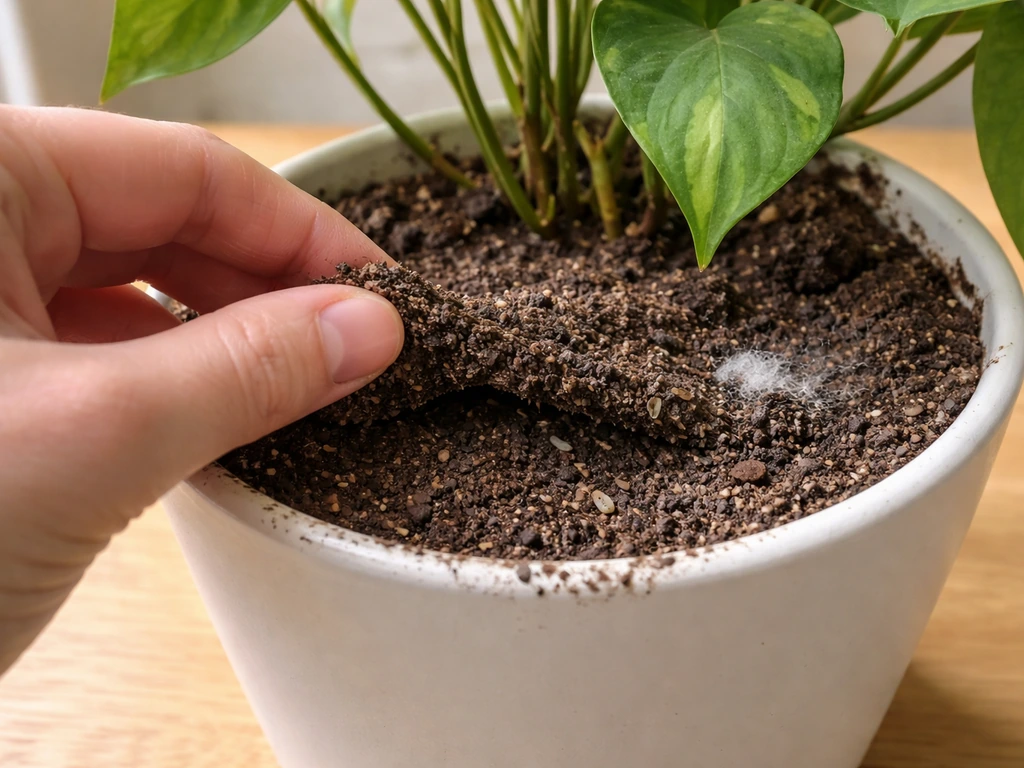
Fungus gnats are tiny flies that hover around soil. The larvae live in moist soil and feed on roots. The most effective control is the simplest one: let the top inch or two of soil dry out between waterings. Gnats need consistently moist soil to reproduce, so drying out the surface breaks their cycle. Yellow sticky traps catch adults. For persistent infestations, a soil drench with diluted hydrogen peroxide can help. Mold on soil surfaces is addressed the same way, reduce moisture and improve airflow.
Common pests: spider mites and mealybugs
Spider mites thrive in hot, dry conditions with low humidity, they love heated indoor air in winter. You'll see fine webbing on leaf undersides and tiny stippled damage on leaves. Raise humidity, keep leaves clean (a regular wipe-down with a damp cloth works), and use insecticidal soap or neem oil spray if needed. Mealybugs look like small white cotton tufts at leaf joints and stem bases. Remove them with a cotton swab dipped in rubbing alcohol, then follow up with horticultural oil. Both pests require persistence, check plants weekly and repeat treatment for several weeks to break their life cycle.
A simple routine to go from beginner to confident grower
The goal isn't a complicated care schedule, it's building a few quick habits that mean you actually look at your plants regularly. Most problems are easy to fix when caught early and very hard to fix when ignored for weeks.
Your basic weekly routine
- Check the soil moisture on each plant by pressing your finger an inch into the soil — water only if it feels dry at that depth (or fully dry for succulents and cacti)
- Look over the leaves quickly for any signs of pests, yellowing, or new damage
- Rotate each pot a quarter turn so all sides get even light exposure
- Wipe dust off large leaves with a damp cloth every couple of weeks — dust blocks light absorption
Monthly and seasonal tasks
- Fertilize every 2–4 weeks during spring and summer at half-strength; stop or greatly reduce feeding in fall and winter
- Check if roots are coming out the drainage holes or circling the surface — if so, it's time to repot into the next size up
- Flush soil with plain water every 2–3 months to clear salt buildup
- Adjust plant placement as seasons change — winter sun is lower and less intense, and you may need to move plants closer to windows
Next-step upgrades when you're ready
Once you've got a few plants thriving and a routine that feels easy, there are some genuinely worthwhile upgrades. A full-spectrum LED grow light opens up a huge range of plants that your natural light would never support, and it makes growing herbs and edibles indoors practical year-round. If you find watering consistency hard to manage (travel, busy schedule), self-watering pots with built-in reservoirs are a real solution, not a gimmick.
Trying water propagation is a great low-risk next step, take a pothos or philodendron cutting, root it in water, and watch the process happen in real time. If you want to go further, exploring a simple passive hydroponic system for herbs is both practical and genuinely satisfying. Growing healthy plants indoors is a skill that builds on itself: each plant you keep alive teaches you something the next one benefits from.
If you've killed plants before, that's not a sign you can't do this, it's just data. Most of the time, one small adjustment (better drainage, less water, more light) is the difference between a struggling plant and a thriving one. Start with one or two forgiving plants, learn what they're telling you, and build from there. You'll get there faster than you think.
FAQ
How can I tell if a window spot in my house is bright enough for a plant?
Use a “light test” before buying, place the plant where you want it for a week, then check for two signals: steady new growth and leaves staying a normal color and shape. If you see slow growth, pale color, or leggy stretching, the spot is too dim, move it closer to the brightest window or switch on a grow light.
What’s the best way to decide when to water, if I’m not sure by the plant calendar?
For most beginner houseplants, wait until the top 1–2 inches of the mix are dry, then water thoroughly and drain fully. If you consistently wait and the plant still struggles, the issue is often drainage or pot size, not just your timing.
What should I do if I love a decorative pot but it has no drainage hole?
If your decorative pot has no drainage, water the plant in a separate nursery pot with holes, then discard any runoff from the outer cachepot after the excess drains. This prevents root rot while still letting you keep the look you want.
My plant is in a big pot, how do I know if the size is causing problems?
Downsize the pot or repot into a mix that drains faster. Oversized containers hold water longer, which can cause yellowing and root problems even if you water “correctly.” A good trigger to repot is roots circling the container edges or soil staying wet for many days.
What causes the white crust on indoor potting mix, and how do I fix it?
White crust is usually mineral salts from hard tap water or overfeeding. Scrape the top inch of soil, then switch to careful feeding (half strength) and water that fully drains. If your water is very hard, consider using filtered water for routine watering.
How do I deal with algae in water propagation jars or on the surface of soil?
Algae in the top surface usually means too much light hitting wet soil or staying consistently wet. Reduce the time the pot sits in direct sun, let the top layer dry between waterings, and improve airflow. For propagation in water, keep the glass out of direct sun and scrub algae during water changes.
If I use a grow light, how many hours per day should I run it?
Start with 12 hours per day if you are using LEDs, then adjust based on response. A common mistake is running grow lights 5 to 10 minutes “to test,” most plants need consistent exposure for several days to show change, especially with darker rooms.
Why are my leaves getting brown tips, and is humidity the main problem?
It depends on the plant. Tropical foliage plants tolerate medium humidity, but crisp tips often respond to steadier watering or higher local humidity. If you want faster improvement, use a humidifier or group plants, but avoid misting as a primary solution for most houseplants.
What’s the most effective way to eliminate fungus gnats without constantly spraying?
For fungus gnats, the priority is drying the top 1–2 inches between waterings, because larvae need consistently moist soil. Yellow sticky traps reduce adults, but they do not solve the root cause, so consistency matters.
If I treat spider mites or mealybugs once, why do they come back?
Spider mites and mealybugs usually require repeat treatment because eggs and hidden stages survive. Inspect weekly, wipe leaf undersides, and plan on multiple applications spaced out over a couple of weeks rather than expecting one spray to solve it permanently.
What are good beginner plants if I want to reduce the odds of failure?
For first-time growers, the safest low-risk starter set is one low-light tolerant plant (like snake plant), one medium-light trailing plant (like pothos or similar), and one bright-window option if you have it. This combination helps you learn light and watering differences without one plant setting you back.
How do seasonal changes in winter affect how I should care for indoor plants?
In winter, plants grow slower, air can be drier, and your indoor temperature swing risk increases near drafts and heating vents. Keep watering based on soil dryness, not previous schedules, and watch for leaf drop after relocating plants even by a few feet.
Why do my water-propagation cuttings turn mushy or fail to root?
If your cuttings rot in water, it usually comes from submerged leaf material, stagnant water, or a cutting that wasn’t taken cleanly. Remove leaves that would sit below the waterline, change water every 1–2 weeks, and avoid keeping the jar in direct sun.