
Insect-eating plants are genuinely some of the most rewarding things you can grow at home, but they do have a completely different rulebook from your average houseplant. The good news: once you understand why they have those rules, caring for them becomes pretty intuitive. This guide walks you through everything from picking the right species for your space to feeding, watering, dormancy, and troubleshooting problems when things go sideways.
How to Grow Insect-Eating Plants: Beginner Guide to Thriving
Marcus Holloway
22 Apr 2026
What insect-eating plants actually need to thrive
Carnivorous plants evolved in boggy, nutrient-poor environments where the soil offers almost nothing in the way of food. That's exactly why they developed the ability to trap and digest insects. The flip side of that adaptation is that they are extremely sensitive to things other plants handle just fine, like fertilizer, mineral-rich water, and rich potting compost. Treat them like a regular houseplant and they'll decline fast. Treat them like a bog plant from a harsh environment and they'll thrive.
The core requirements across almost all carnivorous plant species come down to four things: very pure water with almost no dissolved minerals, a low-nutrient growing medium that drains well but stays moist, strong light (usually more than most windowsills provide), and the right temperature range for the species you're growing. Get those four right and you're more than halfway there.
Choosing the right species for your space
This is honestly the most important decision you'll make. Not every carnivorous plant suits every situation, and picking the wrong one for your light levels or climate is the number-one reason beginners get discouraged. Here's a practical breakdown of the most popular beginner species and where they fit.
Best for indoors on a bright windowsill or under grow lights
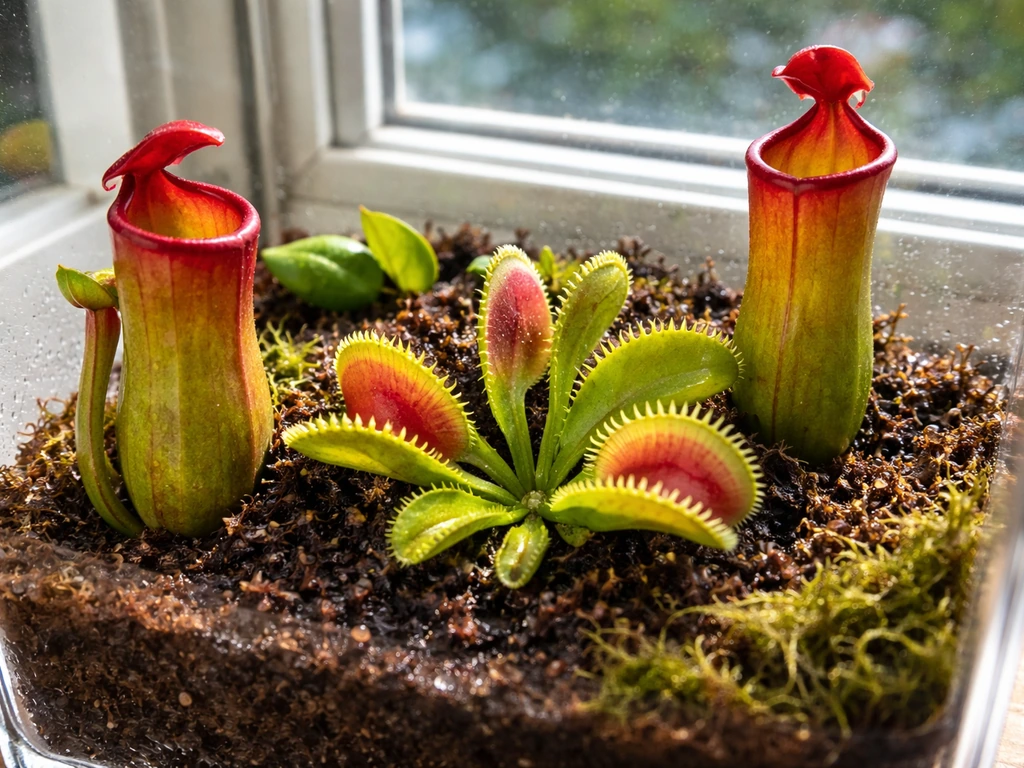
Venus flytraps (Dionaea muscipula) are the classic choice, and they're actually not the most forgiving, but they are widely available and well-documented. They need a lot of direct light, at least 4 to 6 hours of direct sun or a strong grow light, and they go dormant in winter. Sundews (Drosera) are arguably the best beginner plant of the group. Most tropical species skip dormancy entirely, grow happily under LED grow lights, and produce sticky traps that work passively without you having to do anything. Cape sundews (Drosera capensis) in particular are almost unkillable once you nail the water and light.
Best for terrariums
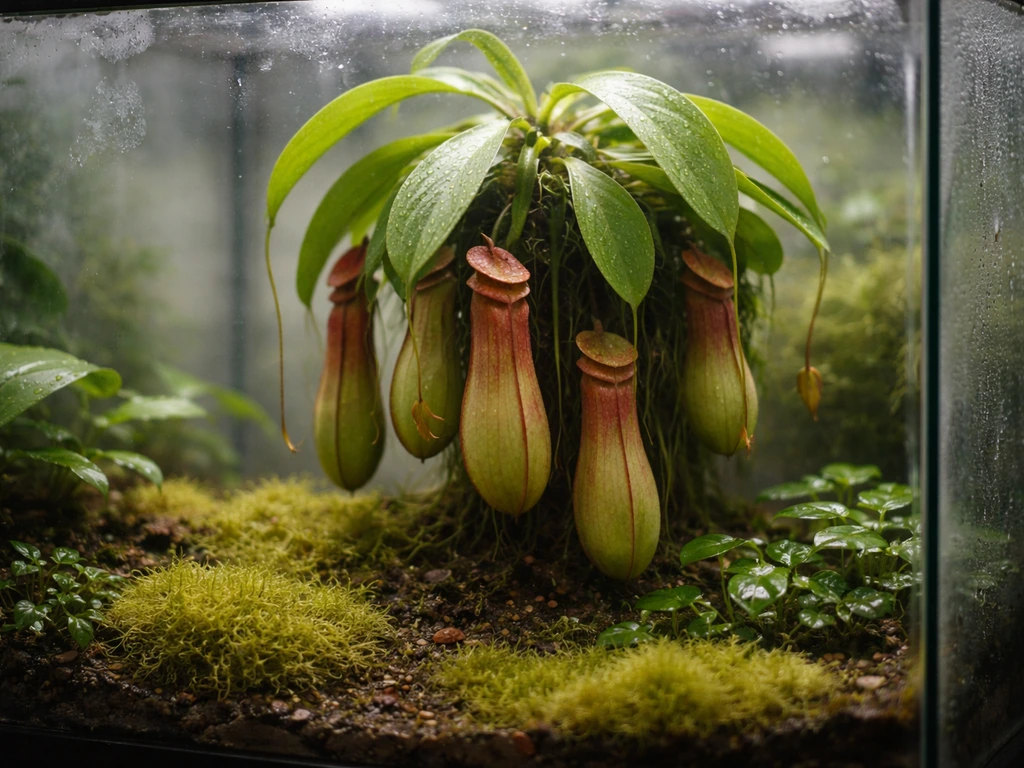
Tropical Nepenthes (pitcher plants) are the go-to terrarium carnivore. They produce dramatic hanging pitchers, tolerate lower light than Sarracenia, and many intermediate and lowland species are happy at normal room temperatures. An enclosed or semi-enclosed terrarium helps maintain the higher humidity Nepenthes prefer, since windowsills can be challenging due to low ambient humidity. Pinguicula (butterworts) also work well in terrariums, though they're compact enough to grow in a simple pot too.
Best for outdoors
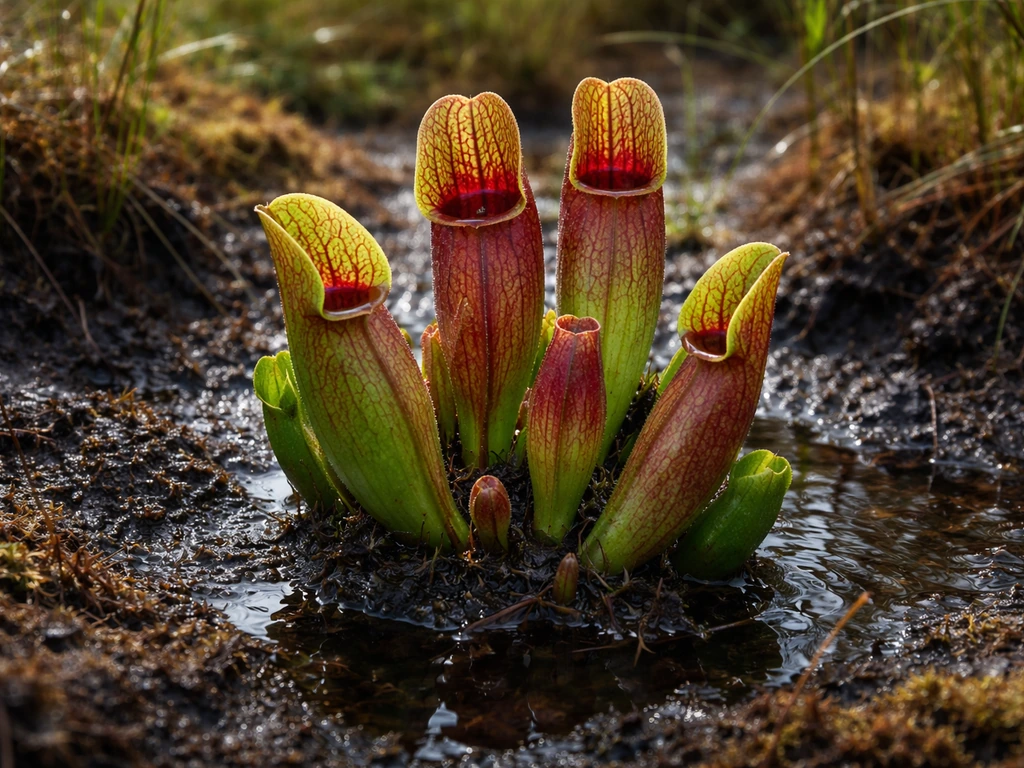
North American pitcher plants (Sarracenia) are your outdoor powerhouses. They need full sun and actually require winter dormancy to stay healthy long-term, which makes them perfect for temperate gardens or patios. If you want the simplest path to success, start by choosing a species that can handle your outdoor light and seasonal temperatures, then follow the dormancy and watering guidance for that group Best for outdoors. If you're in a climate with cold winters, Sarracenia can sit outside year-round in most of the continental US. Venus flytraps are also outdoor-friendly in USDA zones 7 to 9, and temperate Drosera species like Drosera rotundifolia follow the same seasonal rhythm.
| Species | Best Environment | Light Need | Dormancy? | Beginner Friendly? |
|---|---|---|---|---|
| Venus Flytrap (Dionaea) | Outdoor / Bright window | Full sun / strong grow light | Yes, winter | Moderate |
| Cape Sundew (Drosera capensis) | Indoor / Grow light | Moderate to bright | No (tropical) | Very high |
| Sarracenia (N. American pitcher) | Outdoor / Full sun | Full sun | Yes, winter | High (outdoors) |
| Nepenthes (tropical pitcher) | Terrarium / Indoor | Moderate, diffuse | No | Moderate |
| Pinguicula (butterwort) | Indoor / Terrarium | Moderate | Some species yes | High |
Getting the soil and pot setup right
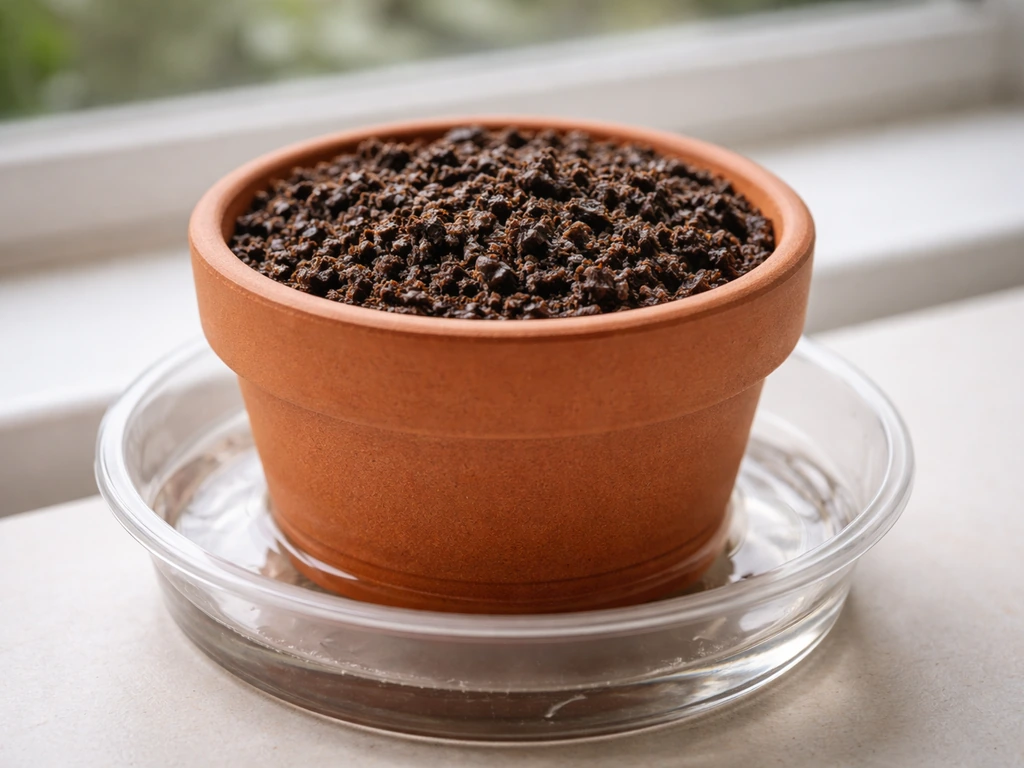
Standard potting mix will kill carnivorous plants. It's too nutrient-rich and usually contains fertilizer. What you need is a low-nutrient, acidic, moisture-retentive medium that doesn't compact into a brick. The go-to mix recommended by the International Carnivorous Plant Society for most species is a 50/50 blend of sphagnum peat moss and coarse horticultural sand. That ratio gives you moisture retention from the peat and drainage from the sand. For Nepenthes, a looser mix works better: 1 part long-fibered sphagnum and 1 part perlite is a popular and forgiving choice that keeps roots aerated while staying moist.
One thing to watch: peat can sometimes need rinsing if it's been stored with additives, and sphagnum moss on its own can pack down over time and lose permeability. If your plant's roots look waterlogged even with regular watering, compaction is often the culprit, and a repot into fresh media fixes it quickly.
For pots, choose plastic over terracotta. Terracotta is porous and leaches minerals into the soil, which defeats the whole purpose of using pure water. Plastic pots also hold moisture longer, which most carnivorous plants prefer. Make sure there are drainage holes. Many growers use the tray method where the pot sits in a shallow tray of water (more on this in the watering section), so a standard plastic nursery pot with drainage holes is essentially the perfect vessel.
Light, temperature, and humidity: where to actually put them
Carnivorous plants need more light than most people expect. As a general rule, more light means healthier traps, stronger coloration, and faster growth. If you want to take it further, focus on species and light conditions that can support big growth targets like 10-pound plants how to grow 10 pound plants.
The US Botanic Garden's guidance and industry PPFD data both confirm that indoor culture almost always requires supplemental lighting if you don't have a genuinely south-facing window with unobstructed sun. As a reference point, Sarracenia want a minimum of around 100 PPFD and grow best higher up toward 400 PPFD. Drosera can handle anything from 100 PPFD up to 500+ PPFD depending on the species, with more light producing more dramatically colored and active traps.
If you're growing indoors, a dedicated LED grow light placed 6 to 12 inches above the plant for 12 to 14 hours a day will do more for your plants than the best windowsill in most apartments. The ICPS dedicates a whole section to LED lighting for carnivorous plants precisely because it's that important. For highland Nepenthes specifically, targets are roughly 50 to 250 µmol/m²/s of diffuse light over a 12 to 14-hour photoperiod.
Temperature depends heavily on the species. Highland Nepenthes need warm days (around 70 to 80°F) but cool nights (45 to 60°F), which can be tricky indoors. Lowland Nepenthes prefer it warm day and night, running 80 to 90°F during the day and 70 to 78°F at night. Sarracenia and Venus flytraps are temperate plants that do fine at room temperature in summer and need genuine cold in winter for dormancy. Most tropical Drosera are happy at typical indoor room temperatures of 65 to 80°F year-round.
Humidity matters most for Nepenthes, which prefer 60 to 80% relative humidity for good pitcher development. A terrarium or grow tent handles this automatically. For Sarracenia, Venus flytraps, and most Drosera, average household humidity is fine, especially if you're using the tray watering method.
How to water carnivorous plants without killing them
Water quality is the single easiest thing to get wrong and the single most important thing to get right. If you want a full walkthrough, follow this guide on how to grow carnivorous plants from start to finish the single most important thing to get right. Tap water contains dissolved minerals (calcium, magnesium, chlorine, and others) that accumulate in the soil over time and essentially poison carnivorous plants. For Sarracenia in particular, certain mineral concentrations can be outright lethal.
The rule is simple: use only rainwater, melted snow, distilled water, or reverse osmosis water. The US Botanic Garden lists all three natural options as ideal. If you're buying water, distilled from the grocery store works perfectly and is usually under a dollar a gallon.
The tray method is the easiest watering technique for most carnivorous plants. Place your pot in a shallow tray or saucer and keep about 1 to 2 inches of pure water in it at all times. The plant wicks moisture up from the bottom, which also keeps the roots consistently moist the way a bog would.
For Nepenthes, the tray method is less common; those plants prefer to be kept evenly moist but not sitting in standing water, so watering from the top when the top inch of media starts to dry is the standard approach. For Pinguicula, a very shallow water layer of just 2 to 5 mm works well to keep the mix evenly moist without waterlogging the crown.
Over time, even with pure water, some mineral buildup can occur from dust and other environmental sources. If you notice a white crusty residue forming on the soil surface, flush the pot thoroughly with a large amount of distilled water (several times the pot's volume) to rinse the media, then return to normal tray watering.
Do you need to feed them bugs?
If your plant is outdoors or near an open window, it will probably catch enough insects on its own and you won't need to do anything. Insects, spiders, and gnats find traps naturally. But if you're growing indoors in a sealed environment or you haven't seen your Venus flytrap close in weeks, a little supplemental feeding helps.
For Venus flytraps, the ICPS recommends live insects as the gold standard, but rehydrated dried bloodworms also work well because they provide the protein and movement-trigger the trap needs to properly digest a meal. The important part is that the trap needs some stimulation after closing (in nature, a struggling insect provides this). You can gently squeeze the outside of a closed trap with your fingers for 20 to 30 seconds to mimic that movement and trigger full digestion. Don't feed dead, still pieces of food and expect good results.
Never feed carnivorous plants actual meat like hamburger or chicken. The US Botanic Garden explicitly advises against this because carnivorous plants cannot digest complex proteins from animal meat effectively, and it just rots in the trap, causing mold and damage. Also, never fertilize. North Carolina State University Extension specifically warns that Venus flytraps should not be fertilized, because fertilization can kill the plant Also, never fertilize.. The ICPS guide for Venus flytraps states this clearly: do not fertilize your plants. Fertilizer in nutrient-sensitive roots causes rapid decline. The whole point of the trapping system is to be their nutrient source, so trust that and don't add anything to the soil.
For Sarracenia and Nepenthes, feeding is even more passive. The pitchers fill with digestive fluid and catch prey on their own. If you want to give a boost to a pitcher plant indoors, you can drop a small live insect or a pinch of rehydrated bloodworms into one or two pitchers every few weeks. Don't overload every pitcher, it can cause bacterial rot in pitchers that aren't fully functional yet.
Seasonal care and dormancy: what changes throughout the year
Many carnivorous plants, particularly temperate species, require a genuine dormancy period in winter. This isn't optional for long-term health. Skipping dormancy year after year weakens the plant and eventually kills it. Think of it the same way you'd think about perennial plants in a garden: the rest period is part of the plant's life cycle, not a sign something is wrong.
Venus flytraps
Venus flytraps need about 3 to 4 months of winter dormancy with temperatures between 35°F and 50°F (roughly 2 to 10°C). During this time, the plant dies back, traps go limp, and it looks pretty rough. That's normal. Keep the soil just barely moist (not wet), reduce light to a few hours, and store in an unheated garage, shed, or the crisper drawer of your refrigerator if you're in a warm climate. When temperatures warm up in spring, move it back to full light and resume normal tray watering.
Sarracenia
Sarracenia need 3 to 4 months of dormancy at temperatures between 32°F and 50°F (0 to 10°C). If you're in a temperate climate, leaving them outdoors in a sheltered spot through winter works perfectly. The pitchers die back, but the rhizome survives. In spring, new pitchers push up fast once temperatures rise and light returns. Sarracenia don't need to be babied through dormancy, just protected from hard freezes and kept with some moisture.
Sundews (Drosera)
Whether your sundews need dormancy depends on the species. Temperate sundews like Drosera rotundifolia go dormant from roughly October through March at temperatures near 0 to 10°C. Tropical species like Drosera capensis grow year-round with no dormancy required. Winter-growing sundews, found in Mediterranean climate regions, actually grow in cool seasons and go dormant in hot, dry summers instead. Check the species before assuming.
Nepenthes and Pinguicula
Most tropical Nepenthes don't have a formal dormancy period. Grow them consistently year-round and they'll produce pitchers continuously. Some Mexican Pinguicula species, however, do have a winter dormancy where they form compact succulent-like rosettes and prefer temperatures between 5 and 10°C with a dry substrate during that rest phase. When spring comes, they return to their carnivorous form and resume normal watering.
Repotting
Repot carnivorous plants in late winter or very early spring, just before growth resumes after dormancy. This minimizes stress and gives the plant a full season to establish in fresh media. Most carnivorous plants benefit from fresh media every 2 to 3 years even if they haven't outgrown their pot, because peat and sphagnum break down over time and lose their structure.
Common problems and how to fix them
Yellow leaves or dying traps
Some yellowing of older leaves is completely normal. Carnivorous plants regularly shed old traps as new ones grow. If yellowing is happening fast across young growth as well, the most likely culprits are tap water use, mineral buildup in the soil, or insufficient light. Check your water source first. If you've been using tap water, flush the pot thoroughly with distilled water and switch immediately. If light is the issue, move the plant to a brighter spot or add a grow light. Improvement usually shows within two to three weeks of new growth.
Weak or small traps
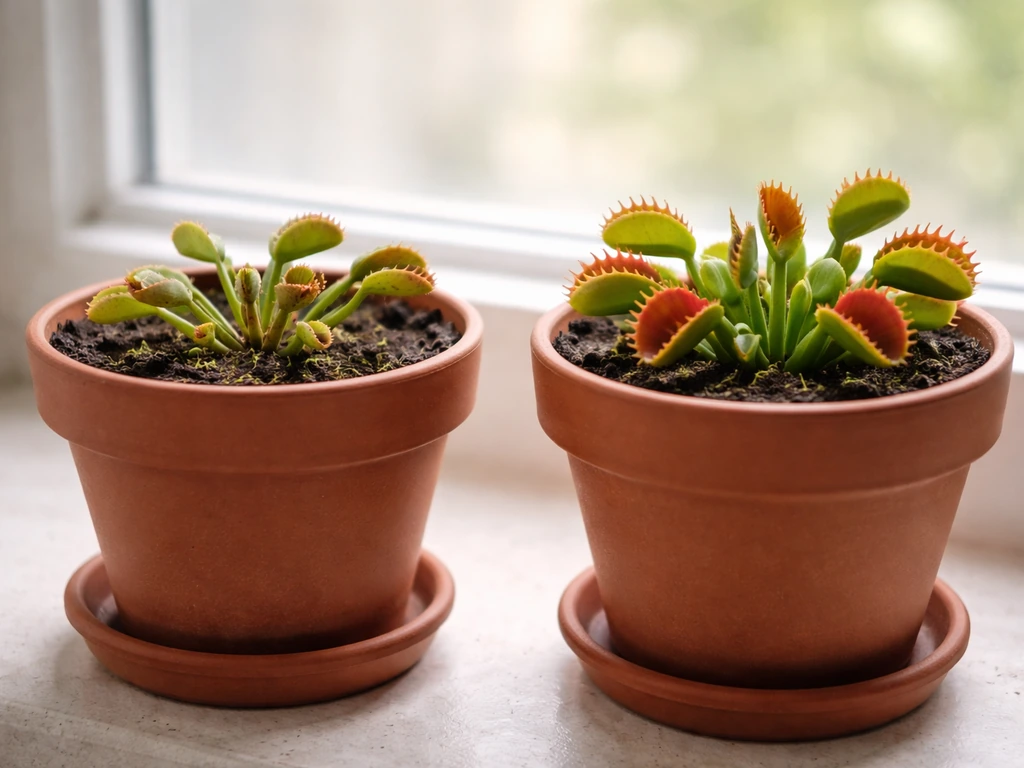
Venus flytrap traps that are small, slow to close, or look shriveled are almost always a light problem. These plants need genuine strong light, not a dim north-facing window. Sundews losing their sticky dew droplets (the mucilage on their leaves) are similarly telling you they need more light. Bump up your light intensity or duration before assuming anything else is wrong.
Mold on the soil surface
Surface mold is common in humid conditions and usually isn't an immediate crisis. Improve air circulation around the plant, reduce the water level in your tray slightly, and avoid misting directly onto the soil. If mold is spreading to the plant itself, you can carefully remove affected leaves and treat with a dilute hydrogen peroxide solution (1 part 3% hydrogen peroxide to 10 parts water) applied only to the affected area, not into the growing media.
Root rot and mushy crowns
Root rot usually comes from one of two things: waterlogged media that doesn't drain (wrong soil mix) or standing water in a warm, low-light environment where the plant isn't actively growing. If you squeeze the base of the plant and it feels mushy, carefully unpot the plant, trim away any black or brown mushy roots, let the healthy roots air for an hour, and repot into fresh, correct media. If the crown itself is rotting, the plant is usually a loss, but cuttings from healthy tissue can sometimes be salvaged.
Pests
Fungus gnats are the most common pest and somewhat ironic given the plants eat insects. Gnats lay eggs in moist media, and the larvae can damage roots. The tray method keeps the top layer of media drier (since water is absorbed from the bottom), which discourages egg-laying. Scale insects and aphids occasionally attack carnivorous plants; treat with dilute neem oil or isopropyl alcohol on a cotton swab. Never use systemic insecticides since they can be absorbed through the roots and cause harm.
Your beginner starting checklist
If you've read this far and you're ready to actually get started, here's what to do today. Pick one easy species (Cape sundew if you're growing indoors, Sarracenia if you have outdoor full sun space), grab a bag of sphagnum peat and some coarse horticultural sand (or a pre-mixed carnivorous plant soil), find a plastic pot with drainage holes, and get a gallon of distilled water from the grocery store. That's your entire beginner setup, and it costs less than $20.
- Choose one beginner species suited to your light and space (Cape sundew for indoors, Sarracenia for outdoors in full sun, intermediate Nepenthes for a terrarium setup).
- Source a carnivorous plant from a reputable nursery or online specialist rather than a big-box store, since store plants are often stressed or improperly cared for.
- Mix equal parts sphagnum peat and coarse sand (or 1: 1 sphagnum and perlite for Nepenthes) and fill a plastic pot with drainage holes.
- Plant at the same soil depth as the original container, firm gently, and don't add any fertilizer or compost.
- Place the pot in a tray with 1 to 2 inches of distilled or rainwater and keep the tray topped up.
- Put the plant somewhere with maximum available light, or set up an LED grow light 6 to 12 inches above it on a 12 to 14-hour timer.
- Do not fertilize. Do not use tap water. Let the plant do its thing.
- Plan for winter dormancy if you're growing a temperate species: note the species, look up its dormancy temperature range, and mark your calendar for when to start cooling it down.
Growing insect-eating plants is one of those hobbies where the learning curve feels steep at first but levels off quickly. Once you understand that these plants essentially want to be left alone in nutrient-poor, wet, bright conditions, the care becomes simple maintenance rather than constant intervention. If you want to go deeper on closely related topics, carnivorous plants share a lot of overlap with broader insectivorous plant cultivation techniques and general outdoor bog garden setups.
If you want to go deeper on insectivorous plant culture, check out how to grow insectivorous plants next insectivorous plant cultivation techniques. Start with one plant, get the water and light right, and build from there. If you want more step-by-step help, this article covers how to grow creeper plants in the same spirit of getting the basics like light, water, and soil right.
FAQ
Can I use tap water if I let it sit out overnight or boil it first?
No. Letting tap water sit only allows some gases to escape, it does not remove dissolved minerals. Boiling also concentrates minerals as water evaporates. For carnivorous plants, stick to distilled, reverse osmosis, melted snow, or rainwater, then use tray or top watering as your plant type requires.
How do I know if my grow light is strong enough for my carnivorous plant?
Watch for “light response” signs. Venus flytraps with small or slow traps, and sundews that lose sticky droplets, usually indicate insufficient intensity or too short a photoperiod. If you can, use a light meter (PPFD), and for many beginners it is safer to run longer and slightly brighter rather than under-lighting.
Should I clean the tray or saucer to prevent salt or residue buildup?
Yes. Even with pure water, mineral and dust films can build on surfaces and later contaminate the media. Empty and rinse the tray periodically (and scrub residue), then refill with fresh pure water. Also avoid letting water become stagnant for long stretches indoors.
Do insect-eating plants need fertilizer if they are not catching insects?
No. Fertilizer is one of the fastest ways to decline carnivorous plants. If prey capture is limited, feed only as needed for the specific species (for example, occasional live insects or rehydrated dried bloodworms for Venus flytraps), and ensure light and watering are correct first, since poor light often reduces trap function.
How often should I feed a Venus flytrap if it lives indoors?
A common beginner mistake is overfeeding. Once the plant is producing healthy traps, aim for feeding only a small number of times per month, and only when a trap closes naturally or after gentle stimulation for a closed trap. If you keep stimulating traps that are already weak, you can exhaust the plant.
Is it okay to mist insectivorous plants with distilled water?
Usually misting is unnecessary, and for many species it can worsen surface mold. Keep Nepenthes humidity up via a terrarium or grow tent, and rely on tray watering for most other groups. If you do mist for specific reasons, do it lightly and avoid wetting the growing medium or crown.
What humidity should I target for Nepenthes vs the rest of the plants?
Nepenthes generally need higher humidity (often around 60 to 80% relative humidity) for reliable pitcher development, which is easiest to maintain in a terrarium or humidity-controlled tent. Sarracenia, Venus flytraps, and most sundews tolerate normal household humidity, as long as watering and light are right.
Do I need to cover or protect insect-eating plants during cold snaps?
It depends on the species and the dormancy it needs. Temperate outdoor types should experience real winter conditions for dormancy, but you still should protect them from extreme, prolonged hard freezes. A sheltered patio corner, insulation, or temporarily moving potted plants can prevent tissue damage while still allowing the dormancy period.
Can I keep a carnivorous plant indoors year-round without dormancy?
For most temperate species, skipping dormancy will weaken plants over time and eventually kill them. If you want indoor-only, choose tropical sundews that grow year-round without dormancy, and for temperate species plan a cold period with the right temperature range and reduced light.
Why are my new traps turning black or never fully forming?
Often it is a light or water issue, or the plant is stressed by recent repotting. Blackening can also happen if a trap is closed and then fails to digest, which is more likely when the trap is weak. Check you are using pure water, confirm strong direct light (or grow light), and wait for new growth before changing multiple variables at once.
What should I do if the plant’s soil surface keeps growing white fuzz or crust?
White crust is usually residue from minerals or evaporation patterns, even if you used “mostly” pure water. Flush the pot thoroughly with distilled water, then return to proper watering. If you see surface mold, improve airflow and reduce how much water sits at the surface, avoid misting onto the media, and remove heavily affected leaves.
How do I prevent root rot when I use the tray method?
Tray watering works best when the media drains properly and the plant is in adequate light. Root rot is more likely when media is wrong (compacts, too nutrient-rich) or when plants sit in low light and warm conditions without active growth. If the plant seems mushy at the base, repot into fresh correct media and trim only clearly dead roots.
Can I grow these plants in terracotta or outdoor clay pots?
For many species, no. Terracotta is porous and can leach minerals into the media, which undermines the need for low-mineral conditions. Plastic or glazed pots with drainage holes are the safer default, and you can still manage moisture using tray or top watering rules.
Do I have to repot even if the plant still looks healthy?
Yes, periodic repotting helps. Even with pure water, peat and sphagnum media can break down and lose structure over time. Many growers repot every 2 to 3 years to refresh drainage and aeration, especially if you see compaction or water no longer distributes evenly in the pot.