
Insectivorous plants can absolutely thrive at home, but they have one rule that's completely different from every other houseplant: they evolved in nutrient-poor, boggy environments, so everything you normally do to pamper a plant (fertilizer, potting mix, tap water) will kill them. Once you understand that core difference, the rest is surprisingly manageable. This guide walks you through everything, from picking the right plant to setting up a routine you can actually stick to.
How to Grow Insectivorous Plants: Step-by-Step Care for Beginners

Marcus Holloway
20 Apr 2026
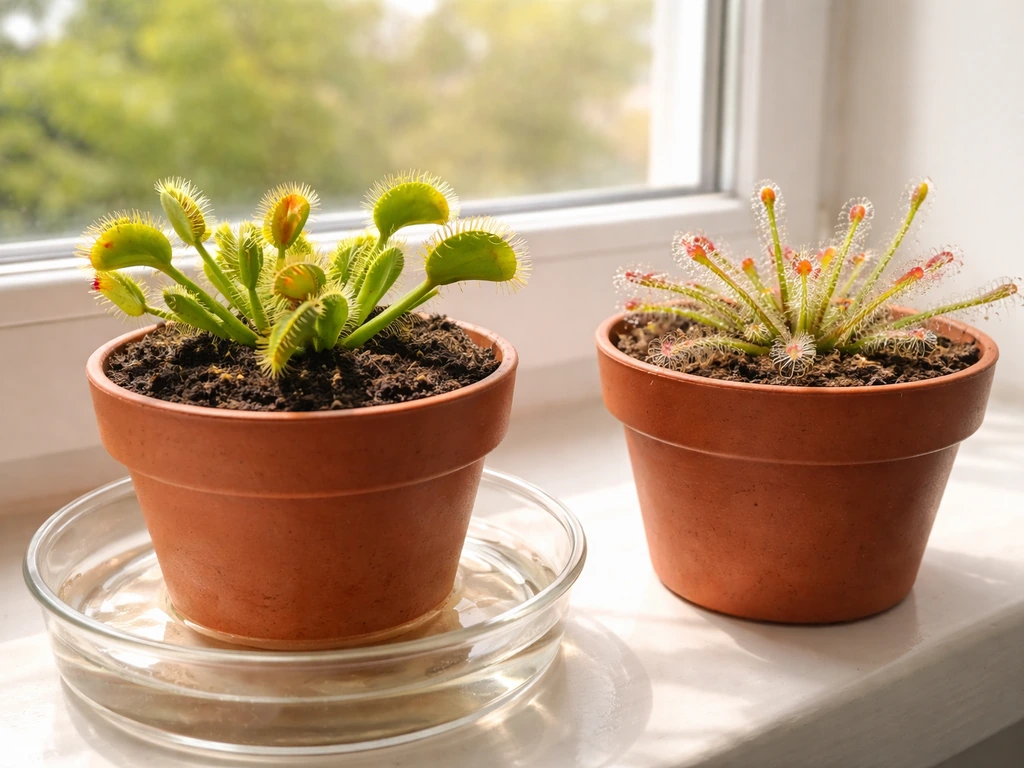
Pick the right insectivorous plant for your space
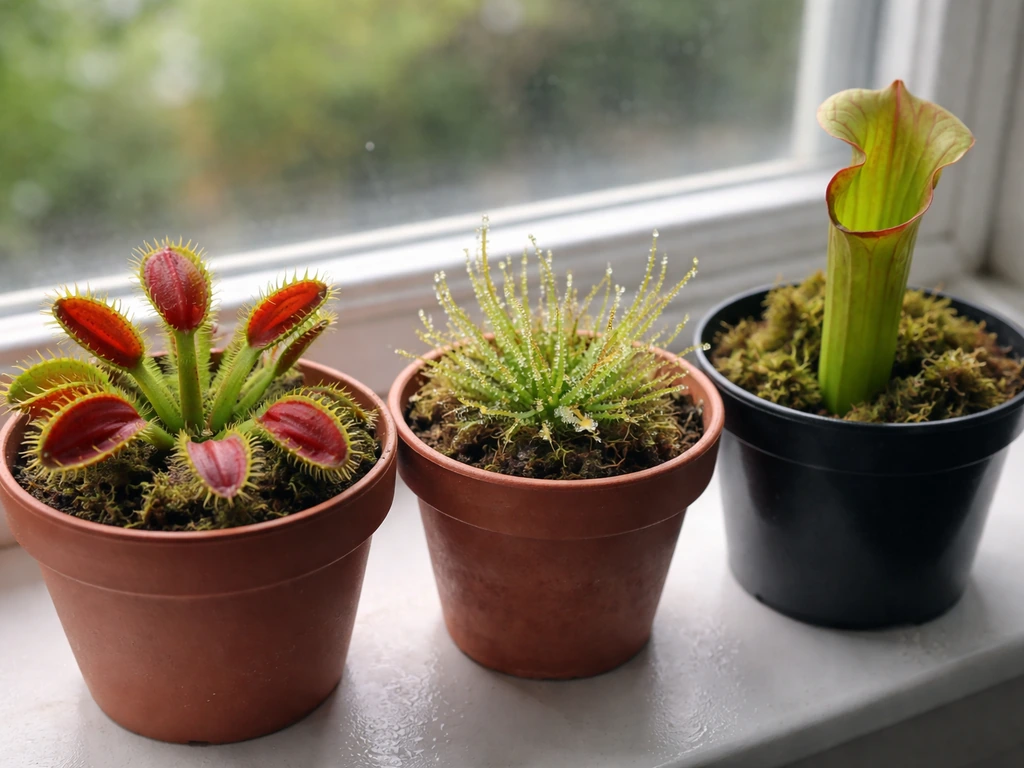
The biggest beginner mistake is buying a plant that doesn't match your conditions. Before you fall for something at the garden center, ask yourself two questions: how much direct sunlight can you realistically provide, and are you willing to manage a winter dormancy period? Your answers will narrow down the best genera immediately.
| Plant | Light needs | Dormancy required? | Best for beginners? | Ideal environment |
|---|---|---|---|---|
| Venus flytrap (Dionaea) | 4+ hours direct sun or grow light | Yes, 3-4 months cool/cold | Yes | Sunny windowsill or outdoors |
| Sundew (Drosera) | Varies by species; 8-16 hrs light daily | Tropical: No. Temperate: Yes | Yes (tropical types) | Windowsill, terrarium, grow light |
| Pitcher plant - Sarracenia | 4+ hours full outdoor sunlight | Yes, tolerates frost | Intermediate | Outdoors or very bright patio |
| Tropical pitcher plant (Nepenthes) | Bright indirect; 14-16 hrs light | No | Yes for lowland types | Indoor shelf, terrarium, grow light |
| Butterwort (Pinguicula) | 8,000-15,000 lux; moderate-bright indirect | Some Mexican types: no strict dormancy | Yes | Windowsill, terrarium |
If you're a first-timer with a decent south- or west-facing window and no grow lights, a Venus flytrap or a tropical Drosera like Drosera capensis is the easiest entry point. Both are forgiving, widely available, and cheap enough that if something goes wrong, you haven't lost much.
If you're working with low light or a north-facing window, a Nepenthes (tropical pitcher plant) or a Mexican Pinguicula is the smarter pick because they tolerate lower light intensities and don't need a cold dormancy period. Sarracenia are fantastic plants but they genuinely want to live outside, so if you're in a small apartment without any outdoor space, hold off on those until you have a porch or balcony.
If you want to grow these plants outside, make sure you choose species that can handle your local seasons and direct sun grow plants outside.
One thing worth noting: insect-eating plants and carnivorous plants are the same thing described with different words. If you've been researching how to grow insect eating plants or how to grow carnivorous plants, you're looking at exactly the same care requirements covered here. If you want step-by-step guidance, use this as your guide for how to grow insect eating plants.
Light, temperature, and seasonal dormancy basics
Light is where most beginners underestimate what their plant needs. These plants grow in open bogs and meadows with near-full-sky exposure, not on a dim bookshelf. Getting the light right is the single biggest factor in whether your plant survives long-term.
How much light each genus actually needs
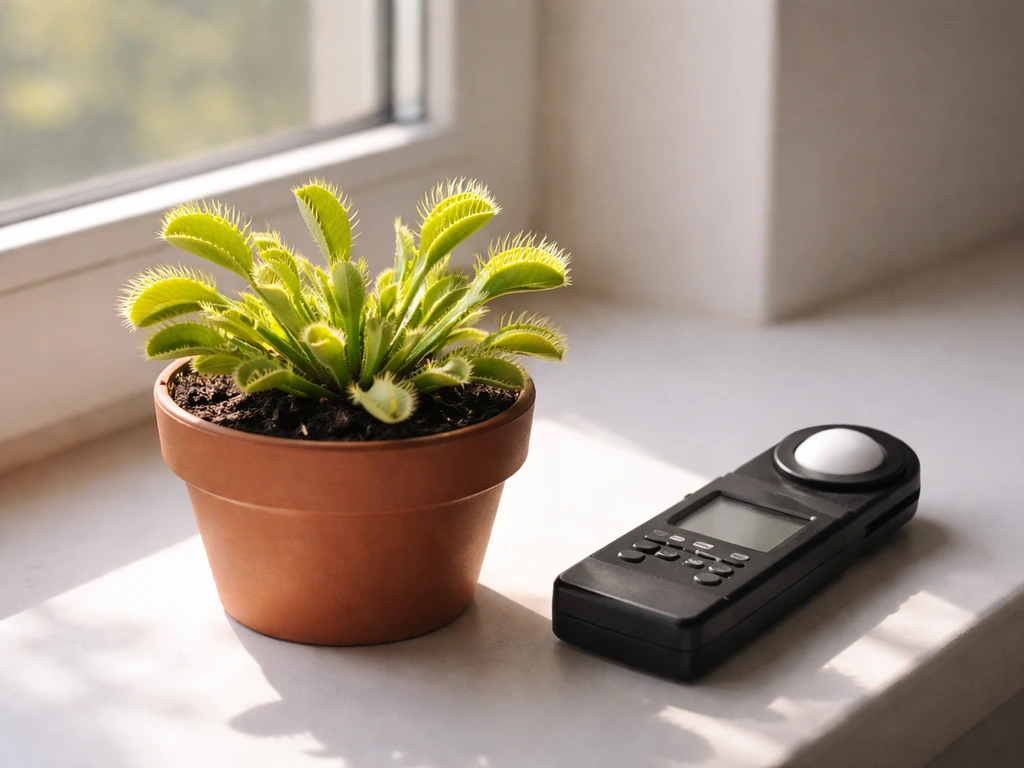
Venus flytraps need a minimum of around 100 PPFD (photosynthetic photon flux density), with a suggested range of 100-400 PPFD, across a 12-14 hour photoperiod. In practical terms, that means at least 4 hours of direct sunlight on a sunny windowsill. If your window isn't sunny enough, fluorescent or LED grow lights work, but fluorescent lights have to be placed close to the plant because usable light drops off fast with distance.
Drosera need a similar minimum (around 100 PPFD) but many species thrive at 500+ PPFD, and some like Drosera capensis want about 8 hours of full or partial sun daily, with 12-16 hours total light when using artificial lighting. Nepenthes prefer bright indirect light for around 14-16 hours daily and do well under LED grow lights if your windows are insufficient.
Pinguicula are the lowest-light option in this group, doing well at roughly 8,000-15,000 lux, which is a moderately bright indirect position. Sarracenia are the most demanding outdoors plants, needing at least 4 hours of full direct sunlight per day outside.
Temperature and dormancy: who needs a winter rest
This is where insectivorous plant care splits into two distinct camps: temperate species that need a cool winter rest, and tropical species that don't. Venus flytraps need a genuine dormancy of about 3-4 months at temperatures between 35-50°F (roughly 2-10°C).
NC Cooperative Extension recommends aiming for at least about 10 weeks of dormancy in the 35, 50°F range for Venus flytraps, and notes that indoor-grown plants may not always need dormancy even though it can be beneficial dormancy of about 3-4 months at temperatures between 35-50°F.
Without it, they weaken over successive growing seasons and eventually die. You can achieve this by moving them to an unheated garage, a cool basement, or even placing them in the fridge during winter. Sarracenia are even more cold-tolerant during dormancy and can handle temperatures dipping to around 20°F at night as long as daytime temps rise above freezing.
Temperate Drosera may also slow down or go dormant in winter, but many tropical sundews can be grown at steady household temperatures year-round.
Nepenthes are tropical plants and do not require any cold dormancy. They thrive at daytime temperatures of roughly 80-85°F and nights in the 60s°F. Drop them into a cold garage in winter and you'll damage or kill them. Mexican Pinguicula sit somewhere in the middle: most don't require a strict cold dormancy the way flytraps do, but they may shift into a succulent-leaved resting phase in cooler, drier conditions. The key takeaway is to research your specific species before winter arrives, not after your plant starts looking rough.
Soil/medium and the water rules (and what to avoid)
This section is non-negotiable. Use the wrong soil or water and your plant will die slowly, looking worse each week, and you'll wonder what you did wrong. The answer is almost always in the medium or the water.
The right growing medium
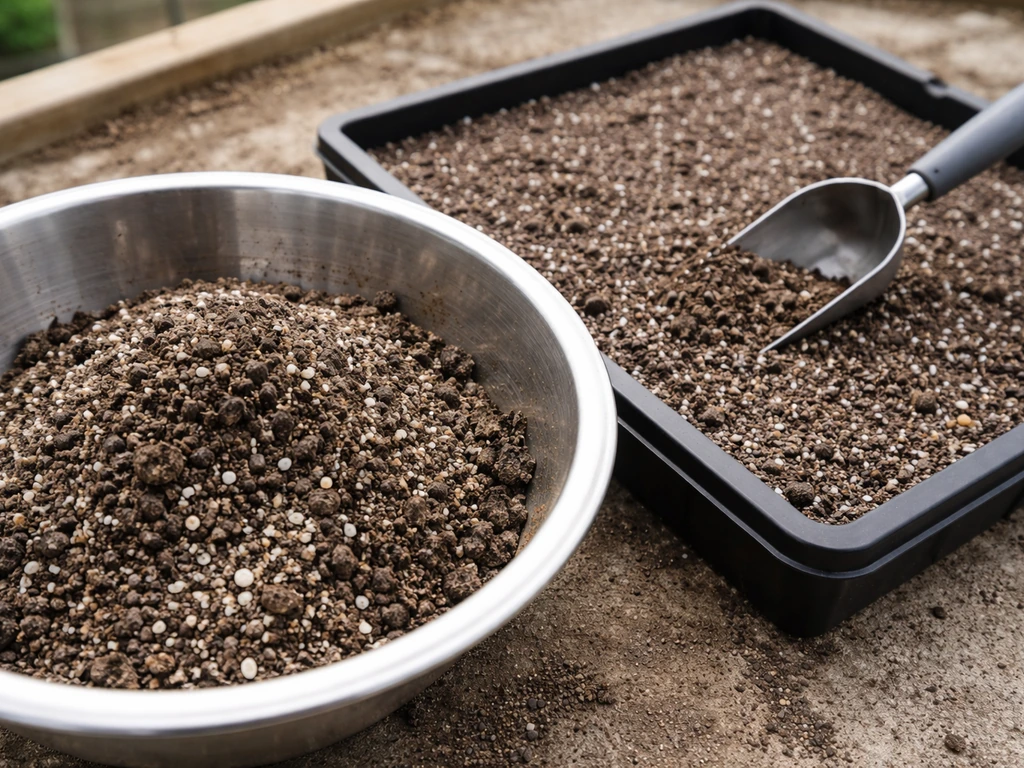
Insectivorous plants need nutrient-poor, acidic, well-draining media that holds moisture. That eliminates every standard potting mix, compost, and garden soil. A reliable mix for Venus flytraps is 5 parts peat moss, 3 parts silica sand, and 2 parts perlite by volume. For Nepenthes, a blend of long-fiber sphagnum moss and perlite works well and drains better than peat-heavy mixes. Peat and perlite is also a solid all-around beginner substrate for several genera. Never use potting mix that contains fertilizer, moisture-retention crystals, bark, or compost. Check every label. Even "natural" potting mixes often contain added nutrients that will burn the roots of carnivorous plants.
The water rule is the most important rule
Use only distilled water, reverse osmosis water, or clean rainwater. Tap water contains dissolved minerals and chlorine that accumulate in the growing medium over time and essentially poison the plant from the roots up. This is one of the most common silent killers for beginners. Even if your tap water tastes fine, the dissolved solids it carries are too high for plants that evolved in near-pure rainwater. Buy a gallon of distilled water from any grocery store for under $1.50, or collect rainwater in a clean container. If you're setting up multiple plants, a small reverse osmosis filter is a worthwhile investment.
What to avoid without exception
- Tap water (dissolved solids build up in the medium and burn roots over time)
- Any fertilizer, including diluted houseplant fertilizer (these plants evolved to not need it)
- Standard potting compost or soil with added nutrients
- Clay or terracotta pots (they leach minerals into the medium)
- Softened water (even higher in certain minerals than regular tap water)
Planting, container choices, and watering routine
Best containers
Plastic pots are the safest choice for most insectivorous plants. They don't leach minerals, they're cheap, and they hold moisture well. Clay and terracotta pots are a problem because they absorb and release minerals that contaminate the growing medium. For Venus flytraps and Sarracenia, choose a tall pot (at least 4-6 inches deep) so the roots have room. Nepenthes do well in hanging baskets or plastic pots with good drainage. For terrariums, you can house Nepenthes or Pinguicula nicely, but Venus flytraps and Sarracenia need better airflow than a sealed terrarium provides.
The tray watering method
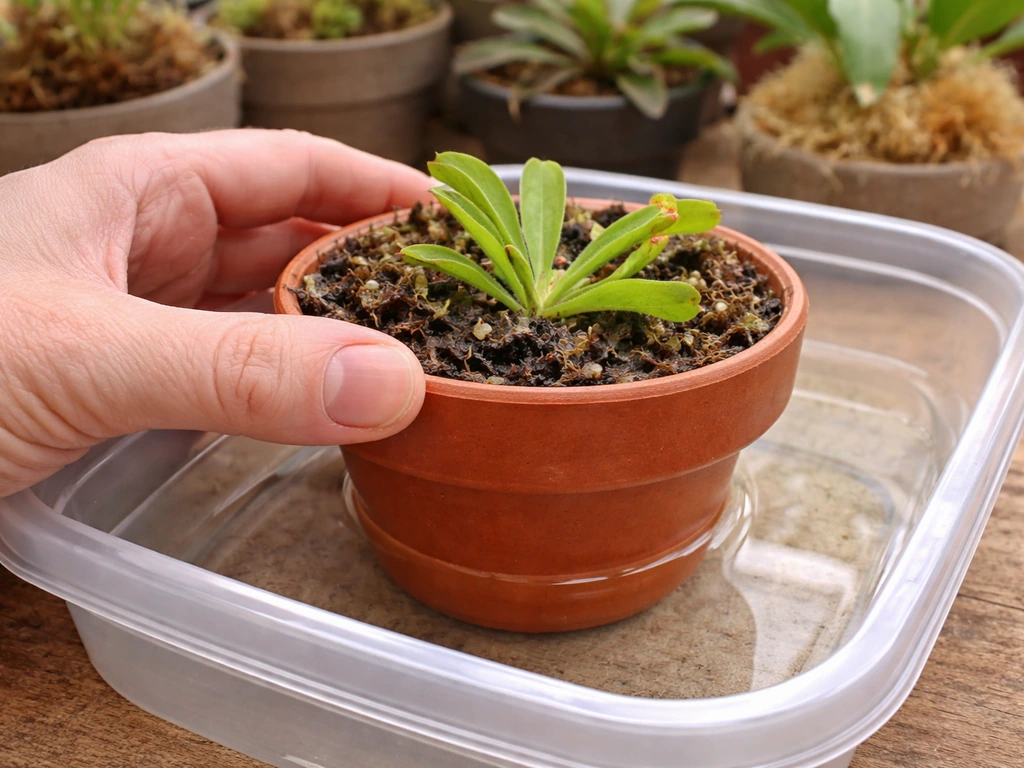
The tray method is the standard watering approach for Venus flytraps, Sarracenia, and most Drosera. Place the pot in a shallow tray or saucer and keep about 2-5 mm of pure water in the tray at all times. The plant drinks from the bottom up, which keeps roots consistently moist without waterlogging the crown. Don't let the tray run completely dry, and don't fill it so deep that the soil becomes waterlogged.
Over time, mineral residue can build up in the medium even with pure water, which is one reason repotting every 1-2 years matters. For Pinguicula, avoid pouring water directly onto the rosette as it increases rot risk. Keep the saucer shallow and water from below. For Nepenthes, the medium should stay consistently moist but the pot should never sit in standing water, as this encourages root rot.
During dormancy periods, reduce watering so the soil stays only slightly damp rather than actively wet. Flytraps and Sarracenia in dormancy need much less water than they do during the growing season.
Feeding: do you need to feed insects?
Here's the honest answer: if your plant is in good light outdoors or near an open window, it will probably catch its own food and you don't need to do anything. Feeding is supplemental, not mandatory for survival. That said, access to prey does promote faster growth, larger traps, and better overall vigor.
If you want to feed your plant, keep it simple. A small live or recently killed insect, about a third of the trap's size, works well for Venus flytraps. For Nepenthes, one small insect per pitcher is more than enough. Avoid feeding them raw meat, cheese, fertilizer solutions, or human food.
The digestive process is energetically costly, so overfeeding (triggering traps constantly or stuffing multiple insects) stresses the plant. Triggering a Venus flytrap repeatedly without feeding it also wastes energy, since each trap can only open and close a limited number of times before it dies off. For Drosera, the sticky mucilage traps small insects on its own. Pinguicula will catch fungus gnats and small flies passively.
In a typical indoor setting, a weekly feeding of one or two small insects per plant during the growing season is plenty. During dormancy, stop feeding entirely.
The one thing to avoid completely: houseplant fertilizer. Even diluted, it introduces nutrients the plant is not equipped to process through its roots, and it will damage or kill it. The carnivorous diet is a workaround for nutrient-poor soil, not a supplement to conventional feeding.
Ongoing care and growth milestones
Repotting
Plan to repot every 1-2 years, or sooner if the plant has clearly outgrown its container. Fresh medium is important because peat degrades over time, losing its structure and acidic properties, and mineral buildup accumulates even with pure water. Spring, just as the plant comes out of dormancy or starts active growth, is the best time to repot. Use fresh peat/perlite or sphagnum mix, rinse roots gently with distilled water, and don't add anything to the new medium.
Pruning and dead leaves
Dead or dying leaves and traps are completely normal. Venus flytrap traps die after catching and digesting a few meals, and older leaves naturally yellow and die off as the plant grows new ones. Trim dead leaves at the base with clean scissors. Don't pull them off forcefully because you can disturb the rhizome. For Sarracenia, old pitchers die back seasonally. Cut them down in late winter before new growth starts. For Drosera, dead tentacles and leaves can be removed as they appear. Keeping the plant tidy also reduces mold risk.
Seasonal adjustments
As days shorten in autumn, temperate species like Venus flytraps and Sarracenia naturally begin preparing for dormancy. You'll notice the flytrap producing smaller, flatter leaves and traps. This is normal. Move outdoor plants to a cool but protected spot, reduce watering, and stop feeding. In spring, bring them back out and resume normal care. Tropical species like Nepenthes and Mexican Pinguicula don't follow this rhythm, so maintain stable temperatures and consistent light year-round.
Troubleshooting common failure points
If your plant is struggling, work through this list systematically rather than guessing. Most carnivorous plant problems trace back to just a few causes.
| Symptom | Most likely cause | Fix |
|---|---|---|
| Leaves turning black, plant dying | Tap water mineral buildup or fertilizer contamination | Flush medium thoroughly with distilled water; repot if severe; switch to pure water only |
| Plant shrinks and goes limp in winter | Missing dormancy or incorrect dormancy temperature | Check species requirements; provide 35-50°F for Venus flytraps for 3-4 months |
| Plant looks limp and pale, stretching toward light (etiolation) | Insufficient light | Move closer to window or add grow light; target species-appropriate PPFD range |
| Mold or white fuzz on soil surface | Poor airflow, overwatering, or crowded growing space | Improve ventilation; reduce tray water level; trim dead plant material |
| Pests (fungus gnats, aphids, scale) | Soil moisture issues or contaminated medium | Use sticky traps for gnats; treat aphids/scale with diluted neem oil away from pitcher fluid |
| Root rot, crown collapse | Overwatering or sitting in too-deep tray water | Reduce tray depth to 2-5 mm; ensure good drainage; repot if roots are mushy |
| Traps won't close or are permanently open | Overfeeding or repeated mechanical triggering | Stop stimulating traps; allow plant to rest; reduce feeding frequency |
| Leaf edges turn brown or crispy | Mineral burn from hard water | Switch immediately to distilled or RO water; flush medium; repot |
| No new growth for weeks in spring | Dormancy ending too slowly or still too cold | Ensure temperatures are warming above 50°F; increase light gradually |
| Plant looks fine but no pitchers forming (Nepenthes) | Insufficient humidity or light | Increase ambient humidity to 60%+; supplement light to 14-16 hrs daily |
One thing worth normalizing: these plants do go through ugly phases, especially coming out of dormancy or recovering from a rough spell. A flytrap that looks dead in February might push out healthy new growth in April. Before you throw a plant out, make sure you've corrected the basics and given it 4-6 weeks to respond.
A beginner starter setup and care schedule
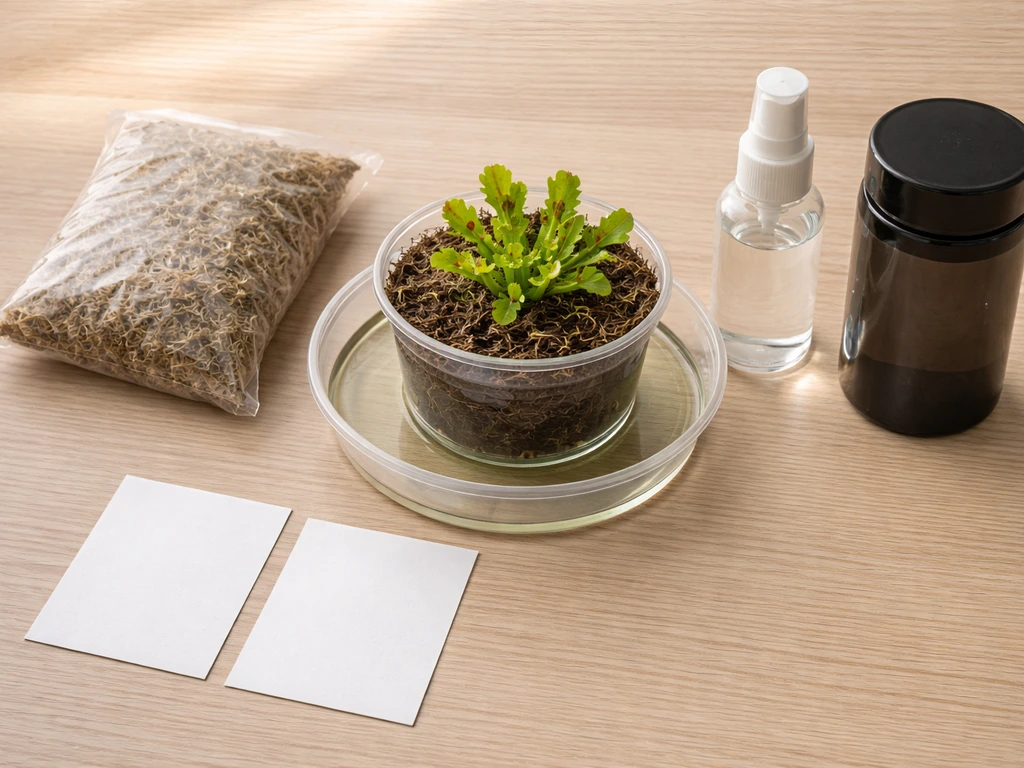
Here's a concrete plan you can follow this week, built around the most beginner-friendly choice: a Venus flytrap or tropical Drosera. If you want a more step-by-step approach, you can use this guide to plan how to grow creeper plants based on the specific conditions you can provide. Adjust the dormancy section if you choose Nepenthes (skip the cold rest) or Sarracenia (move it outdoors).
What to buy
- One Venus flytrap or Drosera capensis from a reputable carnivorous plant nursery (not a grocery store plant in decorative moss)
- A 4-inch plastic pot with drainage holes
- A bag of peat moss and a bag of perlite (or pre-made carnivorous plant mix)
- A shallow plastic tray or saucer
- A gallon of distilled water (or set up rainwater collection)
Where to place it
Put the plant on your sunniest windowsill, ideally south- or west-facing, where it will get at least 4 hours of direct sun. If you don't have that, set up a full-spectrum LED grow light 6-12 inches above the plant and run it for 12-14 hours a day on a timer. Keep the plant away from heating vents, air conditioning drafts, and radiators.
Monthly care schedule
| Time of year | Care actions |
|---|---|
| Spring (March-May) | Repot if needed; resume tray watering with 2-5 mm pure water; begin feeding once new growth appears; increase light duration |
| Summer (June-August) | Maintain tray water; feed once a week (one small insect per trap or per plant); ensure 4+ hrs direct sun or full grow light schedule |
| Autumn (September-November) | Reduce feeding as growth slows; reduce tray water level slightly; watch for dormancy signs (smaller leaves, slowed growth) |
| Winter (December-February) | For Venus flytraps: move to cool location (35-50°F); keep soil barely damp; no feeding; reduce light to natural winter levels. For tropical types: maintain warmth, light, and light watering as normal |
That's really all there is to a basic routine. The biggest shift in thinking is this: stop trying to give these plants what houseplants want. If your goal is bigger results like how to grow 10 pound plants, remember that the biggest shift is exactly this: stop trying to give these plants what houseplants want. No fertilizer, no rich soil, no tap water, no pampering. Give them light, pure water, and appropriate temperatures, and they'll do everything else themselves, including catching the occasional gnat that wanders by. Once you're comfortable with one species, branching out to Sarracenia outdoors or experimenting with Nepenthes in a terrarium setup opens up a genuinely fascinating rabbit hole of carnivorous plant growing.
FAQ
Can I grow insectivorous plants in regular potting soil if I skip fertilizer?
Most insectivorous plants should not be grown in standard potting soil or potting mixes, even if they are labeled “organic.” Use only nutrient-poor mixes made for carnivorous plants, and ensure the medium stays acidic and well-draining (for example peat-silica sand-perlite for Venus flytraps, or sphagnum plus perlite for Nepenthes).
What should I do if I only have tap water available?
Tap water is a common silent killer because minerals and dissolved solids build up in the medium over time. If you want a fallback, use distilled or reverse osmosis water, or collect clean rainwater, and avoid “filtered tap water” unless you test it and it matches very low dissolved solids.
My plant looks weak or pale, should I fertilize it?
Do not fertilize to “help them catch up.” If your plant looks pale or weak, the cause is usually insufficient light, wrong water quality, incorrect substrate, or missing dormancy (for temperate species). First correct light and water, then wait 4 to 6 weeks for new growth to show whether recovery is happening.
Do all insectivorous plants need a winter dormancy?
Yes, but dormancy requirements must match the species. Venus flytraps need a cool rest roughly 3 to 4 months, while Nepenthes do not. If you skip dormancy for flytraps, they typically weaken across successive seasons and eventually fail.
How often should I trigger Venus flytrap traps with insects?
Yes, but trigger feeding is not the goal. For Venus flytraps, only feed a small insect about one third the trap size, and at most about once per trap early in the growing season. Constantly forcing traps to close, even with food, can exhaust the trap’s ability to function and stresses the plant.
Should I trim off traps that look brown or dying?
No, you generally should not remove living traps just to make the plant look tidy. Dead traps can be trimmed at the base with clean scissors, but live traps help the plant photosynthesize and build energy. If many traps are dying quickly, the plant is usually getting too little light or using the wrong water.
Is it better to feed more often to get bigger traps?
Overfeeding matters less for sundews and pinguiculas because they catch small prey more naturally, but it still can cause stress if you provide too much. In typical indoor conditions, weekly feeding with one or two very small insects during active growth is enough, and you should stop completely during dormancy.
What’s the correct way to water using the tray method?
Many beginners use deep soaking, then the crown stays wet and rot develops. For tray watering, keep the water depth shallow (about 2 to 5 mm) and do not let the medium sit waterlogged. During dormancy, reduce watering so the mix is only slightly damp rather than wet.
How do I acclimate an insectivorous plant to brighter sunlight?
Move slowly when changing light levels. If you take a plant from shade to strong sun, give it time to acclimate over days to a couple of weeks, especially for Drosera and pinguiculas. Sudden high light can cause scorch or rapid dieback, which looks like “bad growth” but is often stress from transition.
My Venus flytrap is not making new traps, what should I check first?
A common reason is insufficient direct light. Venus flytraps often need at least several hours of direct sun, and many Drosera species need light in the range where grow lights help. Another issue can be missing dormancy for temperate species, wrong substrate, or water with high mineral content.
Can I keep Venus flytraps or Sarracenia in a closed terrarium?
For most species, a terrarium can be too humid and low in airflow, which increases mold risk and can cause root or crown issues. Use a terrarium only if you can maintain the right airflow and medium for the chosen plant, and avoid sealed setups for Venus flytraps and Sarracenia.
Are terracotta pots really bad for carnivorous plants?
Plastic is usually safest because it does not absorb minerals the way terracotta can and it helps keep the growing mix stable. If you use clay, it may slowly leach and release minerals into the medium. For most beginners, plastic pots and good drainage are the least complicated choice.
When should I repot, and how do I know it’s time?
Repot in spring, around the time the plant comes out of dormancy or starts active growth. Fresh media reduces peat breakdown and mineral buildup, and you should not add fertilizer to “boost” the new mix. If the plant is declining, repotting sooner can help only after you confirm the light and water basics are correct.
Why does my plant look dead after dormancy or after I brought it home?
That can happen during dormancy or recovery. Venus flytraps may produce smaller, flatter leaves going into rest, and some traps will naturally die off after meals. Before replacing the plant, correct light, water, and dormancy, then give it 4 to 6 weeks to show new growth.
Can I grow these plants outdoors, and how do I decide which species fits my climate?
Use the species guidance as the filter. Venus flytraps and Sarracenia generally fit better outdoors with full sun, but many Nepenthes and pinguiculas are better suited to stable indoor temperatures or protected setups. If you try to “force” an outdoor species indoors, you often run into light shortages and temperature swings that prevent healthy growth.