Growing foliage plants successfully comes down to matching the plant to your actual conditions, not the conditions you wish you had. Get the light, watering, and medium right from the start, and most foliage plants will reward you with lush, full leaves with very little fuss. This guide walks you through every step, from picking the right plant for your window to fixing yellowing leaves and keeping things going long-term.
How to Grow Foliage Plants: A Step-by-Step Guide

Marcus Holloway
18 May 2026
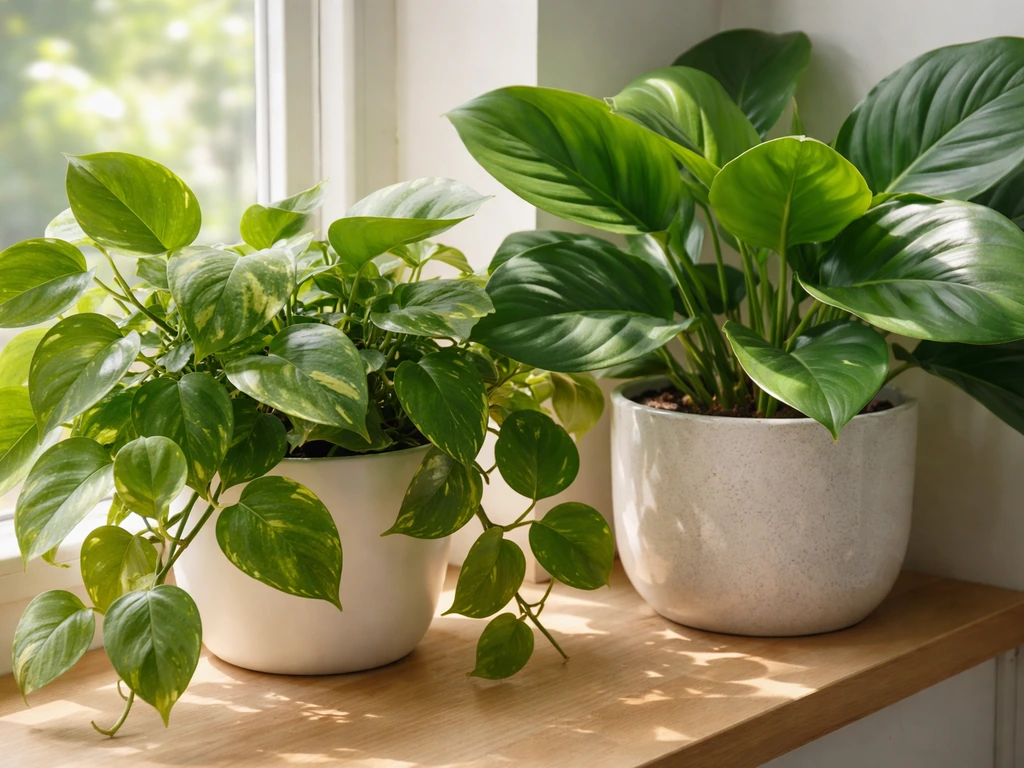
Pick foliage plants that match your light and space
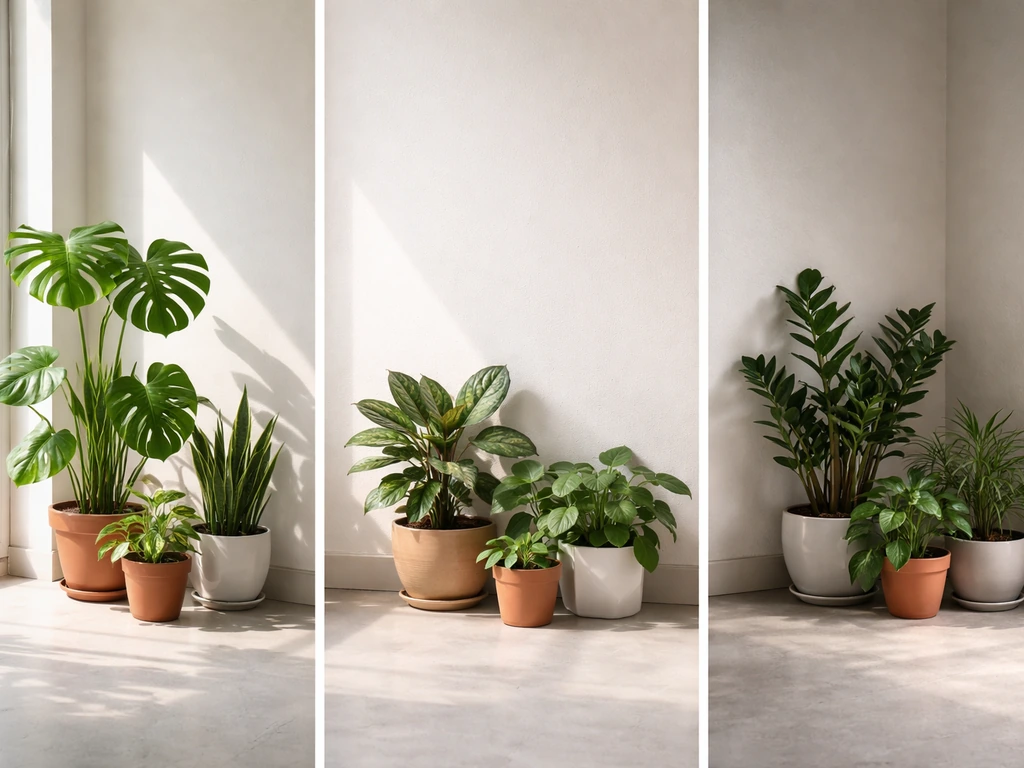
The single biggest mistake beginners make is buying a plant they love, then squeezing it into a spot that can't support it. Before you buy anything, assess your light honestly. Stand at your window on a typical day and look at how much direct sun actually hits the floor. North-facing windows give you low, indirect light. East-facing windows give bright but gentle morning sun. South and west windows are your brightest options, with south being the most consistent. Cornell Cooperative Extension is clear that light intensity drops off sharply with distance from the source, so a plant sitting three feet back from a window gets dramatically less light than one right on the sill.
Once you know your light level, match it to the plant. Here are some reliable foliage plants organized by light need:
| Light Level | Good Foliage Plants | Notes |
|---|---|---|
| Low (north window, dim room) | Pothos, ZZ plant, Cast iron plant, Chinese evergreen | Tolerant of neglect; slow growers but very forgiving |
| Medium indirect (east window, 3–5 ft from south/west window) | Philodendron, Peace lily (leaves only), Dracaena, Snake plant | The sweet spot for most tropical foliage plants |
| Bright indirect (right next to south/west window, no direct beam) | Monstera, Rubber plant, Fiddle-leaf fig, Calathea | Faster growth; Calathea needs steady humidity too |
| Bright direct (hours of direct sun) | Croton, Coleus (indoors), some Dracaena varieties | Great color but watch for leaf scorch if moved suddenly |
Space matters too. A Monstera deliciosa can spread 3 to 4 feet wide indoors. If your corner is tight, go for a snake plant, pothos in a hanging basket, or a compact Chinese evergreen. Terrariums are an excellent option for very small spaces or if you want high-humidity tropical plants like fittonia or miniature ferns. Oklahoma State University Extension recommends naturally dwarf, slow-growing species for terrariums precisely because the enclosed environment amplifies both humidity and growth constraints.
Set up the right potting medium (soil vs water vs terrarium-style)
Your growing medium affects watering frequency, root health, and how forgiving your setup is when you miss a day or two. You have three main options, and each has a real use case.
Potting soil
This is the default for most foliage plants and the easiest to manage. Illinois Extension recommends a disease- and pest-free commercial potting mix that drains well. A good all-purpose mix includes peat (or coco coir), perlite, and vermiculite. That combination holds just enough moisture while letting excess water flow out. Avoid garden soil indoors; it compacts, drains poorly, and introduces pests. For succulents or snake plants, mix in extra perlite (about 30 to 50% of the total volume) to speed drainage. For moisture-loving tropicals like calathea or peace lily, the standard mix is fine as-is.
Water propagation and semi-hydro
Many foliage plants, especially pothos, philodendron, and tradescantia, grow happily in water for months or even permanently. You put a cutting in a glass of water, keep it topped up, change the water every one to two weeks to prevent bacterial buildup, and watch it grow. Learning how do new plants grow from cuttings helps you choose the right medium and care routine for faster, healthier roots watch it grow. This works because these plants adapt their root structure to the available medium. For longer-term water growing (sometimes called semi-hydro), people use inert substrates like LECA (lightweight expanded clay aggregate) with a nutrient solution, which gives roots both oxygen and steady moisture. It is less forgiving if you forget to top up, but it virtually eliminates overwatering and fungus gnats.
Terrarium setups
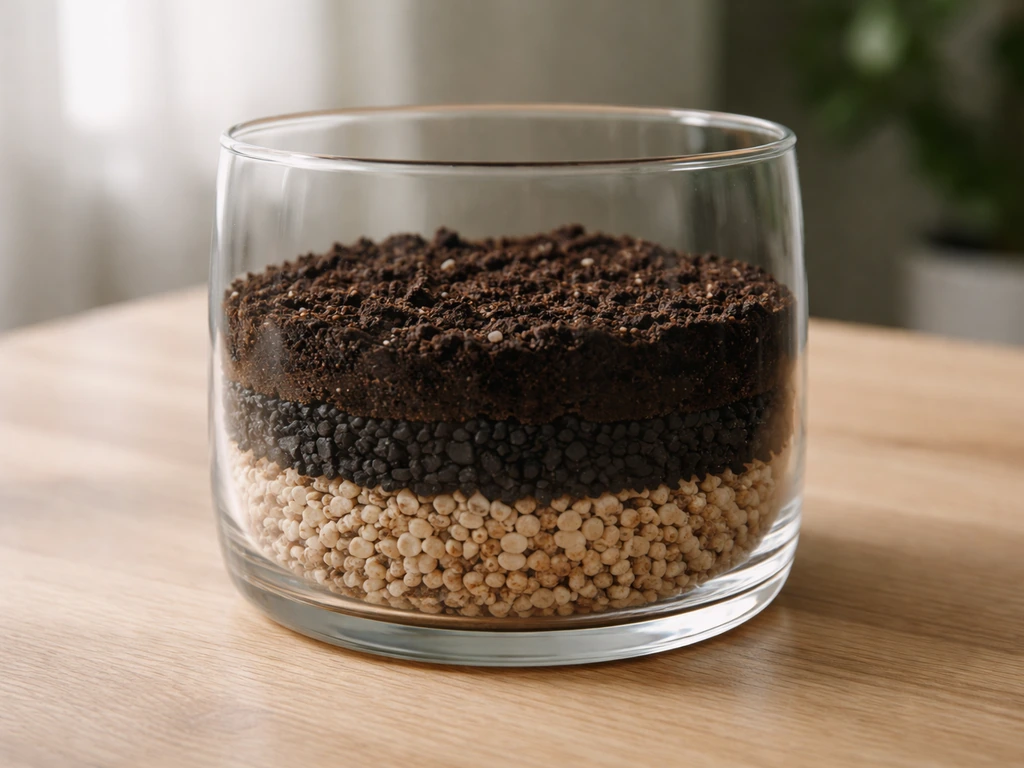
A terrarium is essentially a self-contained microclimate. You layer the bottom with drainage material (gravel or hydro balls), add a thin layer of activated charcoal to keep things fresh, then fill with a moisture-retentive potting mix. Oklahoma State University Extension notes that commercial terrarium mixes often include a starter fertilizer charge, so you usually do not need to add fertilizer at planting. Closed terrariums recycle moisture and are great for ferns, moss, and fittonia. Open terrariums dry out faster and suit succulents or air plants better.
Light, watering, humidity, and temperature rules that work
Light
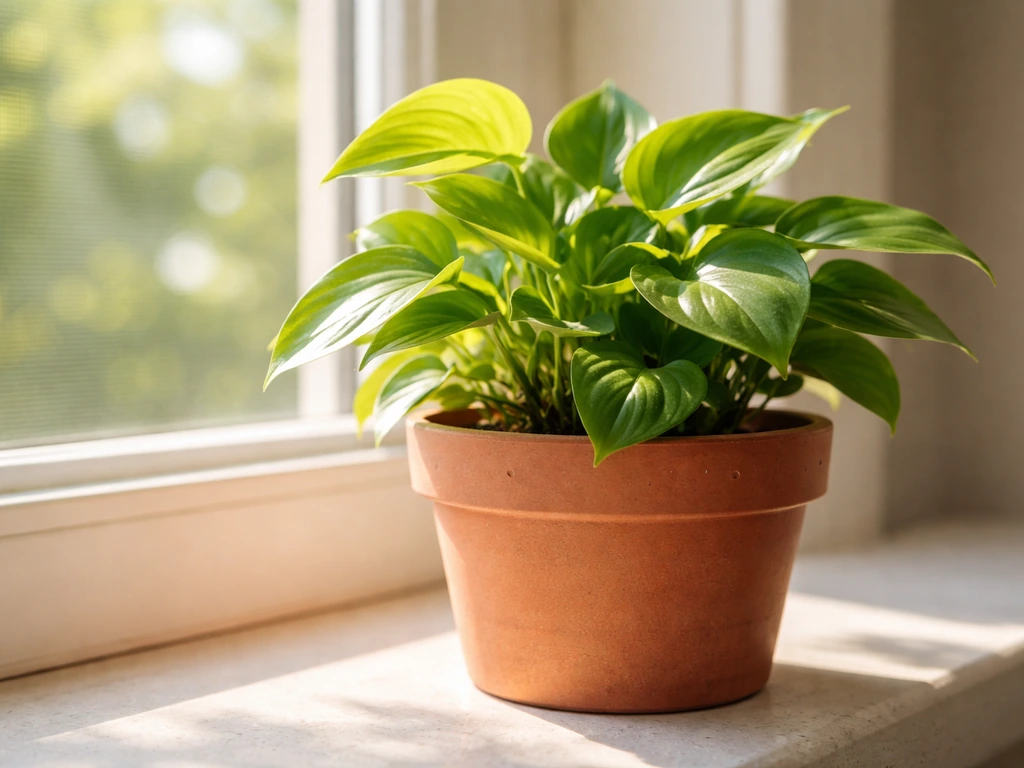
Place plants as close to the window as their tolerance allows. Rotate pots a quarter turn every one to two weeks so all sides get even exposure and the plant grows upright rather than leaning. University of Nebraska-Lincoln Extension recommends moving plants back from window ledges in winter, not just because of cold drafts but because glass can drop to temperatures that damage tropical leaves on frosty nights.
Watering
Forget watering on a fixed schedule. Instead, check the plant. Push your finger about an inch into the soil: if it feels dry at that depth, water thoroughly until it drains from the bottom. If it still feels moist, wait. University of Minnesota Extension suggests an even simpler trick: lift the pot. A light pot means the soil is dry; a heavy pot means moisture is still there. Always water until you see it drain freely, then pour off any water sitting in the saucer. University of Maryland Extension specifically calls out standing saucer water as a root rot trigger. The goal is wet-dry cycling, not constant soggy soil.
Humidity
Most tropical foliage plants prefer humidity between 40 and 60%, with the pickier ones like calathea and ferns doing best at 70 to 80%. University of New Hampshire Extension confirms this range, and Penn State Extension notes that ASHRAE recommends keeping indoor humidity between 30 and 60% for a healthy home environment anyway, so targeting 50% is a win for both plants and people. If your air is dry, a small humidifier near your plant shelf is the most effective solution. Grouping plants together also raises local humidity slightly through transpiration. Misting works briefly but does not sustain higher humidity for long.
Temperature
Most foliage plants are tropical and want temperatures between 60 and 80 degrees Fahrenheit (15 to 27 degrees Celsius). University of Maryland Extension notes that extremes in both temperature and humidity can cause leaf drop, stunting, and spindly growth. Keep plants away from heating vents, air conditioning units, and cold drafts near doors or single-pane windows. A consistent temperature matters more than hitting a perfect number.
Fertilizing and nutrient balance for lush leaf growth
Foliage plants need nitrogen more than anything else. Nitrogen drives leafy, green growth, which is exactly what you want. To grow more leaves, focus on the basics that drive leafy, green growth: adequate light, consistent watering, and enough nitrogen during the growing season. A balanced liquid fertilizer like a 20-20-20 or a nitrogen-heavy formula like 3-1-2 works well for most foliage plants during the growing season (spring through early fall). Use it at half the recommended dose every two to four weeks. Less is genuinely better than more here: overfertilizing causes salt buildup in the soil, which burns roots and creates the same browning tip symptoms you see from underwatering.
During winter, most indoor foliage plants slow down significantly. Cut fertilizing to once a month or stop entirely until you see new growth resuming in spring. If you just repotted into fresh commercial potting mix, hold off on fertilizing for at least six to eight weeks since most mixes include a starter charge of nutrients already baked in.
For terrarium setups, fertilize even more sparingly: a diluted liquid fertilizer at one-quarter strength once every two months is usually enough. You want slow, controlled growth inside a terrarium, not a fast-growing plant that outgrows its container in weeks.
Planting, repotting, and basic maintenance routine
Potting up for the first time
When you bring home a new foliage plant, resist the urge to immediately repot it into the largest container you can find. In general, plants start life from seeds or cuttings, then grow by building roots and leaves as they find the right conditions. Big pots hold more water relative to the root mass, which dramatically increases the risk of root rot. Start in a pot that is only 1 to 2 inches larger in diameter than the current root ball. Make sure it has drainage holes. Fill around the roots with fresh potting mix, water it in, and let it settle for a few weeks before doing anything else. If you are learning how to grow nursery plants, apply these same light, watering, and potting basics and adjust as the plants establish new roots.
When and how to repot
Iowa State University Extension advises that plants actually prefer being slightly root-bound and do not need repotting on an annual schedule. Repot when you see roots circling the bottom of the pot, growth has slowed noticeably, the plant tips over easily (top-heavy), or the soil dries out very fast after watering. Illinois Extension says spring or early summer is the best time, right as active growth is ramping up. When you repot, check for circling or tightly wound roots and gently loosen or cut them so they grow outward rather than continuing to spiral.
Ongoing maintenance
- Wipe dusty leaves with a damp cloth every few weeks so the plant can absorb light more efficiently
- Remove dead or yellowing leaves promptly to keep energy directed toward healthy growth
- Rotate the pot a quarter turn every one to two weeks for even light exposure
- Check soil moisture before every watering rather than watering on a set day
- Flush the soil with plain water every two to three months to wash out fertilizer salt buildup
Propagation and pruning to keep foliage full
Pruning for fuller growth
Foliage plants get leggy when they are reaching for light or when lower leaves die off and never get replaced. Pruning redirects the plant's energy into new growth. Cut stems just above a node (the little bump or joint where a leaf attaches) using clean scissors. The plant will branch from that point, giving you two or more new stems where there was one. For vining plants like pothos or heartleaf philodendron, pinching back long vines every few months keeps the plant bushy rather than straggly. Do not be nervous about cutting: most foliage plants bounce back within a few weeks.
Simple propagation methods
Propagation is one of the most satisfying parts of growing foliage plants, and it is genuinely easy for most species. Here are the main methods:
- Stem cuttings in water: Cut a 4 to 6 inch stem with at least two nodes, remove the bottom leaves so they are not submerged, and place it in a clean glass of water in bright indirect light. Roots usually appear within one to three weeks. Works for pothos, philodendron, tradescantia, and coleus.
- Stem cuttings in soil: Follow the same cutting process but dip the cut end in rooting hormone powder and stick it into moist perlite or a seed-starting mix. Keep the medium consistently moist but not wet. Slightly better long-term root structure than water propagation.
- Division: For clumping plants like peace lily, calathea, or snake plant, simply unpot the plant, gently separate the root clumps by hand (or cut with a clean knife), and pot each section individually. This is the fastest way to multiply what you already have.
- Leaf cuttings: ZZ plants and some succulents can be propagated from individual leaves laid on moist soil. This takes months, so patience is required.
Troubleshooting common foliage plant problems and pests
Most foliage plant problems fall into a handful of patterns. Learning to read the symptoms saves you from guessing and making things worse.
Yellowing leaves
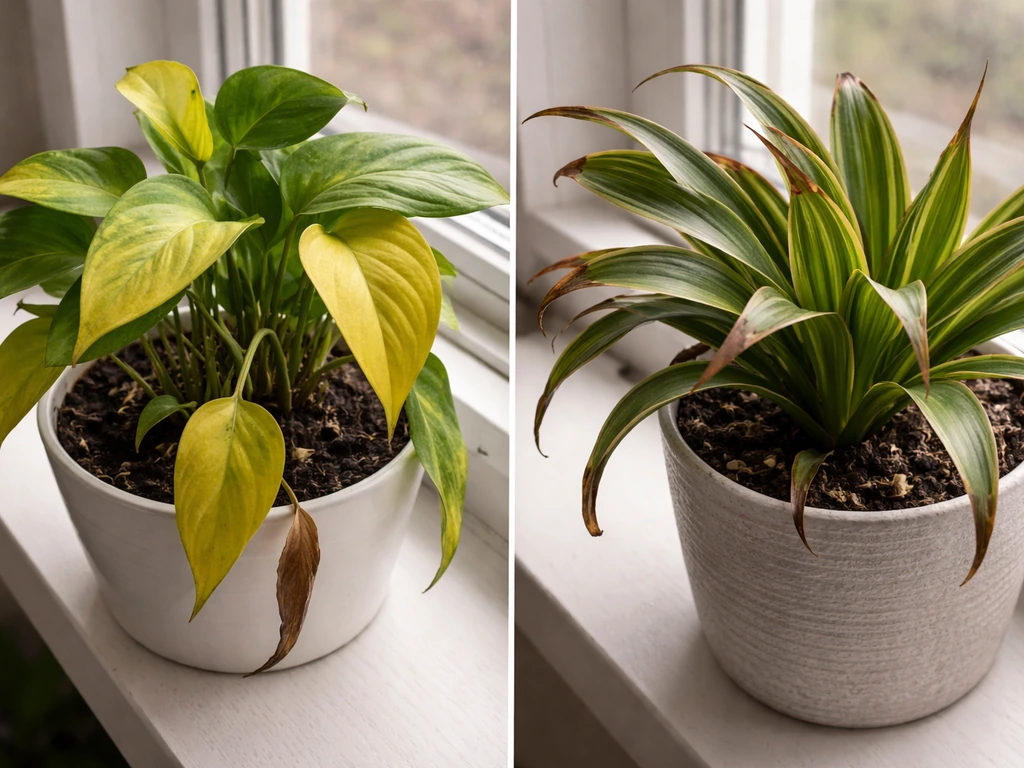
This is the most common complaint, and the cause could be one of several things. Utah State University Extension and other extension resources are consistent that both overwatering and underwatering cause yellowing, which is frustrating but makes sense: both stress the roots, which then fail to deliver water and nutrients to leaves. To tell them apart, check the soil. If it is soggy and the pot is heavy, you are overwatering. Let it dry out, improve drainage, and check that the saucer is empty. If the soil is bone dry and pulling away from the pot edges, underwater. Water it thoroughly and rehydrate the root zone. If the soil moisture seems fine, yellowing could mean low light, cold drafts, or a nitrogen deficiency (treat with a diluted balanced fertilizer).
Brown tips and edges
Crispy brown leaf tips almost always point to low humidity, salt buildup in the soil, or fluoride/chlorine sensitivity (common in peace lily and spider plant). Raise humidity, flush the soil with plain water, or switch to filtered or overnight-rested tap water. Brown edges with a yellow halo sometimes indicate a fungal issue or root rot starting.
Leaf drop
Sudden leaf drop, especially of otherwise healthy-looking leaves, usually means a shock event: a sudden temperature drop, a cold draft, being moved to a much darker spot, or severe over or underwatering. University of Maryland Extension notes that temperature and humidity extremes are common triggers. Stabilize conditions and give the plant two to four weeks to adjust before panicking.
Leggy or slow growth
Long stems with widely spaced leaves (leggy growth) almost always mean insufficient light. Move the plant closer to a window or add a grow light. Slow growth with good form often just means it is winter, or the plant is root-bound and needs repotting. Slow growth in a new setup can also mean the plant is still adjusting, which is normal in the first four to six weeks.
Curling leaves
Leaves curling inward often signal the plant is trying to reduce moisture loss, which points to low humidity, underwatering, or heat stress. Curling downward sometimes means overwatering. Check the soil, check proximity to heat vents, and check humidity.
Common pests
| Pest | Signs | What to do |
|---|---|---|
| Fungus gnats | Tiny flies around soil surface, larvae in soil | Let soil dry out more between waterings; apply a layer of sand on top of the soil; use sticky traps; treat soil with diluted hydrogen peroxide (1 part 3% H2O2 to 4 parts water) |
| Spider mites | Fine webbing under leaves, stippled or bronzed foliage | Spray plant thoroughly with water to dislodge; apply neem oil or insecticidal soap every 5–7 days for 3 rounds |
| Mealybugs | White cottony clusters in leaf joints or under leaves | Dab with rubbing alcohol on a cotton swab; spray with neem oil solution; isolate plant immediately |
| Scale | Brown bumps on stems and leaf undersides; sticky residue | Scrape off manually; treat with neem oil or horticultural oil; repeat weekly for 3–4 weeks |
| Thrips | Silvery streaks or distorted new leaves | Insecticidal soap or spinosad-based spray; repeat every 5–7 days; isolate plant |
University of Maryland Extension also flags that overwatering specifically invites fungus gnats and crown rots at the same time, so improving your watering habits is the first line of defense against multiple problems at once.
A simple starter plan and next steps today
If you are just getting started and want a near-foolproof setup, here is a practical beginner plan you can put together this week.
The beginner setup
- Choose one or two starter plants: pothos (any light), ZZ plant (low light), or snake plant (low to medium light). These three are genuinely difficult to kill and teach you a lot about reading plant signals.
- Put them in pots one size up from what they came in, with drainage holes, using a standard commercial potting mix with added perlite (about 20 to 30% perlite by volume).
- Place them as close to your best window as possible without direct harsh afternoon sun hitting the leaves.
- Water only when the top inch of soil is dry, always watering until it drains from the bottom. Pour off saucer water.
- Wait six weeks before fertilizing. Then use a balanced liquid fertilizer at half strength once a month through spring and summer.
- Check under leaves and around soil once a week for pests. Catching problems early makes treatment much easier.
Once you have the basics down
After a few months with your starter plants, you will have learned your space, your watering rhythm, and how plants signal their needs. At that point, you can confidently add more demanding plants like calathea, fiddle-leaf fig, or monstera. You can also try water propagation (just stick a pothos cutting in a glass of water to see how quickly roots form) or experiment with a small terrarium setup using fittonia and moss. If you want to see how nurseries grow plants in action, start with water propagation because many common foliage types root readily in water. Each new plant teaches you something the last one did not.
The most important thing is to stay observant. Once those basics are right, you can focus on how plants and flowers grow over time as they develop roots, stems, and leaves. Pick up your plant, look under the leaves, check the soil weight, and notice what has changed since last week. That habit, more than any specific product or trick, is what separates people who keep plants alive from people who struggle with them. You will kill some plants along the way and that is fine. Every one of those tells you something useful for the next one.
FAQ
How do I know if my foliage plant needs more light versus more water?
Use two checks at the same time. If the soil is consistently wet or the pot stays heavy, increase light (move closer to the window or add a grow light). If the soil is dry at about 1 inch down and the plant looks dull or wilted, water first. Light stress usually shows as slower new growth and leggy stems even when watering is correct, while thirst shows up as dryness throughout the pot, not just the surface.
Is it okay to keep foliage plants on a windowsill year-round in winter?
It depends on your window temperature. Glass can chill enough to damage tropical leaves even when the room feels warm. Keep plants a few inches back from the glass, and watch for leaf tips turning brown or leaves dropping after cold nights. If your window gets frosty or very cold, use a stand or move plants to a brighter interior spot during the coldest weeks.
What water is best for foliage plants, especially peace lily and spider plant?
If you notice brown crispy tips or burned leaf edges, suspect salts and chlorine or fluoride in tap water. Let tap water sit out overnight, or switch to filtered water for a few weeks. Also flush the pot occasionally by watering thoroughly until excess drains, then empty the saucer, so salts do not build up at the root zone.
How often should I water when I use a well-draining potting mix?
Follow the plant and the pot, not the calendar. A reliable approach is the “finger depth” test (about 1 inch) or lifting the pot to judge weight. Most foliage plants prefer a wet-dry cycle, so the right frequency is the one that lets the top portion of the root zone dry before the next watering, usually resulting in watering less often in winter and more often during active growth.
Why do my leaves yellow even though I’m not sure I’m overwatering?
Yellowing can come from low light, nutrient imbalance, or temperature stress, not just watering. First check the soil: soggy and heavy suggests overwatering, bone dry suggests underwatering. If moisture is normal, try increasing light and consider a diluted nitrogen-focused feed during spring through early fall. If yellowing is happening mostly on older leaves, it can also be part of natural leaf turnover.
Should I remove yellow leaves or wait?
You can remove leaves once they are fully yellow and weak, but avoid tearing tissue off live stems. Use clean scissors to cut the leaf close to the base. Removing dead leaves improves airflow and makes it easier to spot new growth, but it will not fix the underlying cause if light, watering, or humidity still needs adjustment.
Do terrariums need fertilizer at all?
Often they need very little. Many terrarium mixes include a starter nutrient charge, and the closed environment slows growth and nutrient use. If growth is steady and you do not see pale new growth, skip fertilizer. When you do fertilize, use only diluted liquid at longer intervals, because overfeeding can cause algae and can harm sensitive roots in the confined setup.
How do I prevent fungus gnats when using water propagation or semi-hydro systems?
Keep water clean and avoid letting debris build up. For regular glass water propagation, change water every 1 to 2 weeks as described in the guide. For semi-hydro, keep nutrient solution fresh and ensure the roots have oxygen (inert substrate that does not stay stagnant). Also allow the outer soil surface to dry between waterings in any hybrid potting setup, since consistently damp top layers attract gnats.
What size pot should I use after repotting, and how do I stop overwatering after the move?
Size up only slightly, about 1 to 2 inches wider than the current root ball diameter. After repotting, water it in, then wait to water again until the pot is light and the soil is dry at the right depth. In a too-large pot, the extra wet soil stays in the root zone longer, raising the risk of rot, even if you think you are watering carefully.
My plant is leggy. Should I prune, pinch, or just move it to more light?
Do both in most cases. Move it to brighter light so new growth forms closer to the light source. Then prune or pinch long stems to encourage branching, cutting just above a node for bushier growth. If you only prune without fixing light, the plant may regrow leggy again because it is still reaching.
Can I propagate from a stem even if the plant looks stressed?
It can work, but choose healthy tissue if possible. Propagation is most successful when the parent plant has stable conditions (right light, correct moisture, no active rot). If the plant is dropping leaves or has mushy stems, fix the environment first, then take cuttings. Also remove any leaves that would be submerged in water so they do not rot and contaminate the rooting medium.