
You can grow air purifying plants successfully indoors with basic care, but the honest truth is that the plants themselves won't meaningfully clean your air at normal home densities. What they will do is add oxygen, boost your mood, give you something living to tend, and, in a very modest way, absorb trace amounts of certain VOCs. The key is picking easy, proven species, setting them up with the right light, soil, and watering routine, and keeping them actually healthy. A struggling plant does nothing. A thriving one at least pulls its small weight.
How to Grow Air Purifying Plants Indoors Step by Step
Marcus Holloway
23 May 2026
What air purifying plants can and can't actually do
The whole "air purifying plants" idea took off after NASA's 1989 Clean Air Study, which tested species like pothos, peace lily, and spider plant in sealed chamber environments and found they could absorb chemicals like benzene, formaldehyde, and trichloroethylene. That sounds impressive until you realize the test conditions were nothing like a real home. If you want the quick version of how to help houseplants grow, focus first on light, a well-draining potting mix, and a consistent watering routine. A sealed chamber is not your living room with open doors, cooking smells, and outdoor air exchanging constantly.
A 2019 analysis published in Indoor Air did the math carefully. The median clean air delivery rate (CADR) for a single potted plant is roughly 0.023 cubic meters per hour. For comparison, normal outdoor-to-indoor air exchange in a house runs at about 1 air change per hour. To match that with plants alone, you'd need somewhere between 10 and 1,000 plants per square meter. That's not a living room, that's a jungle. Mechanical air purifiers, by contrast, deliver CADRs of 170 to 800 cubic meters per hour. Plants simply can't compete on particulate matter or VOC removal the way a HEPA filter can.
So what can plants actually do? They do absorb small amounts of VOCs, and rates do vary by species, light level, and the concentration of the pollutant present. They release oxygen during photosynthesis. They raise local humidity slightly through transpiration. And there's solid evidence that living with plants reduces stress, lowers blood pressure, and improves focus. Those benefits are real. Just don't skip the air purifier if air quality is a medical concern for you.
Pick the best plants for your space and goals
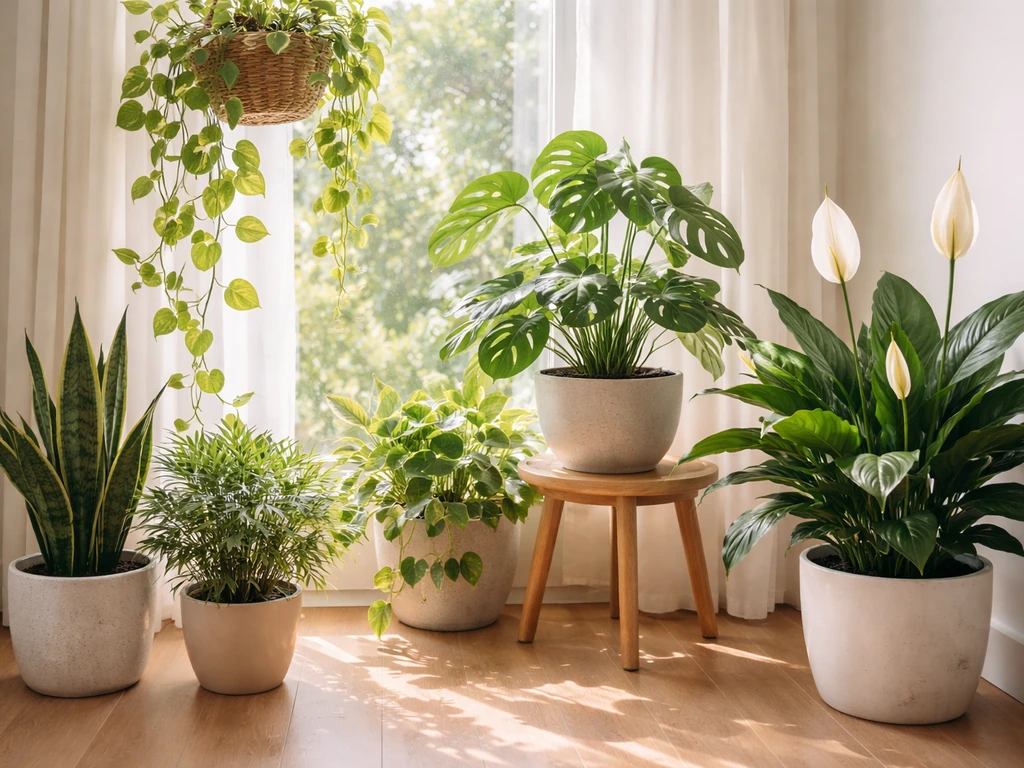
The plants most commonly associated with air-purifying claims are also, not coincidentally, some of the toughest and most adaptable houseplants around. That's a good thing. A healthy, growing plant is always more useful than a stressed one. Here are the ones worth your time, organized by how much light you have.
| Plant | Light need | Difficulty | Best for |
|---|---|---|---|
| Pothos (Epipremnum aureum) | Low to medium indirect | Beginner | Trailing shelves, hanging, soil or water |
| Spider plant (Chlorophytum comosum) | Medium indirect | Beginner | Hanging baskets, produces offshoots easily |
| Peace lily (Spathiphyllum) | Low to medium indirect | Beginner | Low-light corners, also flowers |
| Snake plant (Sansevieria/Dracaena trifasciata) | Low to bright indirect | Beginner | Neglect-proof, minimal watering |
| ZZ plant (Zamioculcas zamiifolia) | Low to medium indirect | Beginner | Very drought tolerant, slow grower |
| Boston fern (Nephrolepis exaltata) | Medium indirect | Intermediate | High transpiration, likes humidity |
| Rubber plant (Ficus elastica) | Medium to bright indirect | Intermediate | Statement plant, larger rooms |
| Dracaena (Dracaena marginata/fragrans) | Medium indirect | Beginner | Tolerates low light, tall and architectural |
| Bamboo palm (Chamaedorea seifrizii) | Medium indirect | Intermediate | Larger spaces, higher transpiration rate |
| Aloe vera | Bright indirect to direct | Beginner | Sunny windows, doubles as first aid |
If you're just starting out, pick pothos, snake plant, or peace lily. These three handle low light and inconsistent watering better than almost anything else. If you want something that actually looks impressive and grows quickly, add a rubber plant or bamboo palm once you feel confident. Mixing species across different heights and light zones makes the most of your available space and keeps things visually interesting.
Light, temperature, humidity, and placement
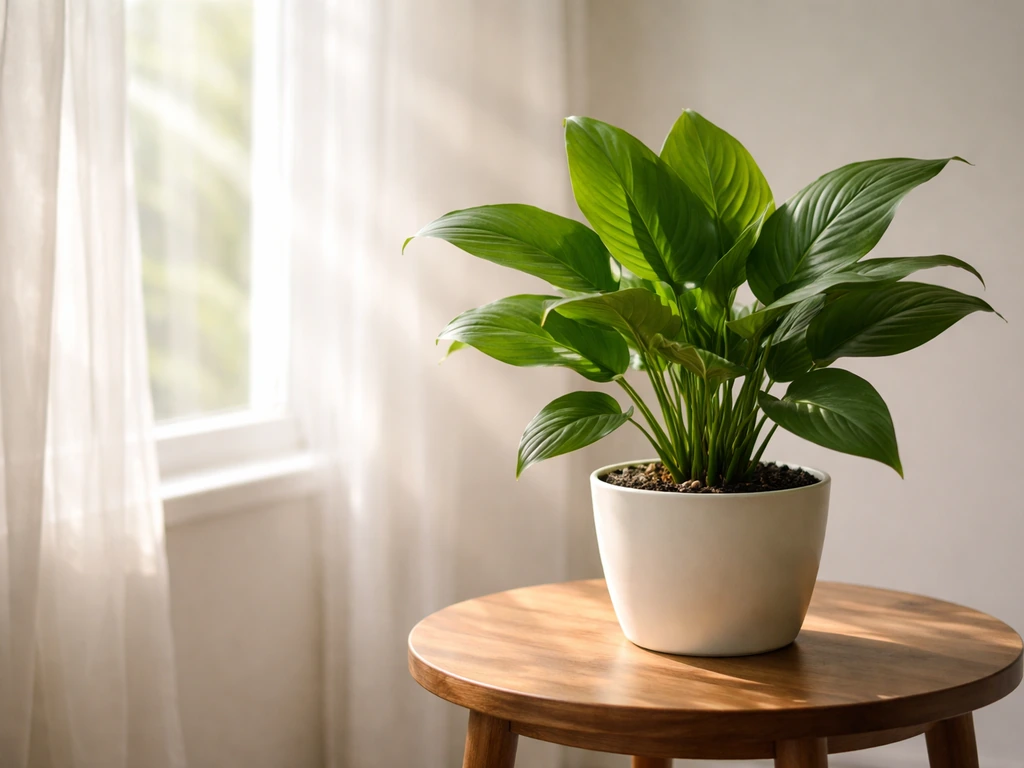
Light is the single biggest factor in whether your plants thrive or slowly decline. Most "air purifying" plants listed above prefer bright, indirect light, meaning they want to be near a window but not in direct sun that would scorch their leaves. A north-facing window in a northern hemisphere home is typically low light. East-facing gives gentle morning sun, which most of these plants love. South and west-facing windows can be bright to intense, perfect for aloe and rubber plants but potentially too harsh for peace lily or pothos without a sheer curtain.
A good rule of thumb: if you can comfortably read a book by the natural light at midday, there's enough for low-light plants. If your shadow is sharp and well-defined, that's bright indirect. If you can see direct sun hitting the floor or your hand, that's direct light. Pothos and snake plants can genuinely handle low-light conditions and keep growing (slowly), but they'll grow faster and look healthier with more light. To understand how to indoor plants live and grow, focus on light, watering habits, and the right environment for their species.
Temperature and humidity targets
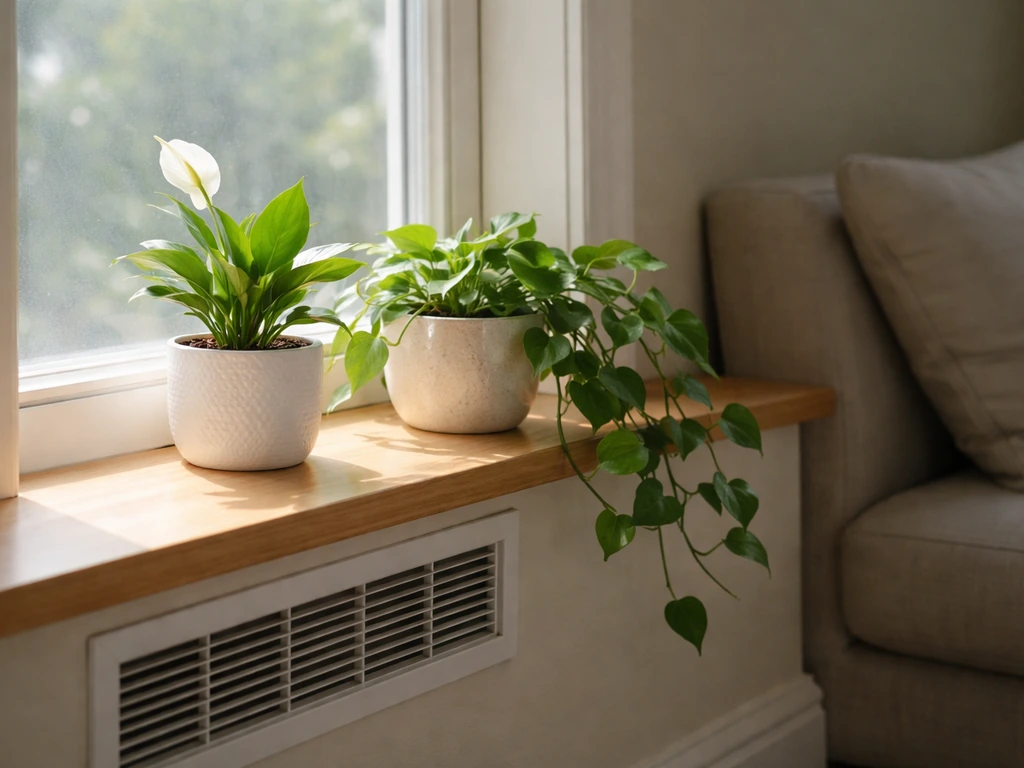
Most of these tropical houseplants are comfortable in typical home temperatures: 60 to 80 degrees Fahrenheit (15 to 27°C) is the sweet spot. Avoid placing them near heating vents, drafty windows in winter, or air conditioning units that blow directly on them. Cold drafts below 50°F (10°C) will damage tropical foliage fast.
Humidity matters more than most beginners realize. Indoor air in winter can drop to 20 to 30% relative humidity, which is too dry for ferns, peace lilies, and bamboo palms. Aim for 40 to 60% RH for most species. You can raise humidity by grouping plants together (they transpire and share moisture), placing pots on a tray of pebbles filled with water (just keep the pot bottom above the waterline), or running a small humidifier nearby. Misting leaves is popular but doesn't actually raise ambient humidity for long and can promote fungal issues if airflow is poor.
Placement for maximum benefit
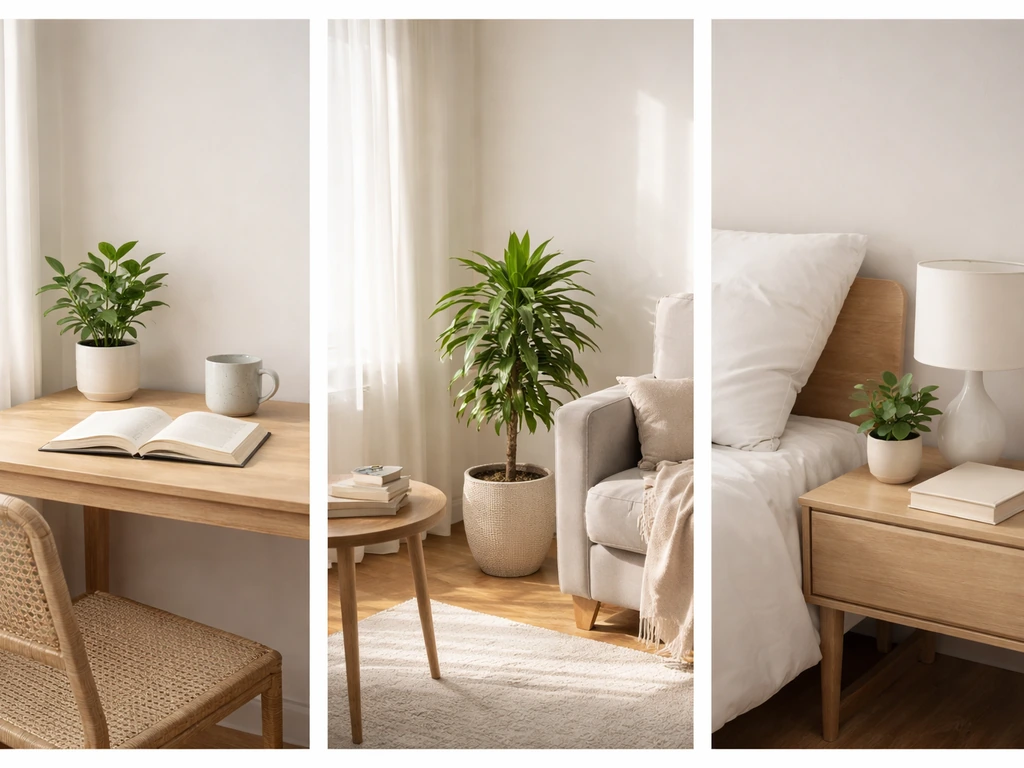
Place plants where you spend the most time: your desk, the living room sofa area, your bedroom nightstand. This maximizes the psychological and mild air benefits while also making it easy to check on them daily. Avoid dark hallways and bathrooms unless light is genuinely sufficient. A struggling plant in a dark corner is just a sad decoration, not a functional one.
Soil vs. water vs. hydroponics vs. terrariums
Most air purifying plants are traditionally grown in soil, but several of them adapt beautifully to other growing methods. Here's how to approach each setup.
Growing in soil
Standard potting mix works for most of these species, but the biggest mistake beginners make is using dense, waterlogged mixes that suffocate roots. For pothos, snake plants, ZZ plants, and dracaena, mix standard potting soil with perlite at roughly a 2:1 ratio. The perlite creates air pockets and prevents compaction. For ferns, a moisture-retaining mix with peat or coco coir works better since they want consistent dampness. Always use pots with drainage holes. No exceptions. A pot without drainage is a slow death sentence for almost every plant on this list.
Growing in water (propagation and permanent water culture)
Pothos and spider plants will live happily in water long-term. Cut a 4- to 6-inch stem just below a node (the little bump where a leaf attaches), strip the lower leaves so no foliage sits underwater, and place it in a glass or vase. Change the water every 1 to 2 weeks to prevent bacterial buildup. These water-grown plants stay smaller than soil-grown ones but are virtually impossible to overwater and look clean and modern on a shelf. Peace lily and dracaena can also be transitioned to water culture, though they need a bit more patience during the transition.
Hydroponics
Several of these species grow well in semi-hydroponic setups like LECA (lightweight expanded clay aggregate) with a passive wicking reservoir. Pothos, snake plants, and peace lilies all adapt well. You rinse the LECA, pot the plant with its roots cleaned of all soil, and place it in a cachepot with a shallow reservoir of diluted nutrient solution. The roots draw up what they need.
This method is particularly forgiving of irregular schedules because the reservoir acts as a buffer. Just keep the reservoir from staying full all the time, roots need air, so let the water level drop before refilling. For a deeper dive into different growing environments, the broader guides on how to grow healthy plants indoors and how to grow plants in your house on this site cover hydroponic and soil setups in more detail.
For a fuller, step-by-step walkthrough, see our guide on how to grow plants in your house.
Terrariums
Closed or open terrariums work best for small, humidity-loving species. Fittonia, small ferns, and peace lily seedlings do well in closed terrariums where humidity stays high. Pothos cuttings work in open terrariums. Snake plants and ZZ plants are not good terrarium candidates, they need drier conditions. Use a layered substrate in terrariums: gravel or activated charcoal at the bottom for drainage, then a thin layer of mesh or sphagnum moss to separate it from the growing medium, then a mix of potting soil and coco coir on top.
How to water, feed, prune, and repot
Watering
Overwatering kills more houseplants than anything else. The standard advice to water "when the top inch of soil is dry" is a good starting point, but a better method is the finger test: push your finger 2 inches into the soil. If it feels damp, wait. If it feels dry and the pot feels light when you lift it, water thoroughly until it drains freely from the bottom. Empty the saucer after 30 minutes so roots don't sit in standing water. Snake plants and ZZ plants want to dry out almost completely between waterings. Ferns and peace lilies prefer staying slightly moist but not wet. Pothos falls in the middle.
Feeding
During the active growing season (roughly March through September in the northern hemisphere), feed with a balanced liquid fertilizer diluted to half strength every 2 to 4 weeks. A 10-10-10 or 20-20-20 NPK fertilizer works well for most of these species. In fall and winter, when growth slows, stop fertilizing or reduce to once every 6 to 8 weeks. Over-fertilizing shows up as brown, crispy leaf tips, which is one of the most common problems I see on pothos and dracaena.
Pruning
Pruning keeps plants bushy and encourages new growth. For trailing plants like pothos, cut back long vines to just above a node using clean scissors. This triggers branching and fills in sparse areas. For snake plants and ZZ plants, remove yellowed or damaged leaves at the base with a clean cut. Peace lily flower stalks should be cut at the base once the flower browns. Always use clean, sharp scissors or pruning shears to avoid tearing tissue and introducing disease. Wiping blades with rubbing alcohol between plants is good practice if you're dealing with any pest issues.
Repotting
Most of these plants need repotting every 1 to 2 years, or when you see roots circling the bottom of the pot or poking out of drainage holes. Go up only one pot size at a time, too large a pot holds excess moisture and increases overwatering risk. Spring is the best time to repot. Gently loosen the root ball, shake off old soil, trim any dead or mushy roots, and place in fresh mix. Water thoroughly after repotting and keep the plant out of direct sun for a week while it adjusts.
How many plants to get and where to put them
Given the research showing that thousands of plants per room would be needed to replicate mechanical air filtration, trying to "dose" your home with plants for air quality is a losing game if that's your only goal. A more practical approach: aim for one medium-to-large plant (6-inch pot or larger) per 100 square feet of living space as a rough starting point. This keeps things manageable, gives you visible green in every area, and delivers the mood and decor benefits clearly. If you want more plants, add them because you enjoy them, not because you're chasing air quality numbers.
For placement, think in terms of visual zones and light availability. Put your brightest-light plants (aloe, rubber plant) nearest south or west windows. Medium-light plants (pothos, spider plant, peace lily) can go a few feet back from the window or near east-facing windows. Low-light tolerators (snake plant, ZZ plant, dracaena) can go in corners or on shelves that get ambient but not direct light. Grouping 3 to 5 plants together in one area creates a more impactful display and also slightly raises local humidity through shared transpiration.
Troubleshooting common problems
Yellow leaves
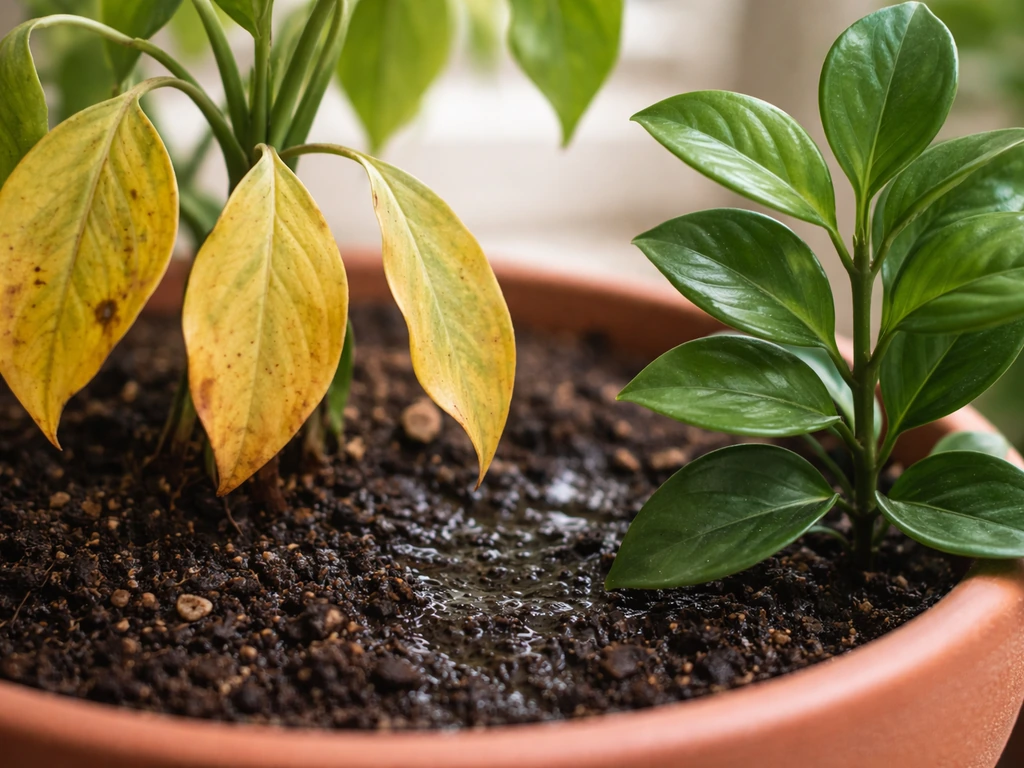
Yellow leaves are the most common complaint and have several causes. Overwatering is the most likely culprit: if the lower leaves go yellow and the soil has been consistently damp, ease off watering and check roots for rot (mushy, dark roots need to be trimmed and the plant repotted into fresh dry mix). Yellowing from nutrient deficiency tends to show up as a more uniform, pale yellow across the whole leaf with green veins still visible. Natural aging also causes lower leaves to yellow one at a time as the plant redirects resources, which is normal. If you're genuinely unsure, check the soil moisture first, that solves the problem more often than anything else.
Pests
The most common indoor plant pests are fungus gnats (tiny flies hovering around soil, larvae damage roots), spider mites (tiny dots on undersides of leaves, fine webbing), and mealybugs (white cottony clusters at leaf joints). Fungus gnats are usually a sign of consistently wet topsoil, let the top 2 inches dry out completely between waterings and the problem resolves itself. For spider mites, wipe leaves with a damp cloth and spray with diluted neem oil or insecticidal soap every 5 to 7 days for 3 weeks. Mealybugs respond to rubbing alcohol applied directly with a cotton swab, plus neem oil spray on the whole plant. Isolate any infected plant immediately to stop spread.
Leggy, stretched growth
Leggy growth, long, spindly stems with wide gaps between leaves, is almost always a light problem. The plant is stretching toward whatever light source it can find. Move it closer to a window or rotate the pot a quarter turn every week so all sides get even light exposure. If natural light is genuinely insufficient, a simple grow light on a 12-hour timer placed 6 to 12 inches above the plant will fix leggy growth within a few weeks of new growth emerging. Prune the leggiest stems back hard to force bushier regrowth.
Brown leaf tips
Brown, crispy tips usually mean low humidity, over-fertilization, or fluoride/chlorine sensitivity. Most tropical houseplants don't love chlorinated tap water. Let tap water sit in an open container overnight before using it, or switch to filtered water. If you've been fertilizing regularly, flush the soil with plain water (pour water through until it drains freely) to clear salt buildup. Then skip fertilizing for 4 to 6 weeks.
Your beginner starter plan and maintenance checklist
Here's a concrete plan you can start today. It's designed for someone with a reasonably lit apartment, no prior plant experience, and a normal schedule. You can build from here as your confidence grows, the guides on how to grow houseplants and how to help houseplants grow on this site go deeper on individual care techniques once you have the basics down.
Week one setup
- Buy 2 to 3 starter plants: a pothos, a snake plant, and a peace lily cover all the major light conditions.
- Choose pots with drainage holes that are only 1 to 2 inches wider than the root ball. Terracotta dries faster (good for snake plants), plastic retains moisture longer (good for peace lily).
- Re-pot into fresh potting mix cut with perlite (2 parts potting mix, 1 part perlite) if the nursery soil looks dense or compacted.
- Place each plant in its optimal spot: pothos near a medium-light window, snake plant in any available spot, peace lily in a lower-light area.
- Water each plant thoroughly until water drains from the bottom, then don't water again until the soil passes the finger test.
Ongoing maintenance schedule
| Frequency | Task |
|---|---|
| Every 2 to 3 days | Check soil moisture with the finger test. Water only if dry 2 inches down. |
| Weekly | Rotate pots a quarter turn for even light. Check undersides of leaves for pests. |
| Every 2 weeks (spring/summer) | Feed with half-strength balanced liquid fertilizer. |
| Monthly | Wipe dust from leaves with a damp cloth to maximize light absorption. |
| Every 1 to 2 months | Trim dead or yellow leaves. Cut back leggy stems to encourage bushiness. |
| Every 1 to 2 years | Repot into the next size up when roots fill the current pot. |
How to tell your plants are thriving
- New leaves appearing regularly (every 2 to 4 weeks during growing season) means the plant is actively growing.
- Leaves are firm, not wilted or soft. Wilting with dry soil means it needs water; wilting with wet soil means root rot.
- Color is rich and consistent for that species — pale, washed-out leaves usually mean more light is needed.
- No sticky residue, webbing, or tiny insects on or under leaves.
- Roots are white or light tan and firm, not dark or mushy.
Growing air purifying plants successfully comes down to getting the basics right: appropriate light, well-draining soil, careful watering, and occasional feeding. If you also want your small plants to produce big buds, you will need to dial in light intensity, consistent feeding, and careful watering to support dense growth how to grow small plants with big buds. The air quality benefits are modest and honest, but the plants themselves, when they're actually healthy and growing, are genuinely worth having. Start with two or three, learn their rhythms, and expand from there. That's it.
FAQ
Can plants replace an air purifier if I want better indoor air?
Yes, but “air purifying” should be treated as a bonus, not the main goal. If you are trying to reduce a specific source like cooking fumes, wildfire smoke, or allergies, prioritize a HEPA purifier and use plants only to support comfort (oxygen production, stress reduction) and a small amount of VOC uptake.
How much do air purifying plants actually reduce VOCs in a normal home?
They can help slightly, but the effect is limited by how much air passes through the room versus through plant surfaces. For VOCs, plants tend to perform best when they are actively growing (more photosynthesis, more transpiration) and when pollutant levels are not constantly replenished by new sources.
What plant count should I aim for if I actually want a noticeable effect?
Set your room up so the plants are healthy first. Use 1 to 2 medium-to-large plants per common living area, then adjust based on light. If you routinely place plants in dim corners, you will mostly get stress, which reduces their ability to do even their modest “uptake” work.
Can I mix different air purifying plants in the same pot?
Yes, but you will get uneven results. For example, peace lily prefers more consistently moist soil than snake plant or ZZ, and that changes watering frequency. If you mix thirsty and drought-tolerant plants in one container, you will almost certainly overwater one side or underwater the other.
What plants can share the same watering routine?
For low-maintenance setups, stick to species with similar watering needs. A practical pairing is snake plant plus ZZ (drier cycle) or pothos plus spider plant (moderate, let the top layer dry). If you want peace lily in the same area, keep it in its own pot so you can water to its preferences.
My soil stays wet and I keep getting fungus gnats, what should I change first?
Fungus gnats are the classic clue that the top layer is staying wet. Let the top 2 inches dry between waterings, don’t keep water in the saucer, and consider bottom-watering for a few cycles. Yellow sticky traps help you catch adults, but the root fix is changing moisture conditions.
Will misting help with humidity for peace lily and ferns?
Misting usually does not raise room humidity for long, and it can worsen leaf spotting or fungal issues if airflow is poor. For real humidity changes, group plants, use a tray of pebbles (pot above the waterline), or use a small humidifier set to your target range.
Why do my plants’ leaves brown at the tips even when I water correctly?
Watch placement as much as watering. If your plant is near a vent, near a drafty window, or under blasting AC, it can dry out or get cold stress without obvious signs at first. Move plants away from direct airflow and keep them in the 60 to 80°F (15 to 27°C) range.
How do I fix leggy growth, and how close should I put a grow light?
For most of these plants, bright indirect light is the safe default. If a plant is leggy, move it closer to the window, rotate weekly, and be consistent. If natural light is weak, use a grow light on a timer, 12 hours per day, and keep it at an appropriate distance for the plant size.
What’s the fastest way to troubleshoot brown crispy leaf tips on pothos or dracaena?
Brown, crispy tips are often salt buildup, low humidity, or water chemistry issues. Let tap water sit overnight or use filtered water, and if you have been fertilizing, flush the soil thoroughly until excess drains out, then pause fertilizer for several weeks.
Can I move pothos or peace lily from soil to water successfully?
Yes, but transition matters. When moving soil plants to water, remove as much soil as possible from roots to prevent rotting, and start with gentle timing (first in clean water, change every 1 to 2 weeks). Expect slower growth while roots adapt, and keep the cutting in bright indirect light.
Which “air purifying” plants can live in a terrarium, and which should I avoid?
Terrariums are doable only for species that tolerate humidity. Snake plant and ZZ typically suffer in consistently humid, closed environments. Use terrariums for small ferns, fittonia, and peace lily seedlings, and give open terrariums more airflow if you see condensation staying for long periods.
How can I tell nutrient burn versus overwatering when leaves start browning?
Overfertilization can look like brown, crispy edges or tips and can build up salts that also stress roots. If you suspect it, flush the soil, stop feeding temporarily, and resume later at half strength during the active growing season.
When is the right time to repot, and how big should I go?
Generally, plan to repot every 1 to 2 years, or sooner if roots circle the pot, roots push out drainage holes, or water runs straight through without soaking. Always size up only one pot size to reduce the chance of staying too wet.
How do I prevent pests before they spread to my other plants?
It depends on the species and the light cycle, but many pests show up faster when plants are stressed or soil is consistently wet. Isolate new plants for a couple of weeks, check leaf undersides, and avoid keeping soil constantly damp to reduce fungus gnat pressure.
If my plant is struggling, what’s the most likely cause I should check first?
If a plant is healthy, its benefits and appearance usually stay consistent. If it is declining, the first thing to check is light and watering method, because those drive the biggest problems (yellowing, leggy growth, rot). Don’t chase air quality claims when the plant is not thriving.