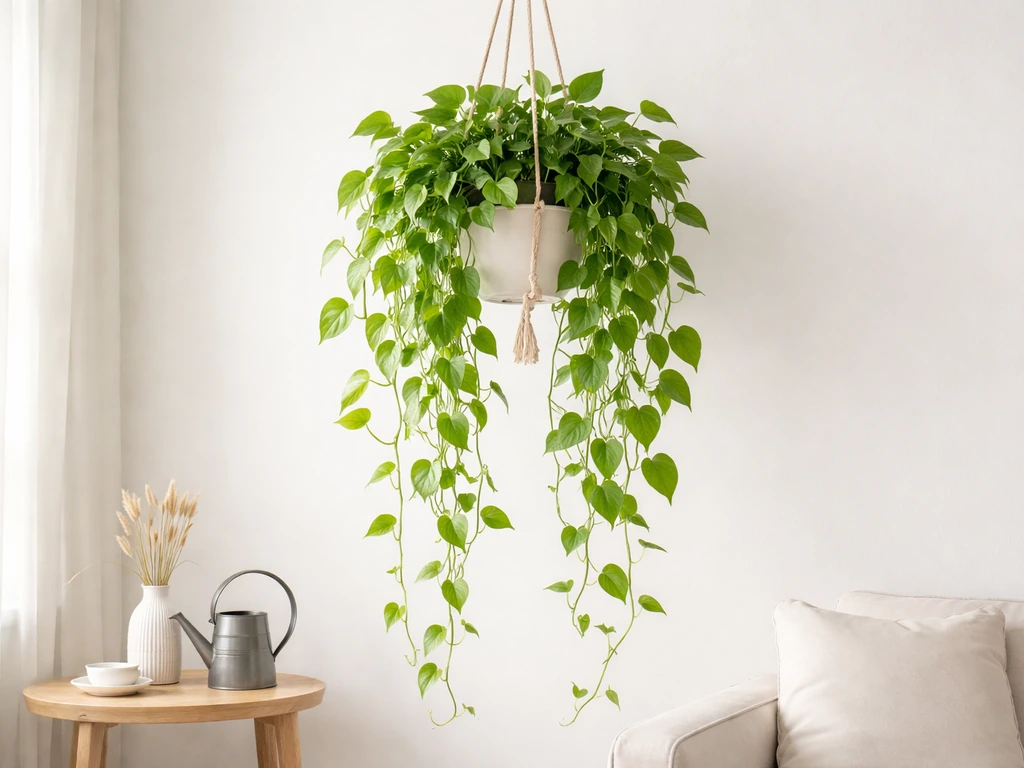
Growing hanging plants at home is one of the most rewarding things you can do with limited floor space, and the honest answer to whether you can pull it off is yes, even if you've killed plants before. The key is matching the right plant to your actual light and watering habits, choosing a setup that doesn't fight you, and then sticking to a simple routine. This guide walks you through all of that from start to finish, so you can get something trailing and green up on your wall or ceiling without the usual beginner disasters.
How to Grow Hanging Plants at Home: Beginner Guide
Marcus Holloway
13 Apr 2026
Best hanging plants for your home conditions
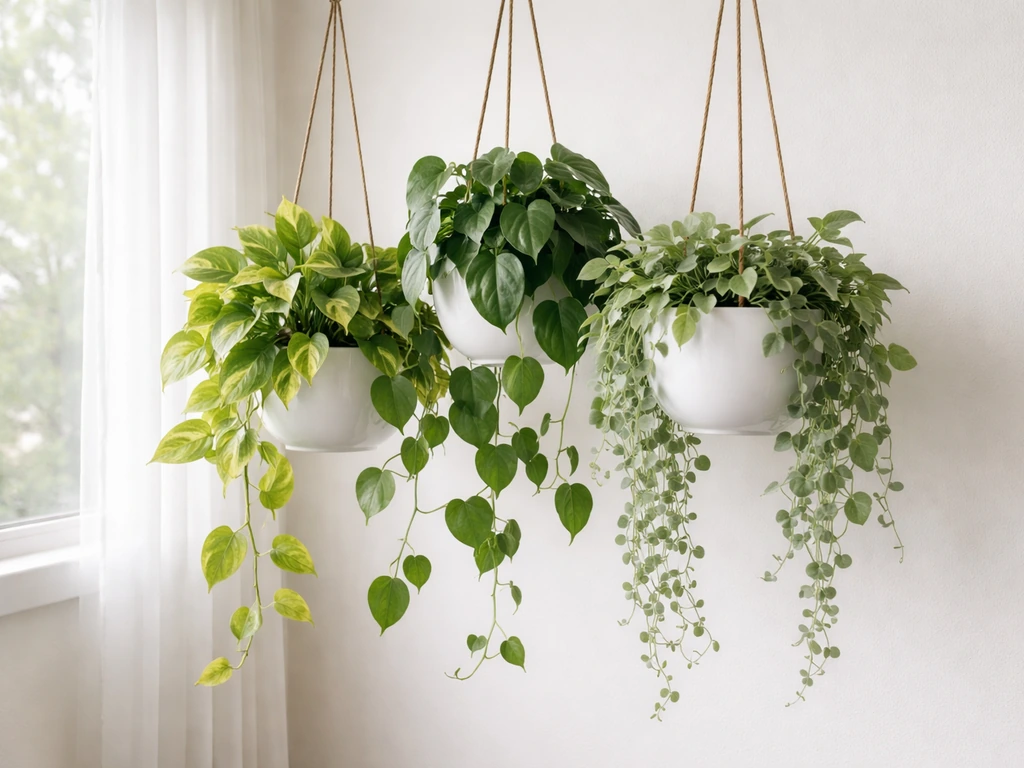
The single biggest mistake beginners make is buying a plant based on looks and then putting it somewhere that doesn't suit it. Before you pick a species, look at your windows. That determines everything. Here are the best trailing and cascading plants matched to real home conditions:
- Pothos (Epipremnum aureum): The most forgiving trailing plant you can grow. It thrives in bright, indirect light but handles lower light better than almost anything else. Perfect for shelves away from windows or for rooms with north-facing light. Trails fast and looks dramatic quickly.
- Spider plant (Chlorophytum comosum): Loves medium to bright light but can genuinely tolerate deep shade. Its thick, fleshy roots store water, meaning it survives if you forget to water for a week or two. Produces cascading 'spiderettes' that look great in hanging baskets.
- Hoya (wax plant): Best for bright, warm, humid spots. Needs careful, regular watering and feeding in spring and summer. Not a set-and-forget plant, but it rewards patience with waxy, trailing stems and occasionally stunning flowers.
- Tradescantia zebrina (spiderwort/inch plant): Rated 'easy' with bright light needs and only moderate watering from spring to autumn, dropping to low watering in winter. It grows incredibly fast and the purple-and-silver striped leaves make it a standout.
- String of pearls (Senecio rowleyanus): For bright spots like east- or west-facing windowsills. It needs well-draining soil and careful watering. More of an intermediate choice, but manageable once you understand its needs.
- Philodendron hederaceum (heartleaf philodendron): A lush, velvety trailer for medium to bright indirect light. Behaves similarly to pothos in terms of care, making it a great second plant once you've nailed the basics.
If you're brand new to houseplants, start with pothos or spider plant. They both tolerate inconsistent watering and a range of light conditions, which is exactly what you need while you're building your routine. Once you're comfortable, you can explore more demanding trailing species. For a broader look at getting started, this guide on how to grow plant in home covers the foundational concepts that apply to every species you'll try.
Choosing containers, hooks, and placement
Containers and drainage
Drainage is non-negotiable for hanging plants. A pot without drainage holes will eventually drown your plant's roots, and because hanging pots are often out of easy reach, you may not notice until it's too late. Go with a plastic nursery pot inside a decorative hanging basket or use a purpose-made hanging planter with drainage holes and a built-in drip tray. Plastic pots retain moisture longer than terracotta, which helps if you tend to underwater. Terracotta dries out faster, which is useful for plants like string of pearls and hoya that prefer slightly drier conditions between waterings.
For size, choose a pot that's only 1 to 2 inches wider than your plant's root ball. Too large and the excess soil stays wet for too long, which invites root rot. Most trailing plants sold in 4-inch or 6-inch pots can stay in those sizes for a long time before needing a repot.
Hooks and hardware
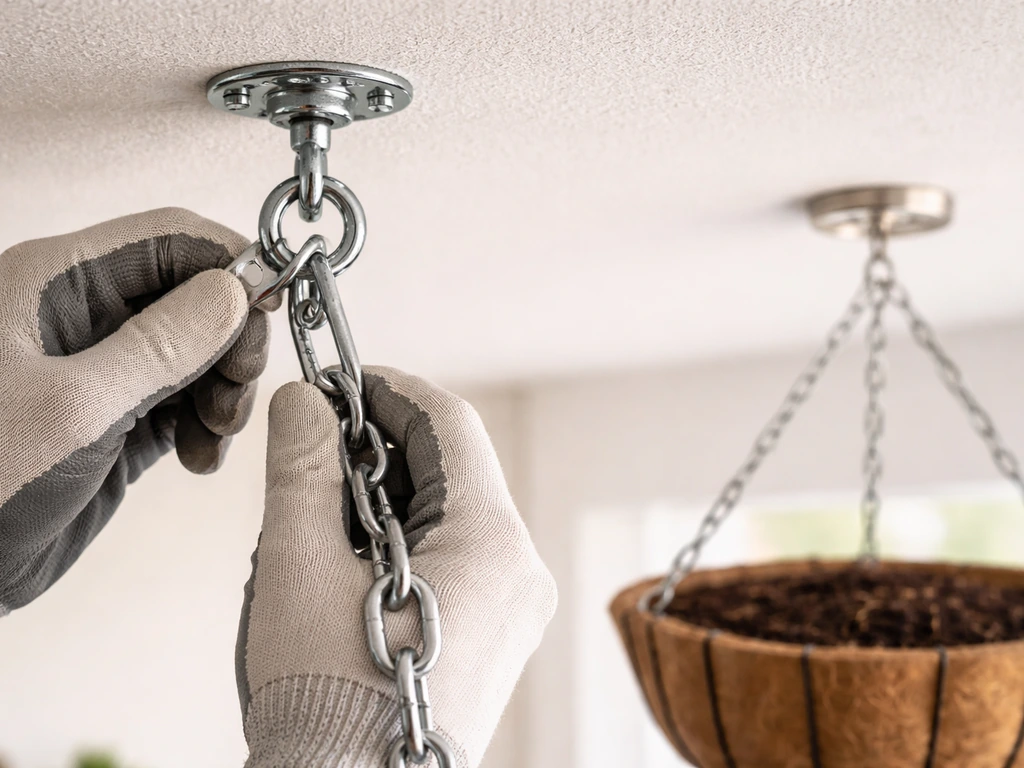
A hanging basket filled with moist soil can easily weigh 5 to 15 pounds depending on pot size. Use a ceiling hook rated for at least 25 pounds to give yourself a safe margin. For plaster or drywall ceilings, use a toggle bolt and hook; for wooden ceiling joists, a screw hook goes directly into the wood. Command hooks are convenient but are only rated for 5 to 7.5 pounds, so they really only work for the smallest, lightest setups. Wall brackets are a great alternative if ceiling mounting isn't possible. They let you position plants at eye level where they can trail downward naturally.
Smart placement
Light and airflow should drive your placement decisions. Most trailing houseplants want bright, indirect light, which typically means within 3 to 5 feet of a window but not in direct sun (which can scorch leaves). Avoid spots directly above heating vents or radiators because the hot, dry air dries soil out rapidly and stresses foliage. Good airflow around the plant helps reduce fungal issues and pest infestations, but a direct draft from an air conditioner or fan is too much stress. Corners with two-window exposure are genuinely ideal because the plant gets light from multiple angles, encouraging more even growth all around the pot.
Soil vs water vs semi-hydro for hanging setups
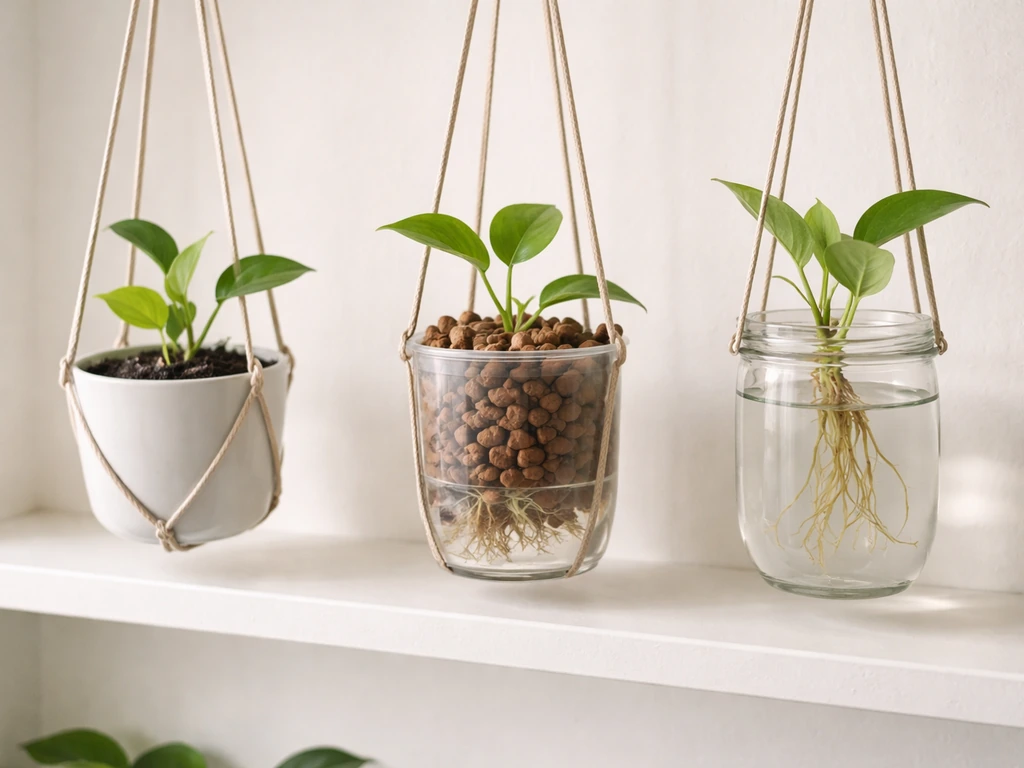
There are three real options for growing hanging plants at home, and each suits a different type of grower. Here's how they compare:
| Method | Best for | Pros | Cons | Recommended plants |
|---|---|---|---|---|
| Soil-based | Most beginners | Widely available, forgiving, suits almost all species | Can overwater or underwater; soil dries unevenly in hanging position | Pothos, spider plant, philodendron, hoya, tradescantia |
| Water/hydroponics | Minimalist setups, transparent pots | No soil mess, easy to see root health, consistent moisture | Needs nutrient solution, not all hanging plants adapt easily | Pothos, philodendron, tradescantia |
| Semi-hydro (LECA/perlite) | Intermediate growers who've struggled with root rot | Excellent drainage, near-impossible to overwater, reusable medium | Requires transition period, needs hydroponic nutrients | Pothos, philodendron, hoya |
For most people, soil is still the best starting point. Use a well-draining mix: a standard indoor potting mix combined with about 20 to 30 percent perlite works well for most trailing species. For succulents like string of pearls, increase the perlite or use a dedicated cactus mix. If you're curious about growing beyond conventional potting soil, how to grow your own plants at home explores different growing methods in more depth.
Semi-hydro is genuinely useful for hanging plants because the inorganic medium (LECA clay balls or coarse perlite) never compacts, drains almost instantly, and eliminates the soggy-bottom-pot problem that kills so many trailing plants. The trade-off is that you need to source liquid hydroponic nutrients and go through a short transition period while roots adjust. If you've lost multiple plants to root rot in soil, semi-hydro is worth trying.
Pure water culture (vase or jar growing) works beautifully for pothos and philodendron and is honestly one of the most low-maintenance hanging setups possible. Grow cuttings in a glass vessel, hang it, top up the water every week, and add a diluted hydroponic fertilizer once a month. The clarity of the water also tells you immediately if something is wrong (murky water or brown roots signal a problem).
Step-by-step propagation and planting
Starting from cuttings is the cheapest and most satisfying way to get a hanging plant going. Most popular trailing species root easily from stem cuttings, and doing it yourself means you can start multiple cuttings to create a fuller, bushier pot right from the beginning.
- Take your cutting: Cut a healthy stem just below a node (the bump or joint where a leaf meets the stem). Each cutting should have 2 to 4 leaves and be 3 to 5 inches long. Remove any leaves that would sit below the waterline or below the soil surface.
- Choose your rooting method: Place cuttings in a glass of room-temperature water, changing the water every 3 to 4 days, or stick them directly into moist potting mix or damp perlite. Both work. Water rooting lets you watch progress; soil rooting usually produces stronger roots faster.
- Wait for roots to develop: In water, most pothos, philodendron, and tradescantia cuttings show roots within 1 to 3 weeks. In soil or perlite, give it 3 to 4 weeks before tugging gently to test resistance.
- Pot up multiple cuttings together: Instead of one cutting per pot, plant 3 to 5 rooted cuttings in the same 4-inch pot. This is the trick to getting that lush, full trailing look instead of a single sad vine. Press them gently into the medium and water lightly.
- Give them a few weeks before hanging: Keep newly potted cuttings at ground level in bright indirect light for 2 to 3 weeks. This lets the roots establish before the plant has to deal with the stress of a hanging position.
- Hang and train: Once roots are established, hang the pot at your chosen height. Begin pinching off the growing tips occasionally to encourage branching rather than one long, leggy strand.
If you're starting from a nursery plant rather than cuttings, the process is simpler: check that the root ball fits your chosen pot without too much excess space, refresh the top inch of soil if it looks compacted or hydrophobic, and let it settle in its new spot for a week before hanging it at full height.
Light, watering, and fertilizing routine for hanging plants
Getting the light right
Hanging plants are usually positioned higher up in a room, which often means farther from the window than you'd think. Light intensity drops off quickly with distance: a spot 6 feet from a window can receive less than a quarter of the light available right at the glass. If your plant is trailing but the new growth looks pale, small, or leggy, it almost certainly needs more light. Move it closer to the window or add a simple grow light (a basic LED panel on a timer set for 12 to 14 hours works well). Pothos and spider plant are your most shade-tolerant options if repositioning isn't easy.
Watering without overdoing it
The most common cause of death for hanging plants is overwatering, and the fix is simple: check the soil before you water, not the calendar. For pothos, let the top 2 cm (about 1 inch) of compost dry out between waterings. In a Reddit pothos watering discussion, people often advise letting the soil dry out between waterings and using a finger check to decide when to water again blank" rel="noopener noreferrer">let the top 2 cm (about 1 inch) of compost dry out between waterings. For philodendron, let the surface become just dry before watering thoroughly. Hoya wants compost that is moist but never waterlogged; let it get fairly dry but never completely bone dry. blank" rel="noopener noreferrer">Spider plant likes regular watering but should never sit in soggy compost. String of pearls benefits from bottom watering (setting the pot in a shallow tray of water so it soaks upward) to avoid getting moisture on the delicate foliage, which can cause rot.
When you do water, water thoroughly until it drains from the bottom, then empty the drip tray after 30 minutes. Leaving hanging plants to sit in standing water is one of the fastest routes to root rot. In winter, reduce watering frequency for all species since growth slows and the soil stays moist for longer.
Fertilizing for healthy growth
Feed hanging plants during the active growing season, which runs roughly from March through September in the northern hemisphere. For houseplants, fertilize mainly during active growth, and a winter or rest period generally means you need less fertilizer blank" rel="noopener noreferrer">fertilize mainly during active growth; a winter/rest period generally means reduced fertilizer needs. A balanced liquid fertilizer with a ratio around 1:2:1 (nitrogen to phosphorus to potassium, such as a 5-10-5 or 10-20-10 formula) works well as a general-purpose option for most foliage plants. Always follow the label's dilution instructions and, when in doubt, use half the recommended dose to avoid fertilizer burn. Feed every 2 to 4 weeks during the growing season and stop fertilizing entirely from October through February when most indoor plants are resting. Tips to grow plants at home includes additional guidance on feeding schedules and soil nutrition that applies directly to hanging setups.
Training, pruning, and managing growth in limited space
Left alone, most trailing plants will send out a few very long vines rather than growing into the full, lush cascade you picture. The fix is pinching and pruning. Pinching means using your fingers or clean scissors to remove the growing tip of a vine, which redirects the plant's energy into producing side shoots. Do this regularly on young plants (every 3 to 4 weeks during the growing season) to build up density before the vines get long.
For plants that have already gone leggy, cut the long vines back by a third to a half. Yes, this feels drastic, but the plant will bounce back within a few weeks with significantly more branching. Use the cut pieces as cuttings to either root new plants or add back to the same pot for that fuller look. Tradescantia in particular benefits from being cut back hard every few months because the older stem sections naturally become bare and woody-looking.
In small apartments, you can use small adhesive hooks on walls to guide long vines horizontally or in a specific direction rather than letting them hang straight down. This spreads the growth out visually, creates a living wall effect, and keeps vines from tangling. Just clip the vine loosely to the hook using a soft tie or twist tie so you don't damage the stem. If you're looking to grow show plants at home that genuinely impress visitors, this kind of intentional training is what separates impressive displays from just a pot hanging from a hook.
Common problems (drooping, root rot, pests) and quick fixes
Drooping or wilting
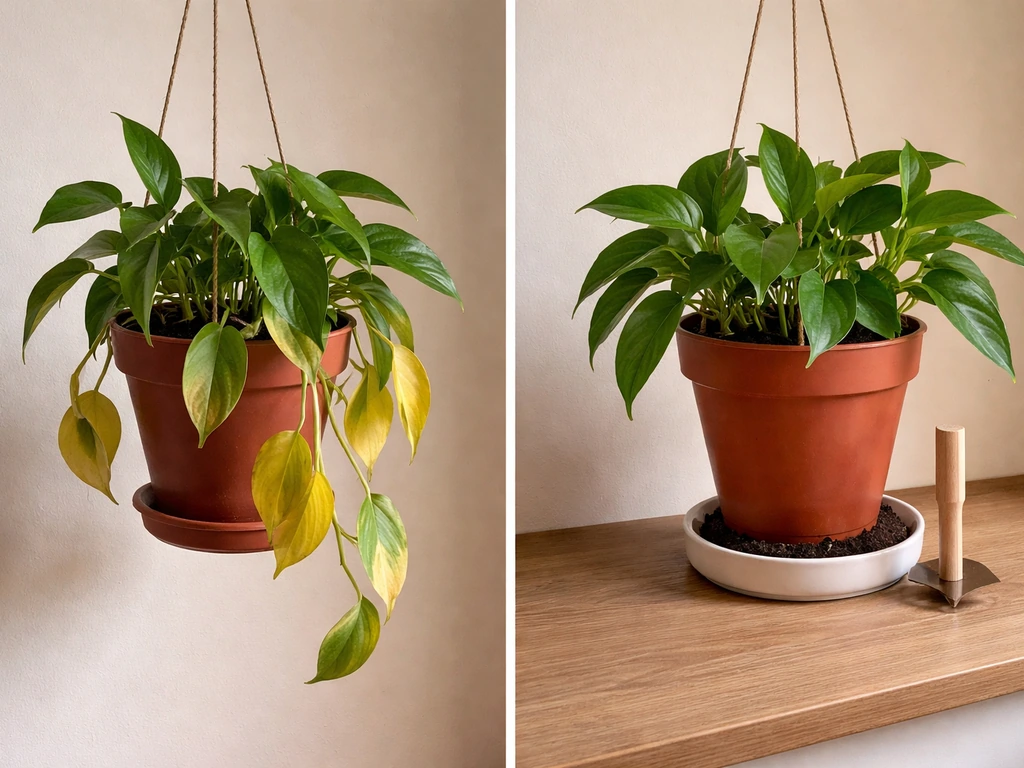
Drooping usually means one of two things: too dry or too wet. Check the soil. If it's bone dry, water thoroughly and the plant should perk up within a few hours. If the soil is wet and the plant is drooping, that's a red flag for root rot. Unpot and inspect the roots immediately (healthy roots are white or tan; rotted roots are brown, black, and mushy). Cut away any rotted sections, let the roots air dry for 30 minutes, and repot in fresh, dry mix with better drainage than before.
Yellowing leaves
Yellow leaves can mean overwatering, underwatering, too little light, or a nutrient deficiency. The pattern matters: yellowing of older, lower leaves only is usually normal aging or slight overwatering. Yellowing all over the plant at once suggests a nutrient deficiency or significant watering issue. If yellowing leaves are also soft and mushy, it's overwatering or root rot. If they're thin and pale, it's likely insufficient light or nutrients. For nitrogen deficiency specifically, a balanced liquid fertilizer applied once or twice will usually show improvement within 2 to 3 weeks. Understanding what's driving the color change is also part of how to grow green plants successfully indoors.
Leggy, sparse growth
Long vines with big gaps between leaves and small new leaves almost always indicate insufficient light. Move the plant closer to a window. Then prune back the leggy sections and pinch the new growth to encourage branching. Within one growing season, you'll see a significant improvement in density.
Drying out too fast
If you're watering every two or three days and the soil still dries out completely, a few things could be happening. The plant may have become root-bound (roots taking up so much pot space there's barely any soil left to hold moisture), the pot may be terracotta or unglazed clay which wicks moisture away quickly, or the spot may be very warm or in a draft. Check for root-bound conditions first by gently removing the plant from its pot. If you see a dense, circular mass of roots with almost no visible soil, it's time to repot one size up. Switching to a plastic pot or adding a layer of perlite topped with a thin layer of sphagnum moss on the soil surface can also help retain moisture for longer between waterings.
Common pests
- Fungus gnats: Tiny flies hovering around the soil. They lay eggs in moist topsoil. Fix: let the top inch of soil dry out completely between waterings. Add a layer of coarse sand or fine grit on top of the soil to discourage egg-laying.
- Spider mites: Fine webbing on leaves and stems, tiny moving dots. They thrive in hot, dry conditions. Fix: shower the plant under lukewarm water, then apply neem oil spray or insecticidal soap every 5 to 7 days for 3 weeks.
- Mealybugs: White cottony clusters at leaf joints and stem junctions. Fix: dab individual bugs with a cotton swab dipped in 70 percent isopropyl alcohol, then follow up with neem oil spray weekly.
- Scale insects: Brown or tan bumps stuck to stems. Fix: scrape off with a soft toothbrush, then treat with neem oil or horticultural oil spray.
- Aphids: Small soft-bodied insects clustering on new growth. Fix: knock them off with a strong jet of water, then treat with insecticidal soap.
Catching pests early is everything. Make it a habit to flip a few leaves over every time you water and check stem joints closely. Early-stage infestations can be resolved in one or two treatments; late-stage ones can take months and may require isolating the plant from your other greenery. For a full breakdown of how green plants respond to stress and how to keep them thriving indoors, how to grow green plants at home is worth reading alongside this guide.
Beginner checklist and long-term care calendar
Before you hang anything: the setup checklist
- Choose a plant that matches your actual light conditions (don't guess, stand in the spot and assess the window direction and distance)
- Use a pot with drainage holes and a drip tray or removable saucer
- Mix perlite into your potting soil for improved drainage (20 to 30 percent perlite for most species)
- Install a ceiling hook or wall bracket rated for at least 25 pounds
- Let newly planted cuttings or repotted plants establish at ground level for 2 to 3 weeks before hanging
- Position the plant within 3 to 5 feet of a window in bright, indirect light unless using a low-light tolerant species
The ongoing care calendar
| Frequency | Task |
|---|---|
| Every watering visit | Check soil moisture before watering (finger test or moisture meter); inspect leaves for pests; empty drip tray 30 minutes after watering |
| Weekly | Rotate pot a quarter turn for even light exposure; top up water if growing in water/semi-hydro; wipe dusty leaves with a damp cloth |
| Every 2 to 4 weeks (spring–summer) | Apply diluted balanced liquid fertilizer; pinch growing tips to encourage branching |
| Monthly | Check for root-bound conditions; prune leggy or bare stems back by a third; look for yellowing patterns and diagnose if present |
| Every 3 to 6 months | Give plants a thorough shower under lukewarm water to flush soil and knock off dust and minor pests; assess whether a size-up repot is needed |
| Every autumn | Reduce watering frequency as growth slows; stop fertilizing; move plants closer to windows as daylight shortens |
| Every spring | Resume feeding schedule; take fresh cuttings to propagate; refresh top inch of soil if compacted; reassess hanging position as sun angle changes |
If you follow this calendar even loosely, you're already ahead of most people who struggle with hanging plants. The difference between plants that thrive and plants that slowly decline usually isn't dramatic neglect; it's the absence of regular, simple check-ins. Build the habits now, and within a season you'll have trailing greenery that genuinely transforms your space. For anyone wanting to go deeper into the principles behind keeping all kinds of houseplants healthy, these practical home growing tips are a useful reference to return to as your collection grows.
FAQ
Can I grow hanging plants in a low-light apartment?
Yes, but choose species that tolerate lower light, and hang them closer to the window than you think. If you cannot get bright indirect light, use a grow light positioned 12 to 18 inches above the plant on a 12 to 14 hour timer, otherwise slow growth and leggy vines will keep happening.
How do I stop my hanging plant from getting long and sparse?
No, trailing vines need regular pruning to look lush. Pinch the growing tips every 3 to 4 weeks during the growing season to force side shoots, and if it already looks stretched, cut back the longest vines by a third to a half, then restart pinching on the new growth.
My plant is in a decorative hanging basket without obvious drainage, what should I do?
Keep the soil evenly moist, not wet, and avoid letting water collect in the decorative basket. Use a pot with drainage holes inside the hanging container, water thoroughly until runoff appears, then empty the drip tray (or outer basket) about 30 minutes later every time.
How often should I water hanging plants, especially in winter?
Use a quick “soak check” instead of a strict schedule. If the top inch or top 1 to 2 cm is still wet, wait, if it is dry, water thoroughly and drain. Also remember that winter light and airflow drop, so most plants need less frequent watering even if you normally water more often in summer.
What if my hanging plant looks pale or growth is slow?
Move the plant, then adjust watering immediately. Pale leaves and slow growth usually mean not enough light, so shift closer to the window or start a grow light, and reduce fertilizer until you see consistent new growth, because weak light plus feeding can worsen yellowing.
How do I train trailing vines on hooks without damaging the stems?
Use a soft tie to secure vines so they are not bearing weight at the hanging hook. If you train vines horizontally with wall hooks, loosely clip or tie, and recheck after a week because stems can thicken quickly and ties may need loosening.
My hanging plant droops, how do I know if it is underwatering or root rot?
Sticking it back into the same wet soil is the most common mistake. If leaves are drooping and the mix stays wet, unpot, trim mushy roots, air-dry for about 30 minutes, then repot into a fresher, drier, well-draining mix and only water lightly after it rebounds.
My hanging plant has yellow leaves, what should I check first?
Often, it is either light or fertilizer timing. Yellowing throughout the plant can point to a watering problem or nutrient shortage, but if the top growth is pale with new leaves smaller, try half-strength balanced fertilizer once, then reassess after 2 to 3 weeks instead of immediately changing multiple variables.
Can I do water culture or hydroponics with hanging plants in my apartment?
Yes, but reduce the risk of spills and standing water. If you use a water culture setup, keep the water level stable and top up weekly, and rinse and refresh the vessel if you notice cloudy water or brown roots, since those are early signs something is off.
How can I tell if my hanging plant needs repotting?
Repot when the root ball is tight and you see very few soil particles holding the mix together. A practical tell is water draining through too fast or drying too quickly, then a quick root check confirms whether you are root-bound and need one pot size up.
What is the best way to handle pests on hanging plants before they spread?
You should deal with pests early by isolating the plant and treating thoroughly. Flip leaves to check undersides and stem joints, and expect to repeat treatments according to the product instructions because eggs and newly hatched pests are commonly missed in the first round.
Do I need special water quality for hanging plants?
In general, tap water may be fine for hardy starters, but if you notice crusty mineral buildup on the soil surface or consistent leaf tip burn, let water sit out 24 hours or switch to filtered water for sensitive plants like string of pearls.