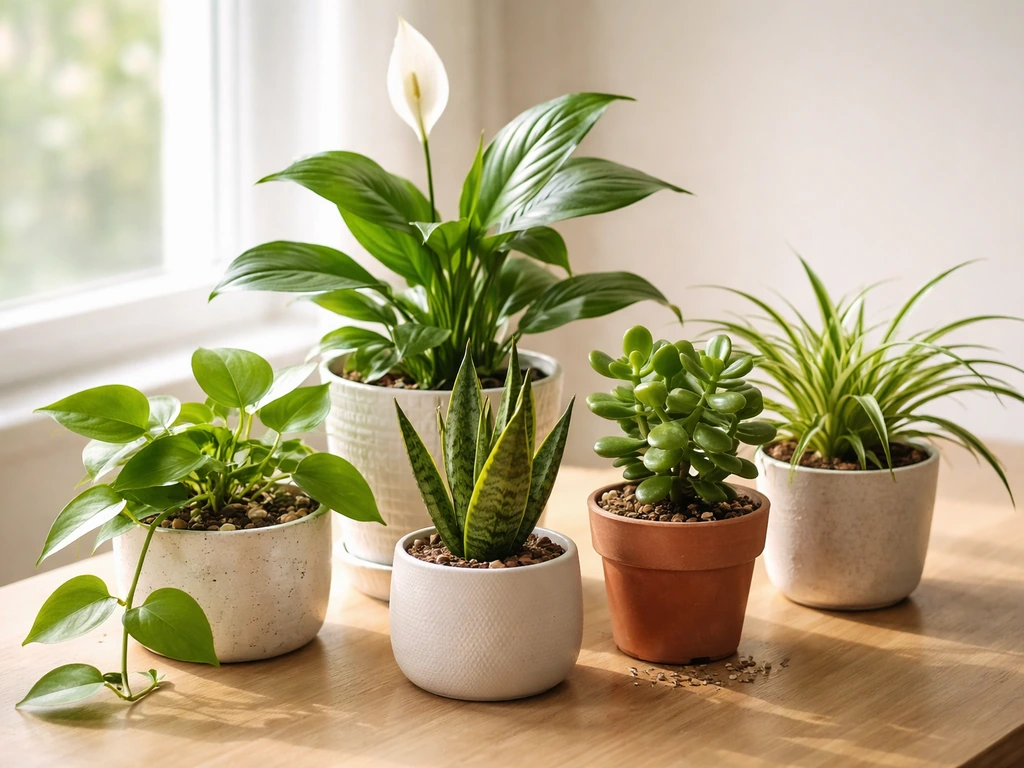
blank" rel="noopener noreferrer">Pothos, snake plants, ZZ plants, peace lilies, and cast iron plants are genuinely growable by anyone, including people who have killed every plant they've ever owned. These plants tolerate low light, irregular watering, small containers, and beginner mistakes in ways that most other plants simply won't. If you pick from this group, set up a simple routine, and learn a few basic warning signs, you will grow healthy plants.
Anyone Can Grow These Easy Plants: Step by Step Guide
Marcus Holloway
13 May 2026
If you want a simple starting point, this guide breaks down the basics of how to grow plants for beginners step by step grow healthy plants. If you're still narrowing down what beginner plants to grow, start by matching plant toughness to your light and watering habits. That's not a motivational speech, it's just what the biology of these plants makes possible.
If you're looking for easy to grow houseplants for beginners, start with the forgiving options mentioned here and build a simple routine around them.
What makes a plant truly "anyone can grow" it
The plants that earn this label share a specific set of traits that make them forgiving rather than demanding. First, they tolerate low light. Most homes don't have the bright, consistent light that plants like basil or fiddle-leaf figs need, and these easy plants can handle windowsills, office desks under fluorescent lights, and dim corners without dying on you. Second, they're drought-tolerant or have clear communication skills.
A ZZ plant stores water in its thick rhizomes and doesn't care if you forget to water it for two weeks. A peace lily, on the other hand, will visibly wilt when it's thirsty, and then perk right back up after a good drink, no permanent damage done. Third, these plants aren't picky about soil or containers, which means beginner setup mistakes (wrong pot size, basic potting mix from a bag) won't immediately cause problems.
They're also slow to react, so you usually have days or even weeks to notice and fix an issue before it becomes fatal.
The key mindset shift for beginners is understanding that "forgiving" doesn't mean "indestructible. If you want to use these plants as starter specimens, learn how to grow starter plants by focusing on light, drainage, and watering cues. " It means the window between a mistake and an irreversible problem is wide enough for you to learn and correct course.
Cast iron plants, for example, genuinely endure heat, dust, low light, and irregular watering at the same time, conditions that would kill most plants quickly. Snake plants tolerate low light better than almost any other houseplant. Pothos will survive in a dorm room under fluorescent lights with watering every 10 days. These aren't marketing claims; they're observable characteristics backed by the actual biology of each plant.
Pick the right plant for your actual light and space
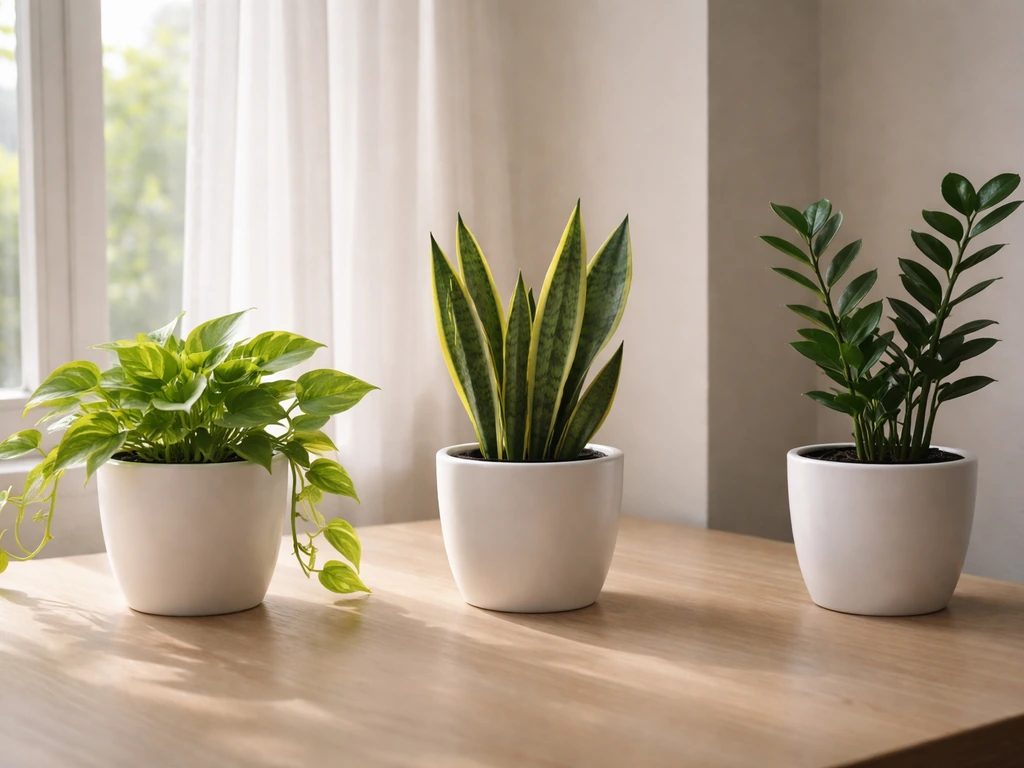
Before you buy anything, look at your space honestly. How far is the nearest window? Does it face south, east, west, or north? Is the window blocked by a building or trees? These details determine which plants will actually thrive for you, not just survive. Matching a plant to your real conditions, rather than the conditions you wish you had, is the single most important decision you'll make as a beginner.
| Plant | Light tolerance | Watering style | Best for |
|---|---|---|---|
| Pothos | Low to bright indirect (survives fluorescent light) | Water when soil is dry | Shelves, desks, windowsills, hanging baskets |
| Snake plant | Low to medium indirect (tolerates low light best of all) | Water when top 2 inches are dry | Dark corners, offices, low-light rooms |
| ZZ plant | Low to medium indirect | Water when top inch dries out | Rooms with no direct sun, offices |
| Peace lily | Low to medium indirect | Water when it wilts slightly | Humid rooms, bathrooms, low-light spots |
| Cast iron plant | Low light, tolerates heat and dust | Occasional watering, drought tolerant | Neglect-prone owners, dim rooms, outdoor shade |
If your space gets almost no natural light, lead with snake plants or ZZ plants. Both handle truly dim conditions without falling apart. If you have a bright window but it's indirect (north or east-facing, or set back from the glass), pothos is your most versatile option and also one of the fastest growers in this group. If you're working with a small balcony or a windowsill with some direct morning sun, pothos and peace lilies will both do well there. For people with a travel schedule or a tendency to forget watering, ZZ plants and cast iron plants are the most forgiving, the ZZ in particular stores water in underground rhizomes and genuinely doesn't need attention every week.
Space matters too. Pothos is a trailing or climbing vine that can fill a hanging basket or drape across a shelf. Snake plants grow upright and tall, making them ideal for floor space in a corner. ZZ plants stay compact and tidy. Peace lilies spread wide but stay relatively low. If you're working with a single windowsill in an apartment, one pothos in a 6-inch pot is a better starting point than three crowded plants competing for light and airflow.
Quick setup: containers, drainage, and potting mix
You don't need anything fancy to start. A basic plastic or terracotta pot with drainage holes, a bag of standard indoor potting mix, and a saucer to catch water runoff is enough to grow any of these plants successfully. The one rule you can't skip is drainage holes. Sitting in standing water is the fastest way to kill a beginner plant, and it will happen in days, not weeks. If you fall in love with a decorative pot that has no holes, use it as a cachepot (an outer sleeve) and keep your plant in a plain nursery pot with holes inside it.
For potting mix, a standard bagged indoor houseplant mix works for all five plants listed above. If you want to improve drainage, mix in about 20-25% perlite by volume, those small white granules you sometimes see in bags of potting soil. Perlite improves aeration and prevents the mix from compacting and staying soggy. For snake plants and ZZ plants specifically, this extra drainage insurance is worth doing because both plants are especially sensitive to root rot from overly wet soil. For pothos and peace lilies, standard mix straight from the bag is fine.
Pot size matters more than most beginners realize. Going too big (a small plant in a large pot) means excess soil around the roots stays wet for too long because the plant isn't using that water yet. Start with a pot that's roughly 1-2 inches wider than the root ball. For most starter plants from a nursery, a 4-inch or 6-inch pot is the right starting size.
You'll move up to a larger pot once the roots start circling the bottom or poking out the drainage holes, usually after 6-12 months for slow-growing beginners like ZZ plants, or as quickly as 3-4 months for fast growers like pothos. If you're looking for good starter plants to grow, focus on forgiving houseplants with simple watering needs, like ZZ and snake plants.
Watering and feeding rules that actually work
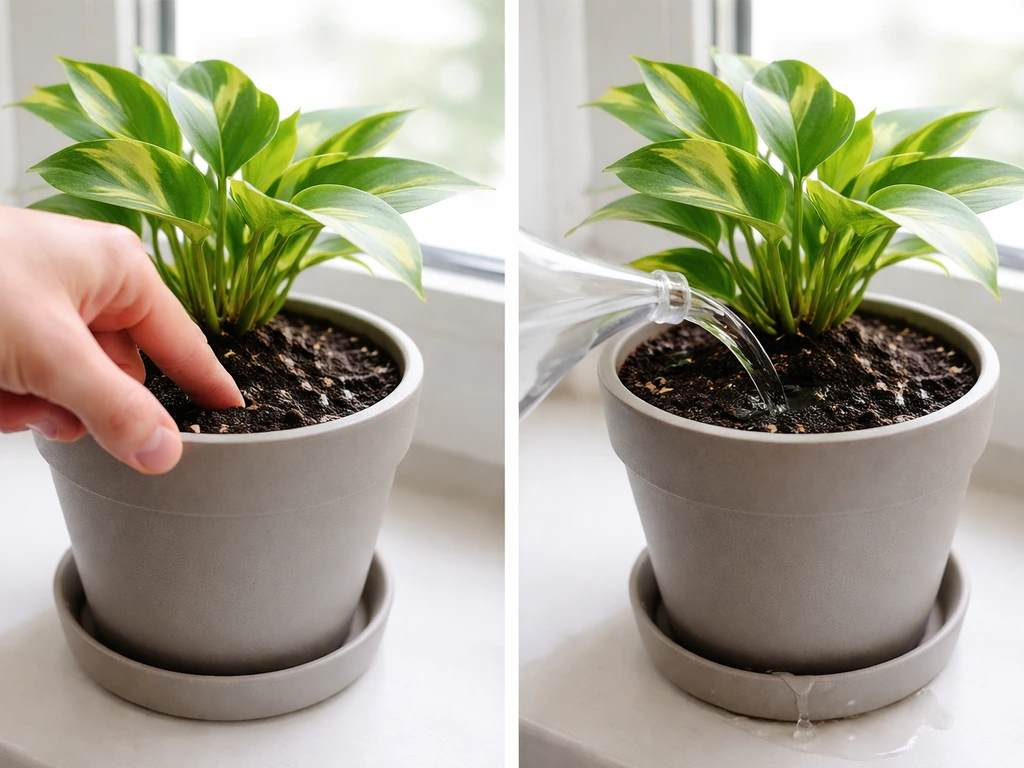
The number one beginner mistake is watering on a fixed schedule rather than checking the plant. Watering frequency depends on your specific pot size, potting mix, room temperature, humidity, and how much light the plant gets, not on what day of the week it is. Instead of watering every Tuesday, check the soil. Stick your finger an inch into the mix. If it feels damp, leave it alone. If it feels dry all the way through, water thoroughly until water drains out the bottom, then empty the saucer after 30 minutes. That "thoroughly water, then let it dry" cycle is the foundation of healthy beginner plant care.
For ZZ plants, water when the top inch of soil dries out. For snake plants, wait until the top 2 inches are dry, especially in winter when growth slows. Pothos likes to dry out moderately between waterings but doesn't like bone-dry soil for extended periods. Peace lilies will show you: they wilt slightly when thirsty and perk up within hours of watering. That communication is one of the reasons they're so beginner-friendly, the plant essentially tells you what it needs. If you choose truly beginner-friendly varieties, you’ll find it much easier to keep indoor plants thriving as you learn the basics easy to grow houseplants for beginners.
For feeding, start simple. Use a balanced liquid houseplant fertilizer at half the label's recommended strength every 2-4 weeks during the growing season (spring through summer). Plants in brighter light will benefit from more frequent feeding than plants in low light. Don't fertilize in fall or winter when growth naturally slows, it just pushes weak, leggy growth and can build up fertilizer salts in the soil. Over-fertilizing is a real problem that can damage roots, so less is more when you're starting out. A half-strength dose every few weeks is plenty.
Growing in soil, water, hydroponics, and terrariums
All five of the easy plants above grow well in traditional soil, but several of them also adapt to other growing environments, and this is one of the most interesting things about beginner plants. If you want a simple starting point, focus on beginner plants to grow that match your light level first, then fine-tune watering and soil later. Pothos in particular is famous for rooting and growing directly in a jar of water.
Just cut a stem with at least one node (the bump where a leaf meets the stem), place it in a clear jar with the node submerged, top up with fresh water every few days, and roots appear within 1-2 weeks. It won't grow as vigorously in plain water long-term as it will in soil or a proper hydroponic system, but it's a great way to propagate cuttings or experiment with water growing.
If you want to go further with water-based growing, a basic hydroponic setup (net pots, an inert medium like hydroton clay balls, and a liquid nutrient solution) is surprisingly accessible for beginners. The critical variables in hydroponics are pH and electrical conductivity (EC). Penn State Extension sample hydroponics guidance ties nutrient program targets to solution EC and includes example nutrient amounts measured in ppm for hydroponic nutrition [electrical conductivity (EC)](https://extension. psu.
edu/downloadable/download/sample/sample_id/118953/). Your nutrient solution should generally stay between pH 5. 5 and 6. 5, and you use EC as your measure of nutrient concentration, essentially how much "food" is dissolved in the water.
You'll need a basic pH meter and EC meter, both available cheaply online. The key rule: measure your water's baseline pH and EC before adding nutrients, because tap water chemistry varies widely and changes how nutrients behave. Start with nutrient concentrations on the lower end of the recommended range for leafy/foliage plants, and adjust from there.
Terrariums are a great entry point for beginner plants that like humidity, like peace lilies or certain small ferns. The glass recycles moisture in the plant's immediate environment, which is genuinely helpful in dry indoor air.
The rules for terrarium success are straightforward: group plants with similar light and moisture needs, make sure the glass is clean and the plants are free of pests before you close it up, and if you see water condensing on the foliage rather than just on the glass, open the lid and let things dry out before resealing. Too much condensation sitting on leaves leads to rot.
Light transmission through glass is slightly reduced, so place terrariums in a bright spot even for low-light plants.
| Medium | Best beginner plants | Key rule | Watch out for |
|---|---|---|---|
| Soil | All five plants above | Check moisture before watering; never leave standing in water | Overwatering, compacted mix, no drainage holes |
| Water (propagation) | Pothos, peace lily cuttings | Change water every few days, keep node submerged | Algae buildup in clear jars (use opaque containers) |
| Hydroponics | Pothos, peace lily | Monitor pH (5.5-6.5) and EC; start nutrients at low end | pH drift, salt buildup, over-concentrated solution |
| Terrarium | Peace lily (small), ferns, mosses | Match light/moisture needs; open lid if leaves get wet | Condensation on foliage, poor light through glass, rot |
Your first-month care plan
The first month after bringing a new plant home is a settling-in period, and you should expect very little visible growth. This is completely normal. Plants need time to adjust to new light levels, humidity, and temperature before they push new growth. Your job in month one is to provide stable, consistent conditions, not to encourage fast growth.
- Week 1-2: Place the plant in its chosen spot and leave it alone. Don't repot, don't fertilize, don't move it around. Water only if the soil checks dry using the finger test.
- Week 2-4: Check for signs of stress (yellowing lower leaves are often just adjustment, not a crisis). If the plant was shipped or has been in a dark store, it may drop a leaf or two — this is normal acclimatization, not a death spiral.
- Week 4+: If the plant looks stable and is pushing any new growth, congratulations — it's established. This is when you can begin a light feeding routine (half-strength fertilizer every 2-4 weeks in spring/summer).
- Repotting: Don't repot in the first month unless the plant is clearly root-bound (roots circling the pot, growing out the drainage holes, or soil drying out within a day of watering). For most beginner plants, the first repot comes 6-12 months in.
Light schedule expectations: these plants don't need grow lights unless your space has literally no natural light. A north-facing window or a spot several feet from a brighter window is genuinely enough for snake plants, ZZ plants, and cast iron plants. Pothos and peace lilies prefer to be closer to a window. Aim for 8-12 hours of ambient light (natural or supplemental) per day. If you're using a grow light, place it 6-12 inches above the plant and run it 10-12 hours per day on a timer.
Common problems and how to fix them fast
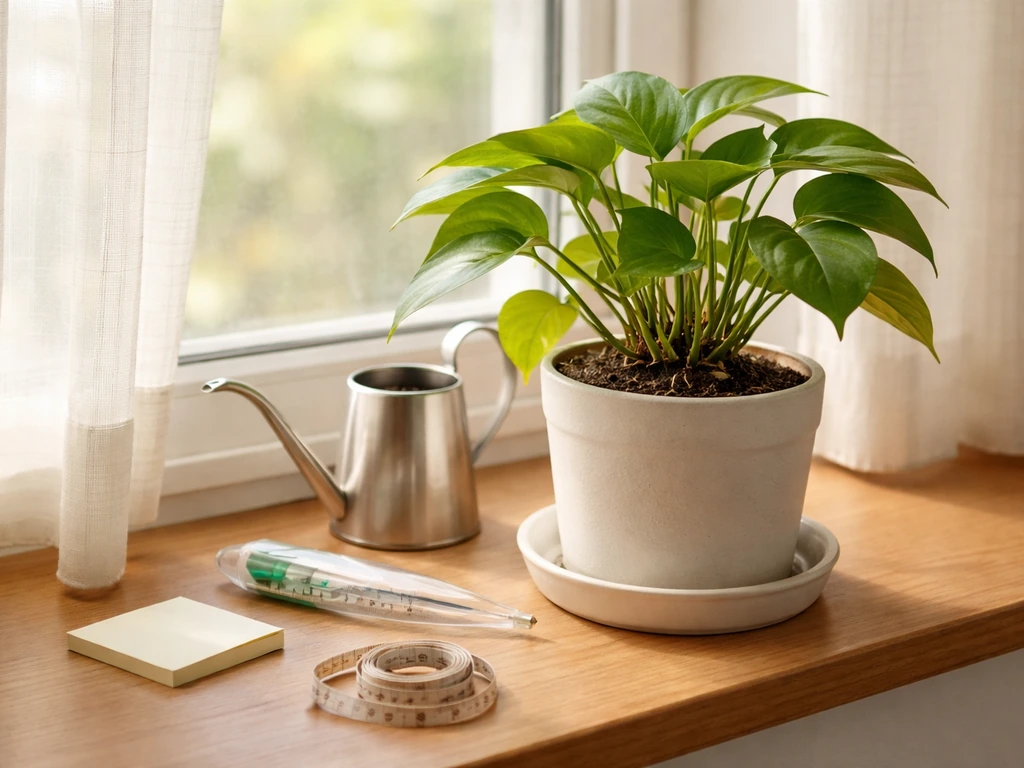
Yellow leaves
Yellow leaves are the most common beginner alarm and also the most over-diagnosed. A few yellow lower/older leaves is completely normal, plants shed old growth. Widespread yellowing, especially of lower or inner leaves combined with wet soil, points to overwatering. The fix: stop watering, let the soil dry out completely, check the roots (healthy roots are white or tan; mushy brown roots mean rot has started). If only a few roots are affected, trim them off with clean scissors, let the plant dry out, and replant in fresh dry mix. Yellowing with dry soil points to underwatering or very low humidity. Yellowing combined with stunted growth can indicate root issues from poor drainage or a too-tight mix.
Leggy, stretched growth
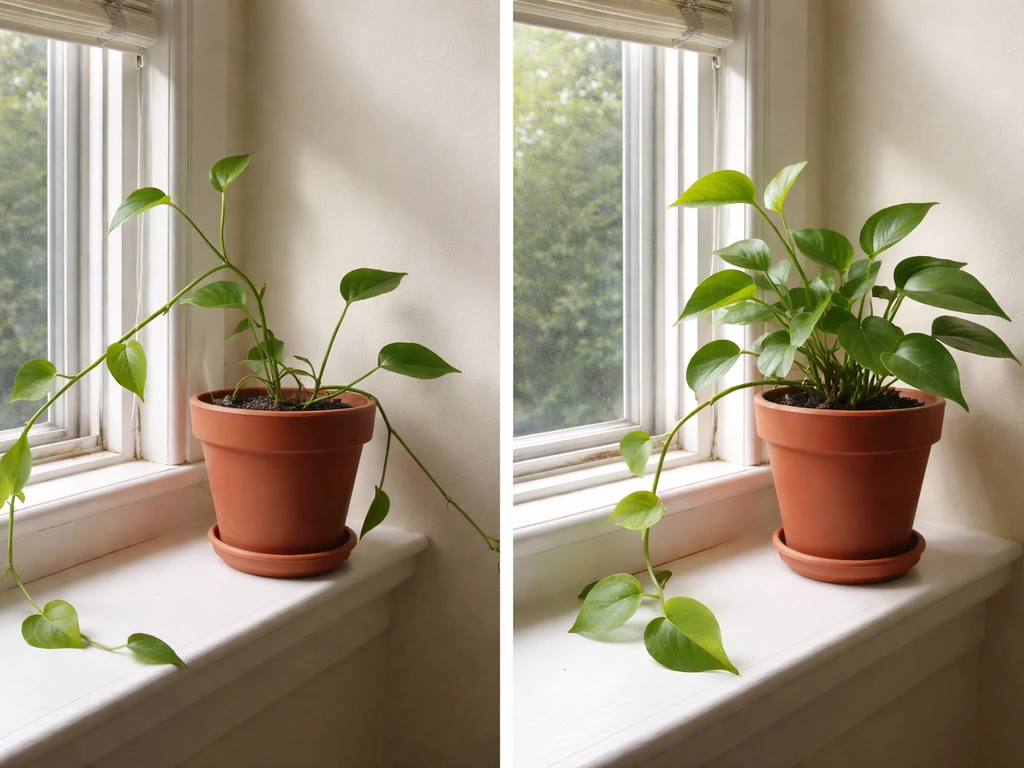
If your plant is producing long, spindly stems with leaves spaced far apart, it's stretching toward light it isn't getting enough of. This is especially visible in pothos. The fix is straightforward: move the plant closer to a light source or add a grow light. The stretched stems won't shorten on their own, but new growth from a better-lit spot will be compact and full. You can trim leggy stems back to a node to encourage bushy regrowth.
Root rot
Root rot usually comes from overwatering combined with poor drainage. You'll often smell it before you see it, a sour or musty smell from the soil. To check, unpot the plant and examine the roots. Healthy roots are firm and white or tan. Rotten roots are brown, black, mushy, or stringy. Remove all affected roots with clean scissors, dust the cuts with cinnamon (a natural antifungal) if you have it, and repot into fresh, dry potting mix in a clean pot with drainage holes. Hold off on watering for 2-3 days after repotting to let any cut root ends seal.
Fungus gnats
Fungus gnats are tiny flies that hover around your soil. They're annoying but rarely harmful to healthy plants, their larvae feed on organic matter in moist soil, and they thrive when soil stays wet for too long. The fix is a combination of cultural change and targeted treatment: let the top inch or two of soil dry out completely between waterings (this disrupts the larvae's environment), place yellow sticky traps on or near the soil surface to catch adults, and if the infestation is established, water the soil with a BTI (Bacillus thuringiensis israelensis) solution, which kills larvae without harming your plant. BTI products are widely available at garden centers and online.
Mealybugs
Mealybugs look like tiny white cottony clusters, usually in leaf axils or on stem joints. Catch them early and a cotton swab dipped in rubbing alcohol, dabbed directly on each bug, handles a light infestation. For heavier infestations, insecticidal soap spray (applied to all leaf surfaces, including undersides) is effective and safe for beginner plants. Repeat treatment every 5-7 days for 3-4 weeks to catch any eggs that hatch after the first application.
Algae and mold in water or terrariums
If you're growing in water or a terrarium, algae and mold are the equivalent of fungus gnats in soil, a sign that conditions are a little off. In water containers, algae grow when the jar gets too much direct light. Switch to an opaque container or move the jar out of direct sun. In terrariums, white fuzzy mold on the surface usually means too much moisture, open the lid more frequently to improve airflow. In both cases, cleanliness at setup matters a lot: Penn State Extension specifically emphasizes cleaning the inside of the glass and the plant leaves before sealing a terrarium, because introducing contamination at the start is what usually causes mold problems later.
Building on your first success
Once your first plant is thriving, the next step is understanding why it worked so you can repeat it deliberately. Take note of how often you actually watered it, where in the room it lived, and how quickly it grew. Those observations are worth more than any general rule because they reflect your specific home conditions. From there, scaling up is just a matter of applying the same principles to slightly more demanding plants or different growing setups.
The easy plants covered here make an ideal foundation, and if you want to branch out into outdoor growing, faster-growing edibles, or more specialized methods like hydroponics and terrariums, the core skills you've built (reading moisture, matching light, watching for stress signals) transfer directly to every one of those contexts. Outdoor conditions are different from indoor ones, but if you can read light and moisture signals, you can successfully start with beginner plants to grow outdoors.
FAQ
If anyone can grow these plants, why do mine still struggle or die?
Most deaths come down to one controllable factor, standing water. Even with forgiving plants, they need drainage holes and a drying window between waterings. If your plant sits in a saucer that never empties, or the pot is much larger than the root ball, the “forgiving” window gets smaller fast.
How do I know whether I should water, especially if my plant is in a low-light corner?
Use a dry-down check, not a calendar. In low light, the soil stays wet longer, so “top inch dry” rules can be misleading. For slow-drying mixes, wait until the depth that matches the plant’s guidance is dry (snake plants often need more depth than pothos) before watering again.
Can I keep an easy plant in a decorative pot with no drainage holes?
Yes, but only if you use it correctly as a cachepot. Keep the plant in a nursery pot with drainage holes inside the decorative cover, and remove the inner pot to drain fully. Do not leave water pooled in the bottom of the decorative container, even if it seems minor.
Are these plants truly safe if I forget watering for weeks?
Some tolerate neglect better than others, ZZ and cast iron plants are the most resilient when you miss a few cycles. Even then, prolonged dryness plus bright light can cause browning, so if the leaves start crisping while the soil is bone dry, move to lower light and resume a consistent dry-and-water rhythm.
What light is “too low” to grow new leaves, even if the plant survives?
Survival and growth are different. If you see minimal new growth for a month or two, or stems get noticeably longer with wider spacing (stretching), your plant is likely reaching for light. Move it closer to a window or add a grow light, then give it time for compact new growth.
Should I rotate the pot to keep growth even?
Rotation helps, especially with pothos and peace lilies that lean toward the window. Turn the pot a quarter turn every 1 to 2 weeks so the plant receives more even light. Avoid rotating daily, sudden changes can be another stressor for beginners.
How fast will these plants grow if I do everything right?
Expect slow to moderate growth rather than rapid results, especially in winter and in low light. ZZ plants and cast iron plants often show small changes month to month, while pothos can respond faster. If you’re not seeing any new leaves after a reasonable adjustment period (often several weeks), recheck light and watering depth rather than increasing fertilizer.
Do I need to fertilize, or can I skip it as a beginner?
You can skip feeding for the first month or two if the plant came from a nursery pot with fresh mix. When you start fertilizing, use half strength and pause in fall and winter. If you notice salt buildup signs like crusty soil or leaf tip issues, stop feeding and flush with plain water.
What’s the safest way to propagate pothos in water without harming the mother plant?
Take cuttings with at least one node and change or top up water regularly, but don’t strip the plant too aggressively. A good beginner limit is removing a small section rather than taking many stems at once. Keep the cutting in bright, indirect light so roots develop without heating or algae overgrowth.
If I see yellow leaves, is it always overwatering?
Not always. A few older yellow lower leaves can be normal shedding. Overwatering is more likely when yellowing spreads while the soil stays wet or smells off. If the soil is dry and leaves yellow as growth stalls, the issue may be underwatering, very low humidity, or insufficient light.
How do I prevent fungus gnats if I tend to overwater?
Let the top inch or two dry completely between waterings and avoid frequent small sips. Adding yellow sticky traps can reduce adult numbers, but the real control is drying the surface and bottom consistently. If you keep the soil too wet, treatments become repeated maintenance rather than a quick fix.
Can terrariums work with these easy plants year-round?
They can, but humidity and airflow are the limiting factors. If you see heavy condensation on foliage or persistent white fuzzy growth, open the lid to dry, then reseal less tightly or improve ventilation. Also place the terrarium in a bright spot, glass reduces light intensity.
My plant has pests. What should I do first, before buying more products?
Start with isolation and inspection. Move the plant away from others, check leaf undersides and stem joints, then remove heavily affected parts if necessary. The “right” treatment depends on the pest type, for example mealybugs respond to targeted dab treatments, while fungus gnats respond to moisture and larva control.