If you've killed a plant before, you probably just started with the wrong one. The good news: there's a whole category of plants practically designed for beginners, ones that tolerate irregular watering, forgive low light, and bounce back from honest mistakes. This guide gives you a curated shortlist for every situation (indoors, outdoors, water, terrariums), tells you exactly what to buy, and walks you through your first week so you're not guessing.
Easy to Grow Plants for Beginners: Best Picks and How to Start
Marcus Holloway
3 Apr 2026
How to pick the right "easy plant" for your space
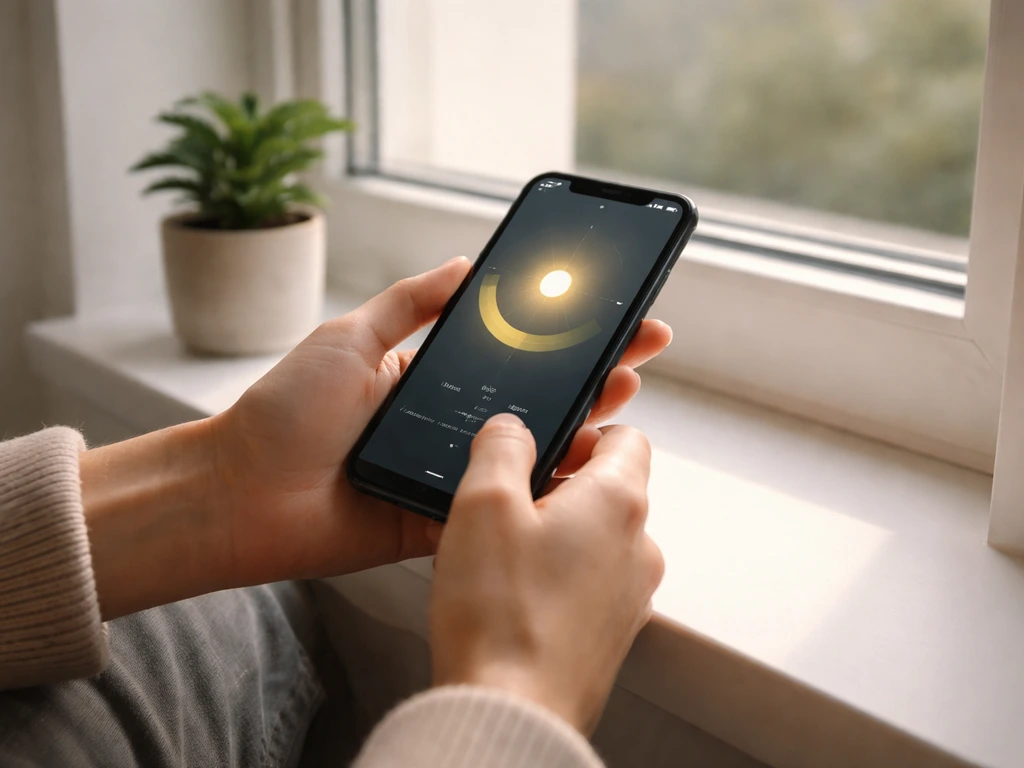
Before you buy anything, answer three quick questions: Where will it live? How much light does that spot actually get? And how often will you realistically remember to water it? Those three answers narrow your list fast. A plant that thrives on a sunny balcony will sulk and die on a north-facing windowsill, and a plant that needs daily moisture will not survive a busy travel schedule. Easy plants exist in every category, but "easy" is always relative to your specific conditions.
Light is the single biggest variable most beginners underestimate. Hold your hand about a foot above a white piece of paper in your chosen spot around midday. A sharp, distinct shadow means bright light. A soft, blurry shadow means medium light. No shadow at all means low light. That simple test will save you a lot of dead plants. Once you know your light level, match it to a plant from the lists below, and you're already most of the way there. If you want a deeper dive into the fundamentals of getting started, how to grow plants for beginners covers the core concepts in plain language.
Also think about your growing medium. Most beginners default to soil, which is a great place to start. But if you're tight on space, interested in water propagation, or want to try something a little different, hydroponics and terrariums are more accessible than they sound. Each gets its own section below.
Easiest beginner plants for indoors (low light to bright light)
Indoor plants are where most beginners start, and for good reason: you control the environment, the pests are manageable, and you can watch them daily. Here are the best picks across the light spectrum, along with exactly what each one needs.
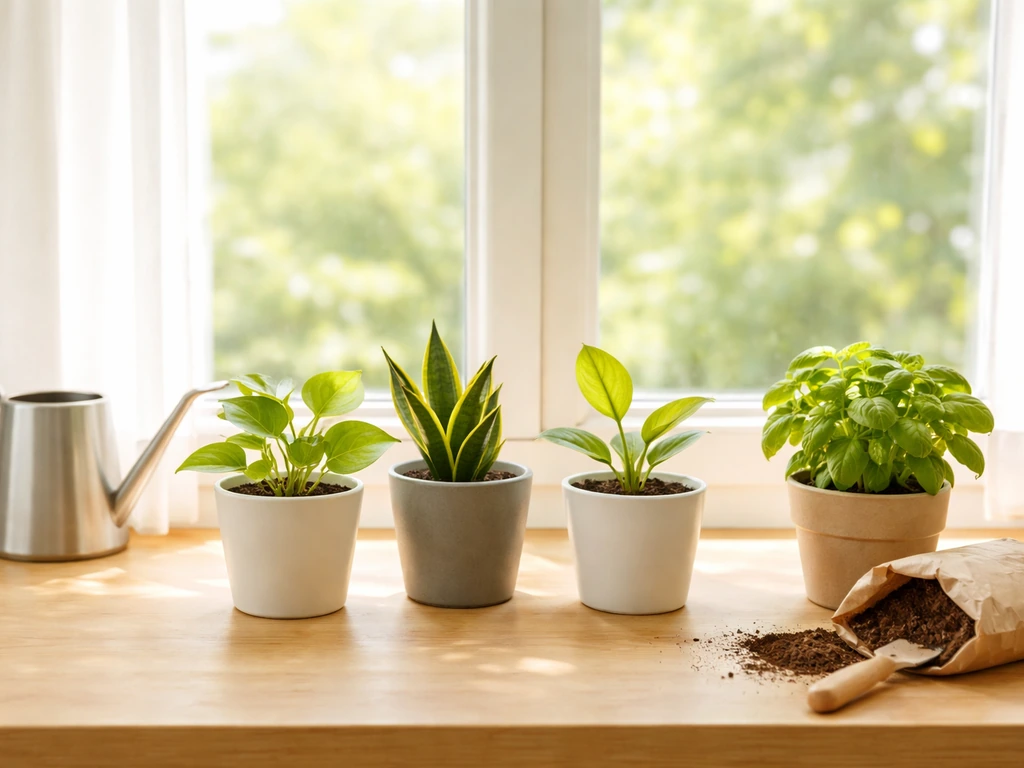
Low light: Snake plant (Sansevieria)
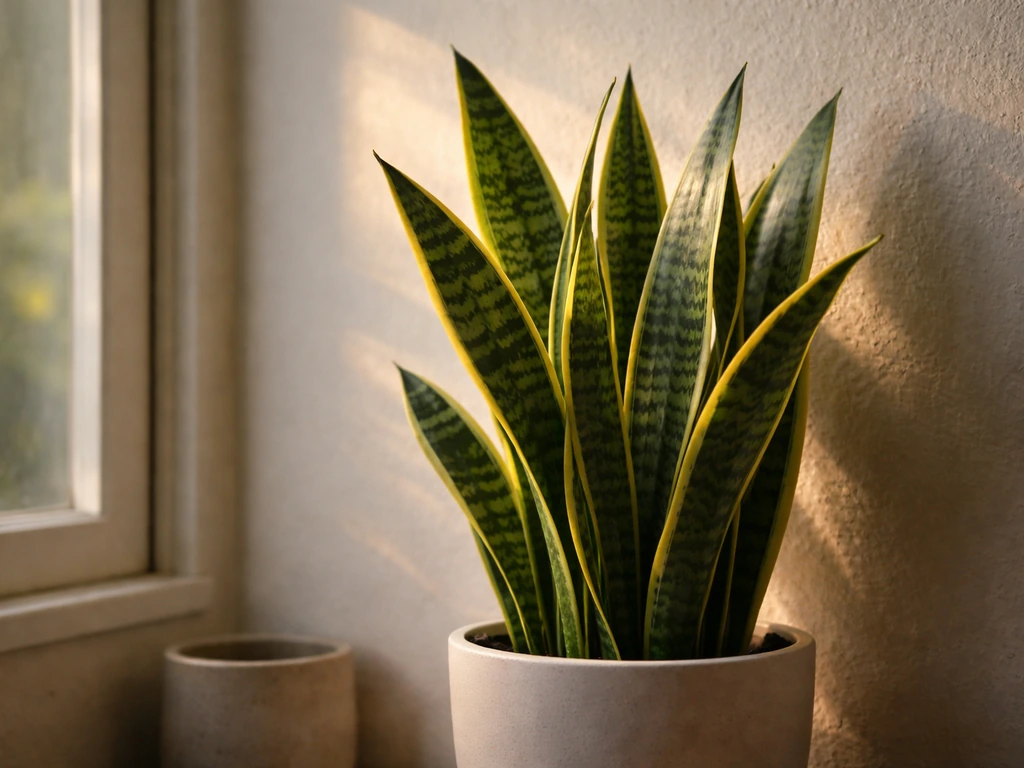
If you've ever felt like you can't keep anything alive, start here. Snake plants can tolerate low light better than almost any other houseplant, and they actually prefer to dry out between waterings. Water it once every two to three weeks in a standard indoor environment, less in winter. The biggest mistake beginners make with snake plants is watering on a schedule rather than checking the soil first. Stick your finger about two inches into the soil; if it's still damp, wait. If it's dry, water thoroughly and let the pot drain completely. Never let it sit in a saucer of water, since roots can die quickly in soggy conditions.
Medium light: Spider plant (Chlorophytum comosum)
Spider plants are genuinely hard to kill. They do well in medium to bright indirect light year-round, and the care routine is almost the same as snake plants: let the soil dry slightly between thorough waterings. The bonus is that spider plants produce little offshoots (called spiderettes or plantlets) that dangle from the mother plant on long stems. You can snip those off and root them in water to get free new plants, which makes them a great first propagation project. If you want to explore a wider range of options at this stage, check out this list of beginner plants to grow for more ideas across different light levels.
Bright light: Herbs (basil, mint, chives)
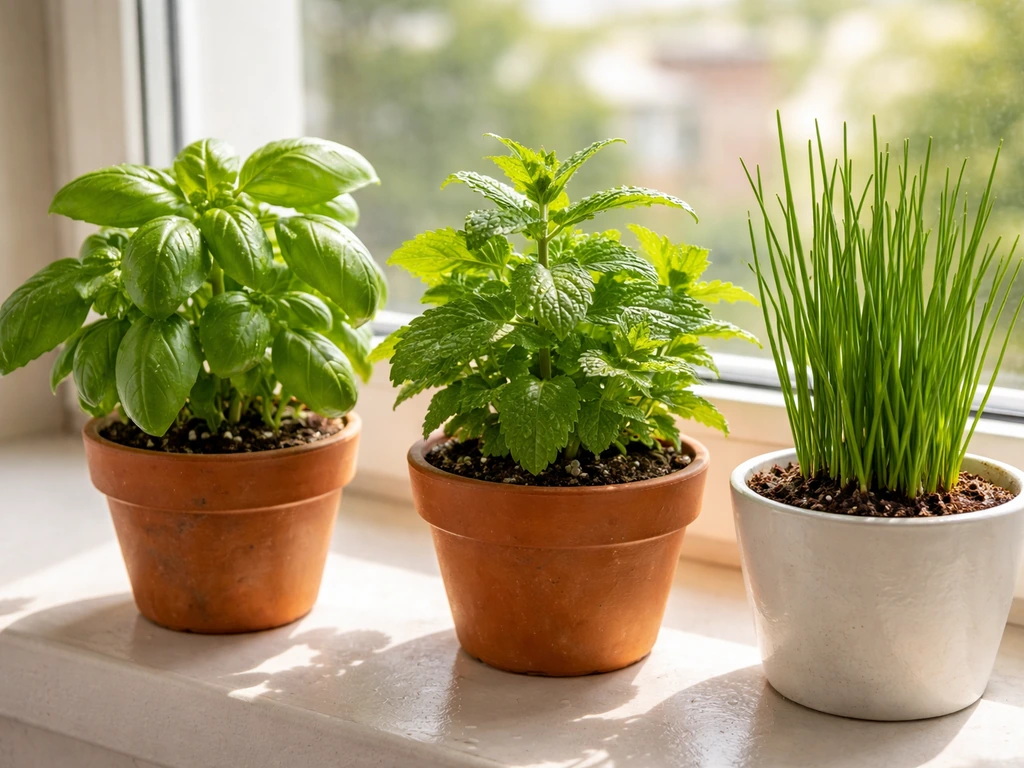
If your space gets real sun, herbs are the most rewarding beginner plants you can grow indoors. You get to eat what you grow, which is great motivation. Basil needs at least 6 to 8 hours of bright light per day and well-drained soil; water it deeply every 7 to 10 days rather than giving it little sips daily. University extension guidance notes basil is an easy, popular culinary herb and recommends a soil pH range of about 6.0 to 7.5 Basil needs at least 6 to 8 hours of bright light per day and well-drained soil. A south-facing windowsill is ideal. Mint and chives are more forgiving on light and can manage with 2 to 6 hours, making them options even for east- or west-facing windows. Plant herbs in small individual pots with drainage holes, use a standard potting mix, and pinch back flower buds on basil as soon as they appear so the plant keeps producing leaves instead of going to seed.
For a fuller guide specifically focused on indoor plants across all these categories, easy to grow houseplants for beginners goes deeper on care routines and variety picks.
The overwatering problem (and how to avoid it)
Overwatering is the number one killer of beginner houseplants, and it does damage in two ways. First, waterlogged soil suffocates roots directly. Second, consistently wet soil is a perfect breeding ground for fungus gnats, those annoying tiny flies that swarm around your pots. Spider mites are another common indoor pest, though they tend to show up in hot, dry conditions rather than wet ones. The fix is the same for both: match your watering to what the plant actually needs, not to a rigid schedule. If you see gnats, let the top inch or two of soil dry out completely between waterings. That simple change usually solves the problem within a week or two.
Easy outdoor beginner plants (and what conditions they need)
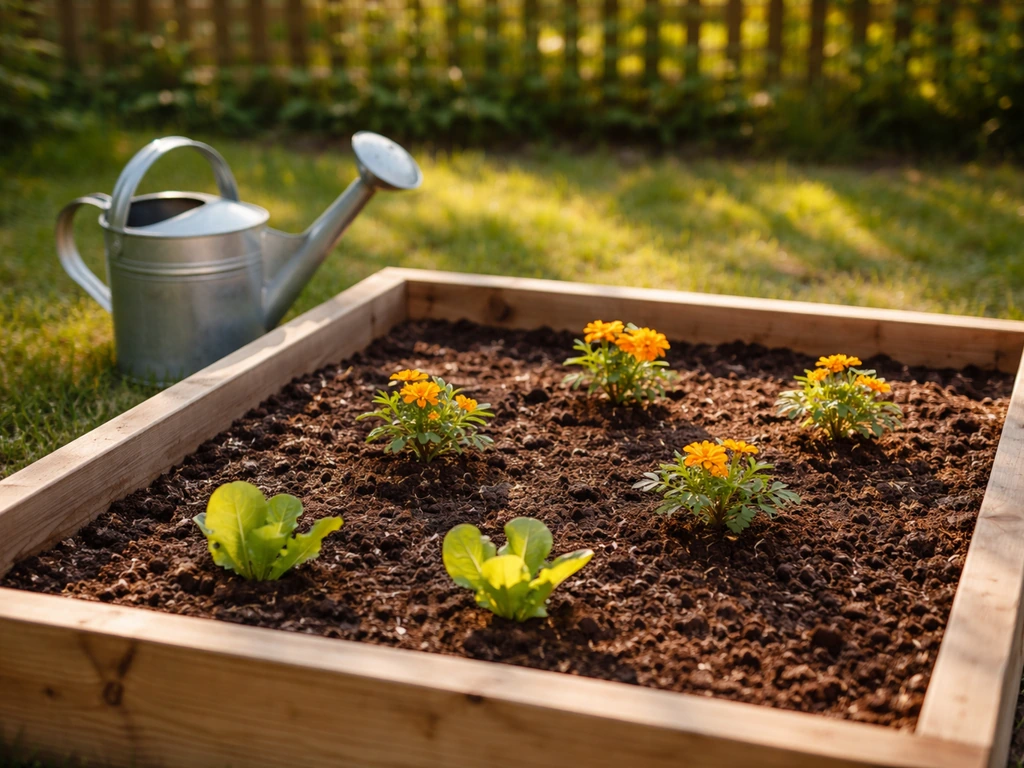
Outdoor growing opens up a lot more options because sunlight, rain, and natural airflow do a lot of the work for you. The tradeoff is that outdoor plants are more exposed to weather swings, pests, and weeds. The beginner-friendly picks below are resilient enough to handle that.
| Plant | Light Needed | Water Needs | Why It's Beginner-Friendly |
|---|---|---|---|
| Radishes | Full sun (6+ hrs) | Regular, even moisture | Ready to harvest in 22-30 days; fast feedback |
| Zucchini | Full sun (6+ hrs) | Deep watering 1-2x per week | Vigorous grower, very forgiving of inconsistent care |
| Sunflowers | Full sun (6+ hrs) | Moderate; drought-tolerant once established | Direct-sow from seed, grows fast, nearly indestructible |
| Marigolds | Full sun to partial shade | Low; tolerates dry spells | Pest-repelling, long-blooming, thrives in poor soil |
| Lettuce/Salad Greens | Partial shade to full sun | Consistent moisture | Grows fast, cut-and-come-again harvesting |
| Nasturtiums | Full sun to partial shade | Low; dislikes overwatering | Edible flowers and leaves, grows in poor soil, self-seeds |
For outdoor growing, the most common beginner mistake is planting too early in the season. Check your last frost date for your area before direct-sowing or transplanting anything outside. Radishes and lettuce are actually cold-tolerant and can go out weeks before your last frost, while basil and zucchini need warm soil (at least 60°F) to thrive. Most seed packets list this clearly. If you're planning an outdoor setup from scratch, beginner plants to grow outdoors goes into more detail on timing, spacing, and soil prep for common starter crops.
Low-effort plants for water/hydroponics and terrariums
Soil isn't the only option, and for some beginners, soil-free growing is actually easier because there's less guesswork around watering. Here's how to approach both methods without overcomplicating them.
Simple water propagation and basic hydroponics
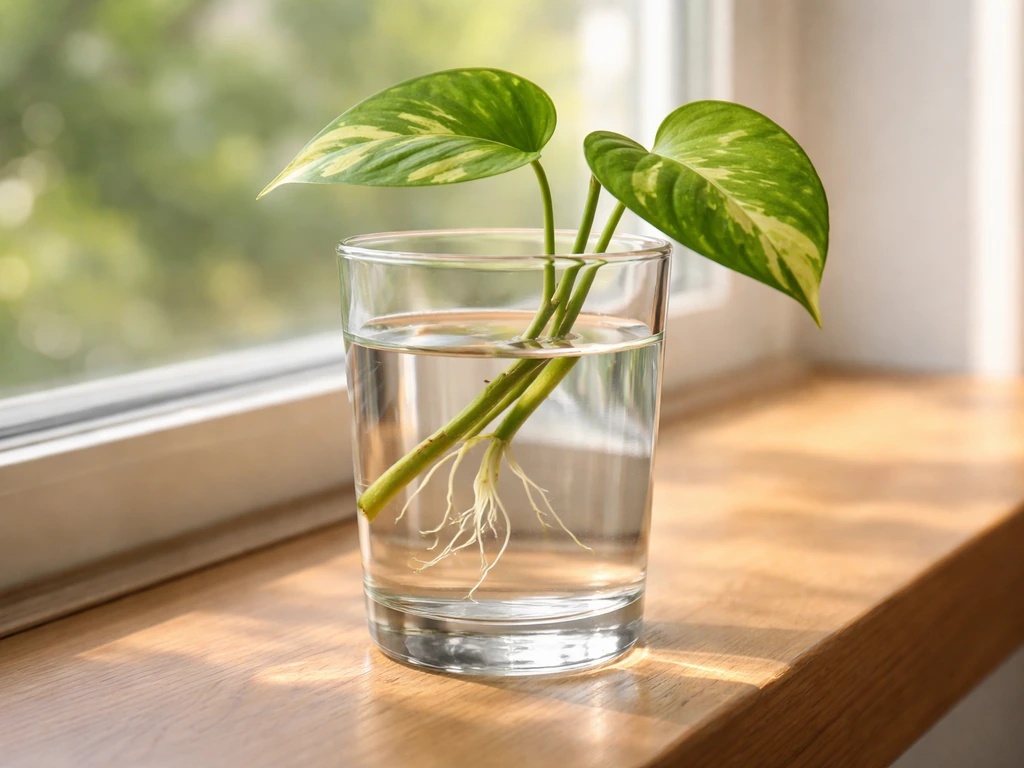
The easiest entry point to water growing is simple propagation: put a cutting from a pothos, spider plant, or coleus in a glass of water near a bright window. Change the water every few days, and you'll see roots in one to two weeks. That's genuinely all there is to it for beginners. If you want to scale up to an actual hydroponic setup, lettuce is the best starting plant. It grows fast, doesn't need complex nutrients at first, and thrives with an EC (electrical conductivity) range of 1.4 to 1.8 mS/cm and a pH between 6.0 and 7.0. Those numbers sound technical, but inexpensive EC and pH meters are available for under $20 online. A good first step is to have your tap water tested or check its baseline pH before mixing nutrient solutions, since the starting quality of your water affects everything downstream. Anyone can grow these plants with a basic hydroponic kit, and lettuce is the proof.
Terrariums: low-maintenance mini ecosystems
A closed terrarium is essentially a self-watering system. Once sealed, moisture cycles through the container and rarely needs to be added. The best beginner plants for closed terrariums are small, humidity-loving species: nerve plant (Fittonia), moss, and baby ferns all work well. Fittonia in particular is well-suited to both closed and open terrariums and does fine in medium light, making it flexible for most indoor spots. The main mistake beginners make with closed terrariums is overwatering at setup. When you see heavy condensation or water droplets on the inside walls, open the lid for about an hour to let excess moisture evaporate. Also, after you water, don't replace the cover until wet foliage has had time to dry. These two habits prevent the mold and rot that kill most beginner terrariums.
What to do in your first week
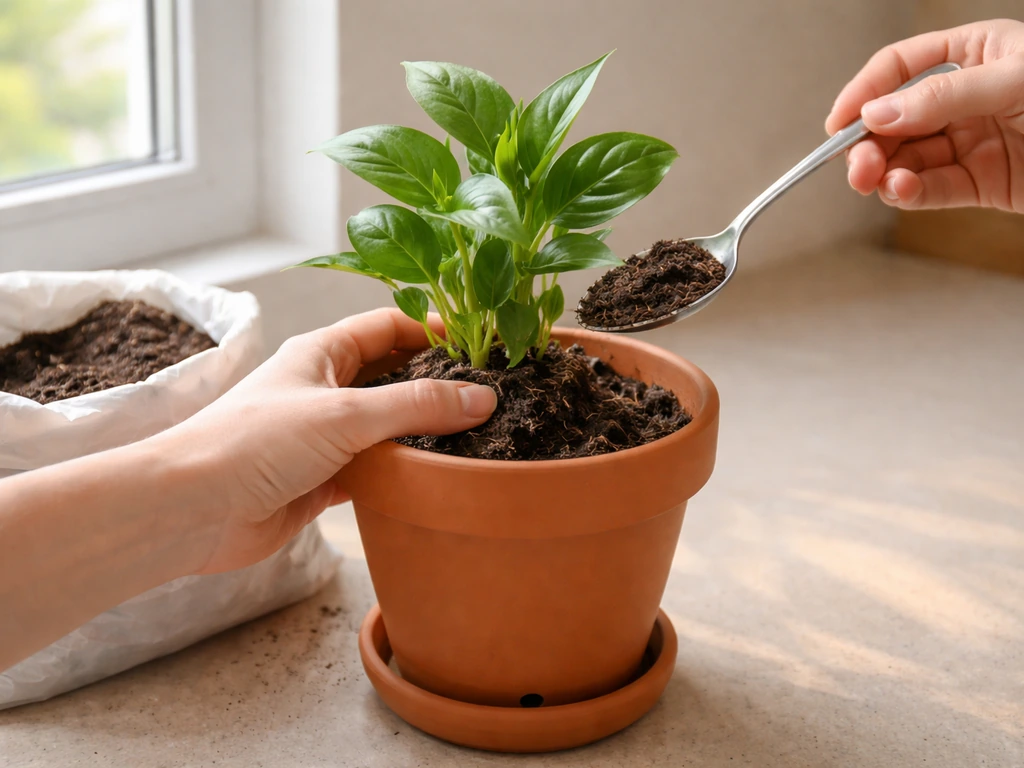
The first week sets the tone. Here's a straightforward day-by-day framework that applies whether you're starting indoors or out.
- Day 1 (Setup): Choose your plant and your spot. Do the shadow test to confirm light levels. Buy a pot with a drainage hole (this is non-negotiable), a basic well-draining potting mix, and your plant or seeds. If growing herbs from seed, sow them about 1/4 inch deep and keep the soil moist until germination.
- Day 2-3 (Settle in): If you bought a transplant, water it in gently after potting and let it settle. Don't fertilize yet. Put it in its spot and leave it alone. Resist the urge to move it constantly; plants stress easily from environmental changes.
- Day 4-5 (First check): Check soil moisture with your finger. If the top inch is dry for a drought-tolerant plant (snake plant, succulent), it can wait. If it's a moisture-loving herb or lettuce, water if dry. Look at the leaves: are they perky or drooping? Drooping right after transplant is usually transplant shock and often resolves on its own within a day or two.
- Day 6-7 (Observe and adjust): Note how fast the soil is drying. This tells you how often you'll need to water in your specific environment. Also check where the light is hitting the plant through the day; rotate the pot a quarter turn so all sides get even exposure. That's your baseline routine established.
If you're starting from seeds rather than transplants, the process involves a few more steps around germination and thinning. How to grow starter plants walks through that whole process clearly, including how to harden off seedlings before moving them outdoors.
Simple care routines and common beginner troubleshooting
Once you're past week one, your job is mostly observation and consistency. Here's a simple weekly routine that works for most beginner plants, plus quick fixes for the most common problems.
Weekly care routine
- Check soil moisture before every watering decision, never water by calendar alone
- Rotate the pot a quarter turn to keep growth even
- Remove any dead or yellowing leaves at the base to prevent rot and pests
- Wipe dust off large indoor leaves with a damp cloth monthly so they can absorb light efficiently
- Check the undersides of leaves for pests (spider mites leave tiny webbing; scale looks like small brown bumps)
Quick troubleshooting
| Symptom | Likely Cause | Fix |
|---|---|---|
| Yellow leaves | Overwatering or poor drainage | Let soil dry out; check that pot has drainage holes |
| Brown, crispy leaf tips | Low humidity or underwatering | Water more consistently; mist or add a pebble tray with water |
| Leggy, stretched growth | Not enough light | Move closer to a window or add a grow light |
| Tiny flies around soil | Fungus gnats from consistently wet soil | Let top 2 inches dry out fully between waterings |
| Wilting despite moist soil | Root rot from overwatering | Unpot, trim black mushy roots, repot in fresh dry mix |
| Pale or washed-out leaves | Too much direct sun | Move to bright indirect light instead |
One thing worth saying out loud: most beginner plant problems are reversible if you catch them early. Yellowing leaves don't mean a plant is dying; they're information. The plant is telling you something is off. Treat it like debugging rather than failure, adjust one variable at a time, and you'll figure out what it needs. If you're still building confidence in plant selection, browsing a focused list of good starter plants to grow can help you find options that match your exact constraints.
Beginner starter shopping list and success checklist
Here's everything you need to get started today, kept as lean and affordable as possible. You don't need a lot of gear. Most beginner failures come from the wrong plant or wrong watering habits, not from lacking equipment.
Shopping list
- One beginner plant: snake plant (low light), spider plant (medium light), or basil/mint (bright light) for indoors; radishes, lettuce, or marigolds for outdoors
- Pot with at least one drainage hole (4-6 inch size for most starter plants)
- All-purpose well-draining potting mix (not garden soil, which compacts in containers)
- A small watering can with a narrow spout for controlled watering
- A spray bottle if you're growing in a terrarium or propagating in water
- Optional: a basic pH meter and EC meter if you're trying hydroponics (under $20 each online)
- Optional: a grow light if your space has genuinely no natural light (a basic 20-40W LED panel works fine for most beginner plants)
Success checklist for your first month
- Confirmed my plant matches my actual light conditions (not what I wish they were)
- Pot has drainage holes and I'm not letting it sit in standing water
- Watering based on soil moisture checks, not a fixed schedule
- Did the shadow test to verify my light level before placing the plant
- Checked for pests at least once in the first two weeks
- Rotated the pot at least once to promote even growth
- Did not fertilize in the first two to four weeks (new plants need to settle first)
- Kept notes or photos to track growth and catch changes early
That's really the whole foundation. Pick a plant that fits your space, set it up correctly on day one, check soil moisture before every watering, and watch what happens. Most of the work is just paying attention. Once you've got one plant thriving, adding a second one gets easier fast because you've already built the habit of observing rather than guessing. From there, whether you want to expand into a full herb garden, try growing in hydroponics, or put together a terrarium, the skills are the same. You're just applying them to a new context.
FAQ
Can I buy one “easy” plant and keep it on a windowsill even if I am not sure how much light it gets?
Yes, but do it after you confirm light first. A plant can survive a darker room for a while, but a sudden jump to stronger sun can scorch leaves. Move it gradually (for example, 30 to 60 minutes more direct exposure every 2 to 3 days) and watch for crispy edges or bleached patches.
My beginner plant looks wilted. How can I tell whether it needs water or not?
If the top inch dries and the leaves droop, water thoroughly until water drains out the bottom, then empty the saucer. If the soil is still damp, drooping often means a different issue such as low light or root stress, so do not “rescue” with extra water right away.
When should I start fertilizing my easy-to-grow plants, and how often?
In general, you should only fertilize lightly once the plant is actively growing, usually after the first few weeks in its new spot. Overfertilizing beginners often causes salt buildup and leaf burn, especially in pots without consistent drainage. If you use fertilizer, use half strength and only during spring and summer.
Do I need special pots, or can I use anything for easy beginner plants?
Choose a pot with drainage holes and a saucer you empty. If you use decorative cachepots (the pot without holes inside), remove the plant pot to water, let it drain fully, then put it back. Sitting in runoff is a fast path to root rot.
Does the water temperature or time of day matter for beginner watering mistakes?
Start with room-temperature water, especially for sensitive plants. Cold water can shock roots and make wilting look worse. Also, watering at the same time of day helps you learn patterns, since evaporation and plant uptake change across the day.
What are signs my easy plant is getting the wrong light, and what should I do?
Some “easy” plants still need brighter light than people think. If you see slower growth, smaller leaves, or leggy stretching, that is a light warning. Recheck your light using the shadow test at the same spot and compare again after moving the plant.
If I root cuttings in water, when should I move them into soil, and how do I avoid killing them?
For indoor propagation in water, change the water every few days and trim the cutting so that only the lower nodes are submerged. When roots reach about 1 to 2 inches, pot it in moist (not soaked) soil and keep it in medium bright light for a week to reduce transplant shock.
I have fungus gnats around my houseplant. Besides watering differently, what else should I do?
If you find fungus gnats, you can also reduce their habitat by letting the soil dry more between waterings and removing the top layer of very wet organic debris if present. Yellow sticky traps help catch adults while your watering adjustment addresses the larvae.
How do I know if it is safe to plant outdoors, beyond checking the last frost date?
Early spring and late summer are often friendlier for outdoor planting, but the real rule is soil temperature and frost timing. Warm-season crops like basil and zucchini usually fail if the ground is under about 60°F, even if days look sunny.
If I want to start seeds for easy plants, what is the most common mistake that ruins seedlings?
Yes, but seed-starting success depends on consistent moisture and enough light. Use a clear cover or humidity dome until germination, then remove it or vent it regularly to prevent mold. After sprouting, switch to bright light so seedlings do not stretch.
Are closed terrariums truly self-watering, and what light level do they need to stay healthy?
Closed terrariums can handle moisture swings better than open setups, but the plant still needs light. If you see pale growth or slow recovery after you close the lid, increase brightness rather than adding more water. When in doubt, open briefly to control condensation instead of overcorrecting with watering.
My plant has yellow leaves. Does that always mean the plant is dying?
Often, but not always. Yellowing can be from overwatering, underwatering, low light, or nutrient imbalance, so do a one-variable check first. Confirm soil moisture, then compare its light situation to your original spot plan before adjusting fertilizer.
How should I choose the second plant so I do not lose momentum or make things harder than necessary?
A simple approach is to keep one plant “as a baseline” that matches your current light and watering ability, then add the next easiest plant with a similar requirement. If you keep jumping to very different light or moisture needs, you will confuse diagnosis.